RSU management discusses development of medical education cooperation at high-level meetings in Cyprus


The Rīga Stradiņš University (RSU) Rector Prof. Aigars Pētersons, together with Chancellor Toms Baumanis and Assoc. Prof. Ingus Skadiņš, Vice-Dean of the Faculty of Medicine, are visiting Cyprus on 25 and 26 February. During the visit, they are participating in a high-level meeting to discuss the development of medical education and the expansion of international cooperation. The visit was held alongside the informal meeting of European Union health ministers in Nicosia, attended also by Latvia’s Minister for Health Hosam Abu Meri.
The RSU management visited the American University of Cyprus in Larnaca to discuss potential cooperation in the implementation of medical studies and the strengthening of clinical training. During the discussions, preconditions for launching a joint medical study programme were discussed that would foster long-term academic collaboration.
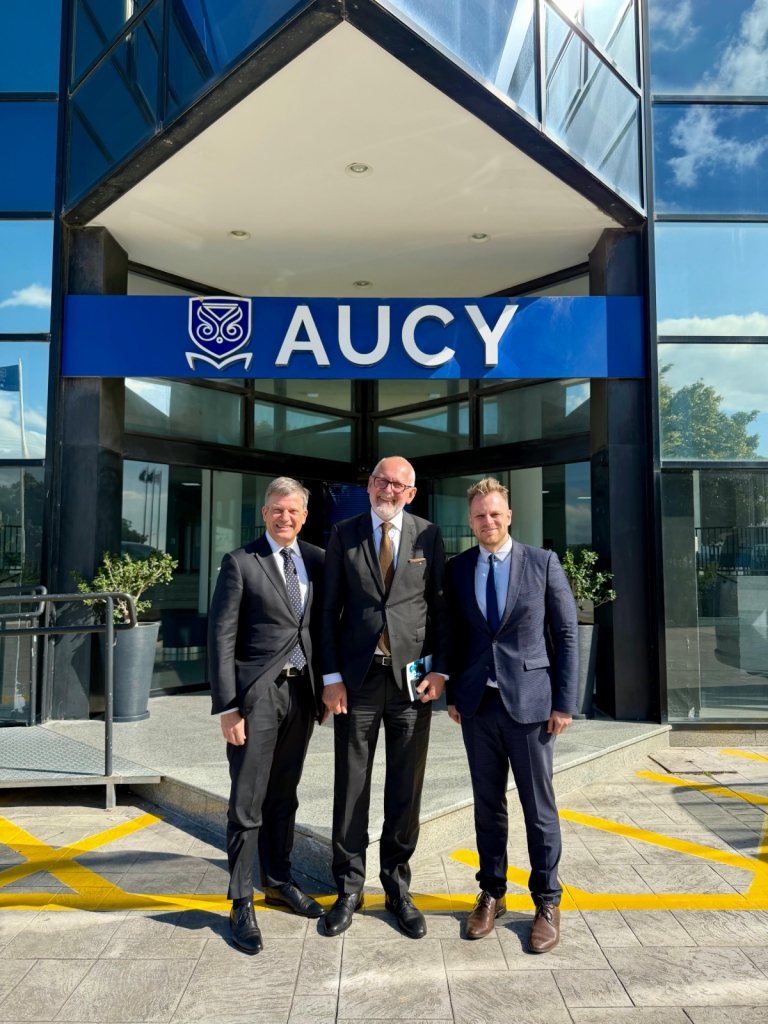
From the left: RSU Chancellor Toms Baumanis, Rector Prof. Pētersons and Assoc. Prof. Ingus Skadiņš at the American University of Cyprus in Larnaca
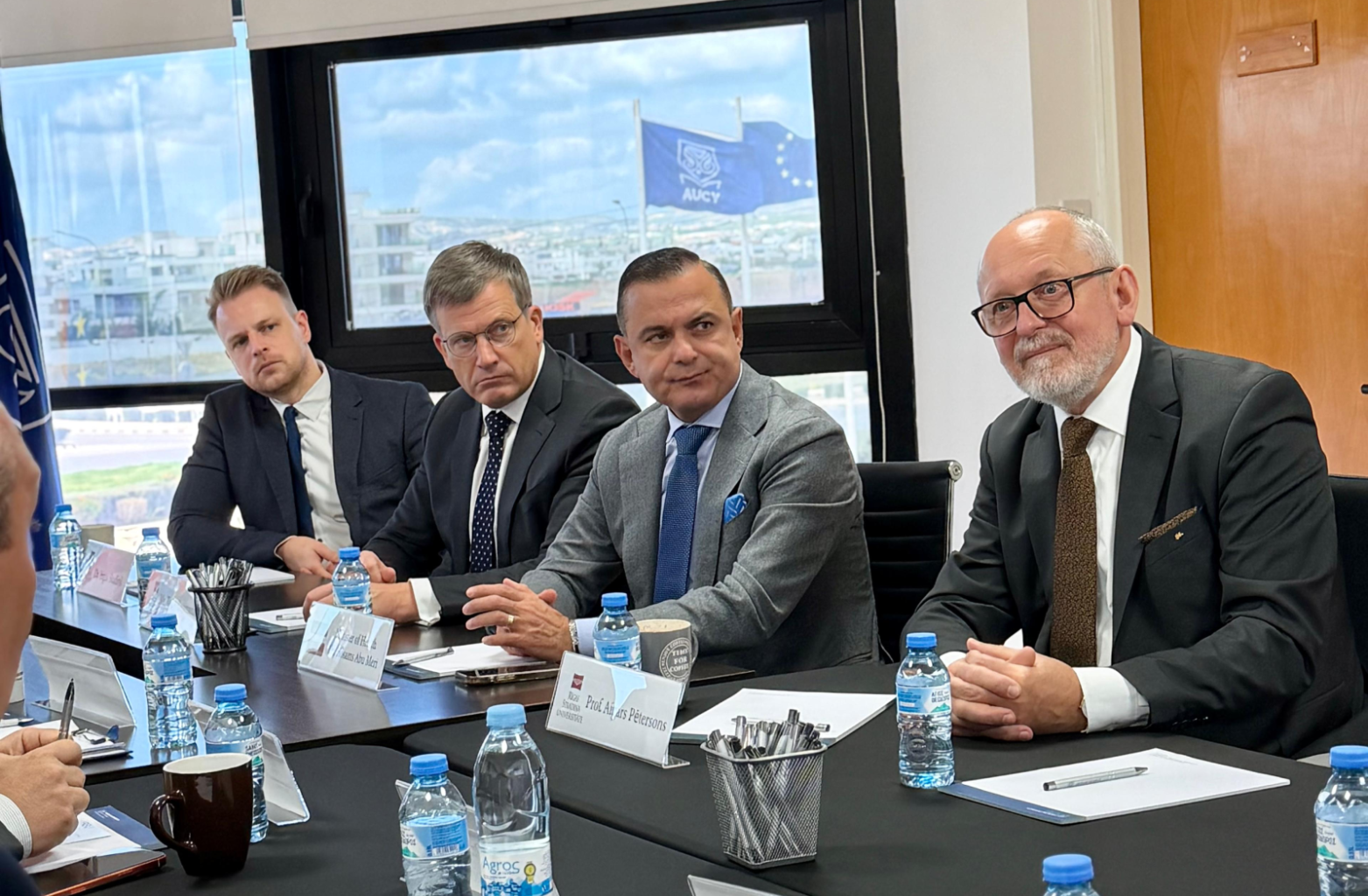
The meeting in Cyprus marks a significant step in the international development strategy of Rīga Stradiņš University. By expanding cooperation and evaluating opportunities for establishing a new clinical learning centre, the university continues to strengthen its position as a research university with an international perspective and high-quality standards in medical education.
RSU Rector Prof. Aigars Pētersons
The RSU medical study model is based on close integration with the clinical environment. The university cooperates with 118 healthcare institutions and hospitals, providing multi-profile clinical placements in high-level medical centres across various European countries. Approximately 90% of international students complete their clinical practice in their home countries, while 10% undertake it in Latvia.
Currently, Cyprus holds the Presidency of the Council of the European Union, and the informal meeting of EU health ministers served as a platform for discussions on the sustainability of European healthcare systems, the access to innovative therapies, mental health policy, and the implementation of the European Health Data Space.
Related news
 RSU hosts CNRS/EHESS Centre for Russian, Caucasian, East European and Central Asian StudiesResearch, International Cooperation