Luminescent Implants as Ports for Light-based Therapies (PHOTOTHERAPORT)
Aim
Description
Pau Gorostiza, an ICREA research professor and principal investigator of the Nanoprobes and Nanoswitches group at the Institute for Bioengineering of Catalonia (IBEC) and CIBER-BBN, is set to coordinate the PHOTOTHERAPORT project, which is funded by the prestigious Pathfinder Open programme of the European Innovation Council (EIC). Through this initiative, the EIC supports the exploration of bold ideas for radically new technologies, welcoming cutting-edge, interdisciplinary, and high-risk/high-reward scientific collaborations that underpin technological breakthroughs.
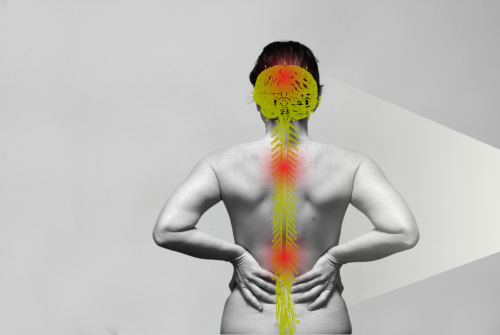
PHOTOTHERAPORT focuses on the development of luminescent implants as ports for light therapies, analogous to those used in chemotherapy for drug delivery. A consortium of 8 institutions from 4 countries, coordinated by IBEC, will execute the project with funding totaling €3 million over the next 3 years.
Light-based therapies are gaining significance in medicine for their ability to target specific regions of the body. Despite their demonstrated therapeutic potential, these therapies encounter a common challenge: the attenuation of visible light through soft tissues and bones before it can reach the intended site. This attenuation increases with the depth of the target tissues and organs.
The PhotoTheraPort platform offers a solution to this challenge. These implants are designed to locally emit light when illuminated with an external light source. They incorporate upconversion nanoparticles that, when exposed to infrared light, emit higher-energy photons (visible or ultraviolet light). This allows the emission of light by the nanoparticles to be controlled remotely and non-invasively by externally applying infrared light, which does penetrate through the tissue and bone. The shape and emission color of PhotoTheraPorts can be adjusted for various therapeutic purposes. The research consortium will initially use this platform to directly photoinduce analgesia, an effect known as photobiomodulation, and compare it with clinically used lamps. The goal is to treat inflammatory pain more effectively in concealed regions of the spine.
The PhotoTheraPorts will subsequently be applied to photopharmacological neuromodulation therapies. For this purpose, photoswitchable drugs designed to synergize with the light emitter platform will be developed. These drugs activate only when exposed to a specific color of light. This second technology will undergo testing to mitigate neuropathic pain by illuminating specific regions of the spine. Additionally, an effort will be made to inhibit the neuronal hyperactivity characteristic of focal epilepsy, which affects a limited region of the brain and is untreatable in 30% of epileptic patients.
"Our goal is to demonstrate, within 5 years, the safety and non-toxicity of the platform and to bring this new photobiomodulation therapy closer to clinical use. Photopharmacological development timelines are unpredictable but are expected to be longer. If we achieve positive preclinical results for neuromodulation, it would be the first molecule of its kind to meet regulatory requirements," explains Gorostiza.
Once the efficacy of PhotoTheraPorts for these pathologies has been proven, the platform has the potential to be applied to other conditions requiring treatments with localized action, such as arthritis, autoimmune diseases, infections, or transplants. The simplicity and versatility of this innovative platform aim to enhance pain management and patients' quality of life, while also providing the healthcare system with ways to optimize medical costs and extend its benefits.
Project Coordinator
- Institute for Bioengineering of Catalonia (IBEC), Spain
Project partners
- Tampere University (TAU), Finland
- Latvian Institute of Organic Synthesis (LIOS), Latvia
- University of Cádiz (UCA), Spain
- Technion Institute of Technology (TIIT), Israel
- Rīga Stradiņš University (RSU), Latvia
- Barcelona Institute for Biomedical Research (IIBB-CSIC), Spain
- Teamit Institute (TINS), Spain.
Project website
News and events
- PHOTOTHERAPORT kick-off meeting
On January 25th-26th, 2024, the Horizon Europa-funded project PHOTOTHERAPORT held its kick-off meeting online. Representatives from four countries – Latvia, Spain, Finland, and Israel – gathered to inaugurate the project's start.
During the kick-off meeting, all project packages were presented, and the first key milestones were discussed.
More about the project - https://cordis.europa.eu/project/id/101130883
Project email address - phototheraport
 ibecbarcelona[pnkts]eu
Information posted on 02.02.2024
- Students visit RSU on the Job Shadow Day
On April 4, 2024, Riga Stradiņš University (RSU) hosted the Job Shadow Day, during which Professor Valērija Groma was shadowed by 4 students from various schools in Latvia.
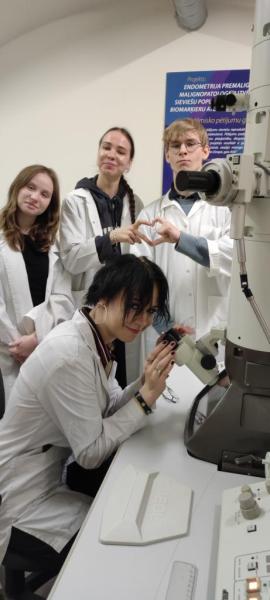 Students were introduced to the work at the Joint Laboratory of Electron Microscopy and the implementation of the Horizon Europe project PHOTOTHERAPORT.
During the shadowing, students were able to observe the preparation procedure of tissue samples, perform analysis of human brain tissue samples under an electron microscope, as well as attend a lecture lasting more than 2 hours on the structure of nerve tissue and the nervous system, and changes in the brain in cases of epilepsy.
The Job Shadow Day is a career education event run by the organisation “Junior Achievement” for schoolchildren from grade 1 to 12. The purpose of the event is to acquaint schoolchildren with various industries and professions to help young people decide on their future education and career. For employers it is a good opportunity to raise awareness of their company and attract future talent.
Information posted on 08.04.2024
- 11th Baltic Morphology Meeting
From 13 to 15 November, the 11th Scientific Conference of Baltic Morphologists took place at the Institute of Anatomy and Anthropology of Riga Stradiņš University (RSU), bringing together leading morphologists from 12 countries, covering various disciplines and offering a wide range of scientific lectures and discussions.
Professor Valērija Groma participated in the conference with an oral presentation The Impact of Neuronal Ion Channels in Epilepsy: A Current Overview, sharing the project data obtained so far.
Recording of the presentation: https://panopto.rsu.lv/Panopto/Pages/Viewer.aspx?id=54f3534…
More about the conference: https://www.rsu.lv/en/balticmorphology2024
Information posted on 29.11.2024
- Research Week 2025 conference
Last 26-28 March, Prof. Valērija Groma presented the latest results of her research group on voltage-gated sodium channels at the International Conference on Medical and Health at Riga, Latvia.
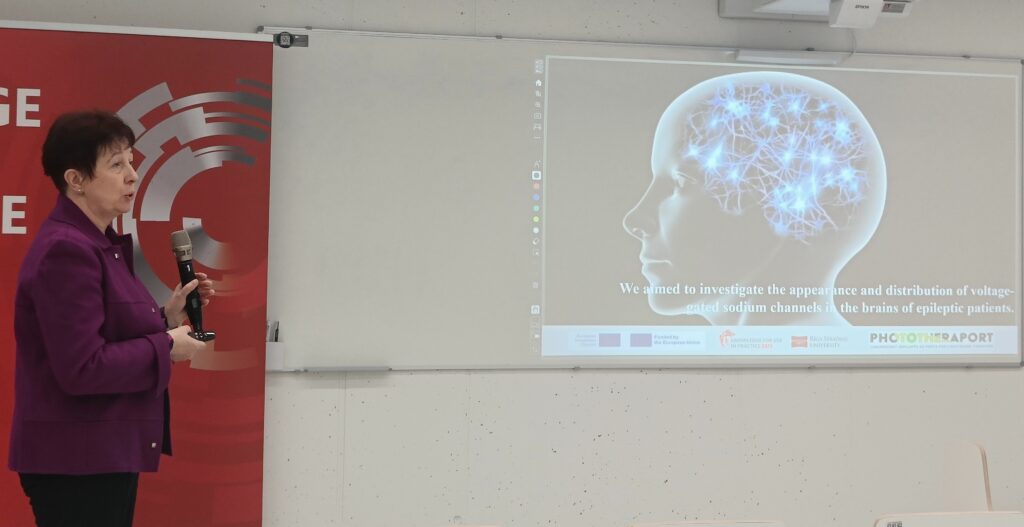
The International Conference on Medical is organized in the frame of Knowledge for Use in Practice, one of the central elements of the Research Week 2025 conferences. Those scientific meetings are organized by the Riga Stradins University and focus on crucial areas that drive societal progress to ensure a sustainable and innovative future.Prof. Valērija Groma participated in the session “From Past to Modern Morphology”, included in the topic “Medical Diagnostics Evolution: From Morphology and Radiology to New Frontiers”, which took place the 28 March. Her oral talk titled “Appearance and Distribution of Voltage-Gated Sodium Channels in Excitable and Non-Excitable Cells of the Human Brain” focused on the study of the appearance and distribution of voltage-gated sodium channels in the brains of epileptic patients.
To an audience of 30 people, Prof. Groma explored how voltage-gated sodium channels, essential for transmitting electrical signals in the brain, are distributed in different types of brain cells. These channels are known to vary depending on the tissue and play a role in conditions like epilepsy. Using human brain tissue from the Netherlands Brain Bank, her research group analyzed the presence of specific sodium channel types in various brain regions, founding that some channels, like Nav1.1 and Nav1.7, appeared only weakly across all regions, while others, such as Nav1.2, showed stronger expression in specific areas like the cerebellum and white matter. Interestingly, not only neurons but also non-excitable cells such as astrocytes and microglia showed some level of sodium channel expression. These findings suggest that sodium channels have diverse roles beyond just electrical activity, including regulating cellular communication and maintaining the balance of ions within the brain.
This kind of conferences promote advancements in one domain to support and propel progress in others, ultimately contributing to a future where innovation, sustainability, and social well-being are examined through an integrated perspective. In this sense, Prof. Groma’s oral presentation stimulated excellent scientific discussions and networking to support advancements in the domain of brain morphology in the context of epilepsy. It was certainly a great scenario for creating new collaborations for PHOTOTHERAPORT project!
Presentation recording (starting at 32:54 minutes)
Information posted on 03.04.2025
- PHOTOTHERAPORT project meeting
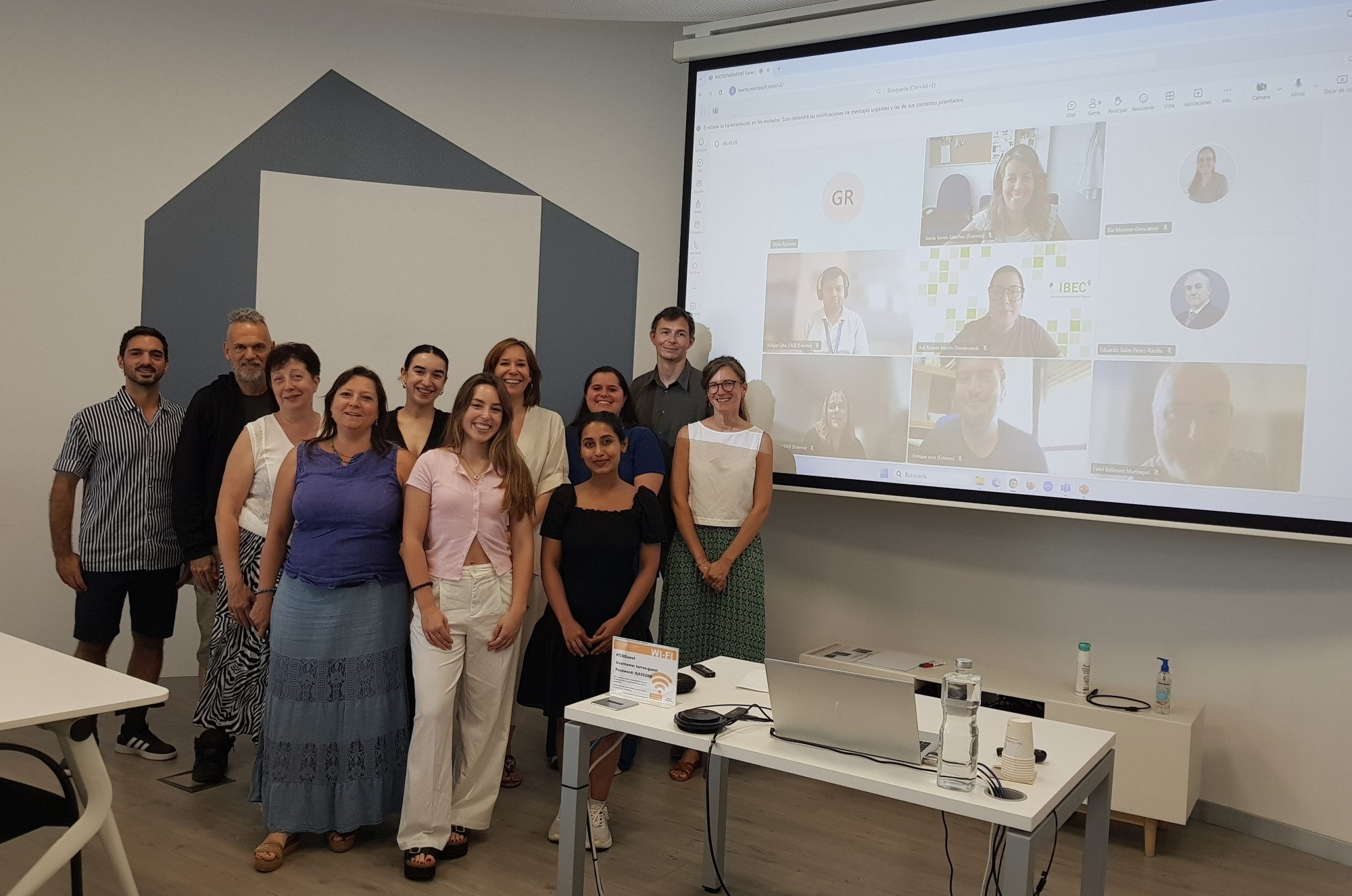
Last week PHOTOTHERAPORT project team met at IBEC Barcelona for our 18-month project meeting.
Two days of fruitful discussions to define next steps in our photopharmacology strategy: light-emitting implants and photo-controlled drugs to treat neuropathicpain and epilepsy.
Information posted on 08.07.2025
Publication:
Interconnected Pathways: Exploring Inflammation, Pain, and Cognitive Decline in Osteoarthritis.
Tarasovs, Mihails; Skuja, Sandra; Svirskis, Simons; Sokolovska, Liba; Vikmanis, Andris; Lejnieks, Aivars; Shoenfeld, Yehuda; Groma, Valerija.
International Journal of Molecular Sciences
https://doi.org/10.3390/ijms252211918