Data from RSU-conducted anthropological study to be presented in Liepāja


On Thursday, 4 June at 17:30, a presentation of the results of an anthropology study conducted by Rīga Stradiņš University (RSU) will take place in the chamber hall of the Liepāja Latvian Society House. Anyone interested will have the opportunity to learn about the data collected in Liepāja and across Kurzeme during the summer of 2025.
The RSU team will be represented by the study lead, Prof. Jānis Vētra, project administrator and doctoral student Arta Grabčika, doctoral student Lāsma Asare, and RSU Faculty of Pharmacy students Linda Elva Andersone and Danija Svalba.
Everyone interested and all study participants are invited to attend. Please register in advance by 3 June by completing a short registration form.
A total of 1,366 people from Kurzeme participated in the study, 563 of whom were residents of Liepāja, making it the city with the highest participation rate among the three cities in Kurzeme.
All participants underwent a comprehensive programme of examinations and data collection, including:
- 3D body scanning;
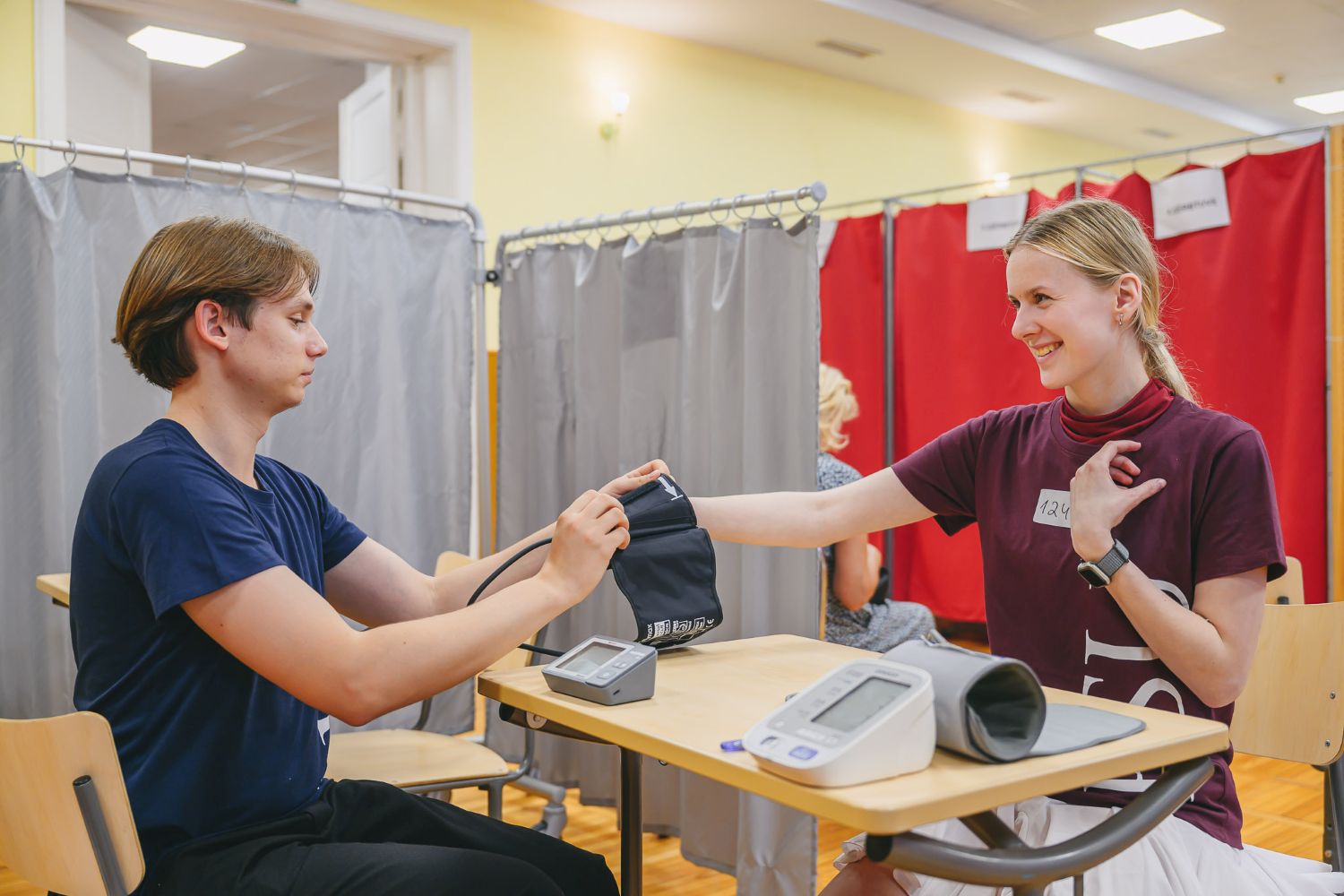
- body mass and blood pressure measurements;
- measurements of lung vital capacity;
- digital photography;
- completion of a questionnaire on participants’ health status and connection to their place of residence.
Adult participants were also offered the opportunity to provide blood samples for inclusion in a biological sample collection, which will support future genetic research (such as the analysis of taste receptor genotypes and dietary habits).
The study found that women in Kurzeme were significantly more active than men, with the highest level of participation observed in Liepāja. Participants ranged in age from 11 months to 91 years.
The researchers particularly highlight the blood pressure data: elevated blood pressure was found in 70% of men and 56% of women.
The data collected will be used to create a social profile of the region and to analyse various health-related factors,
including:
- the relationship between chronic diseases and body measurements;
- the functional status of the musculoskeletal system;
- cardiovascular health;
- respiratory health;
- changes in the body over the course of a lifetime.
Among the initiatives included in the project is a comparison of anthropometric data with historical measurements from 1936–1938 to identify changes that have occurred over time.
Related news
 RSU hosts CNRS/EHESS Centre for Russian, Caucasian, East European and Central Asian StudiesResearch, International Cooperation