Providing doctoral students with knowledge and a sense of security: RSU doctoral thesis supervisors share their experience
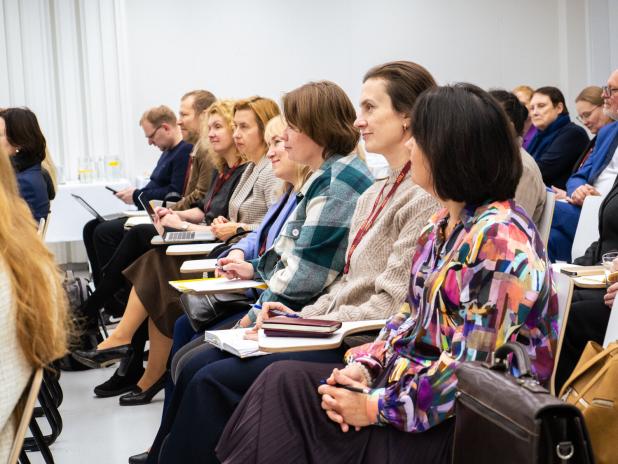
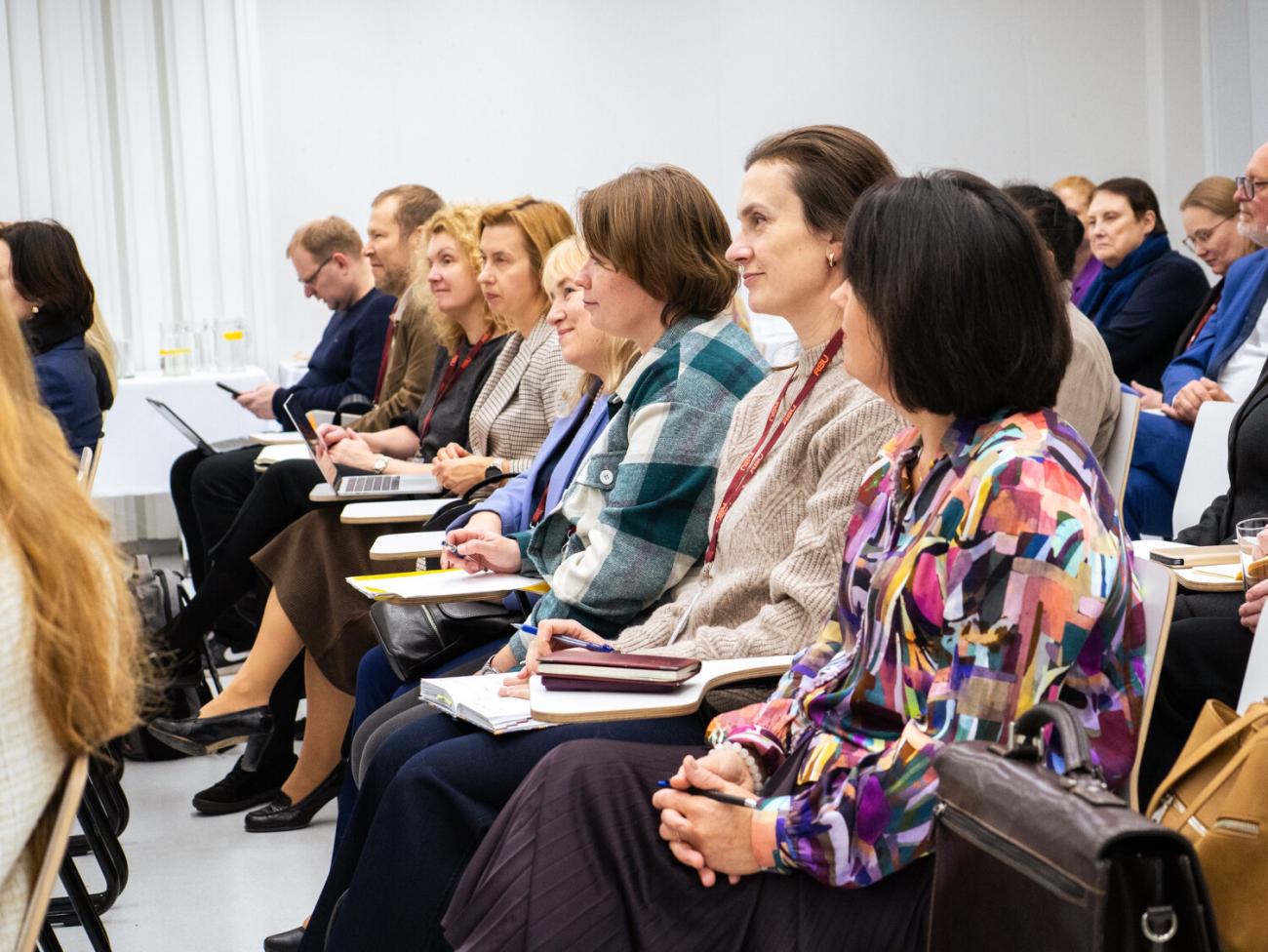
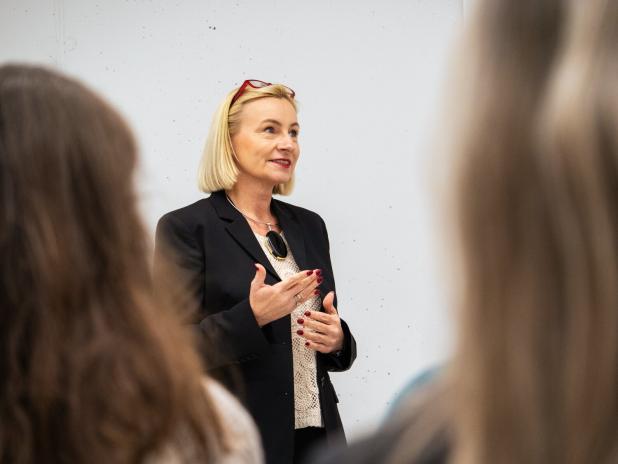
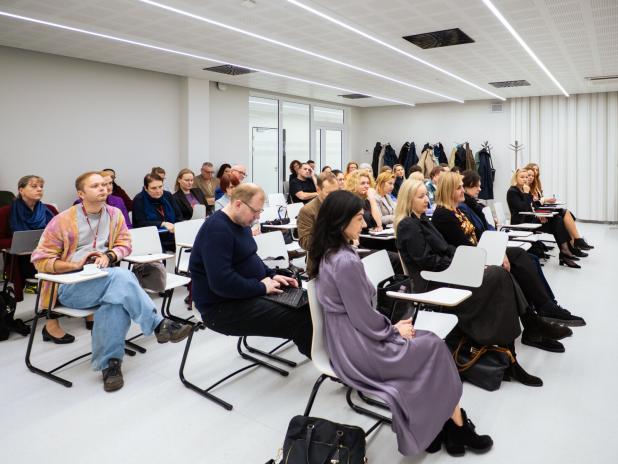
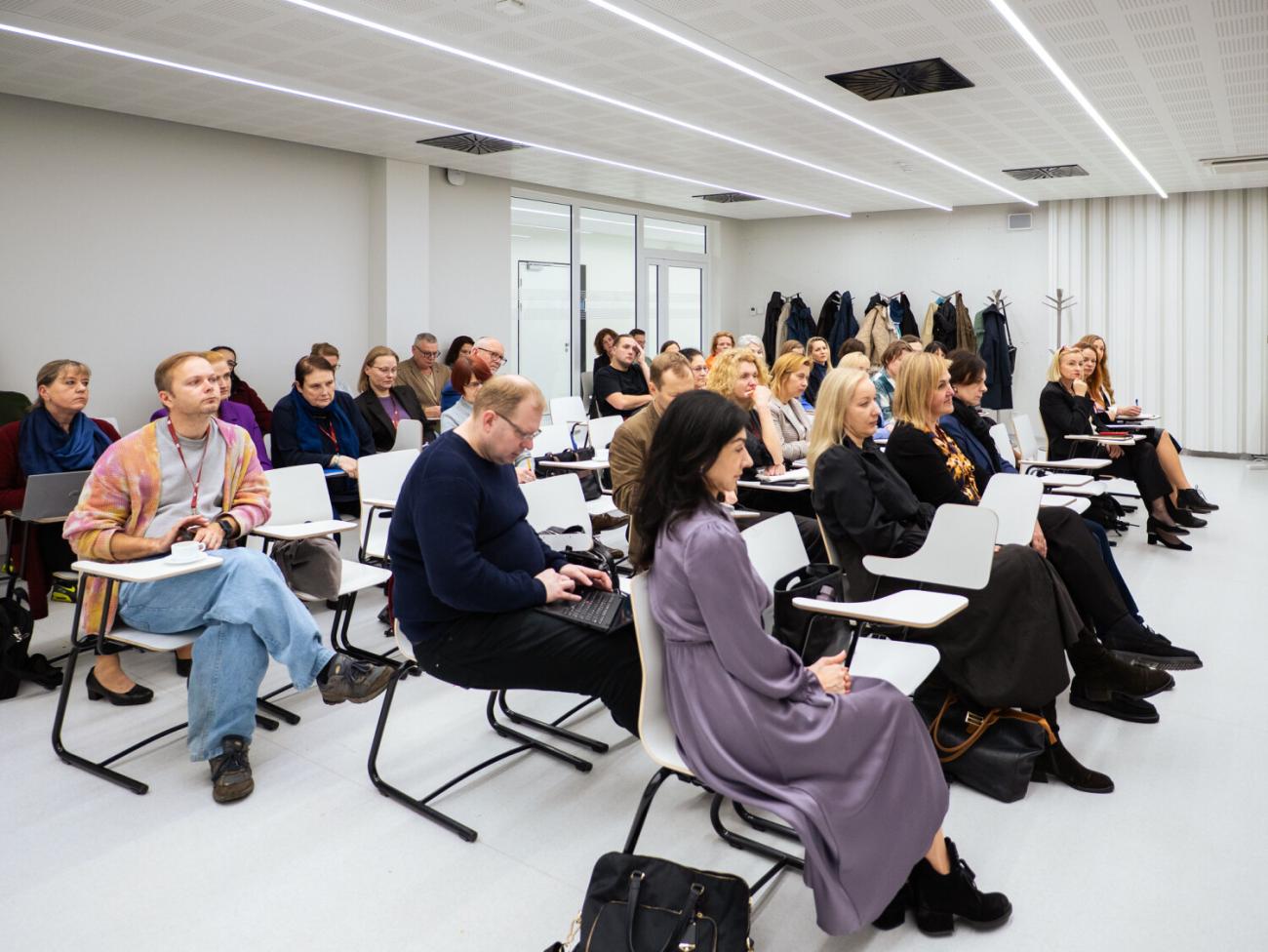
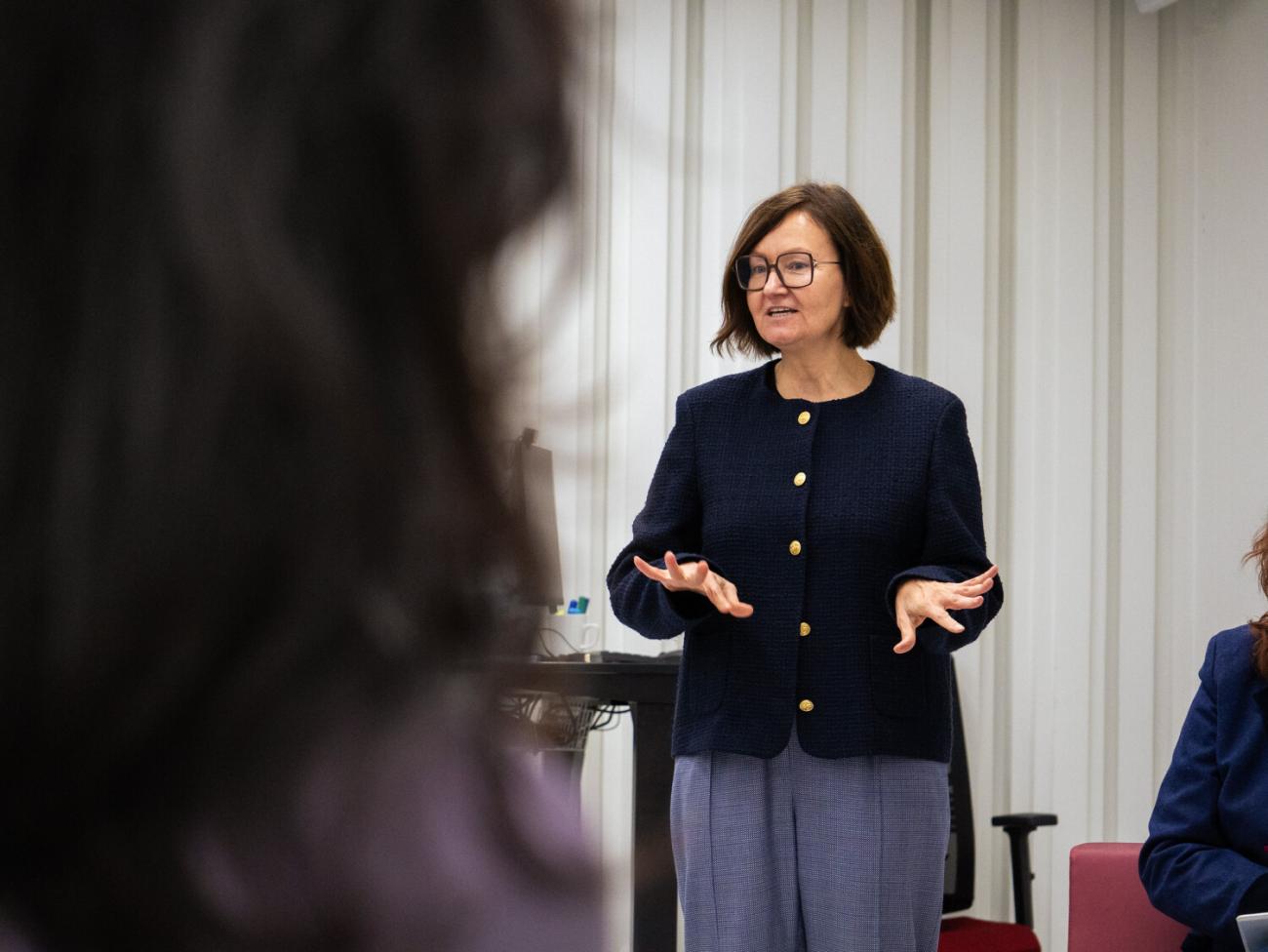
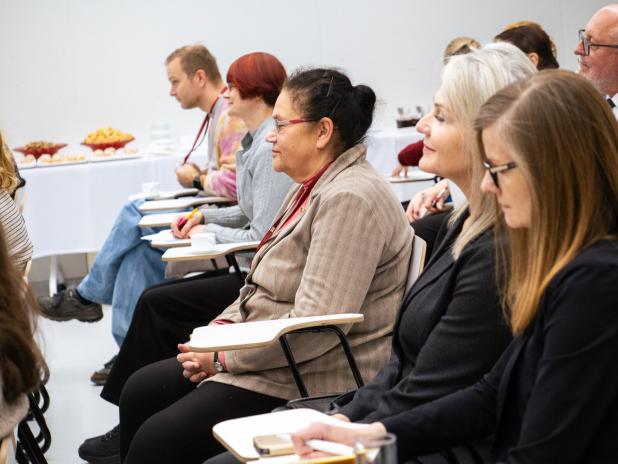
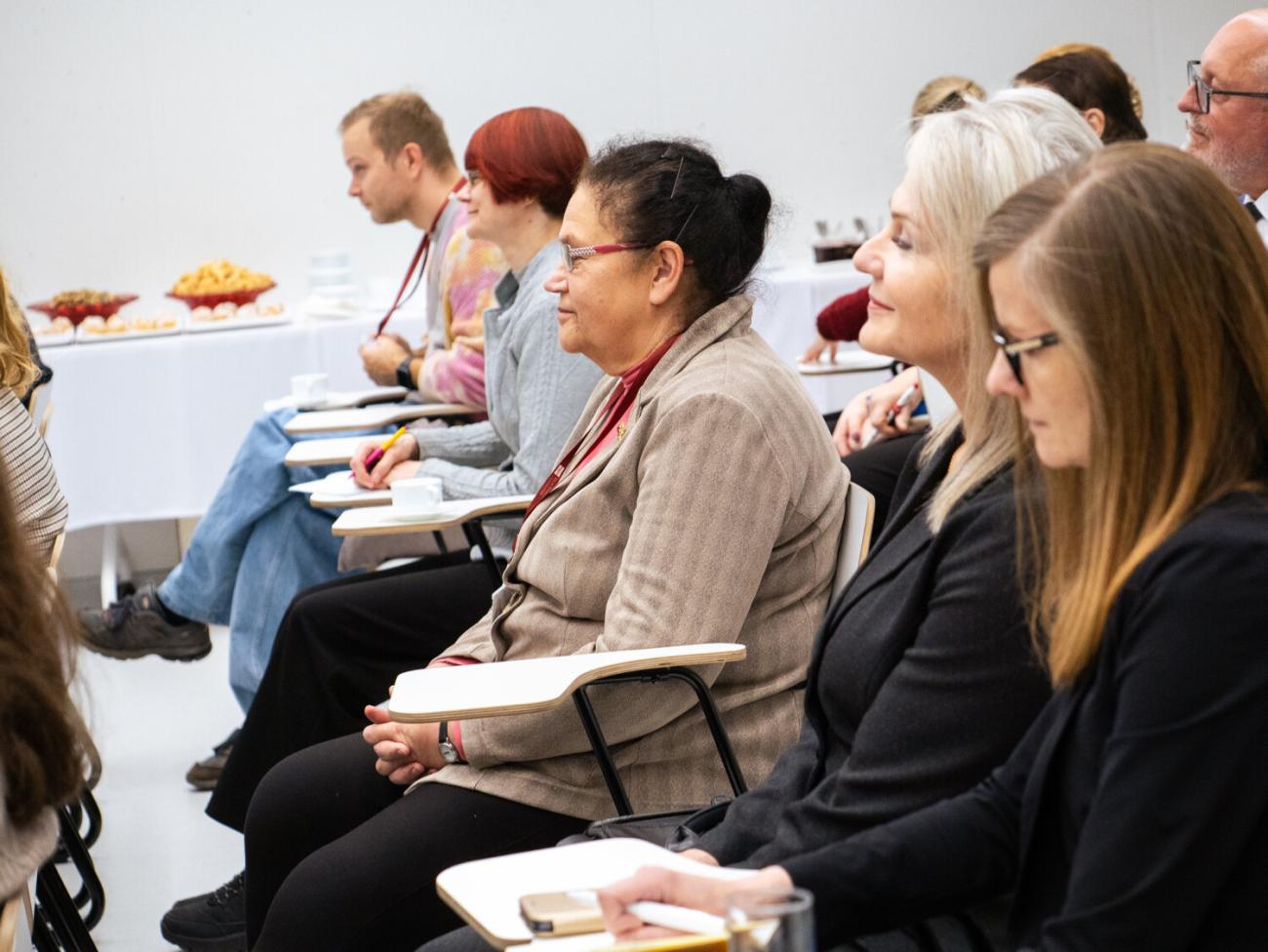
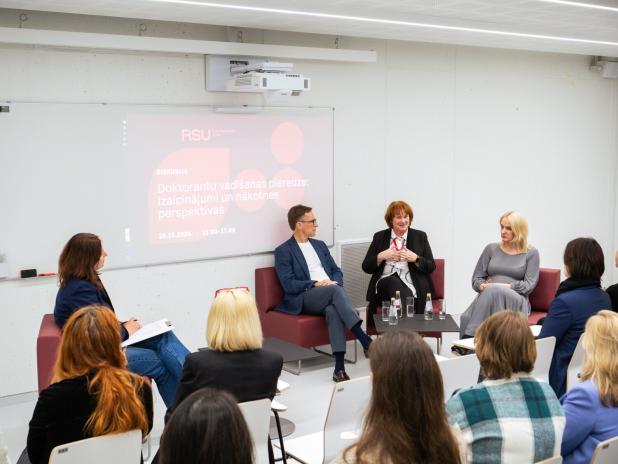
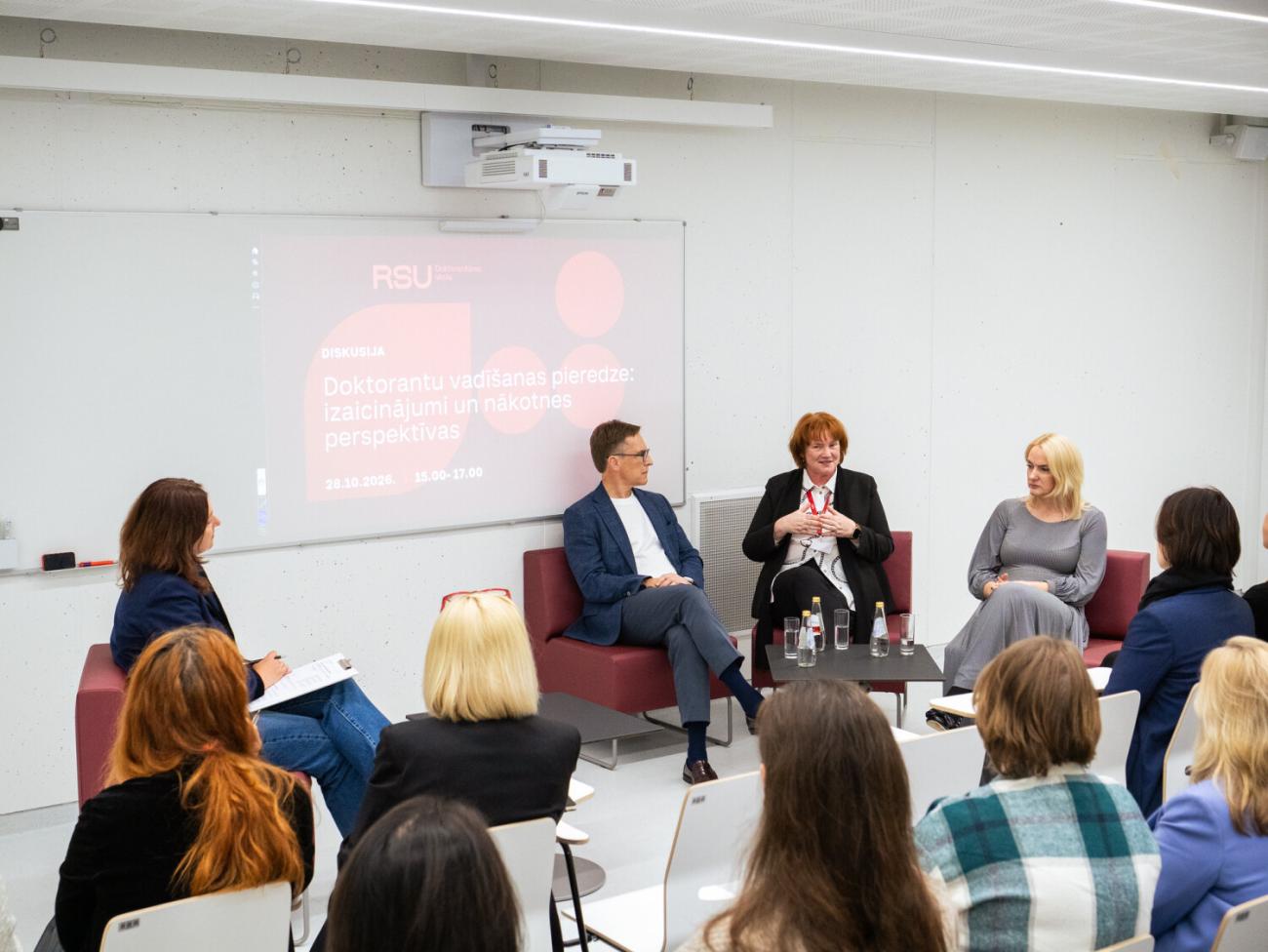
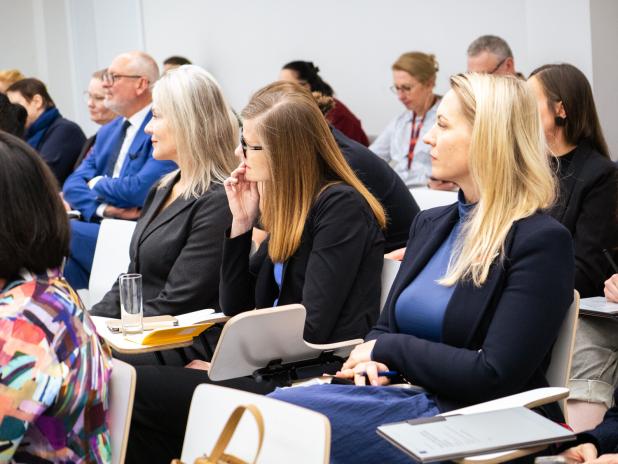
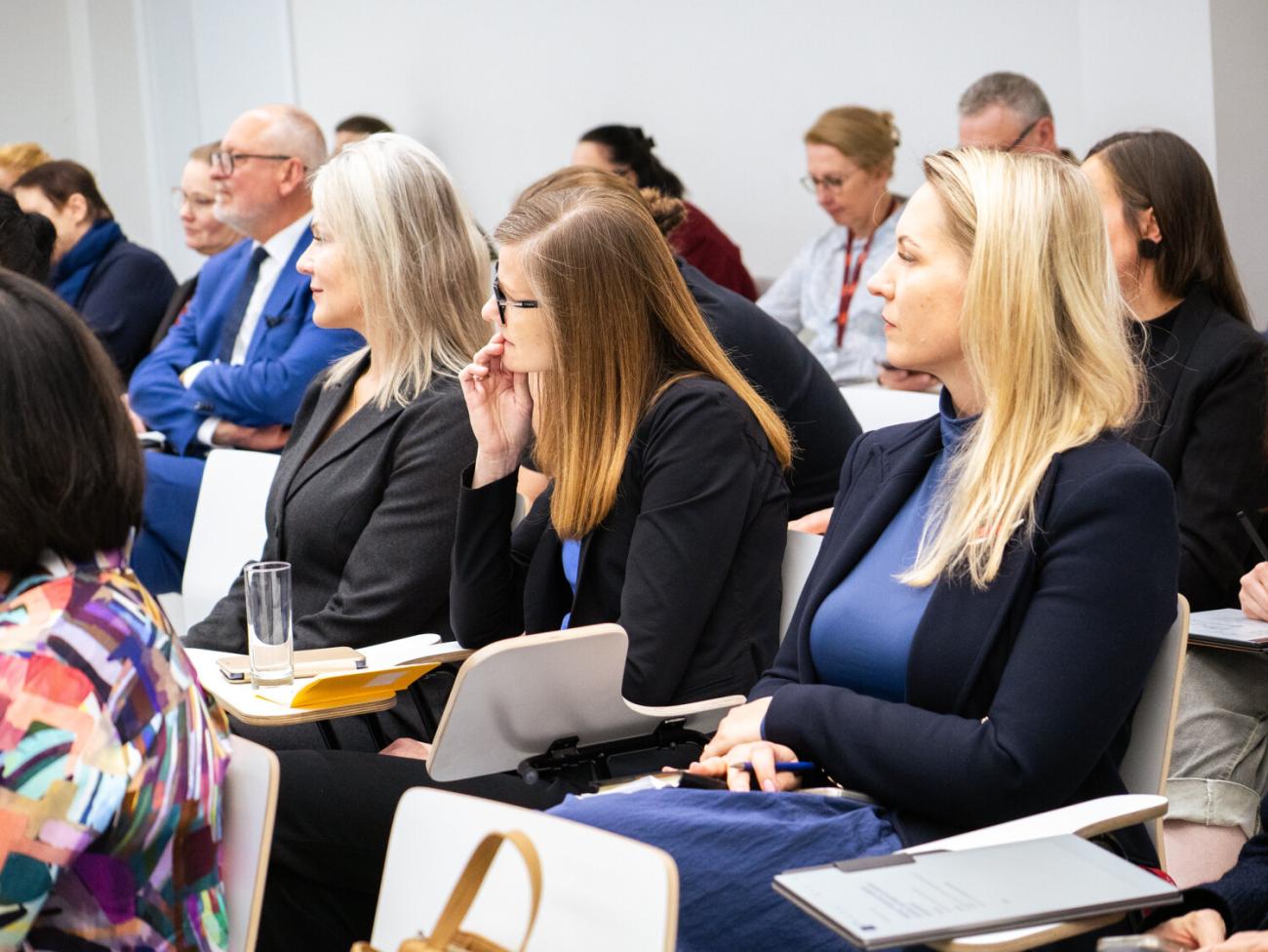


Should a doctoral thesis supervisor constantly encourage and urge their student to work, or will an early-career researcher be more productive if they are 'left in peace'? Are two doctoral thesis supervisors necessary, and is a mentor required? How can a doctoral student’s enthusiasm be balanced with the practical realities of research? These and other questions were discussed by doctoral thesis supervisors at Rīga Stradiņš University (RSU), who gathered for the first time at a specially organised informal event. They exchanged experiences, insights and practical advice on supervising doctoral theses. There was no shortage of humour in the discussions either.
The idea for the meeting emerged from an effort to better understand the needs of doctoral thesis supervisors. At the beginning of the event, Prof. Dace Bandere, Dean of the Department of Doctoral Studies, said: ‘In spring, doctoral thesis supervisors from RSU and the University of Latvia took part in a survey in which they assessed their experience and the challenges they face in their everyday work. The survey and subsequent discussions revealed an interest in exchanging experiences. This is why we decided to organise this informal meeting at RSU.’
Prof. Bandere emphasised the importance of the role of a doctoral thesis supervisor in the life of an early-career researcher.
One doctoral student even compared choosing a doctoral thesis supervisor to choosing a partner for several years.
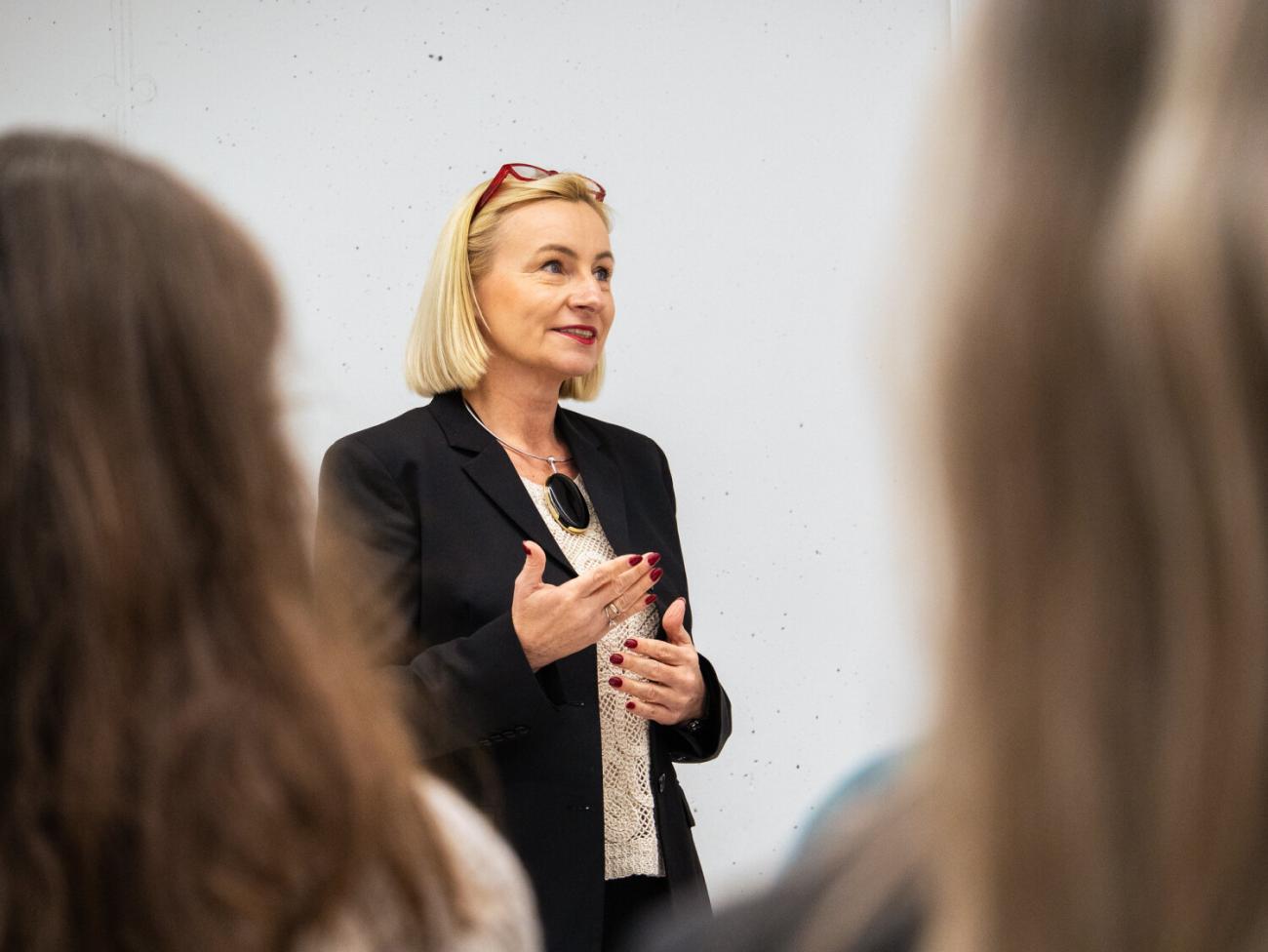
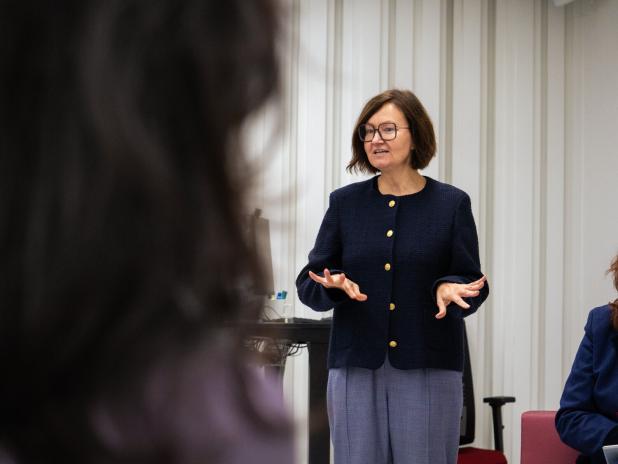
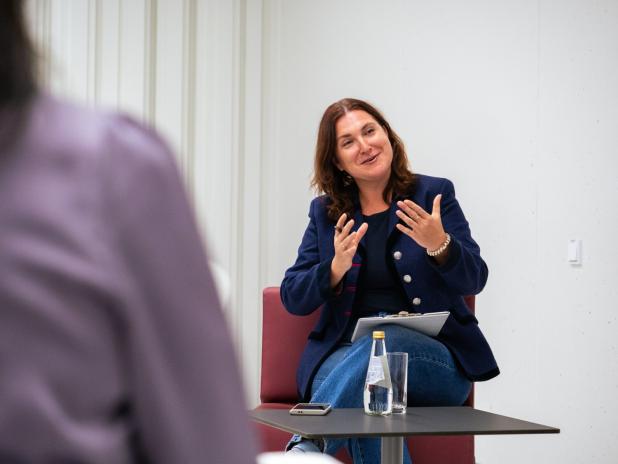
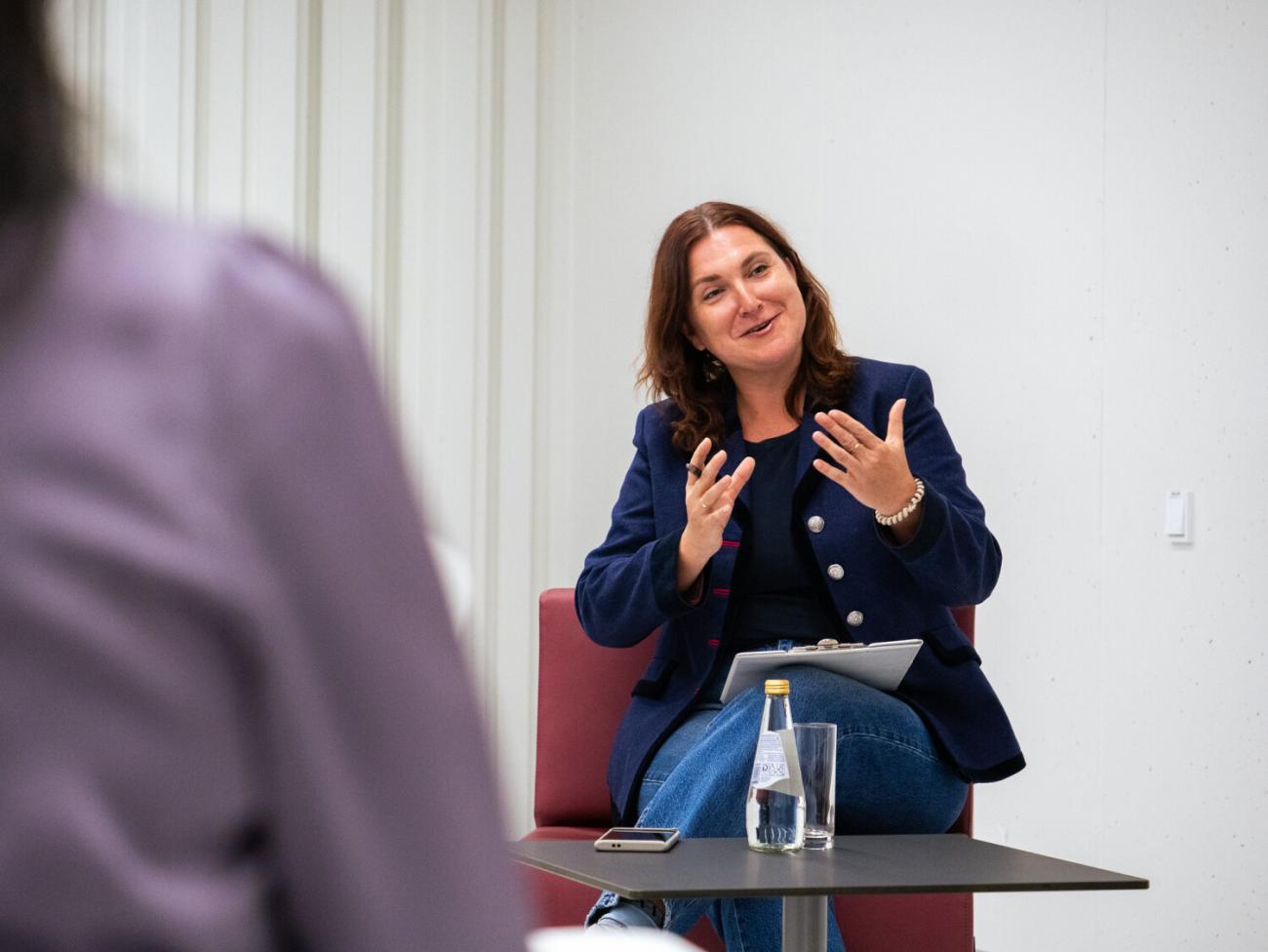
The discussion was moderated by Ieva Puzo, Dean of the Faculty of Social Sciences. The main participants in the discussion were Prof. Elmārs Rancāns, Head of the RSU Department of Psychiatry and Narcology; Prof. Maija Dambrova from the Department of Applied Pharmacy at the RSU Faculty of Pharmacy; and Assoc. Prof. Anda Ķīvīte-Urtāne, Director of the Institute of Public Health. Other doctoral thesis supervisors also took part. Here are some of the insights that emerged.
Defining roles from the start of doctoral studies
One of our objectives as a research university is to nurture the next generation of scientists by encouraging professionals to pursue doctoral studies and supporting them in successfully completing and defending their doctoral theses. How important is the role of a doctoral thesis supervisor in this journey?
Prof. Rancāns explained that the potential of a future scientist is often recognised already during their studies, for example, through participation in student research groups. The cooperation may continue during residency and gradually develop into a doctoral thesis idea. The professor encouraged colleagues not to take it personally if a potential doctoral student they have approached declines the offer of cooperation. He shared his own experience: ‘In 1996, as an inexperienced specialist from Latvia, I was approached at an international conference by a Swedish professor, who asked whether I would like to join his doctoral programme. At the time, I was very busy with healthcare and social activities, so I said: ‘I am honoured, but I must decline.’ The Swedish professor took it in his stride, while adding that he would not be available forever. Two years later, when I had more time for research, I contacted him to ask whether the opportunity was still open. And that is how I began my research in Sweden.
With this story, I want to remind you that a candidate you approach may not be ready at that particular moment. It may simply not be the right time.’
In turn, Prof. Dambrova emphasised that prospective candidates must be given time to consider whether they are truly interested in pursuing doctoral studies.
Sharing experiences, especially at the beginning of doctoral studies, is very important. Colleagues agreed that what may seem self-evident to a doctoral thesis supervisor may be unfamiliar to a prospective or new doctoral student. Therefore, it is important to show them the way forward: where to start and what steps need to be taken.
At the same time, even at the stage of preparing a doctoral thesis proposal, it is important to agree on the boundaries between the support provided by the supervisor and the doctoral candidate’s independent work. If the supervisor takes on too much of the work on the doctoral candidate’s behalf right from the start, the doctoral candidate may come to expect a similar level of involvement in the future.
Similarly, when choosing a topic, it is important to think several steps ahead. ‘We must be realistic – we need to consider what we will be able to achieve. We must offer doctoral students a meaningful topic that will benefit society. We must then assess whether it will be of interest internationally and whether the research will be publishable,’ advised Prof. Rancāns.
Assoc. Prof. Ķīvīte-Urtāne added that doctoral studies sometimes involve making difficult decisions that may be in the doctoral student’s best interests in the long term:
‘Sometimes, one has to make the decision not to delay things and devote seven years to doctoral studies just to realise a particular idea. Sometimes, the doctoral thesis supervisor needs to help the student “package their dream” into a realistic project and take a more pragmatic approach to their work.
The ideas can still be pursued after the doctoral studies have been completed.’ This way, doctoral students can complete their studies rather than having them drag on indefinitely.
One requires help every step of the way; the other must be left in peace
During the discussion, it was repeatedly noted that there is no single formula for successfully supervising a doctoral thesis. Doctoral students differ in terms of their previous experience, motivation and the level of support they require.
Prof. Dambrova emphasised the importance of communication between the student and supervisor. Based on her experience, it is important to establish at the beginning of the collaboration what kind of support a doctoral student expects to receive and how often they would like to be reminded of the tasks ahead.
For some, regular communication with their supervisor helps them maintain a steady work rhythm, while for others it may feel disruptive.
Therefore, the supervisor must be able not only to clearly communicate their expectations but also to listen to the doctoral student.
Assoc. Prof. Ķīvīte-Urtāne shared a practical solution that has significantly improved her cooperation with doctoral students. Initially, she adopted an approach that gave doctoral students considerable independence. However, over time, she realised that regular meetings were necessary. She now schedules at least one meeting per month with each doctoral student. This helps both parties monitor the progress of the research, identify any difficulties in good time and maintain momentum.
Prof. Dambrova recommended encouraging doctoral students to attend the thesis defences of other doctoral students. This allows them to familiarise themselves with the defence proceedings and gradually prepare for their own thesis defence.
She also emphasised that a doctoral thesis supervisor must create a sense of security for the doctoral student – the confidence that there is someone who will support them, offer help and provide an opportunity to discuss any questions or uncertainties.
At the same time, the participants in the discussion agreed that there may be circumstances beyond the supervisor’s control, such as a doctoral student’s prolonged illness.
One of the positive changes highlighted by the doctoral thesis supervisors was the availability of financial support for doctoral students. This allows them to devote more time and resources to their studies and research.
Two supervisors or a supervisor and a mentor
The discussion also addressed whether a doctoral student should have two thesis supervisors or a supervisor and a mentor. Participants acknowledged that, in such a model, the roles of the two specialists could complement one another in terms of both knowledge and experience, as well as their approaches to providing support. One might be more demanding, while the other could offer the doctoral student more support and encouragement.
The discussion was also joined by RSU Rector Prof. Aigars Pētersons, who supervises doctoral students himself. He noted that having two supervisors is a contemporary approach that can help doctoral students better prepare for their thesis defence.
The Rector emphasised that there may be times during doctoral studies when motivation wanes and the support of a single supervisor may not be enough. As a particularly successful example, he cited Professor Māra Pilmane, describing her as “a talented rescuer of those who are floundering, capable of bringing them back to science”.
At the same time, it is important to remember that every doctoral student has their own goals and sources of motivation. This was vividly illustrated by another example shared by the RSU Rector.
He spoke about a doctoral student who embarked on their doctoral studies at the age of 73.
The experienced paediatric intensive care specialist had no previous experience in scientific research but was determined to write a doctoral thesis. Over the course of two and a half years, he produced three international scientific publications and successfully defended his thesis.
When his supervisor subsequently raised the possibility of continuing his academic career, the doctor, who had recently been awarded his doctoral degree, replied that he had already achieved what he had set out to do and retired.
This example clearly illustrates that not all doctoral students plan to pursue an academic career after obtaining their degree. It is therefore important for supervisors to understand each doctoral student’s individual goals.
Practical tips for more successful collaboration
Colleagues also spoke about research teams in which doctoral students, residents and students from different years of study work together. Early-career researchers learn from their more experienced colleagues and, in time, become a source of support for the youngest students themselves.
Suggestions were made to improve the exchange of information between doctoral students and supervisors and encourage continued experience-sharing. Participants also shared some practical tips.
For example, Tenured Professor Egils Stalidzāns suggested making a note of ideas and points discussed after each meeting. This helps maintain continuity in the collaboration, ensuring that doctoral students do not feel at their next meeting that they are meeting “a different doctoral thesis supervisor” who is not building on what was discussed previously.
Meanwhile, Assoc. Prof. Ņikita Bezborodovs from the Department of Psychiatry and Narcology encouraged learning from the experience of the University of Helsinki, where doctoral students are given greater flexibility, for example, in choosing study courses and planning their research publication schedules.
Prof. Dambrova emphasised another important aspect:
doctoral students must be given the opportunity not only to acquire knowledge in their research field but also to develop skills that will be essential for their future academic careers.
These include preparing and submitting scientific publications, drafting project proposals and collaborating with other researchers.
So that no one has to face their challenges alone
One of the most valuable outcomes of the event was simply the opportunity to meet and connect.
Doctoral students sometimes admit that they feel alone in their research and the challenges it brings. They are therefore warmly encouraged to attend the RSU Doctoral School, which organises Doctoral Student Afternoons, providing opportunities to meet other doctoral students in person and learn practical skills that are useful in the research process. They can also join the Latvian Association of Young Researchers.
However, doctoral thesis supervisors can experience similar feelings of isolation. This makes the exchange of experiences particularly valuable, as it helps them realise that others face similar difficulties and provides an opportunity to seek solutions together.