RSU scientists develop AI disinformation-tracking tools


Photo credit: RSU
At Rīga Stradiņš University (RSU), the international project PROMPT has concluded, during which innovative artificial intelligence (AI) tools were developed to identify manipulative techniques and narratives used in disinformation in the digital environment.
The aim of the PROMPT project (Predictive Research on Misinformation and Narratives Propagation Trajectories) was to develop AI tools that help journalists, researchers, and media literacy experts identify and analyse the rhetorical and emotional persuasion techniques used in the creation of disinformation, applying large language model and narrative analysis technologies.
‘When conflicting narratives appear about France and the United Kingdom supplying nuclear weapons to Ukraine to justify Russia’s ongoing attacks on Ukraine, it is extremely difficult to make sense of such information.
The new disinformation analysis tools help us better understand reality and mitigate the impact of misleading communication campaigns.
As disinformation becomes increasingly sophisticated and emotional, fact-checking alone is no longer enough. Artificial intelligence tools make it possible to analyse both misleading narratives and persuasion techniques tailored to specific cultural contexts. Thus, research helps not only to detect manipulation but also to strengthen society’s resilience against it,’ emphasises Vineta Kleinberga, Researcher at the RSU Faculty of Social Sciences and Scientific Project Manager.
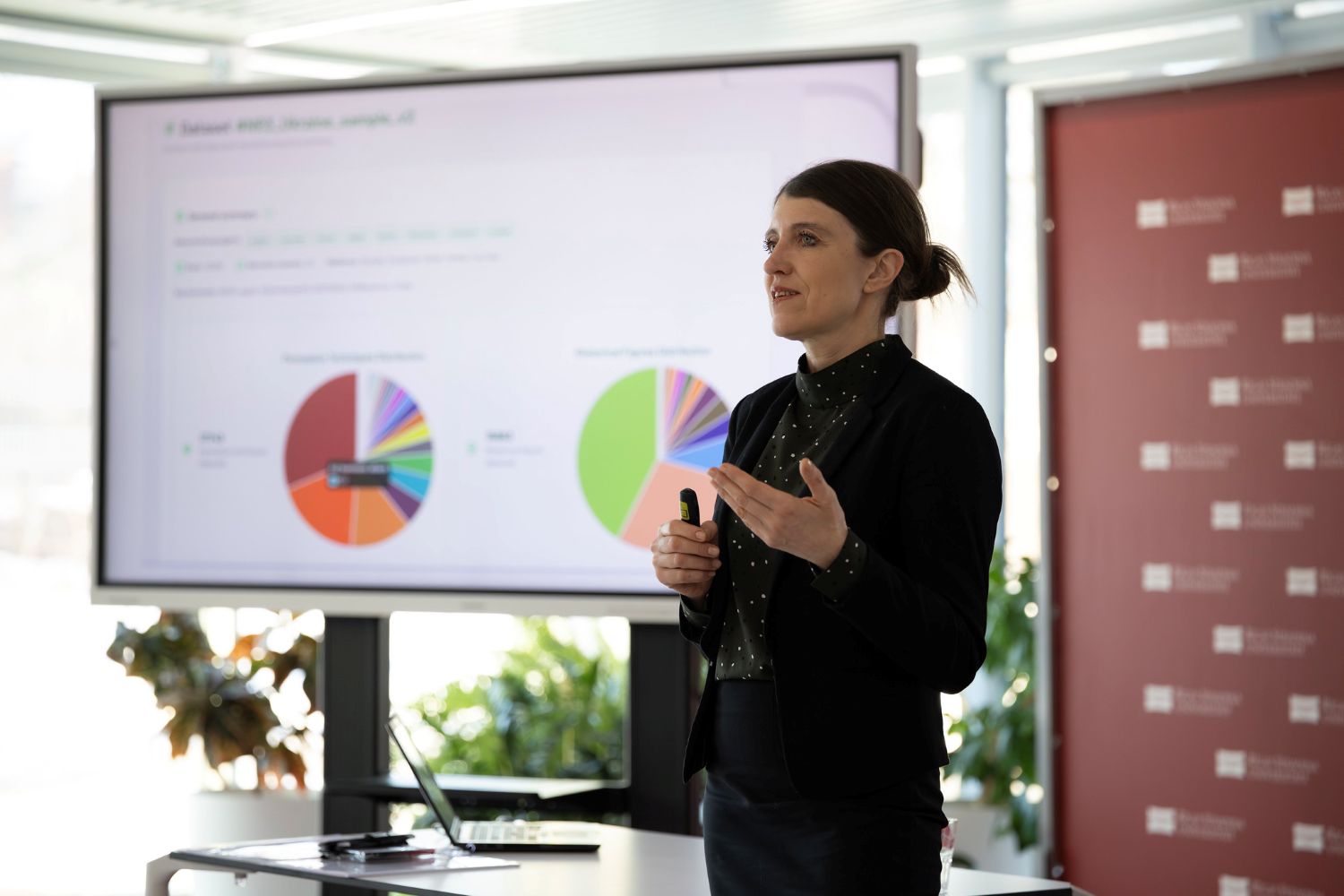
The AI tools were developed under the leadership of the France-based company Opsci.ai, with participation of RSU researchers - Vineta Kleinberga, Prof. Anda Rožukalne, Lāsma Šķestere, Elza Lāma, and doctoral students Beāte Livdanska and Miervaldis Karulis. Work on the international research project PROMPT began in September 2024. In total, nine partners from academia, the media sector, and the technology industry were involved in the implementation of this project.
Artificial intelligence tools developed for analysing disinformation
Three AI tools were developed within the project: PROMPT Wikipedia Sensitivity Meter and PROMPT Wikipedia Sensitivity Barometer are already available to users, while PROMPT Disinfo Scanner and Corpus Analyser is still in the final stage of development.
The tools developed as a result are capable of analysing textual data on social media and other digital channels in eight languages, including Latvian, making the identification of disinformation faster and more accurate. They also make it possible to detect how disinformation networks are being formed and how disinformation actors exploit editable information platforms such as Wikipedia to introduce misleading content. The AI tools are based on an interdisciplinary approach, combining communication science, linguistics, data analytics, and artificial intelligence technologies.
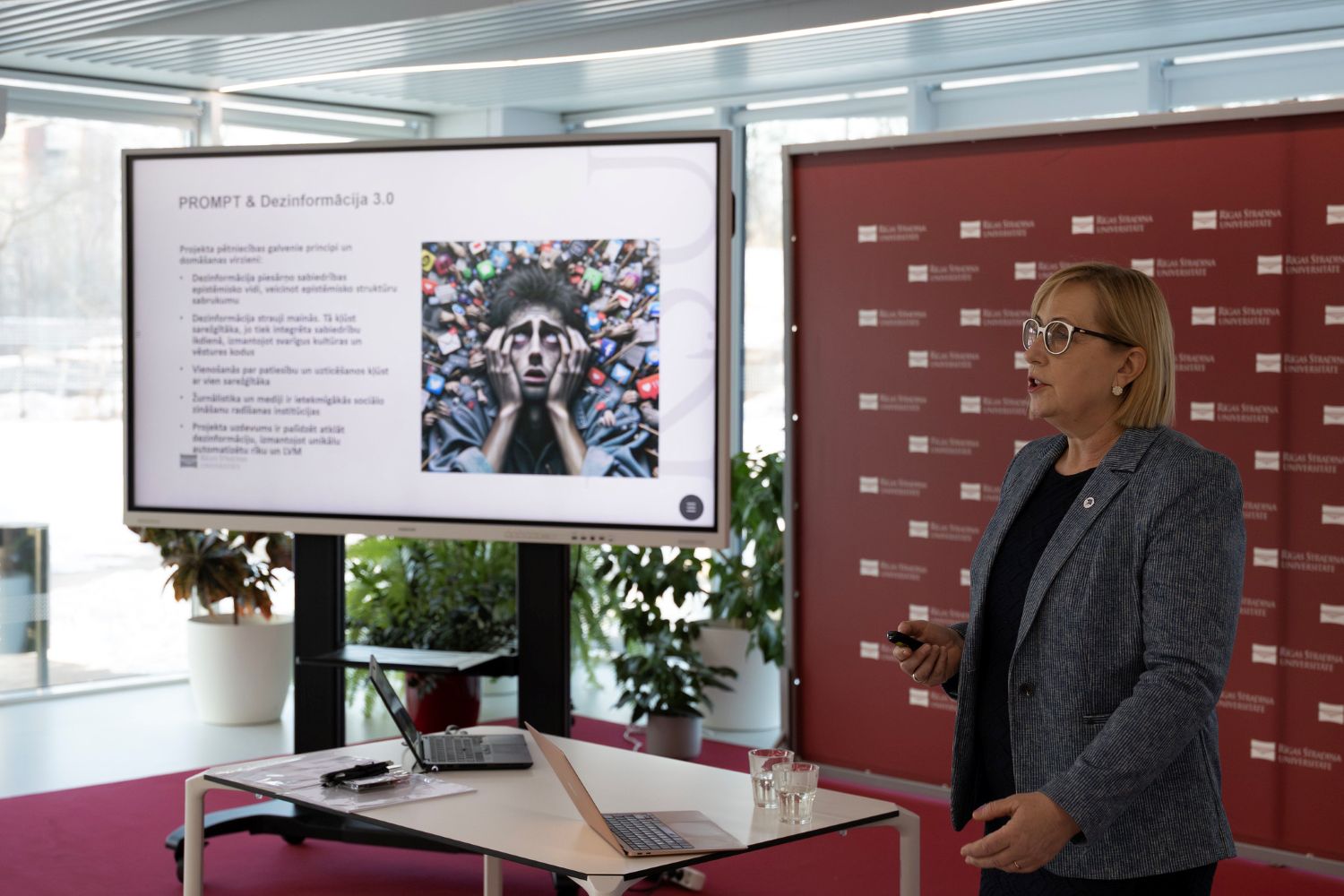
The disinformation analysis methodology developed by RSU
RSU researchers have made a significant contribution to the project by developing a detailed disinformation analysis methodology, which serves as the foundation for training an AI model. The methodology is based on an extensive code book containing more than 30 disinformation categories and over 200 codes.
The Predictive Research on Misinformation and Narratives Propagation Trajectories (PROMPT) project is co-funded by the Directorate-General for Communications Networks, Content and Technology of the European Commission (LC-02629302-PROMPT – CNECT/2023/7387407).


Related news
 RSU hosts CNRS/EHESS Centre for Russian, Caucasian, East European and Central Asian StudiesResearch, International Cooperation