World-renowned neuroscientist Claudio Cuello visits RSU


On 23 March, Rīga Stradiņš University (RSU) welcomed Prof. Claudio Cuello (McGill University, Canada), one of the world’s leading researchers of Alzheimer’s disease and other neurodegenerative processes. The visit took place at the Institute of Public Health, bringing together a wide range of researchers, teaching staff, and clinical specialists from various Latvian scientific and medical institutions.
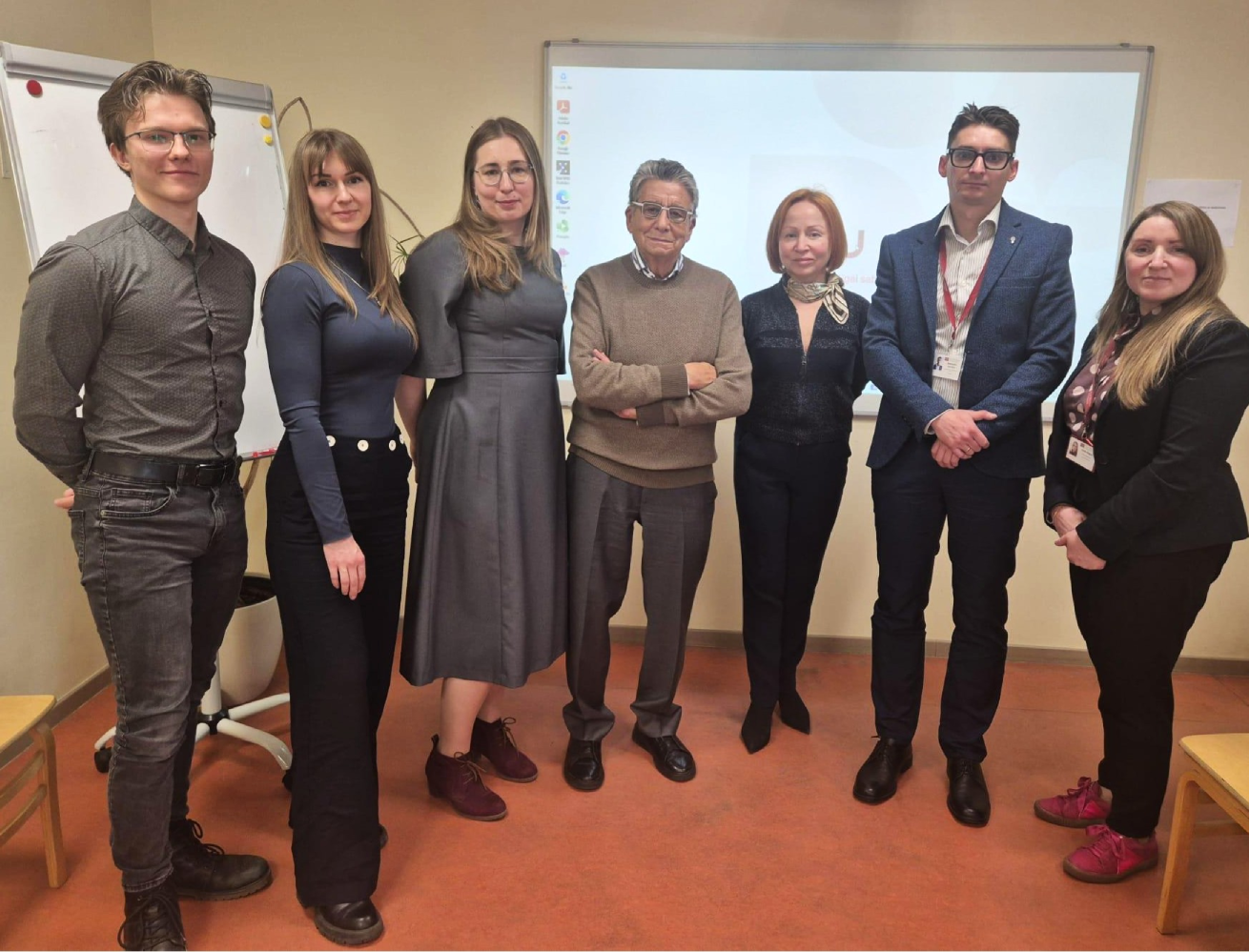
During the visit, the professor delivered a scientific lecture on the latest research into the pathogenesis of Alzheimer’s disease and learned about the work conducted by RSU researchers in the fields of early diagnosis, biomarkers, and public health.
In his presentation, the professor focused on the metabolic pathway of nerve growth factor (NGF) – a process that is critical to the health of the brain’s cholinergic neurons and is therefore closely linked to memory, attention, and learning. These neurons are among the first to be affected by neurodegenerative changes.
The professor explained:
- that in the early stages of Alzheimer’s disease, the conversion of pro-NGF into biologically active NGF is disrupted;
- these disruptions lead to the atrophy of cholinergic synapses;
- and that these, in turn, cause early changes in cognitive abilities that can be detected even before clinical diagnosis.
During the lecture, data from various internationally significant cohorts were presented, including individuals with Down syndrome, the Chicago Religious Orders Study, and Colombian families with early-onset Alzheimer’s disease, in which potential biomarkers for the early stages of the disease have been identified.
During the meeting, there were extensive discussions on Latvia’s experience in:
- research on early biomarkers – EEG, MRI, genetic markers;
- the development of cognitive screening tools;
- the potential for introducing blood biomarkers in Latvia;
- the JADE Health, in which RSU leads a work package on health literacy interventions in the areas of dementia and stroke, as outlined by Larisa Savrasova.
Early-career researchers and doctoral students presented their projects to Prof. Cuello, focusing on the importance of cognitive reserve, early diagnostic methods, and the development of new combinations of multimodal biomarkers.
During the discussions, particular emphasis was placed on:
- the latest disease-modifying therapies and their effectiveness;
- the prophylactic potential of low-dose lithium;
- the possibilities of gene therapy and the use of viral vectors;
- complex biological mechanisms that influence disease progression.
The professor commended the research directions and knowledge of Latvian early-career researchers, emphasising that RSU has established a promising and interdisciplinary team that can significantly contribute to research into neurodegenerative diseases.
The participants agreed to continue discussions regarding:
- joint research in the field of NGF metabolism and early biomarkers;
- international project proposals;
- comparison of clinical data and development of methodology;
- involvement of doctoral students and early-career researchers in international research groups.
Prof. Cuello is one of the world’s leading experts on the molecular mechanisms of neurodegenerative diseases. His work with Nobel laureate Rita Levi-Montalcini has significantly advanced our understanding of nerve growth factor and its role in brain health. His research forms the basis for new biomarker and therapeutic approaches for the early diagnosis of Alzheimer’s disease.
Related news
 Women in research are assessed on achievements, men on potential: RSU explores inequality in science Research