Valdis Dakuļs: risk plays an important role in choosing medical residency today


Writer: Linda Rozenbaha,
Public Relations Unit, RSU
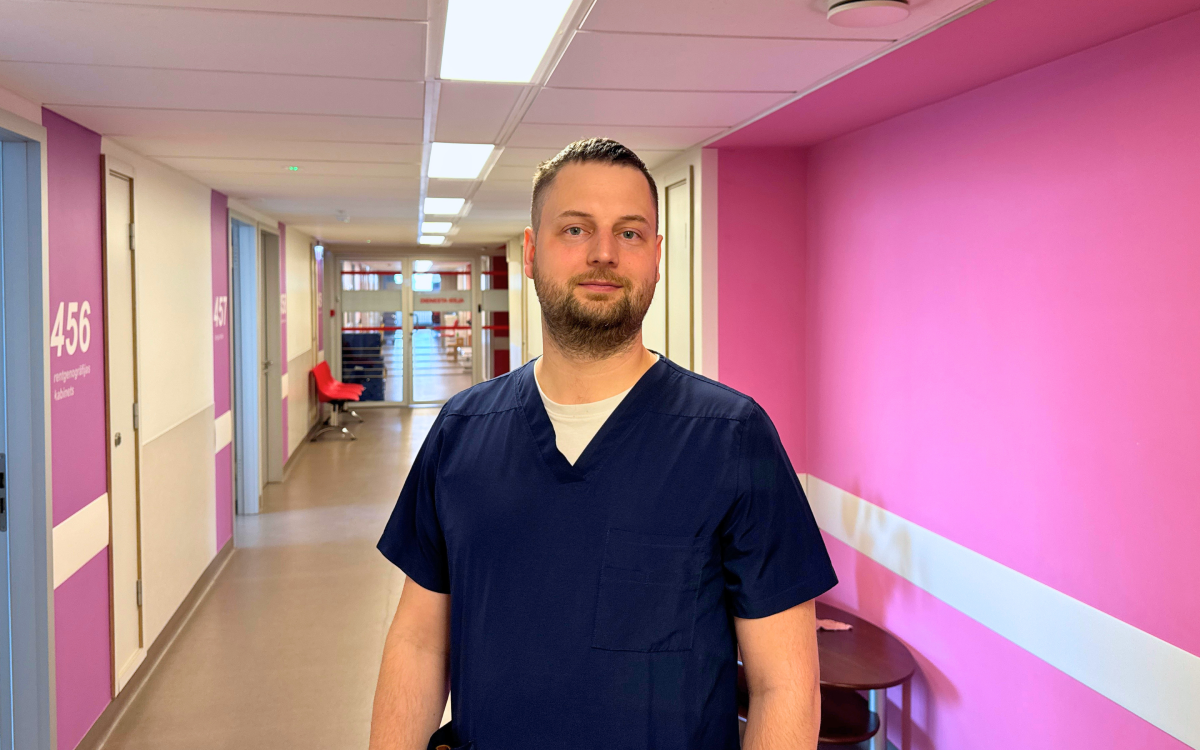
We continue our series of articles featuring residents and residency graduates of Rīga Stradiņš University (RSU). Valdis Dakuļs, a RSU graduate, recently completed his second residency and now works as a fully qualified internist and occupational health physician at Rēzekne Hospital. He decided to pursue a second residency when his first was nearing completion, with the aim of diversifying his skills and making a more versatile contribution to regional hospital practice.
When and how did you realise that you wanted to become a doctor?
I think I only realised I wanted to become a doctor in the 12th grade. I was very good at chemistry at school and initially considered studying chemistry at university, while also seeing medicine as an alternative path. However, through participation in various academic Olympiads in Rīga, I realised that chemistry did not fully appeal to me, whereas the medical profession, which I got to know through job shadowing, truly fascinated me. It was an exciting experience that made me realise I wanted to become a doctor.
Whenever I meet pupils at school, I encourage them to use job shadowing as an opportunity to explore and “try on” a profession.
How did you choose your medical specialty?
Risk plays an important role in choosing a medical residency today, as there is always a chance of not being accepted through the highly competitive selection process. This influenced the decisions of several of my fellow students and, to some extent, my own choices as well. In the year when I had to choose my residency specialisation, there were, if I remember correctly, around 15 applicants competing for just two state-funded places in endocrinology, which was my second choice after internal medicine.
I still remember how one of my groupmates already knew by the fifth year of her studies which specialty she wanted to pursue and even where she planned to work after completing her residency. That certainty gave her peace of mind about the future and spared her the unnecessary anxiety that I noticed among some of our other groupmates. It also made me reflect on my future path.
At the time when I began my residency, Cabinet Regulations provided a 30 % salary supplement for residents training under a contract with a regional hospital. I was eager to take advantage of this opportunity, so towards the end of my fifth year I visited several regional hospitals, both individually and during organised trips with representatives of the Latvian Medical Students’ Association. These visits helped me realise that I see my future – and want to experience it – at Rēzekne Hospital.
Following discussions with the hospital management, individual cooperation and scholarship agreements were concluded. This gave me a clear sense of direction and stability about the future.
The second stage in choosing a specialty was, of course, the residency competition itself.
Because the selection criteria were known in advance, I worked purposefully to achieve the highest possible score, and this ultimately helped me secure a place in residency training.
Eight years have passed since I began my residency in internal medicine, and I still do not regret my choice. I am very happy to work in this profession.
I also have a second specialty – I have completed a residency in occupational health and occupational diseases. I began this second residency immediately after finishing my internal medicine residency. During the final year of my internal medicine residency training, I increasingly felt the need to continue my education in order to broaden my skills and expand opportunities available to me in a regional hospital setting. After discussing this with the hospital management, we came to the conclusion that residency training in occupational health would not only be personally interesting for me, but also valuable for the hospital. As a result, I applied for the specialty and successfully passed the competition.
How did you prepare for and enrol in the residency programme?
I was very purposeful in choosing the medical institution where I wanted to continue my residency training. In my case, that was Rēzekne Hospital. A major part of the preparation process involved collecting residency points through participation in student research groups and writing research papers. At the time, it seemed somewhat funny to me that internationally cited research publications were necessary in order to secure a residency place and eventually work in a regional hospital. Nevertheless, I was quite successful in collecting the required points.
One of the biggest adventures was, of course, the residency interviews. I believe I also performed well there: I received a positive evaluation from the admissions committee and secured a State-funded residency place in internal medicine at RSU.
Preparing for residency in occupational medicine was a completely different experience. By then, I was no longer an undergraduate student, but a resident approaching the completion of my first specialty training. The selection criteria, however, were the same as for undergraduate students applying for residency. Although some details had changed over the course of five years, the main requirements remained unchanged – scientific activity, academic performance, participation in student research groups, etc.
Although the specialty is less competitive, the number of applicants initially exceeded the available state-funded places. Shortly before the interviews, the state-funded places were redistributed, and therefore I was able to secure a residency in occupational medicine.
Afterwards, there was another challenge: as the residency cycles in both specialties largely overlapped, it was necessary to undertake a process of aligning the training programmes. This allowed the required duration of training in occupational medicine to be reduced to two years.
What is the reality of residency?
The reality of residency is certainly different for every resident, depending on their individual goals – what they aim to achieve and what they want to learn. The heads of the programmes also play a very important role in shaping the experience. There is no single universal recipe or scenario for how a resident’s daily life unfolds. Residency is a full-time job, but at the same time it is also a learning process, studies at the university.
My residency started off slowly and was perhaps more challenging than for others, as I had no prior volunteer experience. As a result, it took some time to adapt to the daily work of the department. Gradually, I settled into the rhythm, began to understand the processes, and developed my clinical thinking. Soon after, my practical skills were further strengthened through on-call work at Rēzekne Hospital.
It seems that during my first three years on call, almost every shift brought a new and previously unseen situation.
Such experiences may be less common today, yet I still occasionally encounter something unique and previously unseen. It is a reminder of how dynamic the field of medicine is, and how constantly present and attentive one must be.
The daily residency experience is not limited to on-call duties; it also includes clinical work in the department, as well as academic learning in classrooms, group settings, or individually. Depending on the chosen specialty, there may be no academic cycles at all. During my residency in internal medicine, there were relatively few such academic cycles. However, during my second specialty training in occupational medicine, there were significantly more academic cycles that did not involve daily work with patients. This experience also helped me develop a stronger understanding of theory and the legislative framework – areas that I did not have enough time to fully explore during my internal medicine residency, but which are especially important in the field of occupational health and occupational diseases.
While working in different departments, I felt a difference between a university hospital and a regional hospital.
It seems that during my first three years on call, almost every shift brought a new and previously unseen situation.
Such experiences may be less common today, yet I still occasionally encounter something unique and previously unseen. It is a reminder of how dynamic the field of medicine is, and how constantly present and attentive one must be.
In a regional hospital, I saw significantly more opportunities to take responsibility, work independently, and make clinical decisions.
Although there were always colleagues available to discuss patient cases with, I felt that I had more influence in clinical decision-making than is often the case in university hospitals, as my colleagues trusted me. University hospitals tend to have a larger proportion of residents, which naturally makes the work more team-oriented. In regional hospitals, the number of residents on a daily basis is smaller, creating greater opportunities for individual experience. Everyone has something that suits their development better and is more necessary for their growth. As I said, there is no single recipe for becoming a specialist. This was my experience.
My second year of internal medicine training was interrupted by the COVID-19 pandemic. At that time, I had rotations at Rēzekne Hospital, and had already established my family life there, so I wanted to stay in the region during the pandemic. I continued working in COVID departments. During those years, there were fewer cycles in Riga than there would have been under normal circumstances due to the impact of the pandemic. It affected the organisation of certain cycles, and some of them were recognised as equivalent. However, in my opinion, the quality of my residency education did not suffer. On the contrary, it provided me with a different kind of experience and contributed to my personal growth.
What surprised you most during residency?
What surprised me most was the wide range of experiences I encountered during residency. The attitude and relationship with the supervising doctor play a significant role – both on the first day of the cycle, when initial introductions take place, and throughout the following weeks of close collaboration and shared clinical work. For some residents, this becomes a highly valuable experience that provides substantial knowledge and professional growth. At the same time, I have witnessed a case where a resident experienced significant difficulties in this area due to communication challenges, to the extent that he considered leaving the residency programme. However, in my experience, such cases are rare.
I was also surprised by how many opportunities there are within a relatively short period of time to develop as a person and build self-confidence, particularly in relation to making independent clinical decisions as a doctor. I especially felt this during the pandemic period.
As doctors, we need to continuously develop our character, our attitude towards work and patients, as well as how we take care of our health. This is a stage of life in which we can not only acquire clinical knowledge, but also learn the insights and working styles of colleagues, incorporating them into our daily routines and ways of thinking, ultimately improving ourselves both as doctors and as individuals. I know that I did this myself – I adopted various habits and working approaches. For example, I always carry a marker with me to highlight important information and examination findings.
Why did you choose to pursue your residency in a regional hospital?
One of the main reasons was the 30 % salary supplement. It may seem quite straightforward in hindsight, but at the time it was a significant incentive that influenced my decision to pursue regional medicine. Although the residency funding model has since changed, I know I was not the only one for whom this factor played a decisive role in choosing a regional hospital. The only thing left was to choose the hospital. As I mentioned, after getting to know Rēzekne Hospital, I felt that it was a place where I should be – and where I could be useful.
What would you recommend to future doctors or young residents?
I would encourage them to try on their future profession whenever possible. For secondary school students who are interested in becoming doctors, this can be participation in job shadowing. For medical students and future residents, I would recommend volunteering and making the most of internship opportunities across different specialties and hospitals.
I would strongly recommend gaining experience in a regional hospital, particularly at Rēzekne Hospital. As interns are not continuously present here, this allows for more personal experience and may help in finding a future workplace. I would also encourage not allowing the distance from Riga to regional hospitals to limit future choices – with motivation, it is entirely possible to combine everything, especially given today’s increased mobility. I am glad that I chose a regional hospital, because even now, at the beginning of my career, I feel highly valued as a doctor here. I currently head the Department of Internal Medicine, and my experience shows that a responsible and capable young specialist in a regional setting has every opportunity to prove themselves quickly and grow professionally in a modern environment, while learning from experienced colleagues.
Related news
 Piecing fractured bones back together: Dr Raitis Turkins on residency training in Jelgava RSU in the news, Residents' Stories, Graduate Medical Training, Interviews