Assoc. Prof. Jeļena Storoženko: In a medical laboratory, it's important to remember that each sample is linked to a real patient


Jeļena Storoženko, associate professor and researcher at the Department of Infectology at Rīga Stradiņš University (RSU), began working at RSU in 2002 as a Assistant Professor. For many years, she has been the head of the Laboratory Medicine Residency Programme.
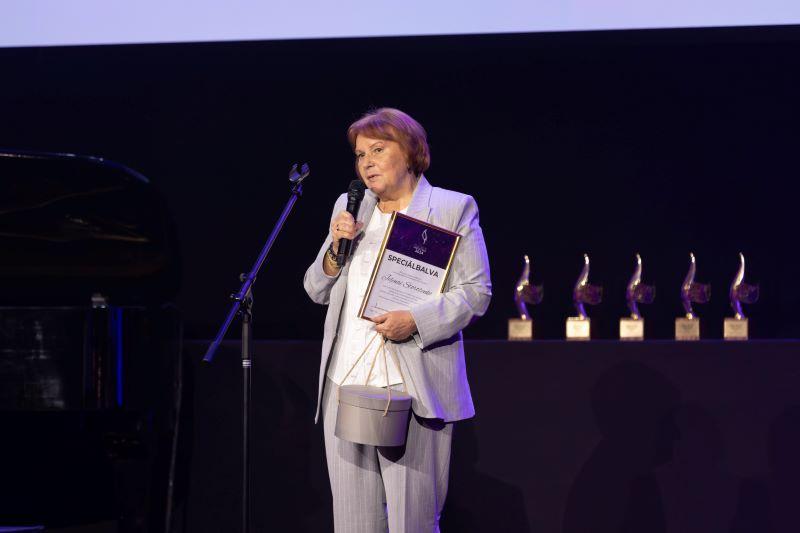
Asoc. prof. Jeļena Storoženko on 28 March 2025 during the annual Medical Awards ceremony, where she received a special award from the Latvian Medical Association for her significant contribution to medical education and the development of laboratory diagnostics.
Photo by Ģirts Miksons
"It is very important that the program is accredited and its content complies with the European Federation of Clinical Chemistry and Laboratory Medicine's training program for laboratory medicine specialists. This means that the education of our specialists is recognized throughout Europe," says Assoc. Prof. Jeļena Storoženko in an interview with the magazine "Ārsts" (Doctor).
With the magazine's permission, we are publishing an excerpt from the article.
Associate Professor Jeļena Storoženko: “As in any field of medicine in Latvia, there is a shortage of talented, knowledgeable and reliable specialists in laboratory medicine.
The functioning of a medical laboratory is very complex, so it is important to not only have good skills and knowledge, but also to be a team player.
Future specialists must be able to communicate both with experienced specialists who carry out the training process and with other laboratory staff. After all, young specialists are also future managers who will have to organize their own work, lead a team, and attract other talented employees.
It is very important for specialists to be familiar with modern laboratory equipment, information technology, and the accreditation process, as accreditation is mandatory for medical laboratories in Latvia.
At the same time, we must never forget that behind the samples and equipment there is a patient, and their health and sometimes even their life depends on our results.
This is the nature of laboratory work – we do not see the patient, but we need to know everything related to the results, such as life-threatening deviations, the sequence of tests, algorithms, interpretation of results, and much more. I am absolutely convinced that new technologies, including artificial intelligence, will never be able to replace the competence and knowledge of employees.
The biggest challenge – preparing the book
The book "Laboratoriskie izmeklējumi dažādu slimību diagnostikā" ("Laboratory Tests in the Diagnosis of Various Diseases") is dedicated to the role of laboratory tests in the diagnosis of various diseases. It was made possible thanks to the close cooperation and support of SIA "Centrālā laboratorija". An outstanding team of 22 authors participated in the creation of the book – professors, associate professors, researchers, leading Latvian doctors and specialists from RSU and University of Latvia. The book was published by SIA "Medicīnas apgāds".

J. Storoženko during the book launch
The desire to write a book about laboratory tests came gradually. During my professional life, which has always been connected with medical laboratories, I accumulated a lot of interesting information about laboratory tests, which was mainly needed when solving practical issues with clinicians, as well as when doing academic work.
I always try to keep interesting notes with the thought that they will be useful someday. Yes, they really were useful.
When I started working at the Central Laboratory, it was decided that I would write a small book about tests. A very small and easy-to-read book. However, it soon became clear that I had to prepare a book that would be interesting and useful to clinicians. Therefore, it had to contain much more extensive information, including descriptions of clinical cases. The book's scientific reviewer, Professor Aivars Lejnieks, pointed out that it would be good if the book helped doctors avoid unnecessary examinations and helped them choose the right ones. Whether it succeeded is up to the readers to judge. The book took three and a half years to prepare, and it was not an easy process. We sincerely hope that it will be useful to doctors in their practical work, as well as to future doctors studying medicine.
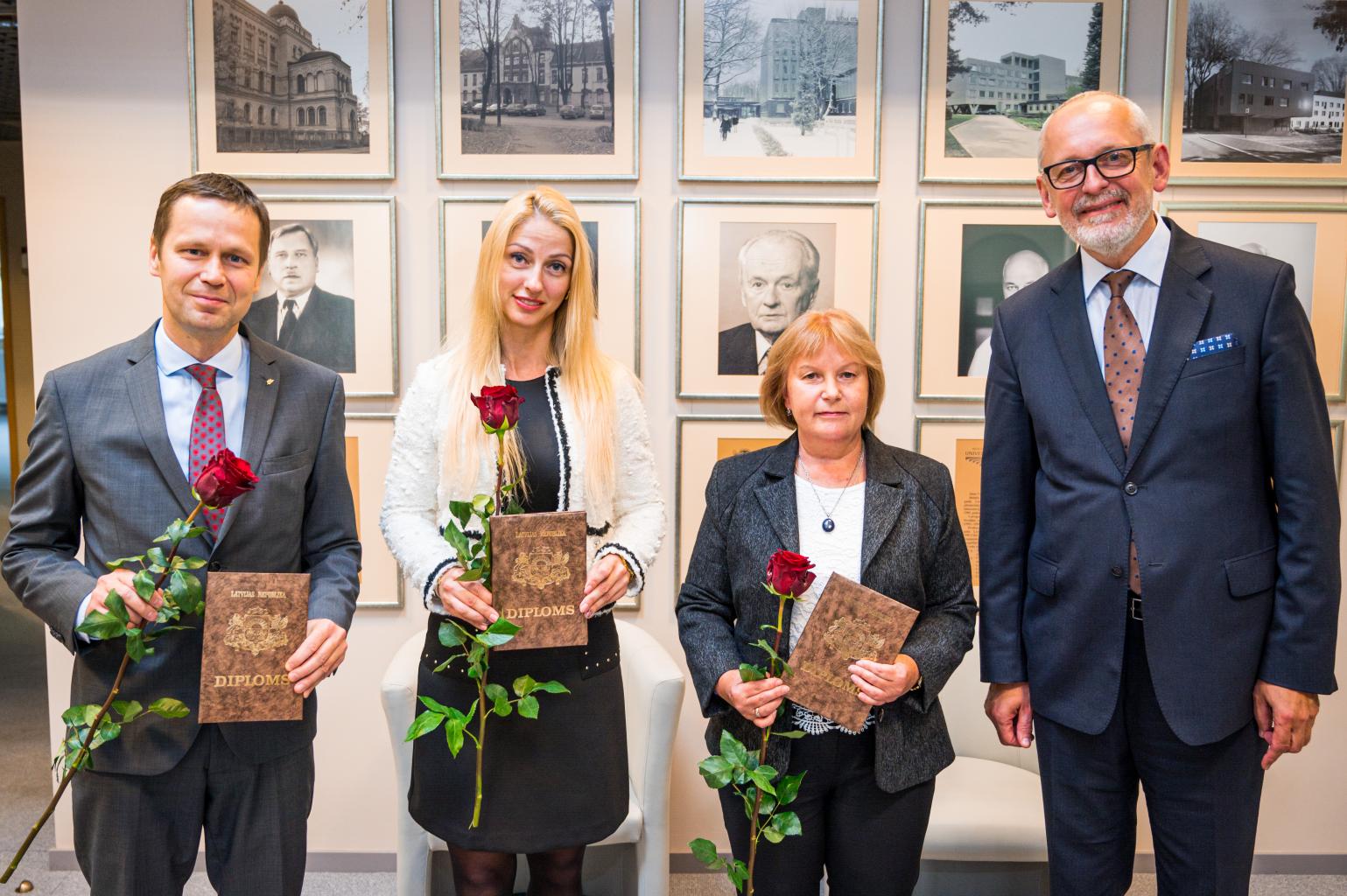
Jeļena Storoženko (2nd right) with colleagues Prof. Pēteris Stradiņš and Assoc. Prof. Agnese Ozoliņa and RSU rector Prof. Aigars Pētersons
Related news
 Piecing fractured bones back together: Dr Raitis Turkins on residency training in Jelgava RSU in the news, Residents' Stories, Graduate Medical Training, Interviews