The European Green Deal and three possible future scenarios: how to live on our pathway to climate neutrality?


The European Union’s (EU) commitment to achieve climate neutrality by 2050 marks one of the most significant transformations in the development of contemporary Europe. It is not merely an environmental policy -
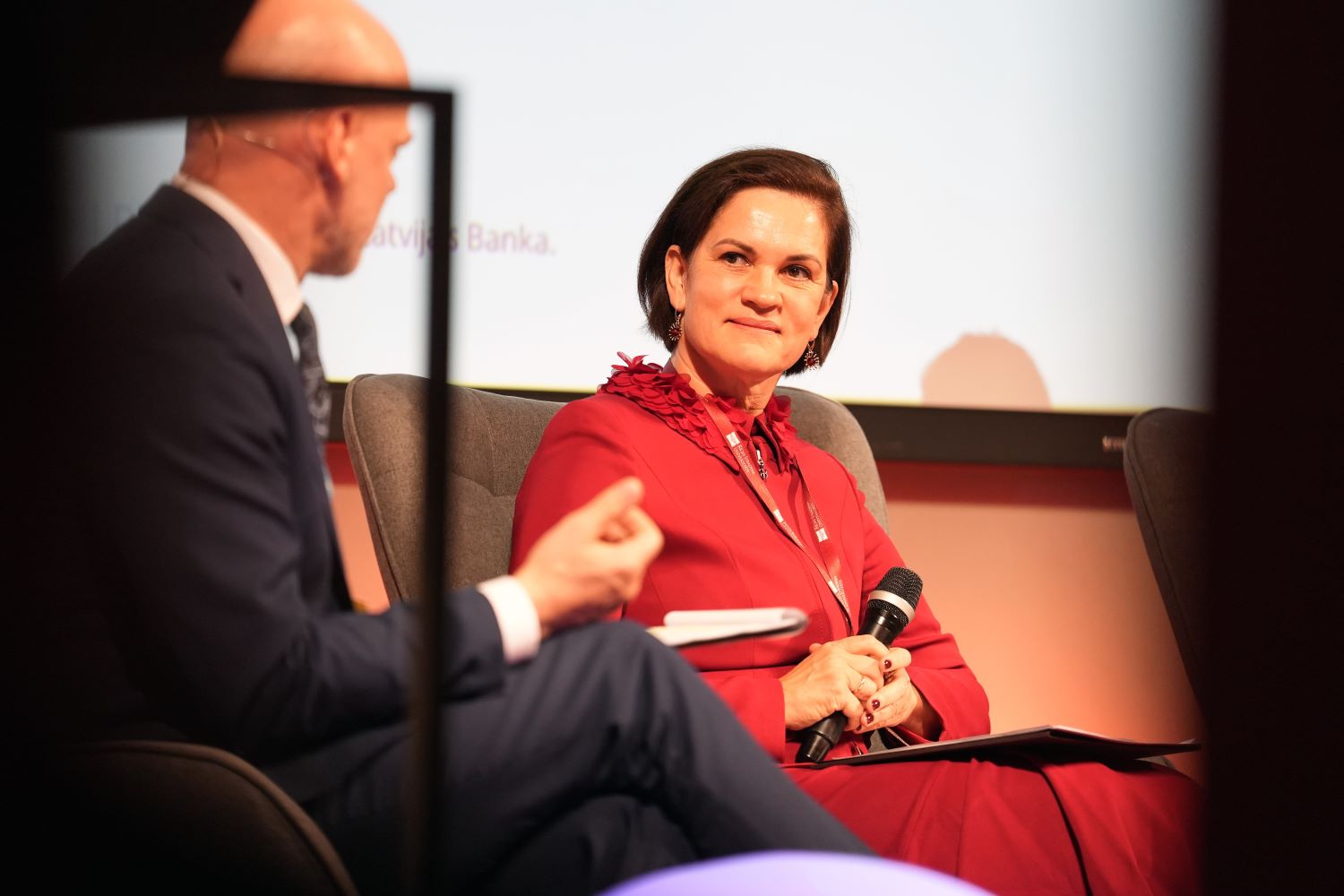
Dr. oec. Dzintra Atstāja, author of the article, lead researcher at the RSU Faculty of Social Sciences in charge of the Climate Neutrality Decision Models project
it is a vision of how Europe seeks to live in the future: how to provide energy, how people will move, how to produce food, and how to maintain a safe and healthy environment.
At the core of this vision is the European Green Deal, which since 2019, has served as the EU’s strategic framework for the transition to a climate-neutral economy. The Green Deal envisages substantial changes in energy, transport, industry, agriculture, forestry, and waste management, while at the same time promising new jobs, greater energy security, and a cleaner environment.
However, events of recent years - the pandemic, the energy crisis, and geopolitical instability - have demonstrated that the pathway to climate neutrality is not a one-way highway. It can develop at different speeds and in different directions, each resulting in a different everyday experience for people.
Researchers at Rīga Stradiņš University have developed three possible development pathways that help illustrate what the European Green Deal might look like in practice - not in terms of policy documents, but in people’s daily lives. These scenarios outline different routes Europe could take on its roadmap to climate neutrality by 2050: from a cautious and slow transition to a purposeful transformation or, in contrast, through setbacks driven by the pressure of crises.
The scenarios are developed by analysing how climate policy decisions are interconnected with energy, transport, agriculture, forestry, industry, and waste management, and how the consequences of these choices return to people in very concrete ways - through household bills, mobility options, environmental quality, and standards of living. The purpose of these scenarios is not to predict the future, but to understand the consequences of different choices.
Minimal transformation pathway: slow adaptation to constant uncertainty
In this scenario, Europe formally maintains its course toward climate neutrality but avoids deep structural changes. Political priorities focus on stability and avoiding social tensions, even if this means slower progress.
In everyday life, this manifests itself as a gradual but fragmented transition:
- Renewable energy expands, but fossil fuels still play a significant role, particularly in the heating and industrial sectors;
- Energy prices become a constant topic of discussion – not always catastrophic, but also unpredictable. Households tend to respond to crises rather than act proactively;
- Transport sector undergoes gradual modernisation; however, private cars remain dominant, and sustainable solutions develop unevenly;
- Waste sorting and the circular economy are introduced, but without a systemic approach - outcomes depend on municipalities, motivation, and funding.
Quality of life: in this pathway, people get used to "constant transition." Nothing deteriorates rapidly, but neither does it improve enough to create a sense of security in the long term.
Moderate transformation pathway: change as the foundation of stability
In this scenario, the Green Deal becomes a practical framework for development, rather than merely a political ambition. Change takes place gradually but purposefully, with a clear understanding that long-term stability comes from timely action.
In everyday life, this means structured changes that make life easier:
- Dwellings become energy-efficient, reducing bill fluctuations and increasing comfort;
- Energy production becomes more local - wind, solar, biomass, and storage solutions reduce dependence on external shocks;
- Mobility evolves not through restrictions, but through alternatives: public transport is becoming convenient, electric vehicles more accessible, and urban planning reduces the need to travel long distances altogether;
- Waste management and the circular economy become part of everyday life rather than an individual choice. Biodegradable waste is used for energy production, materials remain in circulation, but overall waste volumes decline.
Quality of life: less stress, greater predictability, and a sense that change is working in people’s favour. Sustainability is no longer a burden, but an integral element of life quality.
Regression pathway: life in a permanent state of crisis
In this scenario, climate policy is pushed aside in favour of short-term economic and political considerations. Change is postponed until it becomes inevitable.
Everyday life becomes increasingly reactive:
- Energy prices fluctuate sharply and unpredictably;
- Heatwaves, floods, and droughts affect food availability and prices;
- Infrastructure adapts with a delay;
- Waste management is dominated by landfilling and incineration, pollution increases, and health risks become more evident. Sustainable solutions are perceived as expensive or elitist rather than as a shared public good.
Quality of life: exhaustion, insecurity, and a sense that choices are becoming increasingly limited. Society lives in a constant mode of “firefighting”.
These three development pathways reveal that the discussion on climate neutrality is not only about reducing emissions. It is about whether Europe chooses to lead the change or allows it to unfold chaotically.
Although the year 2050 may seem far away, it is the decisions made during this decade that will determine which of these scenarios will gradually become reality. With extensive forest resources, potential for renewable energy, and a relatively small scale, the decisive issue for Latvia is the pace and direction. A gradual yet purposeful transition would reduce dependence on fossil fuels, stabilise energy prices, and improve quality of life. By contrast, the delay or retreat from established goals could lead to higher costs and greater vulnerability in the future.
Related news
 Feminist Investigations Research Group Joins Latvian Research & Innovation Partner Catalogue 2026Research