
26 research projects funded in the second BioPhoT call


In the second Research and Innovation Project (PIP) call of the BioPhoT research platform, funding has been awarded to 26 projects, as decided by the Platform’s Project Management Group on 20 February. Among the approved initiatives are two projects led by researchers from Rīga Stradiņš University (RSU).
A total of 99 applications were submitted in the second call. Following two evaluation rounds, the strongest proposals with the highest innovation potential and scientific quality were selected. On average, the funded projects received 84% of the maximum possible score in the innovation potential assessment and 87% in the scientific evaluation.
Within the second BioPhoT call, two RSU reasearcher-led projects have received funding:
- SPERMFREE aims to develop an integrated analytical workflow for cell-free DNA (cfDNA) analysis to assess testicular function in cases of severe male infertility. The project seeks to create a more precise and less invasive diagnostic approach to support clinical decision-making in reproductive medicine.
- OsteoXplore will develop an automated deep learning platform for early osteoporosis risk assessment using dental cone beam computed tomography (CBCT) scans. The solution is designed to leverage routinely acquired imaging data in dental practice to enable earlier identification of systemic bone health risks.
These two projects join three RSU projects funded in the first BioPhoT call, further strengthening the University’s research and innovation capacity in biomedicine and medical technologies.
Overall, the largest number of supported projects, seven, will be implemented by research groups from the Institute of Solid State Physics at the University of Latvia. They are followed by the University of Latvia with five projects, and the Institute of Organic Synthesis and Riga Technical University with four projects each. Two projects each will be carried out by teams from the Latvian Biomedical Research and Study Centre and Rīga Stradiņš University, while one project each will be implemented by the Institute of Electronics and Computer Science and Ventspils University of Applied Sciences.
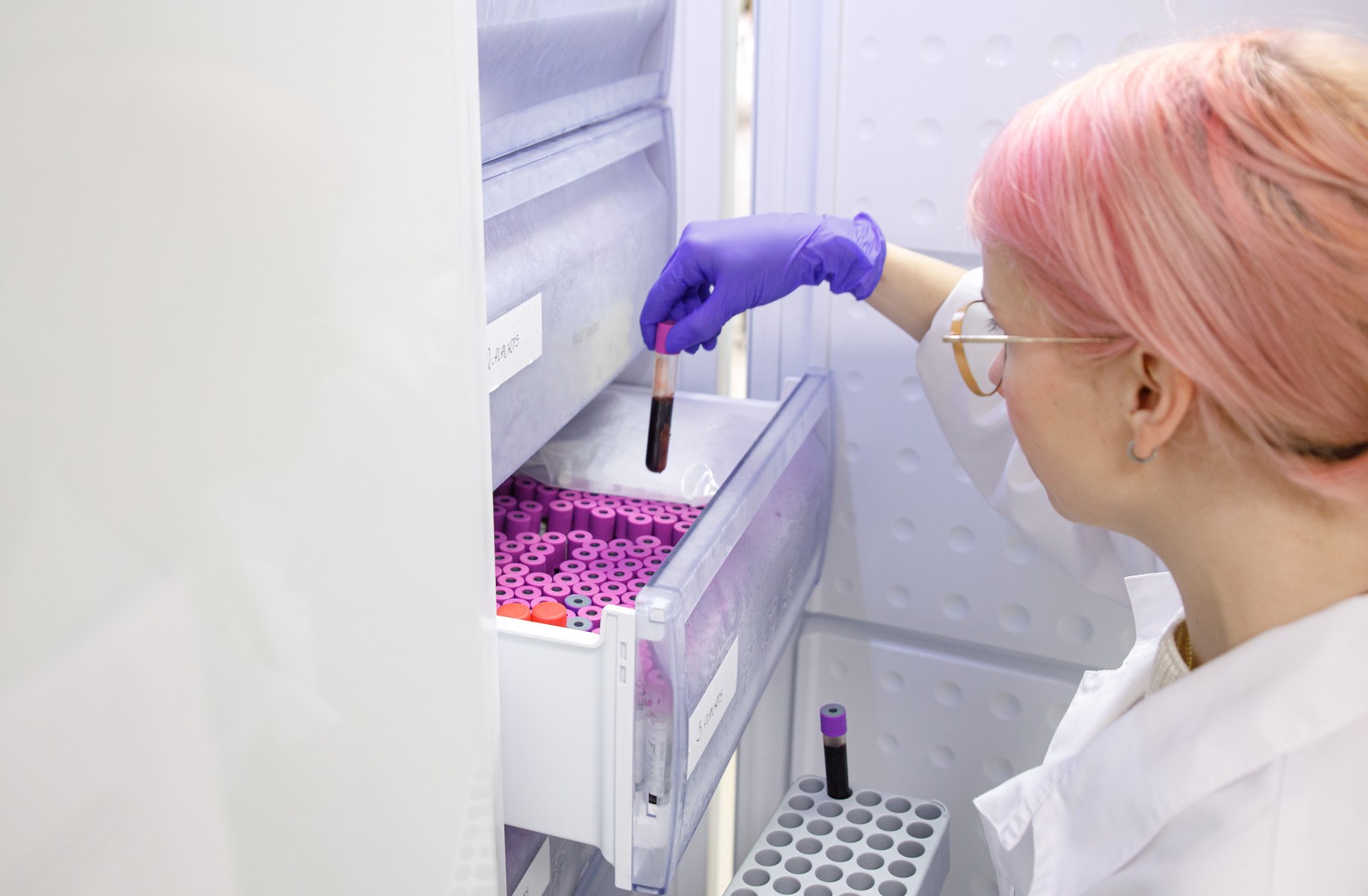
Photo: courtesy of the BioPhoT platform
A total of 4,710,859 EUR will be invested in the implementation of the second call projects. Each project will receive up to 190,000 EUR to carry out eight months of research and innovation activities. The platform aims to promote the development of high value-added technologies in biomedicine, medical technologies, pharmacy, photonics, and smart materials, thereby reducing the gap between science and the commercial sector.
Since the launch of the platform, 223 PIP applications have been submitted across two calls, demonstrating strong interest from the research community. In the first call, 40 projects received funding. Approximately one quarter of these projects focus on biomedicine and healthcare, including innovative approaches to the diagnostics of sepsis, cancer, and infections. A similar proportion represents medical technologies, such as the development of new devices, sensors, and diagnostic solutions. Significant attention has also been devoted to photonics and optical technologies, including fibre optic sensors, luminescent coatings, and infrared spectroscopy solutions. Eight projects are related to smart materials, including innovative biomaterials and sustainable composites, while four address environmental and energy topics.
The project Biomedical and Photonics Research Platform for the Creation of Innovative Products (BioPhoT) is implemented in the state research program Innovation Fund – long-term research program. Platform number: IVPP-EM-Inovācija-2024/1-0002.

Related news
 Sports 360°: RSU researchers to present recommendations for better sports sector governance in Latvia Research, Sports research


