Helping Immune Cells Clear Infection: Mitochondrial Recycling Could Strengthen Our Defences Against Infection


Could antimicrobial treatments fight infection not only by attacking microbes, but also by helping our immune cells work better?
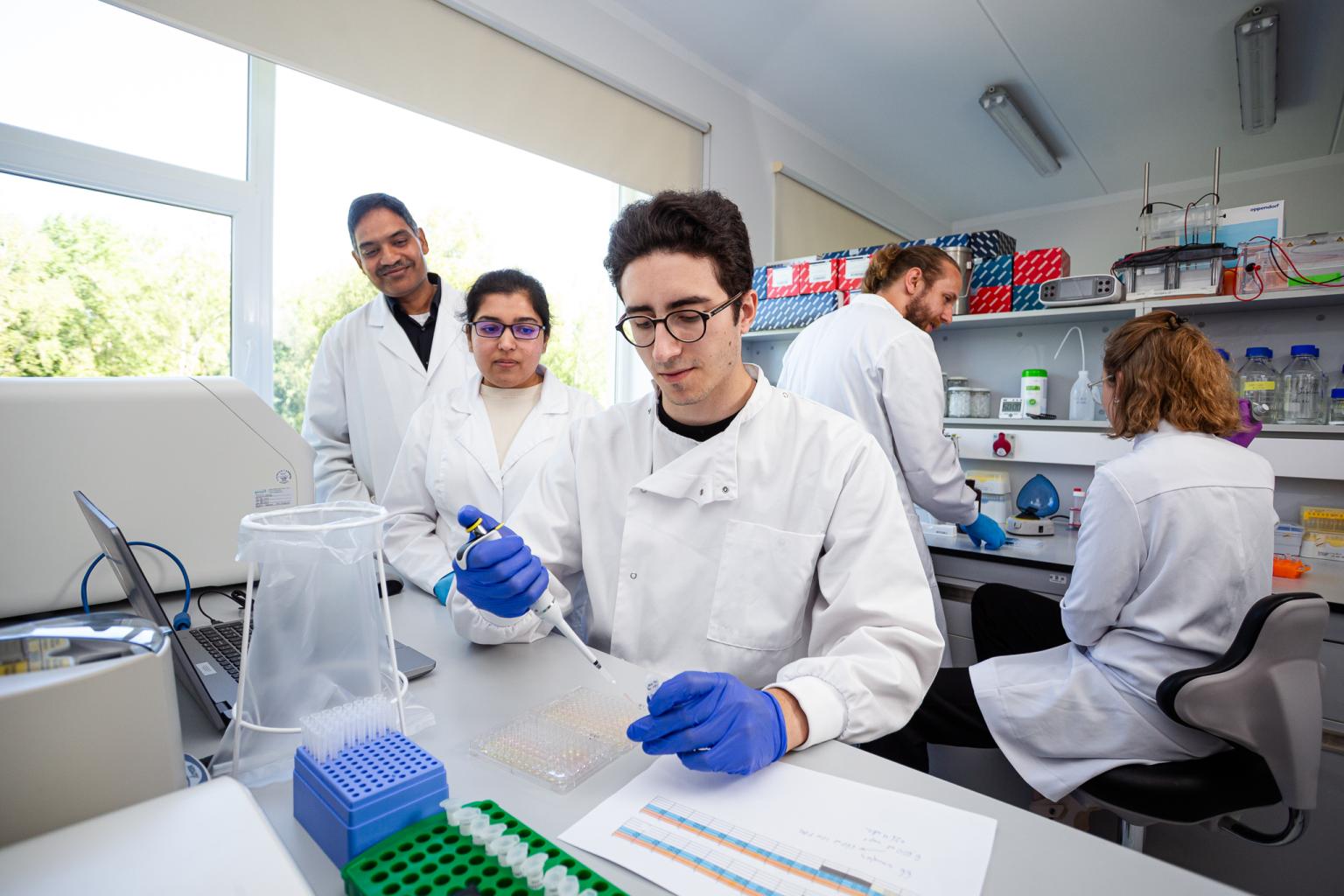
Researchers from the Institute of Microbiology and Virology at Rīga Stradiņš University (RSU), working with an international team of scientists, have uncovered a promising connection between cellular metabolism and the immune system’s ability to fight infection. The RSU team included Emīls Edgars Bašēns, Trushnal Shrikant Waghmare, Georgy Nikolayshvili, Zaiga Nora-Krūkle and Bhupesh Kumar Prusty. Together with colleagues from Rutgers University, the University of Würzburg and other institutions, they investigated how a compound called K21 (a quaternary ammonium silane compound with activity against bacteria, viruses and fungi) influences human immune cells and mitochondrial function. The study was published in the distinguished journal Life Science Alliance.
Their findings suggest that K21 remodels immune-cell metabolism, improves bacterial clearance and stimulates mitophagy — the recycling of mitochondria. Related effects in the nematode Caenorhabditis elegans (a microscopic roundworm widely used in biological research) were accompanied by a longer lifespan.
Turning the immune system into a stronger antimicrobial ally
Antimicrobial drugs usually target pathogens, for example by disrupting bacterial cell walls, metabolism or reproduction. This team asked a different question: how does K21 affect the host’s immune cells?
They focused on macrophages, innate immune cells that engulf microbes, coordinate inflammation and help repair tissues. Could K21’s broad antimicrobial properties partly reflect its ability to reprogramme these cells?
Looking at immune cells one cell at a time
The researchers derived macrophages from human blood cells and examined their response to K21 using cytokine measurements, flow cytometry and single-cell RNA sequencing, which identifies active genes in individual cells.
Single-cell transcriptomics analysis revealed differences beyond the broad M1 and M2 macrophage categories, identifying smaller populations and changes that conventional measurements could miss.
Rather than converting one major macrophage type into another, K21 reshaped the balance of cell populations. It favoured populations with stronger inflammatory and pathogen-clearing gene-expression programmes while reducing others — changes not readily apparent from cytokines and cell-surface markers alone.
A clue hidden inside the cell
Many changes pointed towards mitochondria. These organelles do more than produce energy: they influence metabolism, cellular signalling and immunity, and require continual maintenance.
Through mitophagy, cells break down and recycle mitochondria. K21 promoted both mitochondrial fission — division into smaller units — and mitophagy, apparently without the pronounced mitochondrial stress or damage associated with some other mitophagy-inducing compounds.
These findings suggest a possible link between mitochondrial quality control and macrophages’ antimicrobial activity.
Better at dealing with bacteria
To test this link, the team exposed macrophages to Enterococcus faecalis, a bacterium that can survive inside these cells. K21 was removed before exposure, helping distinguish effects on macrophages from direct effects on bacteria.
The clearest effects appeared in M2 macrophages. Bacterial entry changed little, but bacteria recovered from K21-treated cells formed far fewer viable colonies, suggesting that the intracellular environment had become less favourable for bacterial infectivity.
Other mitophagy-inducing compounds also increased bacterial phagocytosis — the process by which immune cells surround bacteria and take them inside. K21 stood out by combining enhanced mitochondrial quality control with strong suppression of bacterial infectivity.
Microscopic worms lived longer with K21 treatment
The team also tested K21 in Caenorhabditis elegans, a microscopic roundworm widely used in biological research, to explore whether its effects extend to an evolutionarily distant organism.
K21 stimulated DRP-1-dependent mitochondrial fission and mitophagy in the worms, echoing findings in human cells. Genetic experiments showed that the relevant mitochondrial and autophagy machinery was necessary, supporting an evolutionarily conserved mechanism.
K21-treated worms also lived longer. Treatment did not impair viability, development, growth or fertility, and reduced feeding did not explain the longevity effect.
Why the discovery matters
The study suggests that future antimicrobial treatments might strengthen host-cell defences as well as attack pathogens. Targeting mitochondrial metabolism and quality control could improve pathogen clearance and potentially help counter conventional antimicrobial resistance.
The lifespan findings also raise questions about cellular resilience and healthy ageing. However, longer lifespan was demonstrated only in nematodes — not humans.
K21’s precise molecular target remains unknown. The authors suggest that it may interact with mitochondrial membranes, but this hypothesis needs further investigation.
A new perspective on the cell's powerhouses
Mitochondria are more than cellular batteries: their division and recycling connect metabolism, immunity and lifespan. Understanding how K21 influences this machinery could inform new therapeutic strategies.
The central idea is that helping the body fight infection may begin not with attacking microbes, but with improving the machinery inside our own cells.
Related news
 Systemic sclerosis in Latvia may be more common than statistics suggest; study also reveals a frequent risk of nerve damageRSU research synapses