
Key takeaways from conference on fluorides and antibiotics


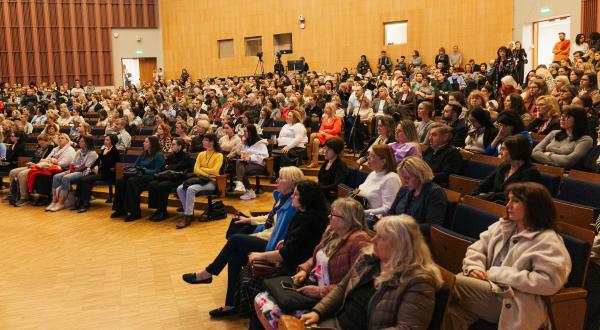
On 29 June this year, Rīga Stradiņš University (RSU) hosted a major event in the field of dentistry – the conference ‘Fluorides and Antibiotics. Balance in Prevention and Treatment’. The event brought together internationally recognised experts and distinguished visiting professors Jaime Cury, Cínthia Tabchoury and Pedro Ricomini, as well as Aigars Reinis, Asst. Prof. at the RSU Department of Biology and Microbiology.
The conference addressed a range of enduring topics in dentistry, including the action of fluorides and their indispensable role in improving public oral health, particularly in the control and treatment of dental caries, the role of antibiotics in both systemic and local therapy, measures to reduce the spread of antimicrobial resistance, and the contribution dentistry can make to addressing this global challenge.
Assist. Prof. Reinis emphasised that the overprescribing of antibiotics is neither the sole nor even the primary cause of antimicrobial resistance.
Through our everyday decisions to purchase, use or dispose of products containing antibacterial agents – for example, toothpastes and mouthwashes containing triclosan or chlorhexidine – we contribute to the development of antimicrobial resistance in the environment.
Furthermore, the routine use of such products for improving oral health is, in most cases, unjustified. Assoc. Prof. Ricomini explained in his lecture that for therapeutic doses of antibiotics to act effectively against pathogenic bacteria, the extracellular polysaccharide matrix, or biofilm, must first be disrupted, thereby exposing the bacteria. Free-floating bacteria are relatively rare in the oral cavity. Consequently, the use of antibacterial oral hygiene products is ineffective in the vast majority of cases, even where their use would otherwise be indicated. Assist. Prof. Reinis reinforced this message by providing practical guidance on appropriate antibiotic dosages, treatment duration and precise clinical indications. By adhering to these principles, every dentist can contribute to limiting the spread of antimicrobial resistance.
The role of sugar in driving undesirable processes within the oral biofilm, which ultimately result in tooth decay, was highlighted once again. Of particular interest was the finding that sucrose is the carbohydrate that promotes the formation of an especially dense and structured biofilm. Within its deeper layers, the pH falls below the critical threshold and remains low for prolonged periods, creating favourable conditions for enamel demineralisation and the development of dental caries. One particularly striking finding was that, although sucrose is composed of the monosaccharides glucose and fructose, consuming these sugars separately results in only a modest increase in biofilm thickness and virulence. By contrast, when they are consumed in the form of sucrose, biofilm develops approximately twice as rapidly, becomes substantially thicker, and reaches the critical pH considerably more readily. Moreover, when sucrose is consumed together with starch, the effect is even more detrimental. It prompts an important question: do we realise that foods such as sushi (which contains starch from the rice and sugar from the rice vinegar) or pasta with tomato sauce may be more damaging to dental enamel than eating a sweet?
And then there are fluorides.
The media perpetuates doubts and myths regarding the efficacy and safety of fluorides.
Dental professionals grow weary of having to justify their use, because the battle between scientific evidence and personal opinion is almost impossible to win when emotion outweighs science. Nevertheless, the discussion must go on, and professionals must repeatedly present the evidence and defend its conclusions, because contemporary society possesses no more effective tool for caries control. Prevention is not an especially popular concept. People often prefer receiving treatment to preventing a disease that has not yet become apparent. Moreover, fluoride does not act merely as a preventive agent; brushing with fluoride toothpaste constitutes daily treatment for early enamel lesions, while professionally applied topical fluorides following tooth polishing by a dentist or dental hygienist represent a more important therapeutic intervention for dental caries than drilling and filling. Restorative treatment does not cure the disease itself; it merely manages the health risks associated with the loss of tooth structure. By combining a patient's daily home-based treatment with professional fluoride applications every three, six, or 12 months, achieves effective caries control that can enable individuals to retain their natural teeth throughout their life.
The subsequent discussions highlighted the impression that, in many parts of the world, controlling dental caries is becoming a less prominent topic. Most of the fundamental knowledge was established around 50 years ago and has been successfully implemented into practice in many countries.
In Scandinavia, for example, there are population groups in which the prevalence of dental caries is below 10%, while the overall prevalence does not exceed 50%. In Latvia, by contrast, the prevalence of dental caries among preschool children is approximately 90%.
Naturally, Latvia is not the only country facing this situation. Countries that have succeeded in reducing dental caries to a level considered manageable from a public health perspective can now afford to devote greater attention to aesthetic dentistry, botulinum toxin treatments and other modern dental procedures. These interventions are undoubtedly valuable and relevant everywhere, including in countries that have not yet achieved satisfactory oral health outcomes. However, publicly funded dental care should prioritise the interventions that successful countries implemented forty or fifty years ago, rather than those they are focusing on today. Dentists will always have work. naturally, most would rather treat older adults who have retained more of their natural teeth than children in tears.
The conference overall and the participation of distinguished visiting professors, has further strengthened the development of a unique library of lectures by the scientists who have shaped the field. While we may not be able to permanently employ the professors and scientists whose work established the fundamental knowledge on oral biological processes, disease aetiology, and treatment mechanisms, students have the opportunity to learn directly from the researchers who generated this knowledge, thanks to the support of RSU visiting professors, the RSU Institute of Stomatology, and the Latvian Association of Paediatric Dentists. The collection already includes Prof. hilip Marsh's lectures on the role of biofilm in the development of dental caries, Prof. Egija Zaura's lectures on the role of the oral microbiome in maintaining health, and lectures by Prof. Nicola Innes and Prof. Dafydd Evans on the fundamental principles of managing dental caries in both paediatric and adult dentistry. These are now complemented by lectures from professors Cury and Tabchoury on the role of fluorides in dental caries control, together with Assoc. Prof. Ricomini's lecture presenting the latest research on biofilm control and the paradigm shift towards reducing the risk of antimicrobial resistance.

Related news
 RSU Medical Law Conference highlights patient safety and responsibility in healthcare Conferences, workshops, Law


