
RSU to hold first Baltic Emergency Medicine Congress on 26–27 May


On 26–27 May 2026, Rīga Stradiņš University (RSU) will hold the First Baltic Emergency Medicine Congress – the largest emergency medicine event in Latvia to date, bringing together doctors, researchers, students, lecturers, and industry professionals from Latvia, Lithuania, Estonia, Ukraine, France, and the United States.
The two-day programme will symbolically mark Emergency Medicine Day while also serving as a platform for experience exchange, professional discussions, and international cooperation, highlighting the vital role of emergency medicine in public health and safety.
The idea for the congress first emerged when we realised that emergency medicine professionals in the Baltic region did not even know each other – it became clear that we needed a shared platform for collaboration. Emergency medicine combines various medical disciplines within a single practice; therefore, to develop it, it is important to change thinking and strengthen quality. This congress is a step towards establishing a strong professional community and high-quality emergency medical care.
Rafaels Ciekurs, initiator of the First Baltic Emergency Medicine Congress and Head of the Krasts Emergency Medical Services Support Centre
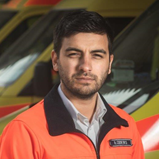
Liene Cipule, Director of the Emergency Medical Service, also emphasises the significance of the event on a Baltic scale:
‘The First Baltic Emergency Medicine Congress is a highly significant event in our region, which for the first time since the restoration of independence of the Baltic states will bring together emergency medicine professionals from all stages of care – including pre-hospital care, in-hospital emergency care, and crisis and emergency management. This is a unique opportunity to discuss education, professional qualifications, scientific advances, the organisation of hospitalisation networks, and innovations in emergency medicine.
We invite every professional in the field to join the congress so that together we can strengthen the Baltic states’ preparedness, competence, and cooperation in providing emergency care both in everyday situations and during emergencies.’
Doctors, physician assistants, nurses, students, researchers, and other industry professionals and interested participants are invited to attend the congress both in person and remotely via Zoom by registering beforehand.
26 May – pre-congress activities
On 26 May, participants will be offered a wide-ranging programme of activities at the RSU Medical Education Technology Centre (26A Anniņmuižas bulvāris, Riga), focused on practical skills development, professional growth, and collaboration.
The programme will begin at 9:00 with the Baltic Emergency Medicine SimCup, a competition for emergency medicine professionals, in which six teams of healthcare specialists from Estonia, Latvia, and Lithuania will demonstrate their clinical skills in dynamic, realistic, and simulation-based resuscitation scenarios.
Industry professionals will also be invited to participate in one of four hands-on workshops to strengthen their emergency medical skills, including the use of non-invasive ventilation, POCUS FAST ultrasound, the eFONA method for emergency airway management, and the effective integration of clinical simulation into training. More detailed information about the workshops: MMS
Students will also have the opportunity to present their research and develop analytical thinking in the abstract competition ‘Show Your Research’. In parallel, the annual meeting of the Emergency Medicine Association of the Republic of Latvia will take place, followed by a discussion on the development of emergency medicine education.
27 May – congress day
On 27 May, the central event of the programme will take place at the RSU Great Hall (16 Dzirciema iela, Riga) and remotely via Zoom platform – the congress itself, divided into three thematic sections. Section 1 will focus on emergency care in hospitals, highlighting its importance for the healthcare system resilience and showcasing international experience in acute patient care. Section 2 will be dedicated to pre-hospital emergency medicine, underscoring innovation, the use of technology and the importance of teamwork in patient care outside hospital settings. Whereas Section 3 will focus on civil-military emergency medicine, discussing healthcare system preparedness for crises and disasters, as well as cooperation models of military and civilian medicine.
The congress will be opened by Aleksejs Višņakovs, Chief Specialist in Emergency Medicine of the Ministry of Health of the Republic of Latvia, who will outline the current challenges in emergency medicine. Each of the three thematic sections will be opened by internationally renowned experts – the section on hospital emergency care will be opened by Prof. Jānis Tupesis from the US, Prof. Abdo Khoury from France will speak on pre-hospital emergency medicine, while Dr. Roman Huk from Ukraine will analyse aspects of civil-military medicine, offering a comprehensive perspective on industry development and cooperation opportunities.
The congress is an important platform for the exchange of experience, professional development, and the promotion of international cooperation in emergency medicine. It is intended as a long-term initiative for the development of the field in the Baltics, while also highlighting key challenges facing emergency care systems, including human resources, professional competence, and innovation in acute care.
Anyone interested is encouraged to register early to be part of this large-scale event.
Related news
 RSU Faculty of Social Sciences brings together early career researchers worldwide: summer school invests in the future of research Conferences, workshops, SZF, International Cooperation


