Learning never stops: IADS European Associate Regional Representative and RSU double degree student Georgs Alberts Pimanovs


Last November, around the time of Latvia’s Independence Day, the Latvian Dental Students’ Association announced that Georgs Alberts Pimanovs, a student at two Rīga Stradiņš University (RSU) Faculties – of Medicine and Dentistry – had been elected European Associate Regional Representative of the International Association of Dental Students (IADS). We invited Georgs to talk about his first impressions of his new position, studies, research interests, as well as what inspires him and his hobbies.
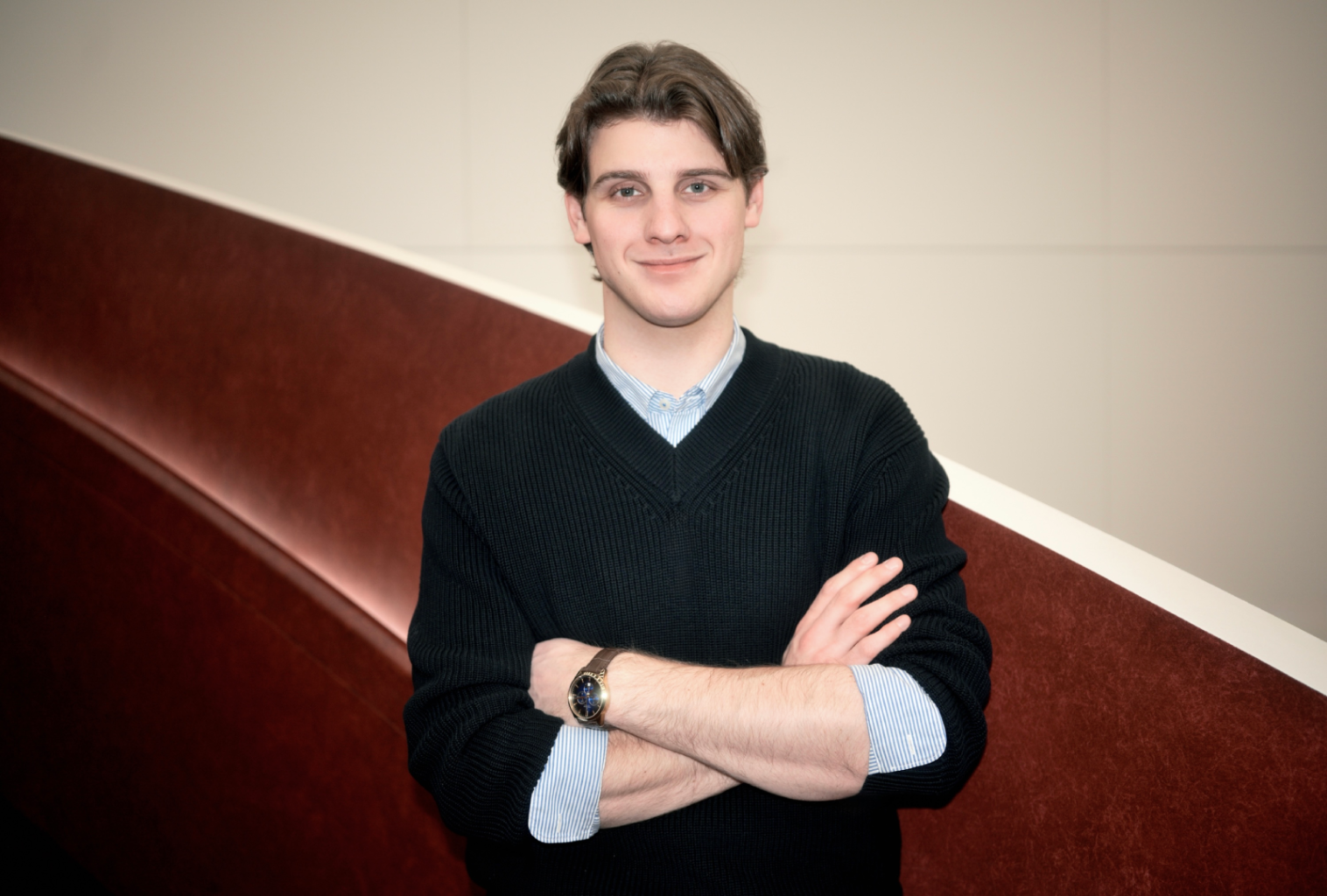 Georgs Alberts Pimanovs. Photo: Courtesy of Reinis Aņiskovičs
You first enrolled at the Faculty of Medicine, but two years later at the Faculty of Dentistry – how far are you currently in each programme? How do you manage to combine studies with the responsibilities of your new position?
I am currently a sixth-year student at the Faculty of Medicine and a fourth-year student at the Faculty of Dentistry. In recent years, significant changes have been introduced at the Faculty of Medicine; namely, the sixth year of study is largely organised in the form of practical training in internal medicine, surgery, and your chosen specialty. At the Faculty of Dentistry, practical classes take place both at hospitals in Riga and at the RSU Institute of Stomatology, where most of our time is spent working with patients.
Combining both programmes used to be much more difficult than it is this year. The previous academic year was the most intensive: I had to take a total of 21 exams during the spring semester! I started taking exams in February, and I was fortunate to pass them all on the first attempt.
My everyday life is very dynamic. I learn from certified doctors at the hospital, and, on certain days, I admit patients during practical classes at the RSU Institute of Stomatology. This semester, the situation is more manageable, as I only had exams scheduled at the Faculty of Dentistry. This has allowed me to complete my medicine placement at my chosen hospital with less pressure, and prepare for my dentistry exams in the evenings.
As for IADS, since we organise the European regional delegate meeting on the last Sunday of each month, it is easy to plan ahead. This helps me balance my academic responsibilities and private life throughout the month without unnecessary stress.
What made you decide to study dentistry in addition to medicine? If you had to choose one of the two programmes again, which one would you prefer and why?
When I graduated from high school, I really wanted to enrol at the RSU Faculty of Dentistry, but my centralised exam results were not good enough to get a state-funded study place. However, I was accepted into the RSU Faculty of Medicine, which was a great achievement for me personally, because I did not study biology and chemistry in secondary school, but commerce and IT. Many people thought it was quite a radical change of direction.
When I started my studies at RSU, I soon got to know fellow students who were studying at both faculties. I was particularly inspired by Dr Ingus Arnolds Apse and Dr Alise Elizabete Rone, who were residents specialising in oral and maxillofacial surgery. They were both active in research and in student life, and their example encouraged me that with sufficient determination it is possible to master both programmes at the same time without losing one’s sense of self or interests. I am very grateful to them for that.
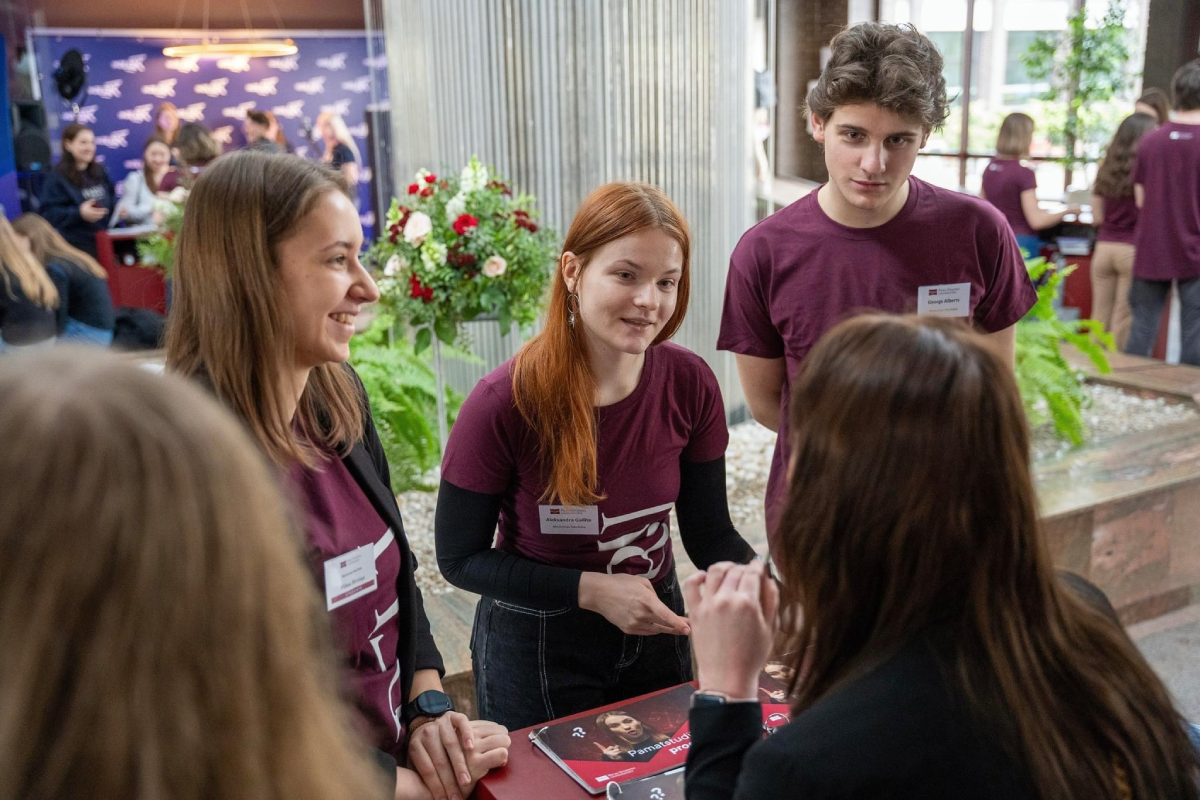 RSU Faculty of Medicine team during RSU Open Days in April 2024
It would be difficult to choose only one programme, as both have become equally important to me. When I began my medical studies, I was elected Study Year Leader, which involved daily communication with both my course mates and the Dean’s Office. I was open with my group about starting parallel studies at the Faculty of Dentistry, and I consistently received their support, including at times when I needed to make up missed classes with other groups. I would also like to acknowledge the Dean’s Office of the Faculty of Medicine, particularly Vice-Dean Ingus Skadiņš, who gave me advice whenever I needed it.
The Faculty of Dentistry is just as important to me. In our group, we help one another, as the study workload is significant, and the clinical work often requires both precision and creativity. Lecturers and professors are very involved in working with patients, and in many situations the support of an experienced, certified doctor is decisive. I also appreciate that we organise social events during the academic year, such as the White Coat Celebration.
Did you expect to be elected to the position of IADS European Associate Regional Representative? What are the conditions for this to happen?
Definitely not, I did not expect it at all. Since becoming a member of the Latvian Dental Students’ Association (LZSA), I have always tried to be actively involved in its activities, but I was particularly interested in public relations in Europe and around the world. In 2024, I participated in the European Dental Students’ Association (EDSA) Congress in Strasbourg, and last summer, I participated in the IADS Congress in Basel. There, I came to understand how important and inspiring student representation can be at the international level.
Following a conversation with the newly elected European Regional Representative Irēna Čaikovska, I learned about the opportunity to apply for the position of Associate Regional Representative and decided to take advantage of it. The evaluation process assessed my previous activities, international experience, English language skills, and having a clear vision for working in the organisation. Fortunately, I was elected, and I learned that I would be representing Europe in this position. I am very grateful to both Irēna and my international colleagues from IADS for this.
 The Latvian delegation at the EDSA Congress in Strasbourg, France
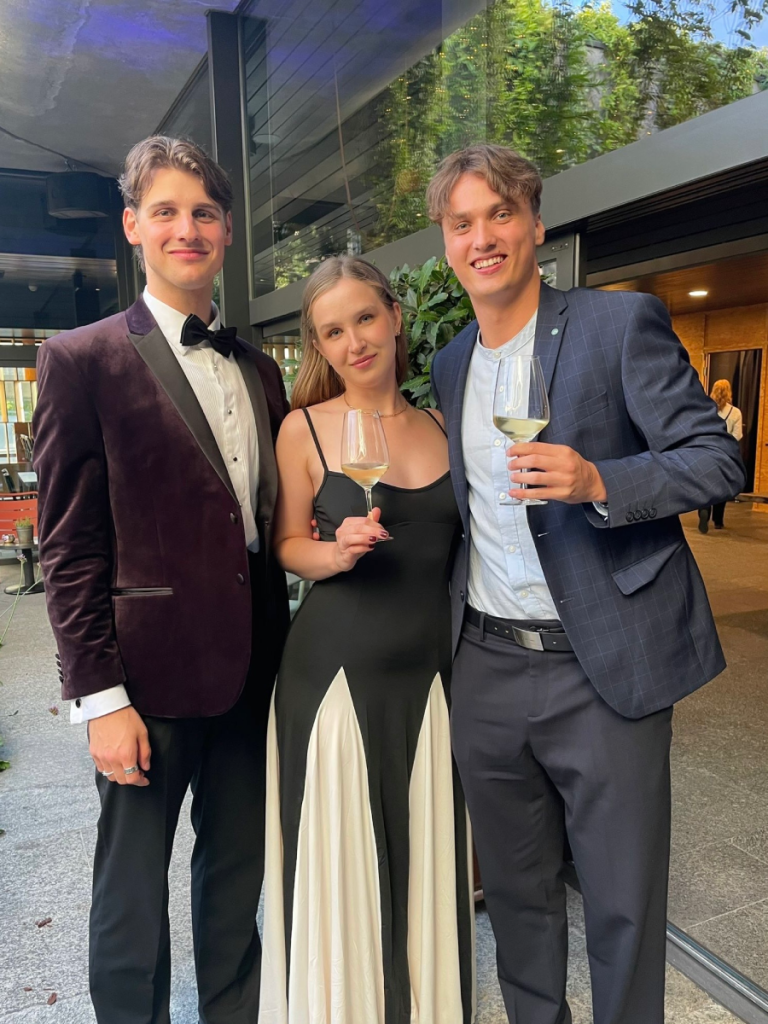 The Latvian delegation at the IADS Congress in Basel, Switzerland
Please tell us briefly about the Latvian Dental Students’ Association and what it does.
LZSA represents the interests of dentistry students at the national and international level, while promoting professional development during studies. The association organises practical creative workshops in collaboration with the industry, allowing students to learn about the latest technologies and clinical approaches that are not always fully covered in the study programme.
Prevention plays an important role in the activities of the LZSA – members of the association educate children in kindergartens and schools of Latvia about oral health and participate in educational activities for new mothers. The association also organises physiotherapy courses for dental students.
LZSA actively develops its international cooperation activities, particularly with the Estonian Dental Students’ Association (Eesti Hambaarstiüliõpilaste Liit, EHÜL) and the Lithuanian Dental Students’ Association (Studentų odontologų asociacija, SOA), organising the annual Baltic Reunion event. The association is continuously developing, expanding the range of its activities and strengthening the professional community of students.
It has been more than a month since you assumed your new position. Have you settled in yet? What are your responsibilities, and what would you like to achieve?
The first month in the position has been fairly calm, and I am gradually settling in. Shortly after I was elected, I organised a networking seminar together with delegates from European regional associations. During the seminar, we learned about the current activities of each member organisation, their plans for the coming months, and their overall structure, including the number of members and scope of their activities.
My main responsibilities are related to strengthening cooperation between European regional associations and expanding representation. Although IADS is widely represented in the European region, there is still room for expanding representation in the region. During the Congress in Basel, the Hungarian Dental Students’ Association joined IADS, and there are ongoing discussions with the Spanish Dental Students’ Association on further cooperation. My goal is to establish strong and sustainable cooperation with other countries as well within a year, such as Norway and the Netherlands. This will reinforce the presence of the European region and promote mutual cooperation within IADS.
In the past, you lead the RSU dentistry student research group, which received the Golden Horseshoe Award (Zelta pakavs) from the RSU Student Union (Studējošo pašpārvalde, SP) in the category of Student Research Group of the Year under your leadership. Does your current position at IADS involve engagement in research activities?
That is correct. I became involved in the group’s activities during my first years at RSU and remained an active member for a long time. When I later took on the role of head of the group, it initially felt like a significant challenge. However, with the support of a strong team of mentors and motivated members, we successfully organised well-attended theoretical sessions and practical classes with guest lecturers, including resident evenings and specialised implant courses. I would like to express my sincere thanks to Dr Dārta Elizabete Emuliņa and Dr Ingus Arnolds Apse for their involvement, as I learned a great deal from working with both of them.
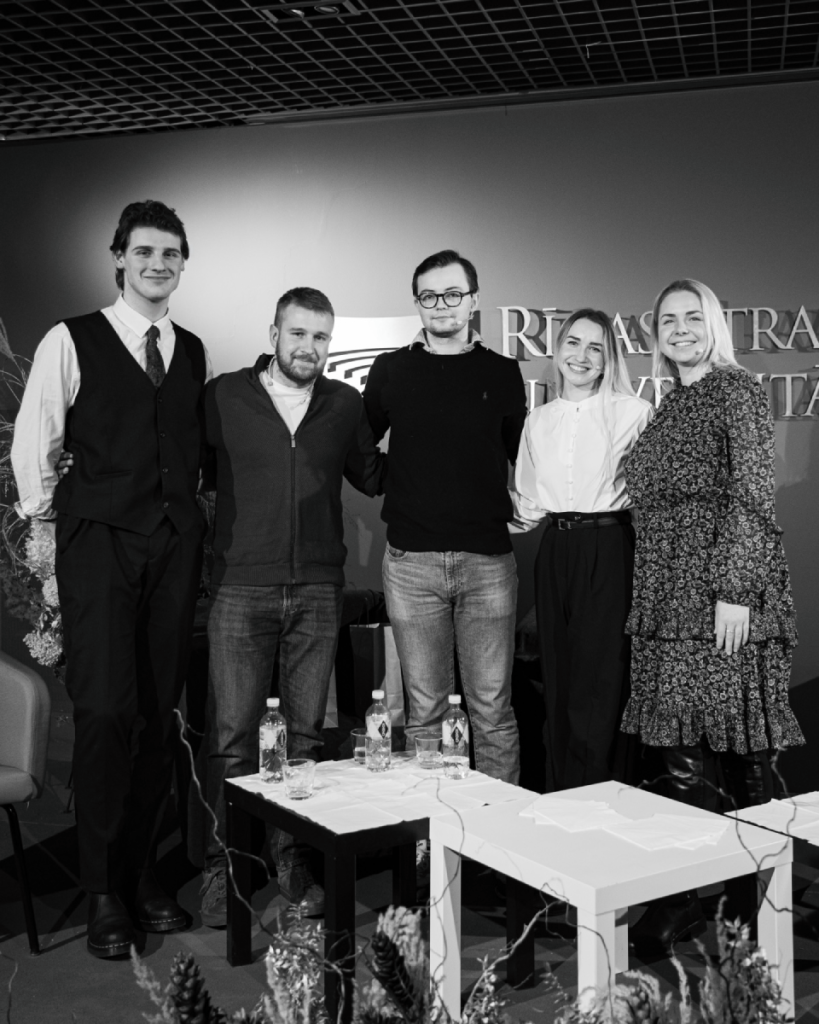 Resident evening organised by the dentistry student research group together with Dr Lācis, Dr Apse, Dr Lāčauniece-Bērziņa and Dr Emuliņš
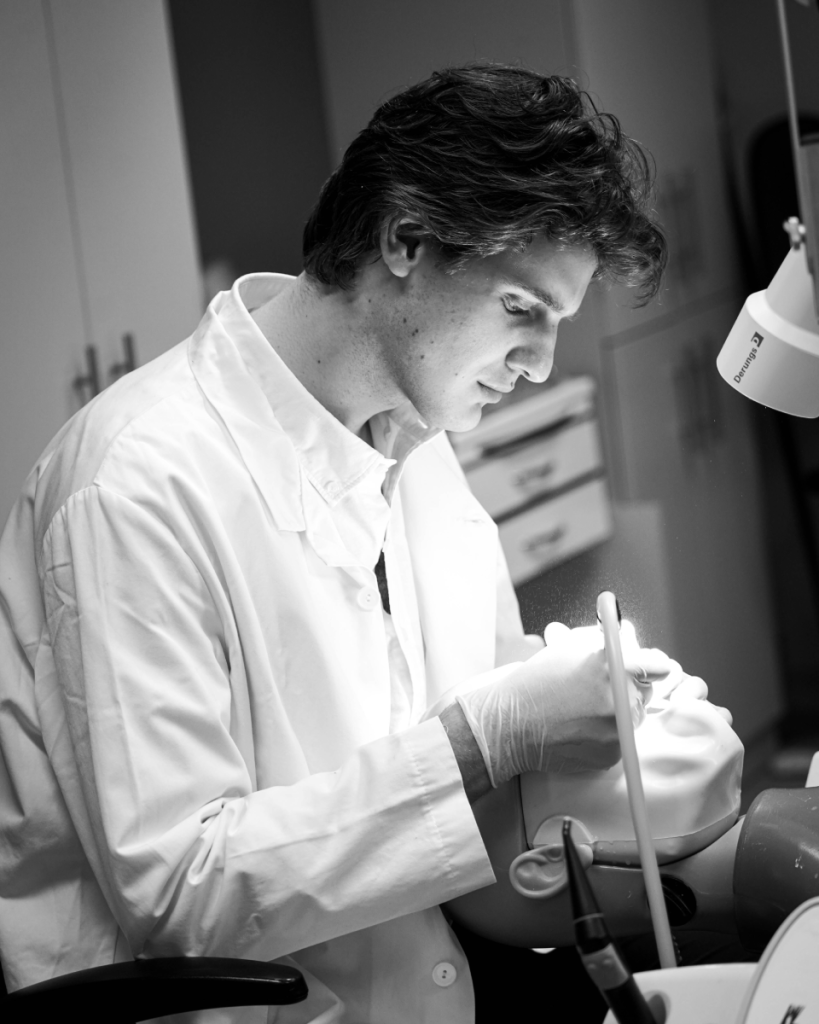 Georgs during a practical session organised by the dentistry student research group with a dentistry preclinical teaching model
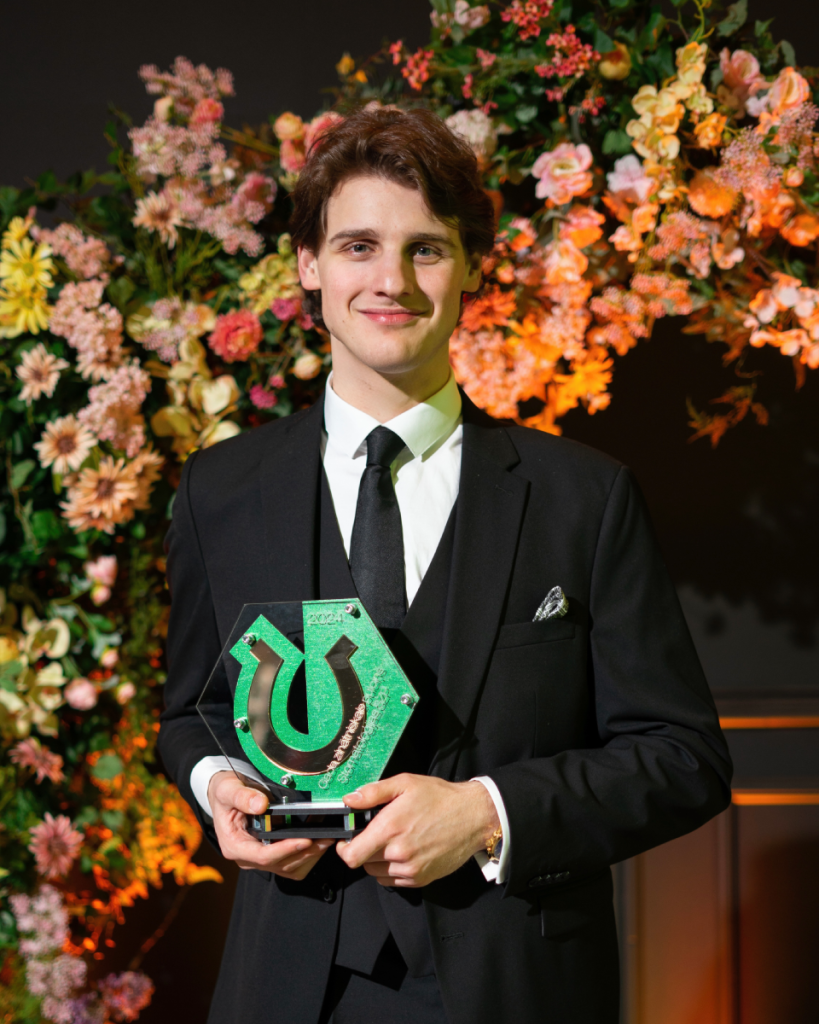 Georgs at the 2024 RSU Student Union Annual Awards Ceremony where the research group received the Golden Horseshoe Award
My current position at IADS does not involve research activities; however, the experience I gained while heading the research group, particularly in organising and the establishing cooperations, has proved very useful in this role.
Have you participated in the RSU International Student Conference or have you ever participated in similar student conferences outside Latvia? If so, please briefly describe your international experience.
So far, I have only participated in the RSU International Student Conference as a listener. In 2024, I led a suturing workshop as part of the conference, but I have not yet presented my scientific work. During the workshop, we prepared silicone jaw models with multiple extraction sites and taught students how to place both interrupted and continuous sutures.
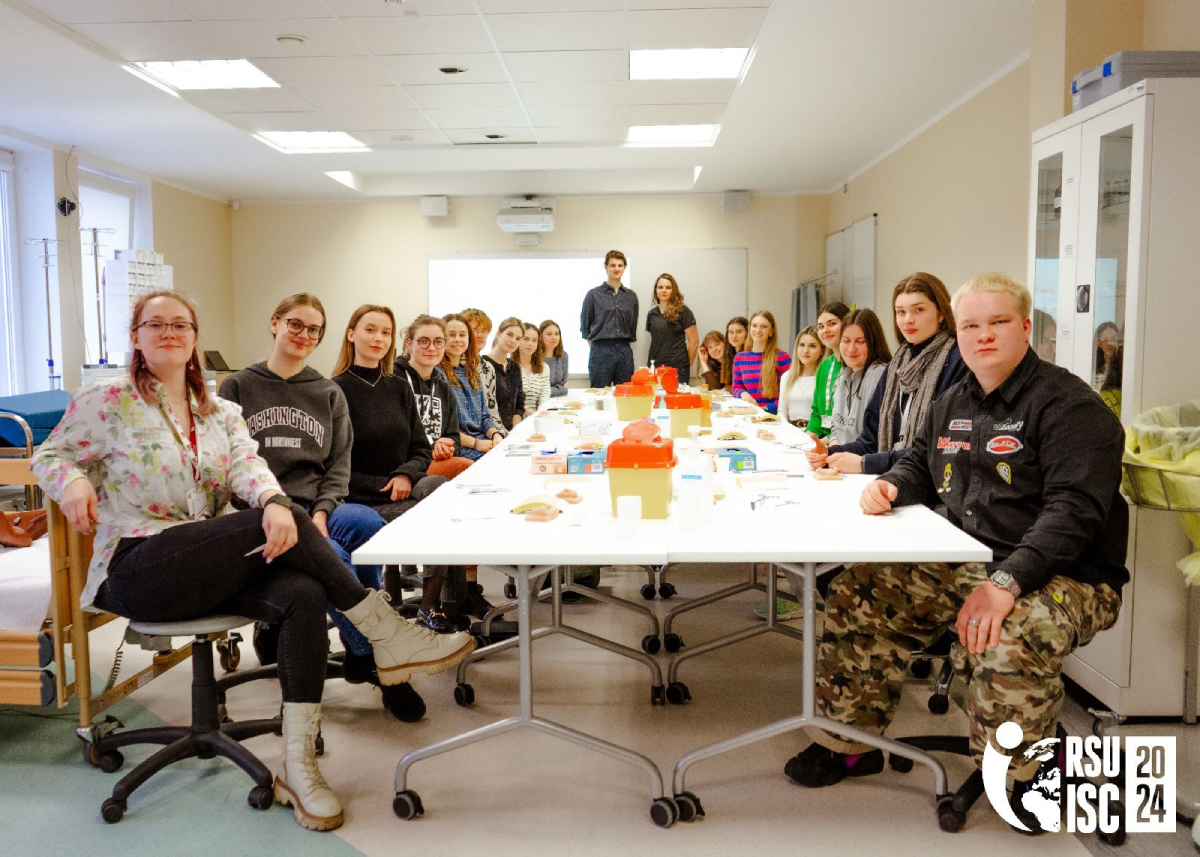 Suturing workshop with Dr Elizabete Ribalkina at the RSU International Student Conference 2024
The RSU International Student Conference is a unique experience for students in the Baltic States, as there are no other student conferences of a similar scale organised in Estonia or Lithuania. I have also researched international student conferences in Europe, such as the medical student conference in Krakow (23–25 April 2026) and the ISCOMS conference in Groningen (1–4 June 2026). The timing of the RSU International Student Conference is convenient and suitable for Latvian and Baltic students because it leaves them time to prepare for colloquiums and exams, as well as, in my case, the national examination in May. Students can therefore actively participate in extracurricular activities, either by organising them or presenting their scientific work, in parallel with their usual study schedule.
Outside Latvia, I have become familiar with scientific competitions at the EDSA Congress in Strasbourg and the IADS Congress in Basel. I hope to present my own research at the EDSA Congress in March and the IADS Congress in April.
What research topics or areas interest you the most?
I am most interested in research in the field of oral and maxillofacial surgery. I am particularly passionate about literature analysis in implantology, and I follow international specialists who regularly publish clinical case reviews and discussions on specialised social networks. My peers from Lithuania, who regularly share their clinical experience, are very active and inspiring in this regard.
I am currently also collaborating with the RSU Department of Occupational and Environmental Medicine on developing a study examining hand and musculoskeletal health among dental specialists in Latvia. I have personally experienced increasing neck and shoulder pain after long working days in the clinic, and given that research of this kind is limited in Latvia, I see a valuable opportunity to conduct a study with clear application in everyday clinical practice. I am particularly interested in exploring how posture, repetitive movements, and load distribution contribute to the development of symptoms, as well as identifying ergonomic solutions and preventive measures that could help reduce these risks.
Do you see yourself potentially working as a lecturer at RSU or another university after finishing your studies?
Most definitely. During my studies, I have met several students who went on to become lecturers at RSU after graduating, and their experience has been truly inspiring.
I believe this aligns with the idea that being a doctor means being a lifelong learner – learning never really stops. My peers have shared that working as a lecturer often brings them back to the basics. The job requires revisiting topics that may not always be at the forefront of their daily clinical work. This helps keep knowledge fresh, encourages seeing issues from different perspectives, and often involves learning the latest information from scientific literature, which can later be applied in practice.
I also like the idea of passing on knowledge, both in terms of practical skills and clinical reasoning. Therefore, I believe that teaching would be a logical and motivating step for me in the future, alongside my clinical career.
Combining studies with work can be quite demanding. Do you find any time for hobbies?
Yes, absolutely. I believe it is important for a doctor not to be constantly working, so I make a conscious effort to find time for my hobbies.
In my free time, I sing in the mixed choir Medera. We are a very friendly group, with many concerts and occasional trips to choir festivals abroad. I particularly like the name of the choir, as Medera is related to the Latin medere (also medeor), which means “to treat” or “to heal”. I also exercise on a daily basis. I enjoy going for a run around the Māra pond and working out at the gym. I am very much looking forward to the reopening of the RSU Sports Club after its renovation.
 The mixed choir Medera at the 16th Latvian Song and Dance Festival in Toronto, Canada
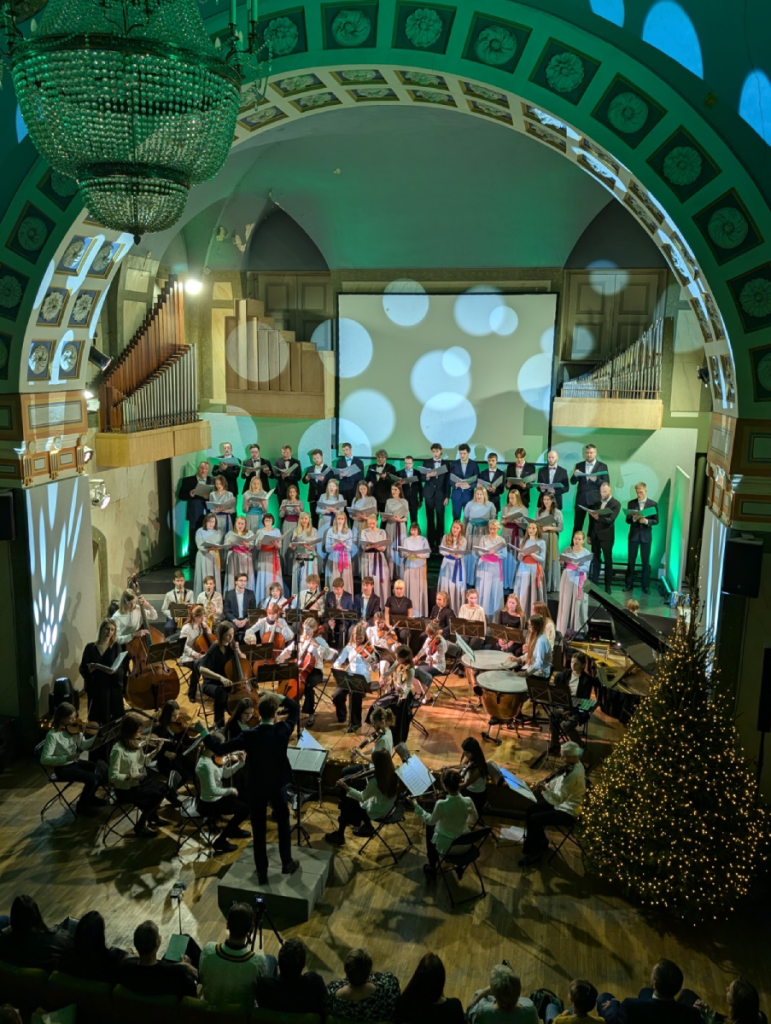 The mixed choir Medera at a Christmas concert in the Ave Sol concert hall
I am also a member of the Lettgallia student corporation. We follow traditions, like going to the Riga Brethren Cemetery to lay flowers at the monument for Mother Latvia on 18 November. When I have a free evening, I enjoy going to the theatre. One of my favourite performances is Dzimšanas dienas kūka (Birthday Candles) at the New Riga Theatre. I recommend seeing it if you have the opportunity.