
Research Project Launched on Demographic Change, Migration, and Re-emigration under Conditions of Geopolitical Uncertainty


'Between Risk and Hope: Demographic Change and (Return)Migration in Latvia Amid Russia’s War in Ukraine' is a new large-scale scientific research project aimed at analysing how Russia’s war in Ukraine affects demographic processes, migration, re-emigration, and societal resilience in Latvia.
The project will be implemented over a three-year period within the framework of the State Research Programme 'Letonica for the Development of a Latvian and European Society' and is led by Associate Professor Māris Andžāns of Rīga Stradiņš University. Project partners include the University of Latvia and the Stockholm School of Economics in Riga. Researchers from other Latvian and international universities will also be involved in the project, including experts from the Latvian diaspora.
A Project on Demography and Migration in the Context of Geopolitical Change
Within the project, Russia’s war in Ukraine is analysed as a structural shock that influences people’s decisions regarding family formation, emigration, return to Latvia, and integration both in Latvia and abroad. Drawing on theoretical approaches from risk society, ontological security, and future imaginaries, the researchers will analyse how perceived insecurity and hopes for the future shape demographic behaviour.
Demographic and migration processes are often assessed through the prism of economic opportunities or their absence. In this project, we will focus in particular on how the surrounding security environment influences these processes. Russia’s aggression against Ukraine has brought many Ukrainian refugees to Latvia and, at the same time, has raised concerns among Latvia’s residents about their own and their family members’ futures—whether to start or expand families, postpone such decisions, or link their future to other countries. Latvians living abroad are also asking whether it is safer to build their future at a distance or to return, as is often considered, in the shadow of insecurity.
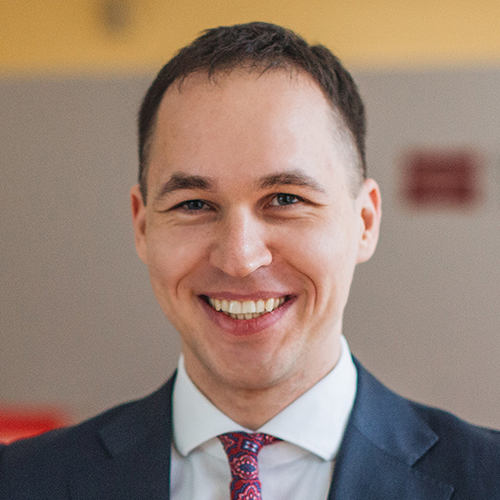
Māris Andžāns
Thematic work packages
- X-Day imaginaries and their demographic consequences (lead – Klāvs Sedlenieks)
- Demographic decisions under conditions of insecurity (lead – Zane Vārpiņa)
- Re-emigration potential from the Latvian diaspora in the United Kingdom (lead – Olga Cara)
- Migration discourse in the media (lead – Mārtiņš Kaprāns)
- Integration of Ukrainian refugees and recent migrants from Belarus and Russia in Latvia (lead – Jānis Juzefovičs)
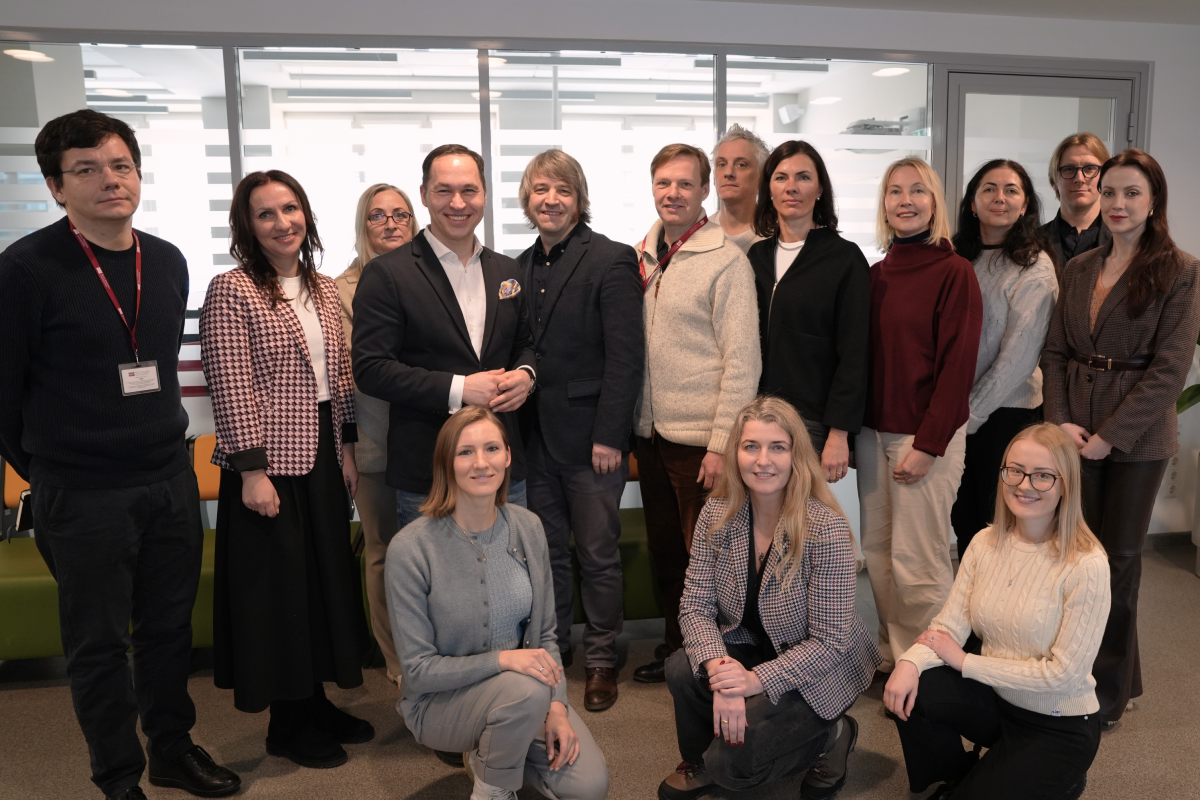
Project team during the inaugural meeting
Evidence-Based Solutions for Policy Planning
The project will employ a combination of research methods, including nationally representative surveys, conjoint experiments, future self-interviews, participant observation, and in-depth interviews. The project will result in reusable datasets, scientific publications, policy recommendations, a book, and informational events, including those held in Latvia’s regions.
Early-career researchers will also be involved in the project, strengthening Latvia’s future expertise in demography, migration, and societal resilience.
Project 'Between Risk and Hope: Demographic Change and (Return)Migration in Latvia Amid Russia’s War in Ukraine' (VPP-IZM-Letonika-2025/1-0002) is financed from state budget allocated from Ministry of Education and Science in state research programme 'Letonika: For the development of a Latvian and European society' and will take place form December 2025 until December 2028
Related news
 RSU hosts CNRS/EHESS Centre for Russian, Caucasian, East European and Central Asian StudiesResearch, International Cooperation


