Between Risk and Hope: Demographic Change and (Return)Migration in Latvia Amid Russia’s War in Ukraine
Aim
Description
The project proposal aligns with the call’s goal of researching demography, migration, and return migration within the context of current geopolitical, socio-economic, and regional changes. It considers Russia’s war in Ukraine as a structural shock that alters how people in Latvia and its diaspora make decisions about family formation, emigration, return, and integration. Drawing on theories of risk society, ontological security, and hope/future imaginaries, it examines how perceived insecurity and future expectations influence demographic behaviour.
The project consists of five substantive work packages:
- Civic “X-Day” imaginaries and their demographic implications;
- Fertility and family strategies amidst insecurity;
- Return migration potential in the Latvian UK diaspora;
- Media discourse on migration;
- Integration experiences of post-2022 Ukrainian refugees, along with recent Belarusian and Russian migrants.
Using mixed methods, including a nationally representative survey, survey and conjoint experiments, participant observation, and in-depth interviews, the project will produce reusable datasets, academic publications, policy briefs, regional outreach events, and a book. By working with Latvia’s ministries responsible for demography, welfare, defense, diaspora, and integration, it will provide evidence-based recommendations to improve population resilience, return migration strategies, and demographic policy planning amid long-term geopolitical pressures.
Read more on the RSU Research Portal
Results
- Original scientific articles submitted, accepted for publication or published in Q1 and Q2 quartile journals included in the Web of Science or SCOPUS databases (in accordance with subsection 12.1.1 of the Cabinet of Ministers Regulations) – 6;
- Original scientific articles submitted, accepted for publication or published in journals or conference proceedings included in the Web of Science or SCOPUS databases (in accordance with subsection 12.1.2 of the Cabinet of Ministers Regulations) – 2;
- Conference materials - summaries (abstract max 1 page) – 10;
- Anonymously reviewed monographs or its manuscripts (in accordance with subsection 12.8 of the Cabinet of Ministers Regulations) – 1;
- Scientific databases and datasets developed within the project (in accordance with subsection 12.8 of the Cabinet of Ministers Regulations) – 3;
- Reports on policy recommendations and policy impacts (in accordance with subsection 12.6 of the Cabinet of Ministers Regulations) – 5;
- Submitted project application to an international or national research and development project competition (in accordance with subsection 12.8 of the Cabinet of Ministers Regulations) – 2;
- Successfully passed the Master's state (final) examination, taking into account the goals and objectives of the Program (in accordance with subsection 12.7 of the Cabinet of Ministers Regulations) – 1;
Other scientific outputs not included in previous categories (in accordance with subsection 12.8 of the Cabinet of Ministers Regulations):
- 5 popular science articles;
- 5 policy document presentations (presentations of the documents referred to in point 8);
- 1 final project conference;
- 8 students involved in the project;
- 2 diaspora researchers involved in the project;
- 1 integrated interdisciplinary research community established on the basis of the project;
- 3 meetings of the Project Stakeholder Co-creation Council;
- 2 presentations for representatives of the Stakeholder Co-creation Council; participation in two international academic networks;
- 30 social media posts;
- 7 enhanced study courses.
Team
- Māris Andžāns – Project leader
- Klāvs Sedlenieks – Work package leader
- Jānis Juzefovičs – Work package leader
- Olga Cara – Work package leader
- Mārtiņš Kaprāns – Work package leader
- Zane Vārpiņa – Work package leader
Partners
- University of Latvia
- Stockholm School of Economics in Rīga
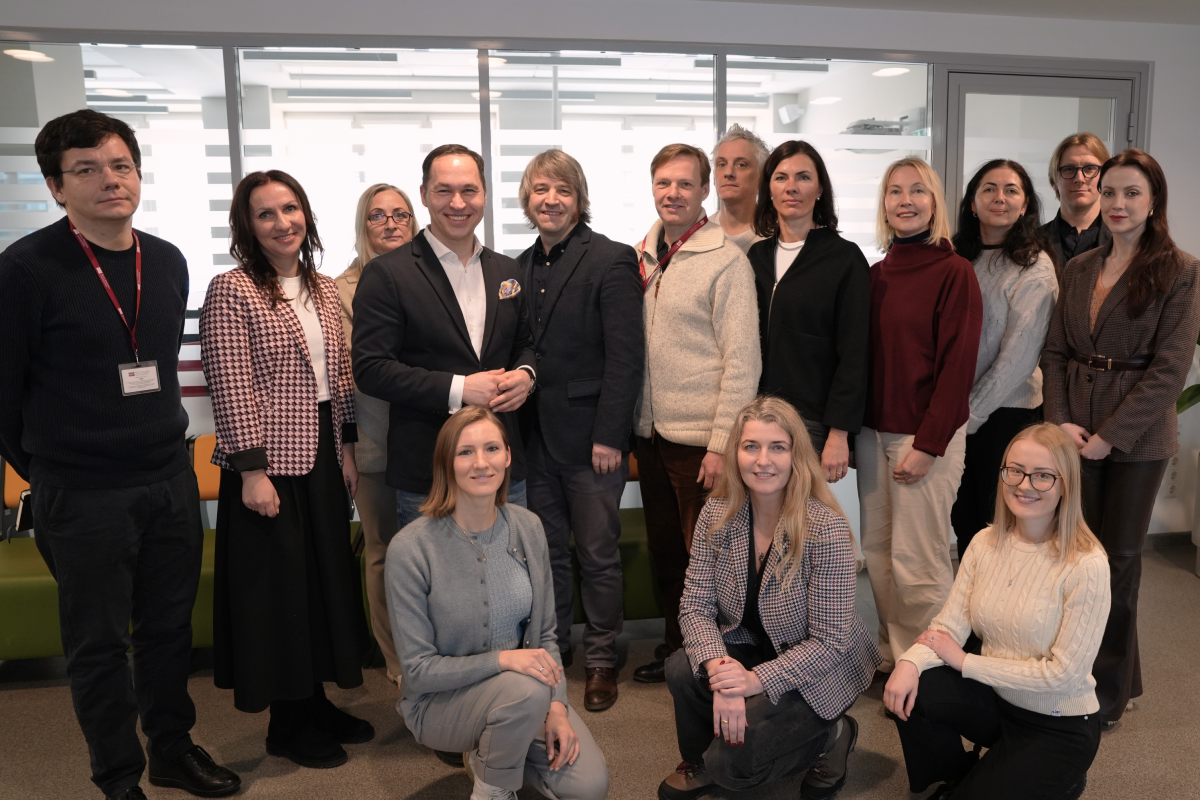
Co-creation Council groups
The group participants listed below are current for the meeting on 16 September 2026. Participant membership may be adjusted if necessary.
| Group | Group name | Group leader | Group members |
|---|---|---|---|
| 1 | “Day X” imaginaries and their demographic consequences | Dr Klāvs Sedlenieks (RSU) klavs[pnkts]sedlenieks  rsu[pnkts]lv rsu[pnkts]lv | Kristers Grauze (Ministry of Defense, Republic of Latvia) |
| 2 | Demographic decisions in times of insecurity | Dr Zane Vārpiņa (SSE) zane[pnkts]varpina sseriga[pnkts]edu | Inga Akmentiņa-Smildziņa (parent organisation "Mammām un Tētiem”, Latvian Parents’ Organisation) Ilmārs Mežs (Vidzeme University of Applied Sciences) |
| 3 | Re-emigration potential from the diaspora in Great Britain | Dr Olga Cara (RSU) olga[pnkts]cara rsu[pnkts]lv | Jānis Mažeiks (Ministry of Foreign Affairs, Republic of Latvia) Vineta Hibšmane (organization “esiLV”) Ģirts Smelters (association "Ar pasaules pieredzi Latvijā”) |
| 4 | Media discourse on migration | Dr Mārtiņš Kaprāns (LU) martins[pnkts]kaprans lu[pnkts]lv | Sanita Lāce (Society Integration Foundation Republic of Latvia) Dārta Pelse (organisation “Providus”) |
| 5 | Integration of Ukrainian refugees and recent Belarusian and Russian migrants | Dr Jānis Juzefovičs (RSU) janis[pnkts]juzefovics rsu[pnkts]lv | Representative subject to availability (Office of Citizenship and Migration Affairs) Dace Paegle (Riga City Council) Jeļena Šaicāne (Ministry of Culture, Republic of Latvia) |