RSU calls on sports trainers and coaches to obtain the required education


As of 1 August this year, the new Sports Law has entered into force in Latvia. The law establishes sports coaches' and trainers' professional status and sets out clearer requirements for working in this profession. Rīga Stradiņš University (RSU) welcomes these changes and emphasises that coaches’ professional preparedness is an important prerequisite for a safe sporting environment, athletes’ health, and the long-term development of the sports sector in Latvia.
According to the new Sports Law, a sports coach is defined as a person who has the appropriate education or professional qualifications and has been issued a sports coach certificate, and who trains and instructs athletes as well as leads sports training sessions. The requirement that only a person holding a sports coach certificate may work as a sports coach will come into force on 1 June 2027. This means that individuals who currently lead sports training sessions or classes but have not yet obtained the necessary education and certificate have been granted a transitional period to obtain the necessary professional status. At the same time, the law also provides for administrative liability for working as a sports coach without the certificate specified in the relevant laws and regulations.
Sports experience alone is not enough
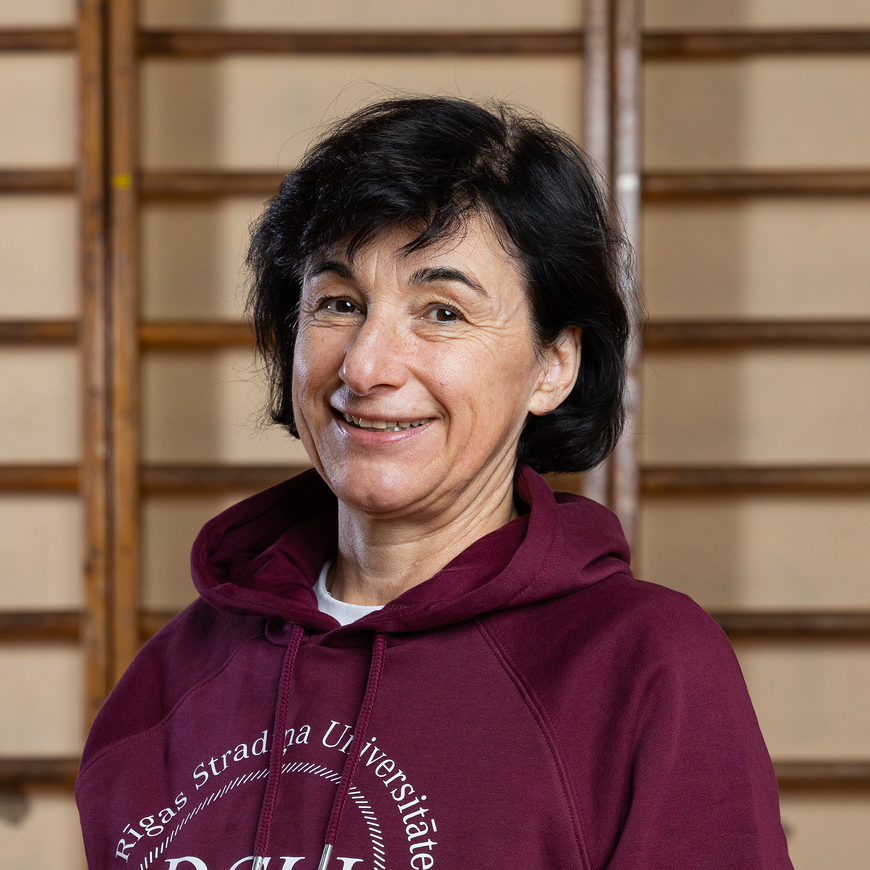
Inese Ļubinska, Head of the Sports Study Field at RSU, points out that the requirements laid down in the law are essential not only for the prestige of the profession, but first and foremost for the health and safety of athletes, students and everyone taking part in training sessions.
People entrust their own and their children’s health, safety and development to trainers and coaches, so personal experience in sport or years spent training are not enough on their own. A coach must understand what happens to the human body during exercise, how to structure a training programme safely, how to recognise the risks of overexertion and injury, and how to work with people of different age groups. Professional education and certification are not a mere formality – they represent a responsibility towards the people whom the coach teaches and trains. The higher the professional standards of our coaches, the safer the sporting environment and the stronger Latvian sport as a whole.
Asst. Prof. Inese Ļubinska
When choosing a coach, everyone is encouraged to verify their professional qualifications and certification. An integral part of studies is scientific research, as well as the opportunity to develop one’s skills and competences through practical training in the chosen sport while studying. Appropriate training provides coaches with knowledge of anatomy, sports physiology, biomechanics, nutrition science, pedagogy, psychology and medicine, as well as the skills to plan, manage and evaluate the training process, while a sports coach certificate attests to professional competence and establishes a uniform standard of quality within the sector.
RSU’s sports coach education embodies the university’s motto, “Science for Healthy Societies”, by combining the latest scientific findings with practical knowledge and skills.
RSU offers a path from Category C to doctoral studies
RSU offers broad opportunities for sports coach education and professional development – from acquiring the basic knowledge necessary to obtain a Category C sports coach certificate to short-cycle and bachelor’s professional studies, as well as master’s and doctoral studies. For those working in the sports sector who do not yet have the education required for certification, the RSU professional development programme Basic Knowledge for Obtaining Sports Coach Category C Certificate is particularly relevant. The programme comprises 320 hours and is designed for people who have completed at least secondary education and wish to acquire the basic knowledge required to work as a coach. The programme covers basic knowledge of sports pedagogy and psychology, anatomy, physiology, sports medicine and training theory. Theoretical knowledge is combined with in-person and practical sessions. Upon successful completion of the programme, participants receive a professional development certificate and are eligible to take the certification examination to obtain a Category C sports coach certificate.
Obtaining the necessary professional status should not be postponed
RSU calls on individuals who are already leading sports training sessions or classes but do not yet have the required education and certification to make use of the transitional period provided for in the Sports Law and obtain the necessary professional status in a timely manner, rather than waiting until 1 June 2027.
If you are already working as a coach but do not yet have the education required for certification, make the most of the transitional period to obtain the necessary professional status in advance!