RSU Academy of Sport promotes inclusive sport opportunities for children and young people


Can a child with a leg amputation play football? Can a pupil with disabilities not only take part in PE lessons but also pursue sports outside of school and achieve high-level results? The answer is yes, provided they have people around them who are aware of the opportunities available, know how to encourage them and can help them find the most suitable solution.
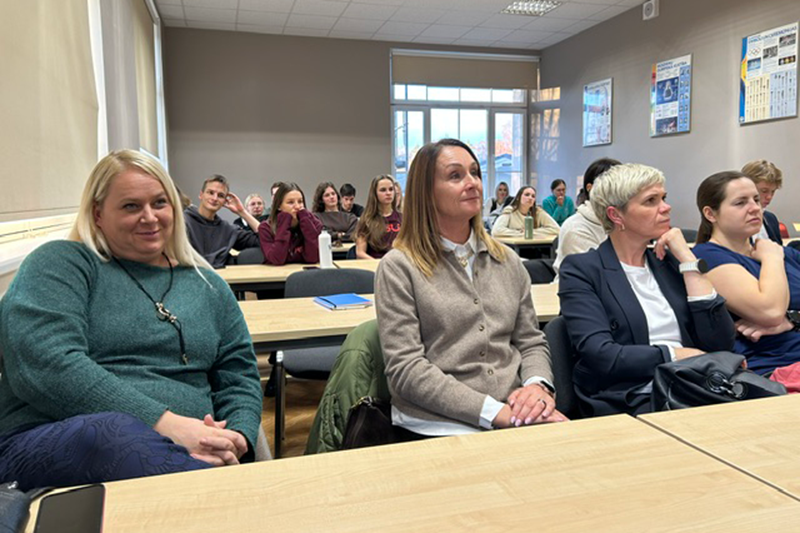
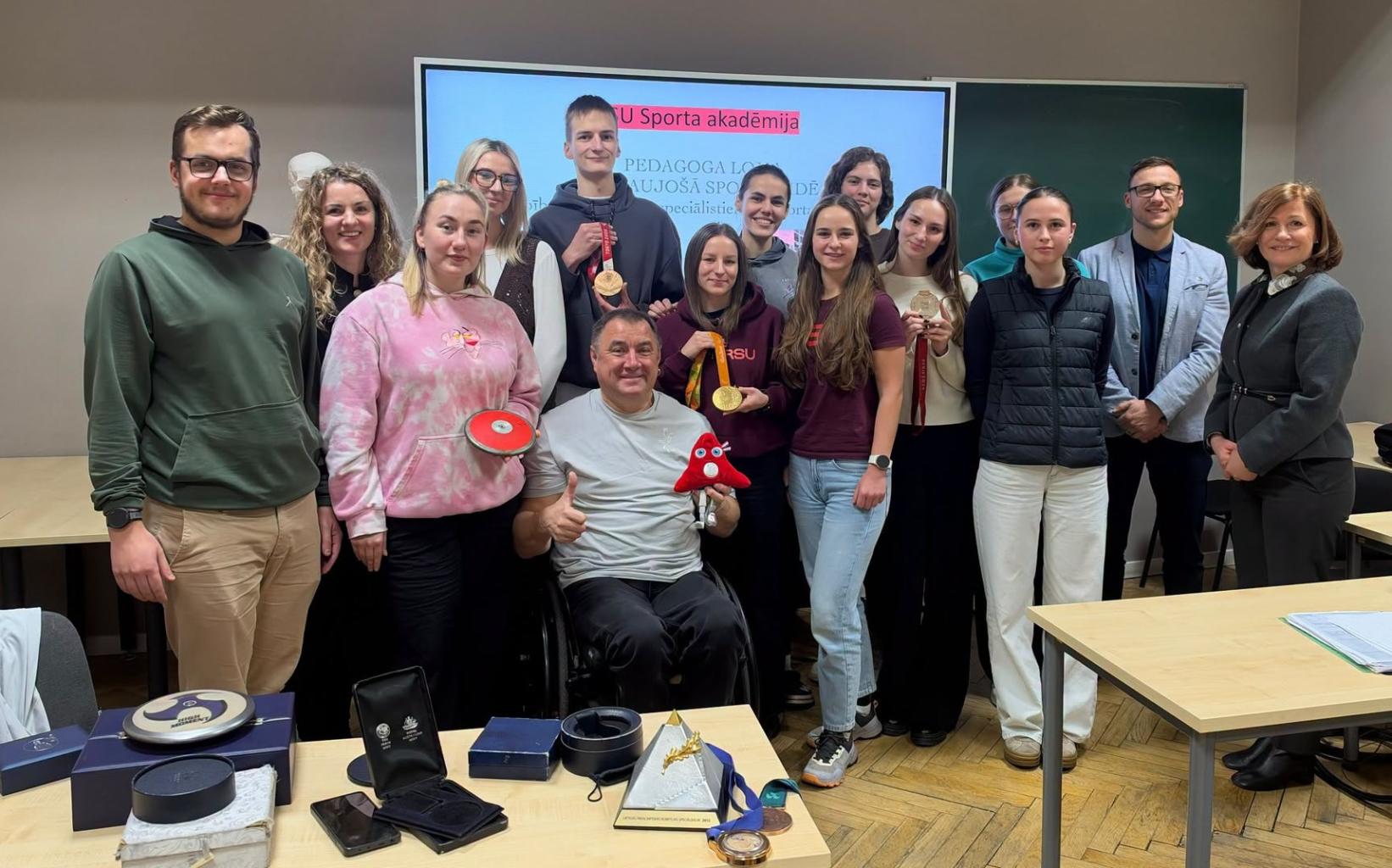
The opportunities offered by inclusive sport, the role of educators and the importance of collaboration in supporting the journey from first sporting experiences to high-performance sport were discussed by participants at the thematic open class Inclusive Sport: Opportunities, Collaboration and the Path to Achievement, held at the Rīga Stradiņš University (RSU) Academy of Sport. Several dozen students, sports educators, coaches and representatives of sports organisations took part in the class.
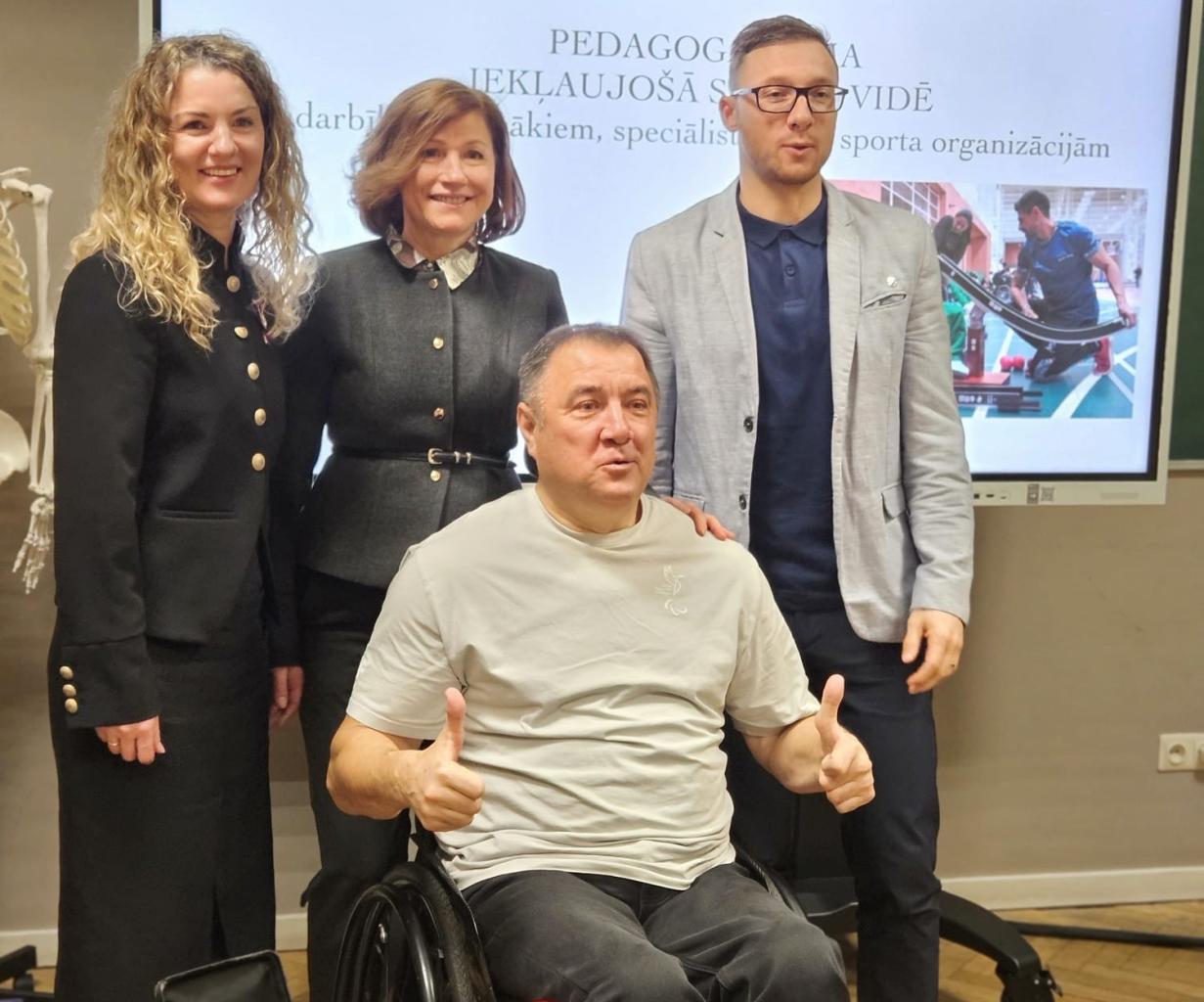
The class was organised by Nadija Strazdiņa, Lecturer at the RSU Academy of Sport and Head of the Special Sports Centre. The speakers sharing their experiences were Ilvars Koscinkevičs, Head of Social Responsibility and Environmental Sustainability at the Latvian Football Federation; Liene Apine, President of the Latvian Paralympic Committee; and Aigars Apinis, Latvian Paralympic athlete and four-time Paralympic champion in discus and shot put.
Sometimes all it takes is a word of encouragement
The main barriers that can prevent children and young people with functional limitations from taking part in sport is not only the lack of accessible environments but also a lack of information and societal attitudes.
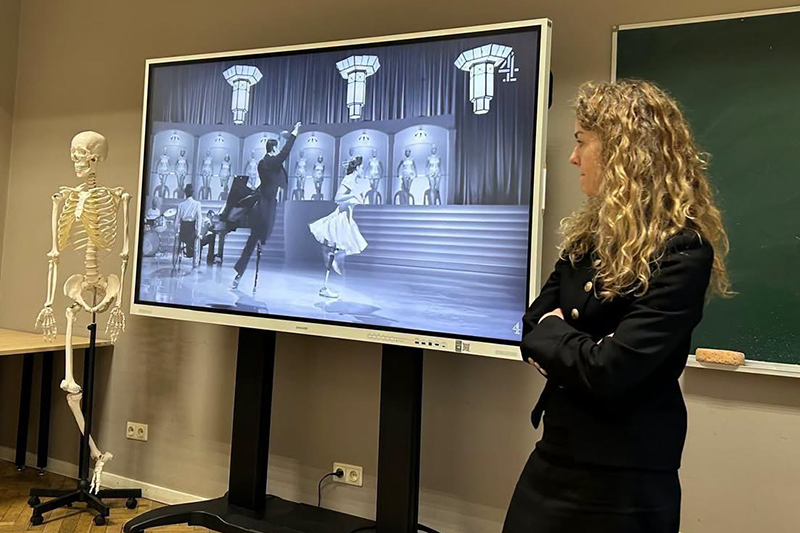
Speaking about the role of educators in an inclusive sporting environment, Strazdiņa emphasises that it is important for educators to recognise not only a pupil’s difficulties but also their abilities, interests and potential. For example, a child with a leg amputation may not know that amputee football exists. By telling the child about this sport and showing them a video or introducing them to the experiences of other athletes, an educator can help them discover a new opportunity.
‘Sometimes, information and a word of encouragement are enough to make a child think for the first time: perhaps, I can do it too,’ says Strazdiņa.
Inclusive sports education is not simply about a pupil being present in a PE lesson. It is important to ensure that they have the opportunity to participate actively, interact with their peers, develop new skills and experience success.
To achieve this, educators must be able to adapt physical activities to each pupil’s individual needs, adjusting the level of difficulty, intensity, equipment, distance, rules or form of communication as necessary.
‘The main principle is to adapt the activity to the pupil, rather than asking the pupil to adapt to the activity,’ emphasises Strazdiņa.
From adapted football to sporting achievements
For educators and families to help children find a suitable sport, it is important to know what opportunities are already available in Latvia.
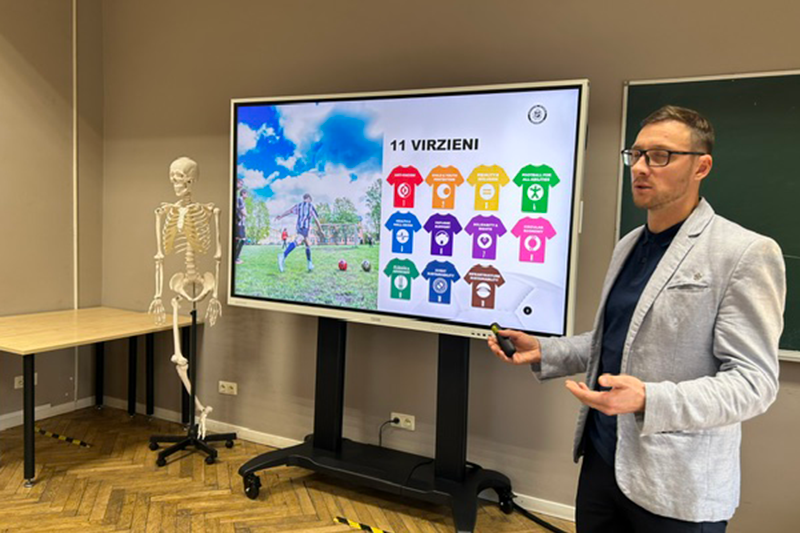
Ilvars Koscinkevičs, Head of Social Responsibility and Environmental Sustainability at the Latvian Football Federation, introduced participants to the Federation’s
11 programmes designed to make football accessible to different groups in society. These include football festivals for special schools, the Special Olympics, Seni Cup, blind football, walking football and amputee football.
As a compelling example of an inclusive sporting environment, Koscinkevičs mentioned the final of the Latvian Women’s Cup, where a young wheelchair user performed the Latvian national anthem on the football pitch at the start of the match. This event demonstrated that being part of a sporting community is not limited to actively participating in sport, but also includes having the opportunity to be present, take part in sporting events and feel a sense of belonging, even if sport is not part of your everyday life.
Meanwhile, Liene Apine, President of the Latvian Paralympic Committee, outlined opportunities for sports development in Latvia and spoke about Paralympic Days and the I’mPOSSIBLE educational programme. Using para-sport and Paralympic values, the programme helps young people understand the importance of inclusion, challenge stereotypes about disability and recognise the sporting potential of every individual.
Apine paid particular attention to involving young people in para-sport and emphasised the importance of giving them opportunities to try different sports from an early age, find the one that suits them best and develop their skills. She also highlighted the importance of collaboration between athletes, coaches and sports doctors in ensuring that young people receive appropriate and safe training.
The class also addressed the transition from PE lessons at school to regular sports activities and training, as well as opportunities to continue developing sporting skills and progress to high-performance para-sport.
The road to medals
Aigars Apinis, one of Latvia’s most decorated athletes, who has competed at seven Paralympic Games in the discus and shot put, shared a particularly personal account of his experiences. He spoke about his life, describing how he came to use a wheelchair, how his sporting career began and how he made his way to his first Paralympic medal.
The athlete also talked about his training and his collaboration with his coach, as well as the importance of support on the path to high-performance sport.
Collaboration as the foundation for inclusive sport
The thematic open class at the RSU Academy of Sport provided an opportunity for future and practising sports professionals to learn about the initiatives available in Latvia, hear about the experiences of professionals and a para-athlete, and establish new professional contacts.
The class demonstrated that no single person or organisation is solely responsible for the development of inclusive sport. For a child or a young person to progress from their first sporting experiences to regular training and, potentially, high-performance sport, collaboration between educators, coaches, families, sports organisations and other specialists is essential.
Related news
 RSU GYM app now available – gym and group fitness classes open to everyone For RSU Employees, For Students, Sports