RSU Library announces registration for the Baltic-German Summer School on Systematic Reviews


The Rīga Stradiņš University (RSU) Library is organising the "Baltic-German Summer School on Systematic Reviews" in collaboration with Charité - Universitätsmedizin Berlin Medical Library (Germany) and Baltic partners from the Library and Information Centre of the Lithuanian University of Health Sciences (Lithuania) and Tartu University Hospital Library (Estonia).
Systematic reviews are carefully planned and structured studies that summarise and analyse the existing scientific literature on a specific topic. They help to identify gaps in knowledge and provide a basis for further research. Librarians play a key role in this process by helping researchers to identify and evaluate relevant sources, providing access to databases, conducting literature searches and offering advice.
Librarians' knowledge and skills are fundamental to ensure the quality and accuracy of systematic reviews, which is why the "Baltic-German Summer School on Systematic Reviews" is designed for medical librarians and researchers from Latvia, Estonia and Lithuania. By using field experts' skills and experience, we could be well-equipped to adapt international best practices to our local context and everyday work. Charité - Universitätsmedizin Berlin Medical Library has a broad experience by leading workshops and lectures on systematic review process to students and scientists. When attending the lectures, theory is learned, but RSU planned concept of summer school is to create systematic review step by step with hands on tasks.
Project duration: 03.03.2025. – 30.09.2025.
Duration of the summer school: 29.07.2025. – 01.08.2025.
Venue of the summer school: Senate Hall, Room K-212, RSU (16 Dzirciema iela, Riga)
Countries and institutions involved in the project
- Latvia: Rīga Stradiņš University Library
- Germany: Charité - Universitätsmedizin Berlin Medical Library
- Lithuania: Library and Information Centre of the Lithuanian University of Health Sciences
- Estonia: Tartu University Hospital Library
Baltic-German Summer School on Systematic Reviews PROGRAMME
About the guest lecturers
Corinna Dressler received an MSc in Health Psychology from the Universiteit Leiden in 2007 and a PhD in Health Sciences from the University of York in 2013. She is an expert in methods for health services research, specifically evidence synthesis and the development of evidence-based clinical guidelines. Prior to joining the Charité Medical Library, she worked at the Division of Evidence-Based Medicine at the Department of Dermatology, Charité. Corinna Dressler was previously employed as a researcher in various multidisciplinary teams in the UK, Canada and Germany. For over 10 years, her focus has been on evidence synthesis and since 2022, she has been the Head of Information Literacy Education / Systematic Reviews at the Medical Library Charité- Universitätsmedizin Berlin.

Meghan Forrest is an information specialist at the Medical Library at Charité – Universitätsmedizin Berlin. Concurrent to her work in health literacy education at the Medical Library, she is a research associate the Institute of Public Health – as well as a PhD student in the Health Data Sciences PhD Program – at the Charité. Her research foci are on evidence synthesis research methodology, and observational research methodology in the field of stroke. She received an MSc in Epidemiology from the Charité in 2023. Prior to her time in Berlin, Meghan worked as an intensive care unit nurse at the University of Michigan.

Irma Klerings is an information specialist at the University for Continuing Education Krems, where she works for the Department for Evidence-based Medicine and Evaluation, Cochrane Austria, and JBI Austria. Her roles include designing systematic searches for a wide variety of evidence syntheses (systematic reviews, rapid reviews, qualitative evidence syntheses, etc.), information retrieval methods research, and teaching literature search skills. Her academic background is media and communication studies.
Full list of guest lecturers will be added soon!

Laptop required.
This project of the Baltic-German University Liaison Office is supported by the German Academic Exchange Service (DAAD) with funds from the Foreign Office of the Federal Republic Germany. |  |
Related news
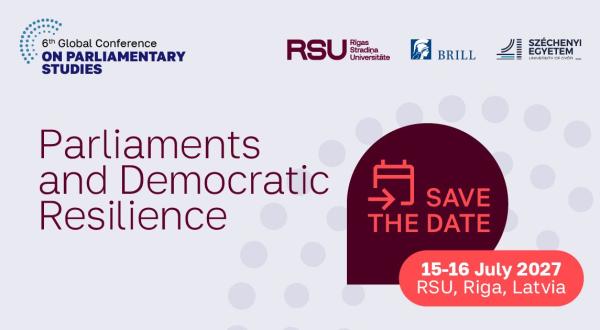 RSU to host the 6th Global Conference on Parliamentary StudiesConferences, workshops, International Cooperation