RSU student from Ukraine: ‘You can’t live in limbo’


Photo: Courtesy of Arina Vitjuka
Rīga Stradiņš University (RSU) is home to Ukrainian students who, having fled the war, are continuing their professional journeys in Latvia and trying to rebuild a safe and stable life. 46 students from Ukraine are currently enrolled at RSU; since the start of the war, 18 visiting lecturers from Ukraine have worked at RSU, and 30 Ukrainian students have studied at RSU Open University.
On 24 February, four years have passed since Russia’s full-scale invasion of Ukraine. For many, this date is not just a number on a calendar, but a dividing line between life before and life after.
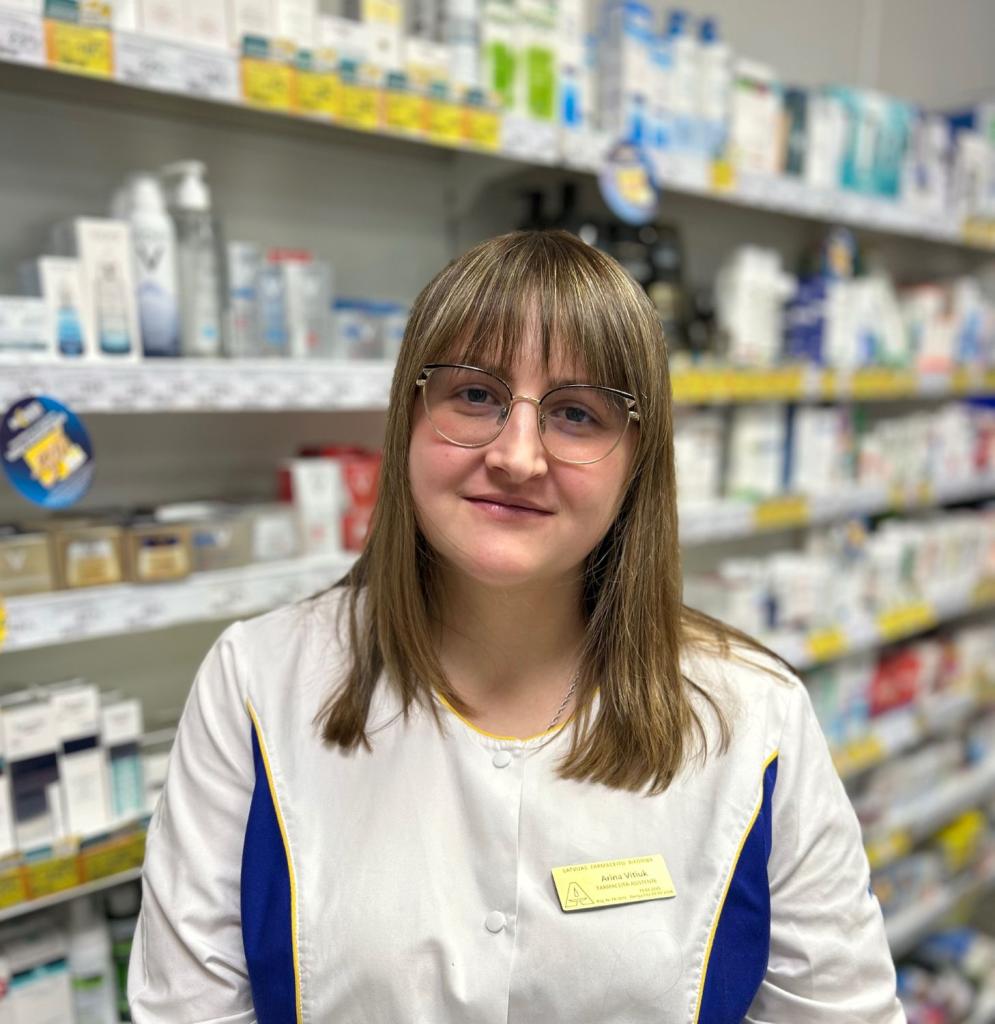
Arina Vitiuka, an RSU Open University student and a pharmacist from Ukraine, arrived in Latvia on 9 March 2022.
Arina, how did you decide to leave, and why did you choose Latvia?
I am a pharmacist. I studied at Zhytomyr College, then at Bogomolets University, and I also completed postgraduate studies in Kharkiv.
I was working, living, building my path and then, suddenly, the war split life in two and forced me to flee to another country.
I remember it felt absurd, even impossible, that in the 21st century a bloody war could start in Europe. You hope until the very last moment that everything will end with threats, not actual gunfire. But the war began. I have a young daughter who was two years old at the time, and it was she who made me decide to leave Ukraine. I understood that I couldn’t risk my daughter’s safety. Choosing Latvia was connected to family, because my grandmother’s brother lives here.
You are from the Zhytomyr region. What did you feel at the time, living so close to the Belarusian border and hearing news about what was happening elsewhere?
Your body is still at home, but your thoughts keep circling around one question: how quickly can everything turn into a catastrophe, and where would my daughter be safer? The news about Bucha, about the roads people took trying to escape, and about the cruelty of Russian soldiers was devastating. And when you realize that your region is also close to the Belarusian border, anxiety is no longer just in your head but becomes a sensation you feel in your whole body. Relatives in Latvia reached out to me, and that was the final push: I took my child and left.
You settled into life in Latvia relatively quickly, because on 26 April you had already started working. Why was that important to you?
If you are left alone just reading news from Ukraine and lost in your own thoughts, you simply start to fall apart. I understood that within the first weeks. At first I lived in Mālpils, where we were welcomed very warmly.
I met with a psychologist who said a very important phrase: don’t live in ‘limbo,’ do something real otherwise the waiting can destroy you.
I repeat that to myself like a mantra, and that is exactly why I asked for the opportunity to work. I needed structure, routine, and the feeling that I was still a professional, not just a refugee.
How did you continue your professional path in Latvia?
At first, I wasn’t sure what the right steps were, because there are rules, documents, and requirements you must meet in order to work fully in Latvia. People suggested that I first go to university and obtain the pharmacy assistant qualification as an external candidate.
After that, I was recommended studying at RSU as an way to gain the right to work in Latvia as a pharmacist.
That’s the path I’m taking now, and I’m happy and grateful that soon, after passing the exam, I’ll be able to work in the profession I love.
How is your Latvian coming along? Without it, working in a pharmacy is difficult.
I’m studying the language diligently, and I have passed the C1 level. In the beginning, I worked as a pharmacy assistant in Sigulda. This wasn’t easy because my Latvian wasn’t good enough, but that motivated me to learn. Now, during my internship in a pharmacy in Purvciems, I have to admit I use Russian more often than I did in Sigulda, but I keep studying so that I can speak completely fluently.
What has your experience been like studying at RSU and undergoing your internship?
Joining a cohort where other students had already been studying for several years, at first I didn’t really understand what, where, and when I was supposed to do things.
I’m grateful to the lecturers, colleagues, and classmates for their understanding and support, which helped me settle in a great deal.
At first the lectures were remote on Zoom, followed by an internship in the pharmacy of Riga 1st Hospital. At the moment I’m doing my internship in my own pharmacy in Pļavnieki, and I feel that I belong here.
We understand that your future plans are not fully in your hands, but how would you like to see your future unfold?
That is the hardest question, because this isn’t mathematics where there is one correct answer. In Ukraine, I have relatives and friends who have stayed behind, I also have people the war has taken, even classmates. And when I hear how friends are living under shelling, in the cold, without electricity, I feel guilty that I am safe. At the same time, I feel a great deal of support in Latvia. My parents came later and are helping me to raise my child, and I can see that a life is taking shape here for me, with work and studies. Right now, I simply tell myself: my place is where my loved ones are, because ‘home’ means people, not only a country.
The most important thing for me is that the war ends justly and that people can return home safely, rebuild their cities and their lives. I would like returning not to mean survival, but rather the chance to live again.