Setting the wheel in motion: RSU students lay the groundwork for mummy research in Latvia


What remains of a human life after two or three centuries? Not only bones but also mummified human remains can preserve a surprising amount of evidence about a person’s health, diseases, diet, lifestyle, injuries and even the circumstances of their life and death. This is the subject of palaeopathology – the science of studying the health and diseases of people in the past, using the evidence preserved in human remains. Modern methods of palaeopathology and diagnostic imaging allow this evidence to be studied with ever-less interference with the remains themselves.
In Latvia, palaeopathological research has so far focused primarily on skeletal material recovered during archaeological excavations. One known exception is the Ancient Egyptian mummy at the Art Museum RIGA BOURSE, which underwent X-ray, computed tomography and endoscopic examination in 2000. However, mummified human remains suitable for research may also have been preserved in Latvian church cemeteries and crypts.
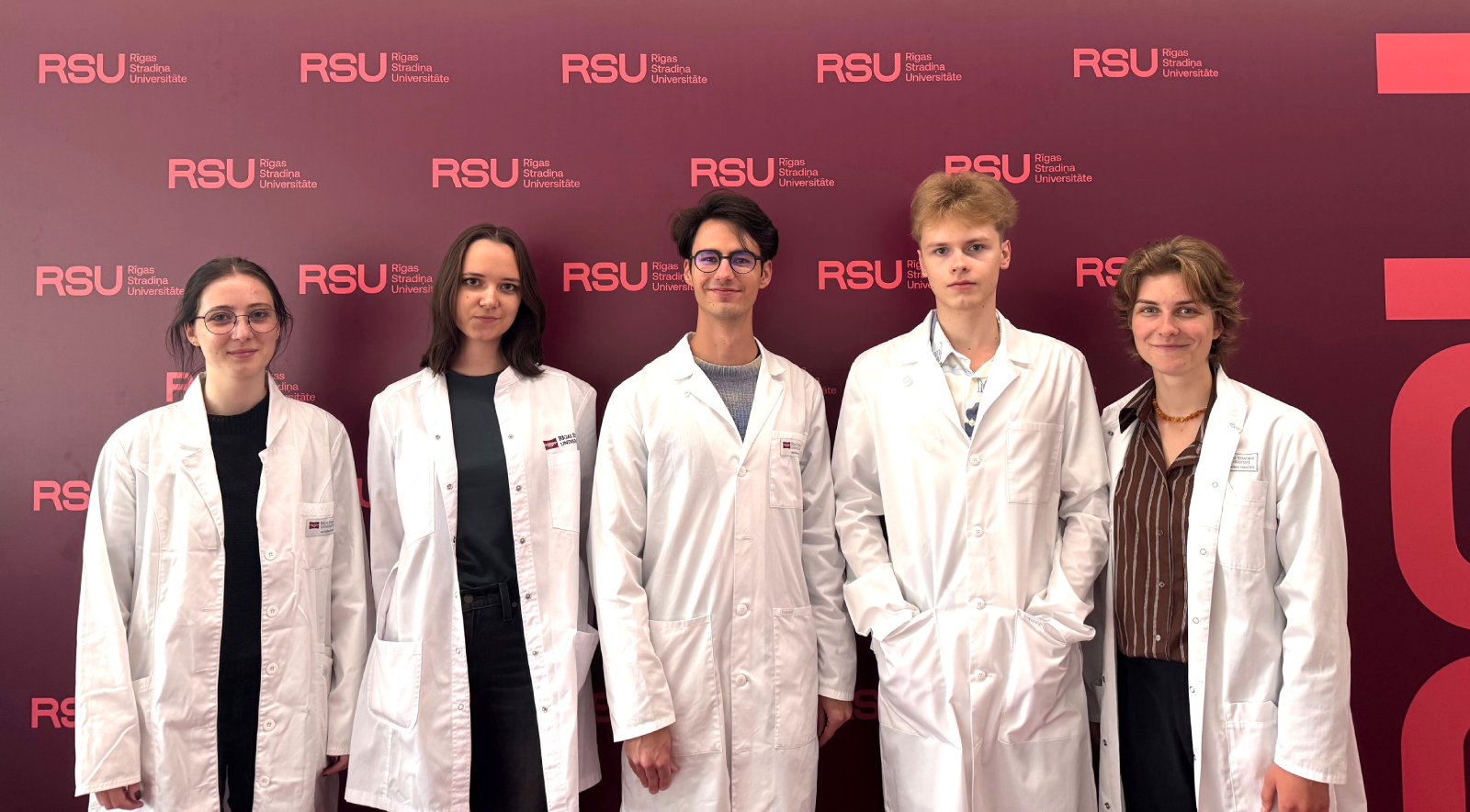
How much of this material is there in Latvia, what is its state of preservation and accessibility, and, most importantly, what research potential it holds – these are the questions that Rīga Stradiņš University (RSU) medical student Aleksis Ķeviņš will attempt to find out together with his fellow students and mentors. As part of a preliminary research project, the students will identify potential research sites, conduct field expeditions and document the evidence they find in order to assess the potential for developing a broader, interdisciplinary field of palaeopathological research into mummified human remains in Latvia in the future. In an interview, Aleksis explains how the idea came about, what they have already discovered and why Latvian mummies could also become a valuable source for research into the history of medicine.
Please tell us about yourself – your studies, work and interests!
I am in my third year of studying medicine at RSU, which is both exciting and challenging at the same time. I try to make the most of opportunities beyond my studies as well by getting involved in research projects and student interest groups. I am also a leader of the Genetics interest group.
I work as a biology teacher at Mārupe State Gymnasium, but in my free time I enjoy participating in the Riga Technical University dance ensemble Vektors. Alongside this, I am also a student ambassador for the RSU Anatomy Museum and lead guided tours for school students.
How did the idea of researching mummified human remains in Latvia came about?
The Anatomy Museum has played an important role in developing this project – Dr. med. Ieva Lībiete, Museum Curator, also is the project’s mentor. Every year on 2 February, the museum organises an event marking the anniversary of the first anatomy lecture. The events always feature interesting guest lecturers. This year’s speaker was Italian bioarchaeologist and palaeopathologist Dario Piombino-Mascali from Vilnius University. He has been studying mummies and mummified human remains for more than ten years. His lecture got me thinking about palaeopathology in Latvia. Listening to what can be learned from mummified human remains, made me wonder: why couldn’t a project like this be carried out in Latvia as well?
Until now, no one in Latvia has taken a systematic interest in mummified burials; for the time being, such a potentially unique resource as mummified remains has not been properly identified and utilised.
I subsequently agreed with I. Lībiete and D. Piombino-Mascali that they would act as mentors for the project. Together with my fellow medical students Līva Eglīte, Madara Uzula, Elizabete Laizāne and Vladislavs Petrovs, we wrote a project proposal The Potential for Bioarchaeological and Palaeopathological Research into Mummified Human Remains in Latvia: A Preliminary Study for a New Field of Research. Then we submitted it for the RSU Alumni Association’s Student Research and Innovation Grant and were awarded funding.
What is the main goal of the project, and what do you expect to find out?
The main idea is to lay the groundwork for using mummified remains specifically in palaeopathological research. We want to establish an initial database and identify the most scientifically and ethically appropriate research and methodological principles for the future development of interdisciplinary palaeopathological research. The project is being carried out at the RSU Institute of the History of Medicine in collaboration with the RSU Genetics interest group and Vilnius University, bringing together methods from the history of medicine, bioarchaeology and palaeopathology.
We are planning to identify human remains dating back approximately 250–300 years, from the 17th to the 19th century – not only bones but also mummified tissue fragments. This usually occurs when the burial site has favourable conditions, allowing the remains to dry out rather than decompose. Various methods can then be used to obtain information about the health, diet, diseases and injuries of people who lived at the time.
We are a group of enthusiasts – students who find this topic both interesting and important. We hope to get the big wheel turning so that further research in this field can follow. In the first stage, we want to establish where in Latvia mummified human remains can be found altogether. Over the course of 12 months, the aim is to compile documentation and draft a report – possibly, even a map – of these burials, their condition and the potential for further palaeopathological research.
What sort of sites will you be examining?
We do not carry out archaeological excavations, but we are identifying sites where burials are physically accessible. We are focusing on burials in the crypts, vaults and other spaces of churches belonging to various denominations in Latvia, as well as in manor estates of the former Duchy of Courland and Semigallia.
Church crypts are underground chambers or large cellars, usually situated beneath the church floor and most often directly beneath the altar area. Historically, they served both as burial chambers for particularly important figures and as small underground chapels.
Burials inside and adjacent to churches were common in Latvia until the second half of the 18th century, particularly amongst wealthier and socially prominent people. In Riga, burial places in church vaults and cellars were available until 1773, while in the Duchy of Courland and Semigallia, further burials in churches were prohibited in 1780. The tradition was discontinued mainly for sanitary reasons – overcrowded cemeteries, flooded vaults and concerns about the spread of infectious diseases, including plague, led to a shift towards cemeteries located outside urban areas.
What has been achieved so far?
We have reviewed archival documents and literature and have already identified around 70 potential objects – churches and manor estates. Of these, around ten may be suitable for expeditions where it is possible to access the mummified burials.
There are many burials that are not physically accessible; moreover, some of the crypts in Latvia were looted during the Soviet era and earlier. Therefore, our aim is not to cover everything, but rather to compile an overview of sites that are physically accessible and are preserving mummified remains, and then to assess the scientific potential of this theoretical material for further palaeopathological research.
What are the next steps?
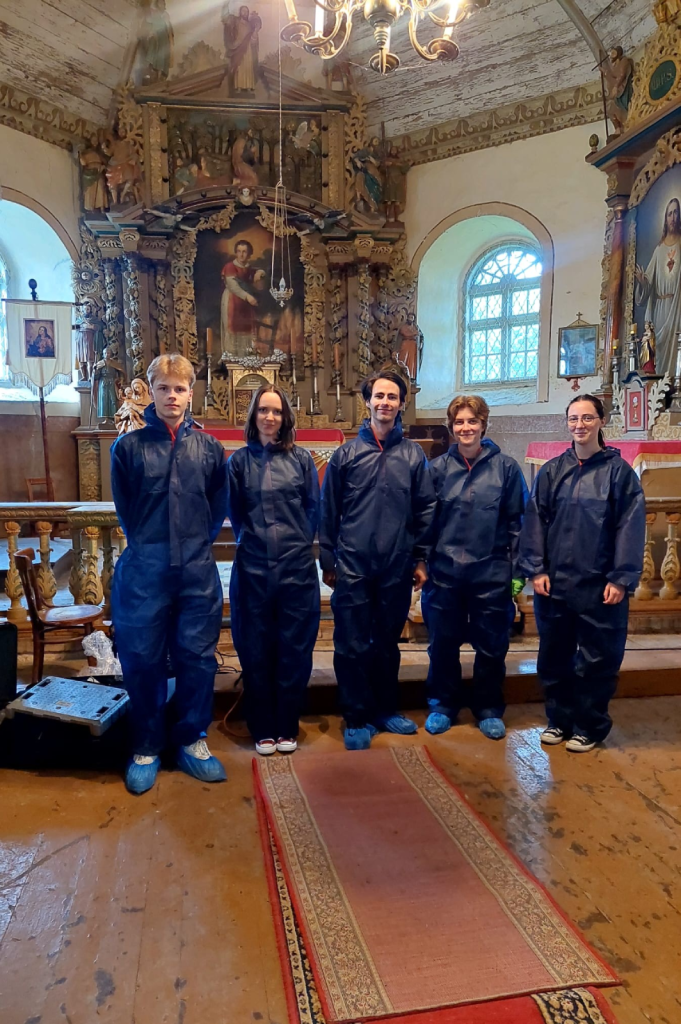
In my opinion, the most interesting part of the project has now begun – the highlight or the expeditions. We are travelling around Latvia with our equipment and documenting the sites we find.
We keep joking that it will feel like being in an Indiana Jones film. Those were our favourite films as children, and now we have the chance to visit places that are normally inaccessible and discover something new.
The expeditions also have broader added value. They provide an opportunity to travel around Latvia, assess the situation in different regions, meet local people and learn about their local culture.
Following the expeditions, we will compile the data collected, carry out 3D modelling and, together with our mentors, assess which sites and human remains have the greatest potential for further research. The project timeframe runs from May this year to May 2027, and we are currently preparing for the expeditions.
At this stage, we will only be carrying out documentation, no invasive procedures are planned. We will consider the possibilities for further research using modern research methods, such as computed tomography, once this preliminary survey project has been completed.
What could we learn from mummified remains in the future, using modern technologies?
This is one of the most exciting prospects of the project. In the next stage of the research, it could be possible to use computed tomography, obtain 3D models, and analyse various bodily structures and tissues. There are also prospects for anthropological research, as well as genetic and microbiological methods.
Technological advances make it possible to obtain far more information with minimal intervention than it was possible 30 or 40 years ago. For example, 3D scanning enables us to obtain digital material at once, which can then be analysed and processed in a variety of ways.
Why is mummy material special? Skeletal remains can tell us a great deal, but only a few of the diseases that affect people leave traces in the bones, such as tuberculosis or syphilis. However, there are a number of diseases and conditions that we can only learn about if soft tissues have been preserved, making mummies a unique source of information. For example, palaeopathological research can also identify signs of atherosclerosis, thereby providing insight into the prevalence of cardiovascular disease in the past.
This is interdisciplinary research that brings together history and medicine. It could provide new material for research into the lifestyle, diet, health, epidemics and range of diseases among the population of Latvia.
Why is such a project relevant for Latvia at present?
We can see that research into mummified remains is much more advanced for our neighbours in Lithuania, so we want to develop this field in Latvia as well.
In my view, we lack fundamental research, which may not have immediate practical benefits but creates an environment for scientific development and allows researchers to focus on significant topics in the long term.
Many of the churches where mummified burials are found are in a poor condition. By bringing this topic to the foreground, it is possible to draw greater attention to the preservation of these burials and the churches themselves. In the future, this could also contribute to the development of regional tourism.
Is Latvia collaborating with researchers from other countries in this field?
Yes, our direct project partner is Vilnius University. At the end of August, our team will travel to Lithuania to meet palaeopathologist D. Piombino-Mascali to take part in workshops and gain practical insight into how they work in this field.
International experience is very important to us, as mummy research is generally much more advanced in Europe than in Latvia. Italy is particularly significant in this field, with a long-standing tradition of mummy research. Our project mentor, Italian palaeopathologist D. Piombino-Mascali, has also gained experience through the Lithuanian Mummy Project. I would say that Dario is the project’s key asset, providing this research with the main driving force. He has worked at the famous Capuchin Catacombs in Palermo, studied members of European noble families, including members of the renowned Medici family, and examined individual bog mummies and several Ancient Egyptian mummies.
How can people help with your research?
We invite anyone who has information about possible mummified burials in Latvia to contact us by email at aleksis[pnkts]kevins rsu[pnkts]edu[pnkts]lv (aleksis[dot]kevins[at]rsu[dot]edu[dot]lv). Even seemingly minor details can be useful – stories, legends or folklore about such burials.
We would greatly appreciate any information that might help us find new potential research sites or add to our knowledge about existing ones.
How do you see the future of this project?
We hope to continue the project through its subsequent stages by securing additional funding. This would then make it possible to carry out palaeopathological research itself, using computed tomography, genetic and microbiological methods.
At present, our task is to lay a solid foundation – to identify, document and understand what is actually available in Latvia. This is the first step. We hope that it will set the wheels in motion for further developments in Latvian archaeology, the history of medicine, anthropology and other fields of research.
Related news
 RSU joins new precision medicine programme for paediatric oncology, LEONARDO Conferences, workshops, Research