Tenured Professor Baiba Vilne: bridging biomedicine, mathematics, statistics and computer science


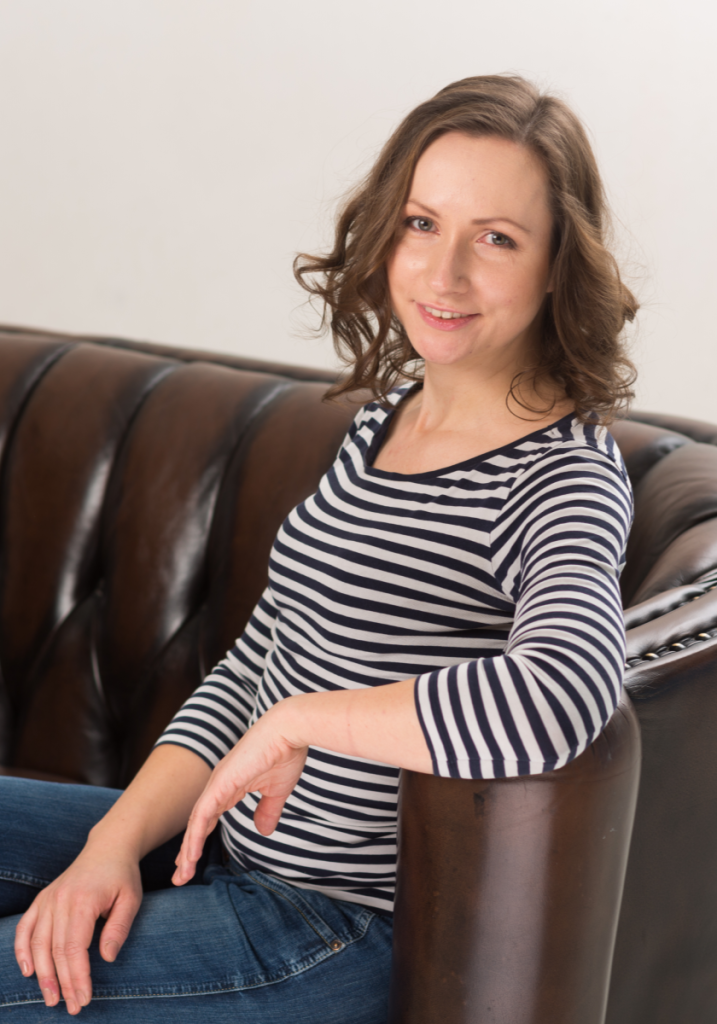
Rīga Stradiņš University (RSU) lead researcher Baiba Vilne has been part of our team for six years, but since the beginning of this year - she has held the position of tenured professor.
After earning a bachelor’s degree in biology from the University of Latvia, she received a scholarship from the German Academic Exchange Service (DAAD) and went to the Technical University of Munich to study bioinformatics and subsequently stayed there for her doctoral and postdoctoral studies. Afterwards, she decided to return to Latvia and worked at the National Scientific Institute BIOR, before being invited to join RSU. Since 2019, Baiba Vilne has been building her research group at RSU and, in her own words, has ‘already been working towards becoming a tenured professor.’
You spent 13 years in Munich and then returned to Latvia. What was your motivation to come back?
Even in my DAAD scholarship application I wrote that I would go study abroad with the intention of returning and giving back to Latvia what I had learned. I did not return as quickly as I had originally planned, though, as some interesting research opportunities came up, but in my postdoctoral period, I realised - it was now or never. Before you start building your own research group, you can still make a change; later on, it is more difficult to do so.
What is the science and research environment like in Latvia, at RSU and in Germany?
Overall, these environments are becoming more similar. We are actively involved in various international research and infrastructure consortia. We are also preparing project proposals at the European level.
I have observed that our scientists are very strong and already involved in the international research community.
This means that these environments are increasingly converging. Perhaps the difference is that in Germany, there was more collaboration with the U.S., whereas we tend to collaborate more at the European level. The next step would be to expand further and establish more collaborations on a global scale.
Let’s turn to your current research. Could you tell us what it focuses on?
Already during my postdoctoral period, I had a strong focus on coronary artery diseases. This topic has remained part of my subsequent research. Postdoctoral period is a time when the foundation is laid for one’s future career, collaborations are established, and a relatively larger number of publications produced.
Currently, I am leading the Integrative Bioinformatics Group, and our work has two main directions. On the one hand, many other research groups in the life sciences need support with bioinformatics. As a result, since returning to Latvia, our research topics have been very, very diverse. For example, at BIOR, we even worked on biofilms in water pipes, while during the COVID-19 pandemic, our work focused on virology.
Many of our project partners are also neurologists, with whom we are currently preparing additional project proposals. Of course, we continue to collaborate with other partners as well, many of whom are cardiologists.
What all these groups have in common is that they collect very large and complex datasets.
For example, these may include genomic information, gene activity (the transcriptome), protein measurements (the proteome), the metabolome (metabolic markers), the microbiome (bacterial and viral measurements), lifestyle indicators, and environmental factors. We must always find the best solution for meaningful analysis of such vast datasets within a unified system. For instance, so that we are able to identify patient subgroups or discover new biomarkers that could help predict the risk of a disease or its progression at an early stage or influence treatment.
At the same time, our work is much broader: bioinformatics is also an independent scientific discipline, as it involves developing new and improved methods tailored to a specific research question. Our task is to select methods, compare them, and develop new ones.
For example, when analysing genomic information, we can use methods that help identify the possible cause of a disease.
If we assume that a particular disease is caused by specific changes in the genome, we start our research at that point and gradually incorporate other data to determine how these changes might affect other biological processes in the body.
We also develop experimental designs, such as how to transfer insights gained from model organisms, such as mice or rats, to humans, and how to integrate data from across different studies.
In this context, it is important to remember that bioinformatics is an interdisciplinary field at the intersection of biomedicine, mathematics, statistics, and computer science. Our job is to take what we need from all of these fields for a given study and put it together in a coherent framework.
So, do you work with data collected by others?
Yes. Our partners usually approach us, and ideally, the data has already been collected, or we write joint project proposals in which they plan to collect the data. In the latter case, we can recommend what data would be meaningful from a bioinformatics perspective.
Could you share some findings from your research that could benefit society?
I would prefer to give a more detailed answer. Many people have probably heard of the so-called Gartner Hype Cycle. Whenever a new technology, method, or discovery emerges, it generates a great deal of interest within society and the professional community, and very high expectations are placed on it. However, when the technology or method is put into practice, we begin to see its limitations. A certain degree of disappointment may follow, and only after this phase do we arrive at a more realistic perspective.
In my field, I can name several such Gartner Hype Cycles. I would start with human genome sequencing. When the Human Genome Project was completed in 2003, it was believed that we would very quickly be able to understand the mechanisms of all diseases and that better diagnostics and treatments would be available in a short time. Later, however, it became clear that the genome sequencing alone was not enough. We then realised that we also needed to collect other layers of data, such as gene activity (the transcriptome) and proteins (the proteome).
We have now reached the next Gartner Hype Cycle, where we realise that big data in itself is not yet information; we need to understand how we can put it all together, meaningfully integrate and interpret it.
Of course, artificial intelligence is currently going through its Gartner Hype Cycle, and in that regard, we are in the phase of high expectations, but it is clear that this will not be a magic wand either.
We must understand that we are moving through these Gartner Hype Cycles. We need the right experimental design to help answer our research question. We have to start with very specific and precisely defined research questions, including from a bioinformatics perspective. We need software tools and workflows that are reproducible.
You mentioned artificial intelligence. Presumably, your work also involves its training?
We are now at a point where artificial intelligence, and agents in particular, truly dominate all fields, including bioinformatics.
A new field has emerged, known as agentic bioinformatics, in which we are, of course, working, and this means that the role of a bioinformatician is changing.
In bioinformatics, each of us builds our own artificial intelligence agent or agents with the idea that, in the future, they could semi-autonomously take over certain functions, particularly with the aim of automating routine tasks. These agents can already help us to find the most suitable tools, perform specific analyses, and create documentation. And, of course, machine learning methods have been part of our day-to-day work for quite some time now. Broadly speaking, this is one of the ways we integrate multi-layered data. We train machine learning models using specific datasets so that the system can subsequently identify biomarkers, such as certain metabolic markers or genomic variations, which help distinguish, for example, patients with coronary artery disease from a control group (i.e. people who have not been diagnosed with the condition in question).
However, I would like to emphasise once again that artificial intelligence is not a magic wand, and close human supervision is still required – the ability to ask the right questions is now even more essential than before, and the results must be interpreted responsibly.
One of the projects in which RSU has been involved under your leadership is ELIXIR. Could you tell us more about it?
ELIXIR is a European intergovernmental organisation in which member states pool their research infrastructures within a single consortium. In modern science, we are increasingly collecting large volumes of data from very large groups of individuals, and countries need support in managing this data. They need standards of best practice and trained experts, and ELIXIR provides these opportunities.
A network of people and infrastructure is therefore being established, through which experience is shared, best practices are developed jointly, and information on various training courses compiled. RSU has taken on the role of coordinator within this organisation.
More specifically, we began our work a year ago as part of ERDF Project No. 1.1.1.5/3/25/I/014 Participation of Rīga Stradiņš University in the Horizon Europe Programme, implementing Latvia’s national partnership and action plan. Our task is to help establish a nationwide network of institutions, or consortium, in Latvia.
You are a tenured professor, but before that you were a lead researcher at RSU. What are the similarities and differences between these positions?
Of course, my work has not changed radically. The biggest difference was between my postdoctoral position and my role as a group leader. As a post-doctoral fellow, you work more or less on your own research topic, but when you transition into a group leader position, you lead your team, write project proposals to secure funding, and, of course, participate in your team’s work – perhaps not so much by performing data analysis or developing software tools yourself, but rather coordinating data analysis, software tool development and the writing of publications. I see the position of tenured professor as a transition to the next level. It brings additional visibility and, of course, even greater responsibility.
The difference in relation to being a tenured professor in the field of bioinformatics is that previously we primarily had a support role, assisting our collaboration partners by helping them write project proposals and analysing the data they had collected. The tenured professorship now gives us the additional task of purposefully and intensively developing bioinformatics as an independent scientific discipline. This means that we must set our own research goals, write project proposals as coordinators and develop new methods.
How big is your team?
The size of the team changes depending on the project funding we secure. At the moment, there are six of us, and it is an optimal size; however, if we obtain additional funding (for example, from large-scale European projects), we can increase our capacity.
Is the team made up of colleagues from RSU, or is it an international team that also includes representatives from other universities?
Our team mainly consists of people who have studied or are studying informatics; there are also medical engineers and people who have studied biostatistics. Sometimes we are joined by biologists who want to learn coding. RSU primarily trains medical professionals, and while they are our collaboration partners, they are not usually specialists in bioinformatics. As a result, building a team is a challenge, and we have to recruit specialists from other universities and often from abroad as well.
You have already mentioned the coordinating work that is part of a scientist’s role, but what does it mean today to be a scientist who leads a project?
It is difficult to answer this question objectively, as I have only experienced what it means to be a scientist today (smiles). People often say that being a scientist or a researcher is not merely a profession – it is a lifestyle. It is a way of looking at the world. I truly identify with this idea, because, at their core, scientists are people who retain curiosity, who are interested in the world around them, ask questions and try to find evidence-based answers. Perhaps, they do not stop at the first answer but continue to question and compare. Sometimes it also means admitting that there are things we do not yet know. I choose to believe that this aspect has remained unchanged over the years.
In my opinion, the role of a contemporary scientist has expanded and become much more complex. If we imagine that scientists in the past often worked alone, focusing on a narrow field of research, today science increasingly involves teamwork. This is certainly the case in our field.
Our work is based on interdisciplinary collaboration; we must be able to work together with people from different fields and understand one another.
At the same time, technologies are developing rapidly, and a scientist, at least a bioinformatician, must be able to acquire them in a very short period of time. As we have already discussed, the role of developing research infrastructure is also now part of scientist’s work. Of course, securing funding is yet another challenge. We must be able to prepare interdisciplinary project proposals, often have a good understanding of innovation, and, moreover, be able to explain what we do and why it matters to society in a way that is understandable.
How do you recharge so that you can continue contributing to science?
For me, recharging means acquiring additional knowledge, because I am a very curious person.
I enjoy learning new things and gaining new knowledge; therefore, I read a lot, and not only in my direct professional field. I also enjoy listening to podcasts on various topics, including mathematics, physics and other fields of science. I am also interested in the social sciences and humanities. I am passionate about the philosophy of science and even science fiction. Perhaps it sounds a little ironic, but it is true – outside of science, I recharge by exploring even more science.
Related news
 ‘Science needs freedom of thought’. Meet Tenured Professor Maija Radziņa Researchers Up Close, Research, Radiology, Interviews