The scientific journey of a Tenured Professor Egils Stalidzāns – from bees to computational models of molecules


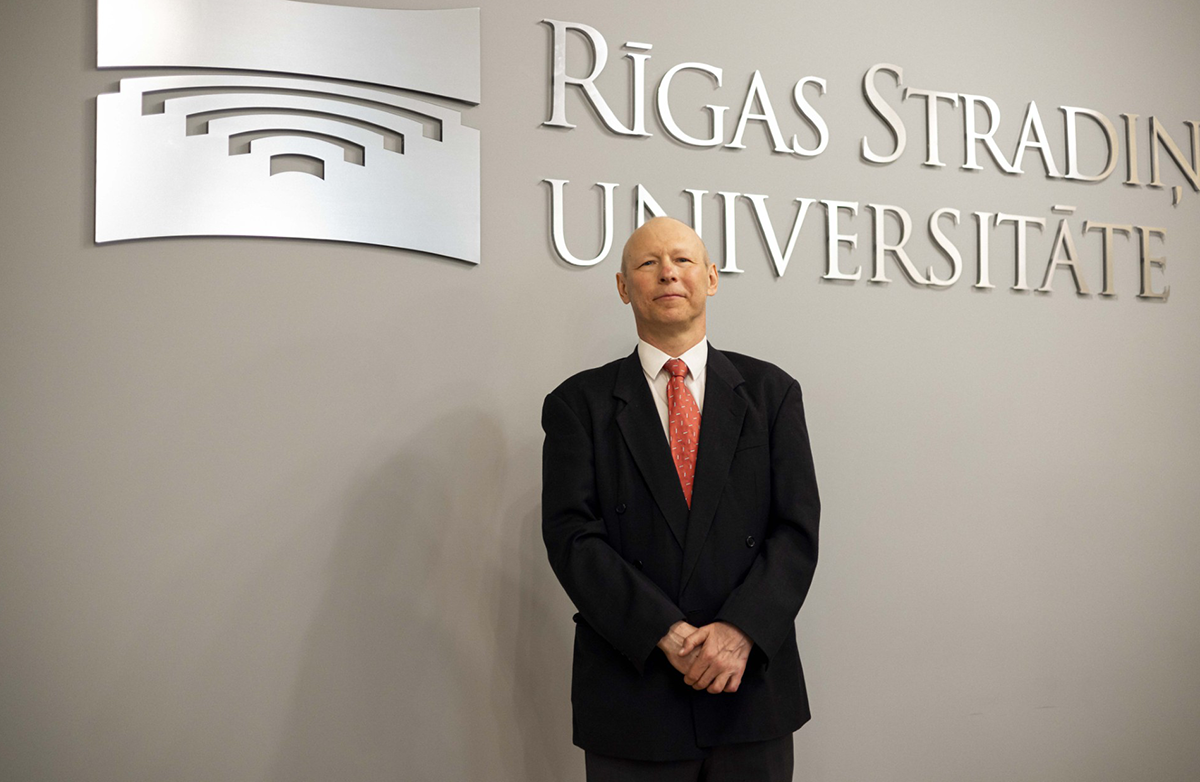
We continue our series of articles on the tenured professors at Rīga Stradiņš University (RSU). Riga-resident Egils Stalidzāns recently joined the Bioinformatics Group at RSU as a tenured professor and is a leader of the Computational Systems Biology Team.
How did you become a scientist?
It actually all started with beekeeping! To both mine and my parent’s surprise, I became interested in bees at the age of 15, despite being more technical. My mother brought the bees to our summer house in Saulkrasti because she had started studying beekeeping. At that time, there were new opportunities to produce a variety of beekeeping products: royal jelly, pollen, bee venom. The beekeeping courses that my mother, and later I, attended brought together many interesting people. I suppose it was the people I met at these courses that drew me into the world of bees. There was a moment when I thought I would be always doing it, because I truly enjoyed it and was good at it. In 1992, at the experimental beekeeping station in Ogresgals, I was given the chance to focus on the artificial insemination of queen bees. I was thrilled and honoured, and saw my own potential as I delved deeper into the subject.
I was only 22, and I experienced the various ups and downs of life. Around 1993, there was an economic crisis and there wasn’t enough funding for science. Radiators were exploding from the cold at research institutions because they couldn’t afford the heating bills. Thinking that it was impossible to survive in science, I got into business instead. However, business took a heavy toll on my nerves, and eventually, due to health issues, I had to ask myself what it was that I truly wanted to accomplish in my life. I realised I wanted to return to research. By that time, I had already obtained a master’s degree in the Faculty of Automation and Computing at Riga Technical University – I was an engineer, but my I wrote my master’s thesis on bees.
I also defended my doctoral thesis on the control algorithms that work in bee colonies during overwintering. This was in accordance with the cybernetics doctrine that control principles are similar in technical systems, biological systems and society. My path led me to what was then the Latvia University of Agriculture, where connecting bees and computers was both important and useful.
It was in 2005 when I first learned about systems biology. I have been working with systems biology ever since, and it still fascinates me. The main driving force is the desire to understand how complex systems work.
After the University of Agriculture, I spent more than 10 years at the Institute of Microbiology and Biotechnology at the University of Latvia. However, I have always been interested in medical issues, as health problems will always remain a priority for any country, whereas science may be underfunded, inconsistently funded, or well supported depending on the circumstances. That is how I have ended up in my fourth research university, and I am still in the same country. I see great potential at RSU. Here my knowledge can truly be applied, and it is in demand.
What exactly is systems biology?
Systems biology is the science that studies how the elements that make up a system interact to produce systemic behaviour that is not merely the sum of the behaviour of individual elements. To put it simply, our research is about cells. Inside cells, there are all kinds of biomolecules, each with its own function. If we know how many there are and how they should interact with each other, systems biology models can help form an idea of what happens when everything works the way scientists and specialists expect. What a computer can do is to run it all in parallel. This means that some 10,000 patterns are running at the same time, and there are billions of participating molecules, all within a single cell. Naturally, a human being cannot picture this in detail in their mind. We know quite a lot about cellular processes, but there is still much more that remains unknown.
The advantage of mathematical modelling is that it reveals what is not possible. For example, according to the law of conservation of energy, modelling can give an early indication that if something lacks energy, it cannot take place. A scientist might have an idea that a certain process could happen in a particular way, but mathematical modelling can show that it won't! And then we can start investigating whether the error is in the idea itself, it is a numerical error, or something has in the model been overlooked. We then improve the model, or someone improves their hypothesis – in this way, we can move forward into the great unknown.
A cell can be compared to a country: in a cell, there are molecules; in a country, there are people. Molecules are diverse—some are like tools that perform specific functions, while others are raw materials from which new components can be made. But tools alone are not enough: someone must operate them, and energy is required to power the process. In the context of countries, we see similar dynamics. Some states are able to act effectively in certain areas because they have the necessary resources or people with the expertise to use those resources. At the same time, we can identify what these countries are not yet capable of—either due to a lack of conditions or because more time is needed. Just like in cells, changes in countries cannot always happen overnight.
Sometimes the mind is full of naive ideas, and it seems that they should definitely work. For example, you might think that if you give a person a book, they will start to read it, because that is what books are for. But in real life, there might be obstacles. Maybe the person is hungry at that moment, or they don’t have their glasses, or they might not be able to read. They might not be interested in the book at all, even if all the right conditions for reading are met!
The idea that we can give cells a certain substance and that they will immediately begin to use it exactly as we imagined does not always work. In cases where it does work, it gets published in scientific journals – we call it a successful therapy or a manipulation. In the majority of cases, however, there is no response at all either from the cell or from the scientific journals.
Isn’t it a bit demoralising to so rarely achieve the intended result?
No, it is extremely interesting, because you have to try to understand why the idea did not work. The reasons can be very different. For example, at this particular moment, the cell or, using the book-reading analogy, the person may simply not be at the right age for reading, and that is it. It might happen later.
Many things seem intuitively obvious to us in the environment we live, because we live here – it is our world, our scale. Imagine aliens studying us and discovering that humans consume coffee, but they have no idea about the quantities involved or how we actually consume it. If the aliens wanted to make humans happy, they might start feeding us raw green coffee beans, which would likely kill us. Quantity matters here: we wouldn’t notice one milligram, while 200 kilograms would be lethal. Therefore, the idea that coffee can make humans happy is correct, but it is essential to know when, how, and how much!
Things that seem self-evident to us are often not self-evident at all to someone unfamiliar with the context. This is especially true when exploring cells – suddenly, numbers become critically important. To achieve any effect through manipulation, we must know the precise quantity and method, as even a seemingly harmless intervention can destroy the cell. This is why mathematical modelling is such a valuable tool: our intuition simply doesn’t extend to numbers on a cellular scale – mine certainly doesn’t. For example, how much of a substance, or how many manipulations, can a cell actually tolerate?
It is very interesting, but in any case, modelling is just a tool. It can be applied in many different directions, basically wherever there are cells. To attract funding for developing such tools, there is no alternative but to work both internationally and in an interdisciplinary way with those who can apply these tools. This makes the work much more interesting. Then we get to shine with our modelling skills, while biologists and medical experts can take us by the hand and lead us through their field like tour guides. Within a year, we can probably become specialists, not at the level where we can treat patients, but enough to understand who the main players are, what the problems are, which molecules are important, what their functions are, and how they interact. The research involves experiments, the results of which we can put into a model and try to understand what the results are telling us, as best we can.
We recently worked on a very small model. We were looking at how metformin, a pharmaceutical compound, moves from plasma into red blood cells. We knew the concentration of metformin both in the plasma and in the red blood cells, and it turned out that metformin simply diffuses through the membrane and that nothing more complex is happening there. And it was a great pleasure to have this hypothesis confirmed by putting the experimental data into a mathematical model.
What will your computational systems biology team be working on?
We are a group of four people, and we are expecting more additions to the team, basically people who are ready to work in this direction and who have the knowledge, skills and interest. The research focus and methods remain the same, as we have always worked with cells, and we have already done research in medicine. We are not starting from scratch. Now, our field of work is RSU and medicine.
Over the past decade, a vast amount of data has been collected on genome expression in various cells, on how many and which genes are transcribed into RNA. From this, we can make assumptions how much of the corresponding protein will be present. Then we can look at how cells cope with their task of maintaining themselves and carrying out their functions, how they interact with each other and, most importantly, how they change their state. Namely, how healthy cells differ from diseased ones and how diseased cells respond to therapy. This is where the previously mentioned systems biology comes into play.
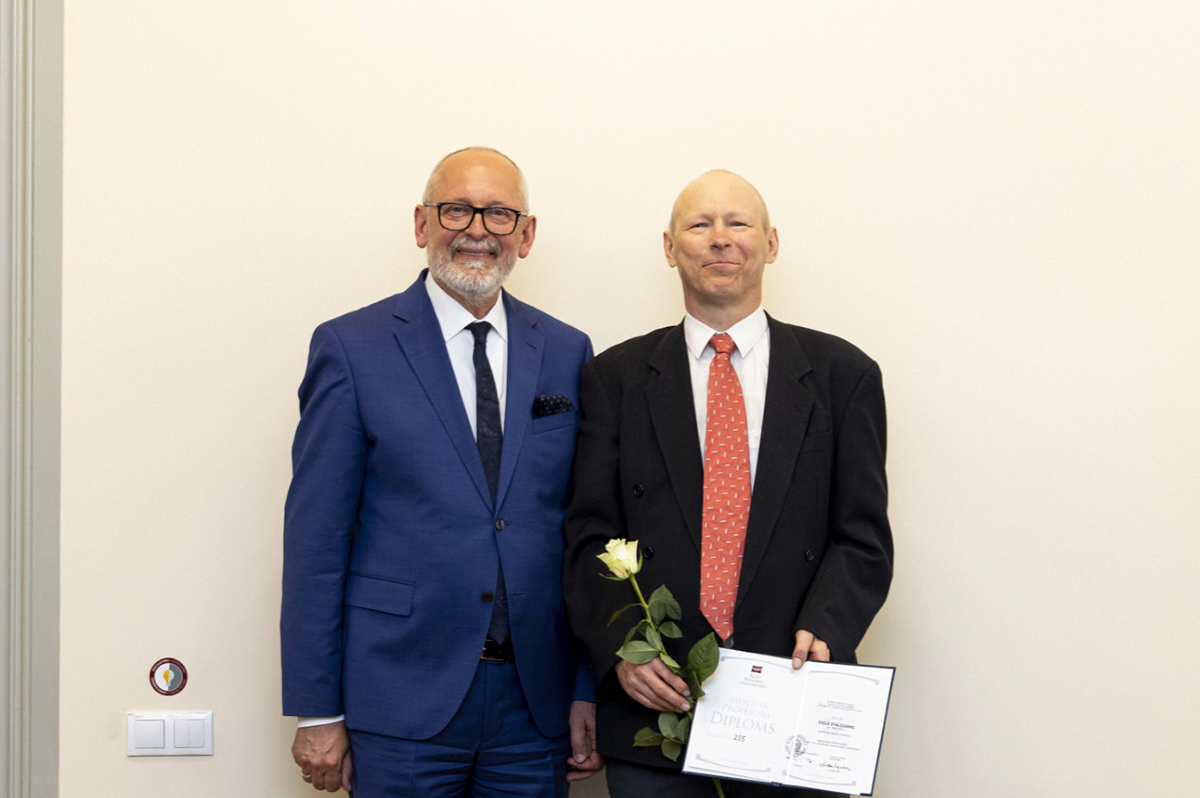
Assoc. Prof. Egils Stalidzāns (on the right) with RSU Rector Prof. Aigars Pētersons
Is your research more focused on computation and calculations, or do you also collaborate in an interdisciplinary way with experts from other fields?
It is important for us to understand what the medical experts are trying to tell us, and just as important for them to understand what it is that we just cannot do. There are things a model cannot do based on the data we receive. When we make a claim that something works in one or another way, we must maintain some scepticism about it. If a model starts working perfectly right away, it often feels like something is wrong. Something might have been overlooked and everything needs to be checked again.
When something goes wrong is when we start interacting with scientists from other fields. This is what drives us to dig deeper and look into the details. This is when collaboration with medical professionals becomes more exciting.
When trying to go deeper into a field like, say, nail fungus, I feel dumber than a first-year medical student, even though I hold a PhD and have several scientific publications. The feeling that you are a complete fool asking obviously silly questions can be uncomfortable. Fortunately, that is not a problem for me. I believe that if you have a good guide, you should make use of them! There are no stupid questions, there are only fools who never ask them. You might have thousands of questions, and then you get stuck and cannot move forward. That is why you need a larger team. I am excited to learn something new even if it is something everyone in another field already knows. For me, this is growth. Healthy scepticism is something to keep in mind when modelling, because you cannot put all the knowledge of civilisation into models. Still there is a saying about modelling: ‘It's better to be approximately right than exactly wrong.’ An adequate mathematical model does not allow for big mistakes.
What else are you interested in? Do you take breaks from science?
I enjoy being in silence – for example, to go to the sea for several days in November when there is not a single person there: just the silence and the sea. That is the best way for me to recharge my batteries and get back to my work.
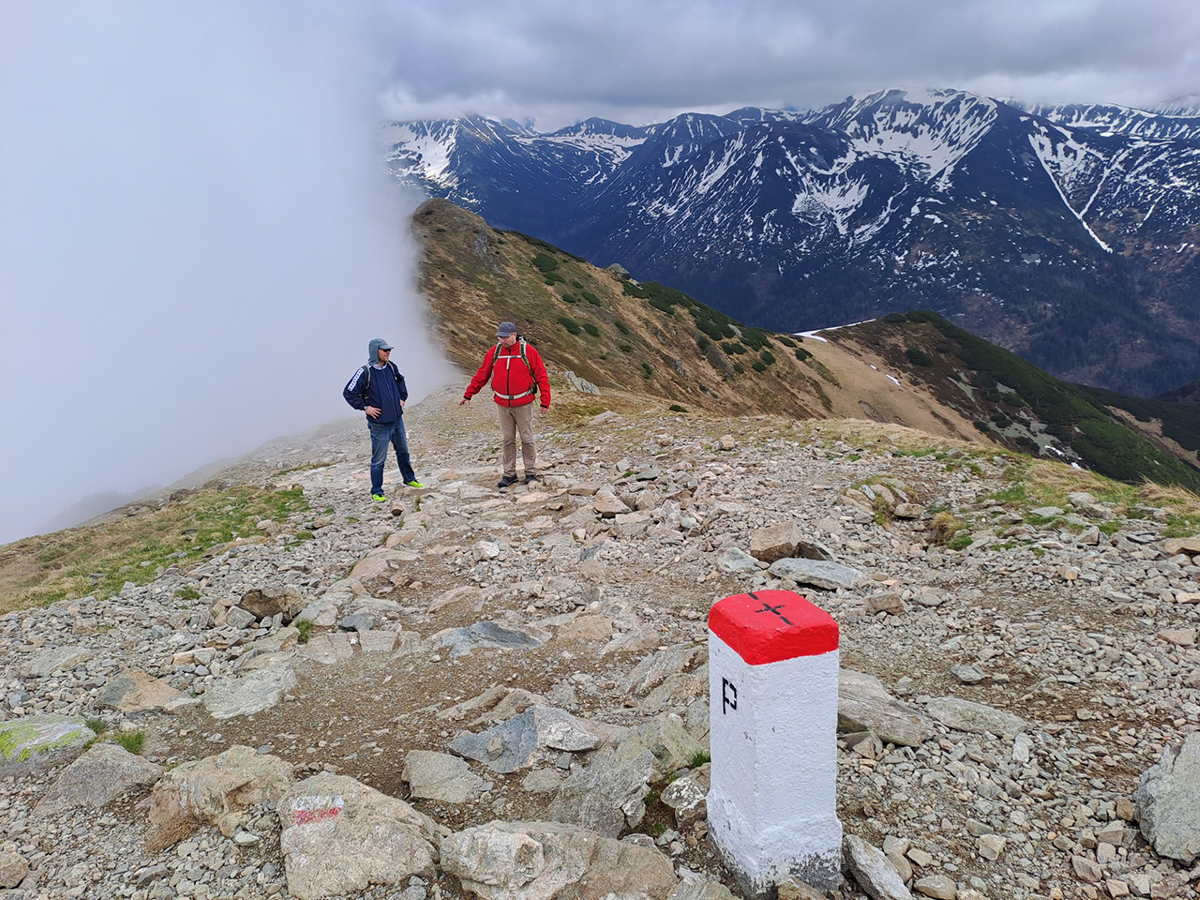
Taking a break in the mountains
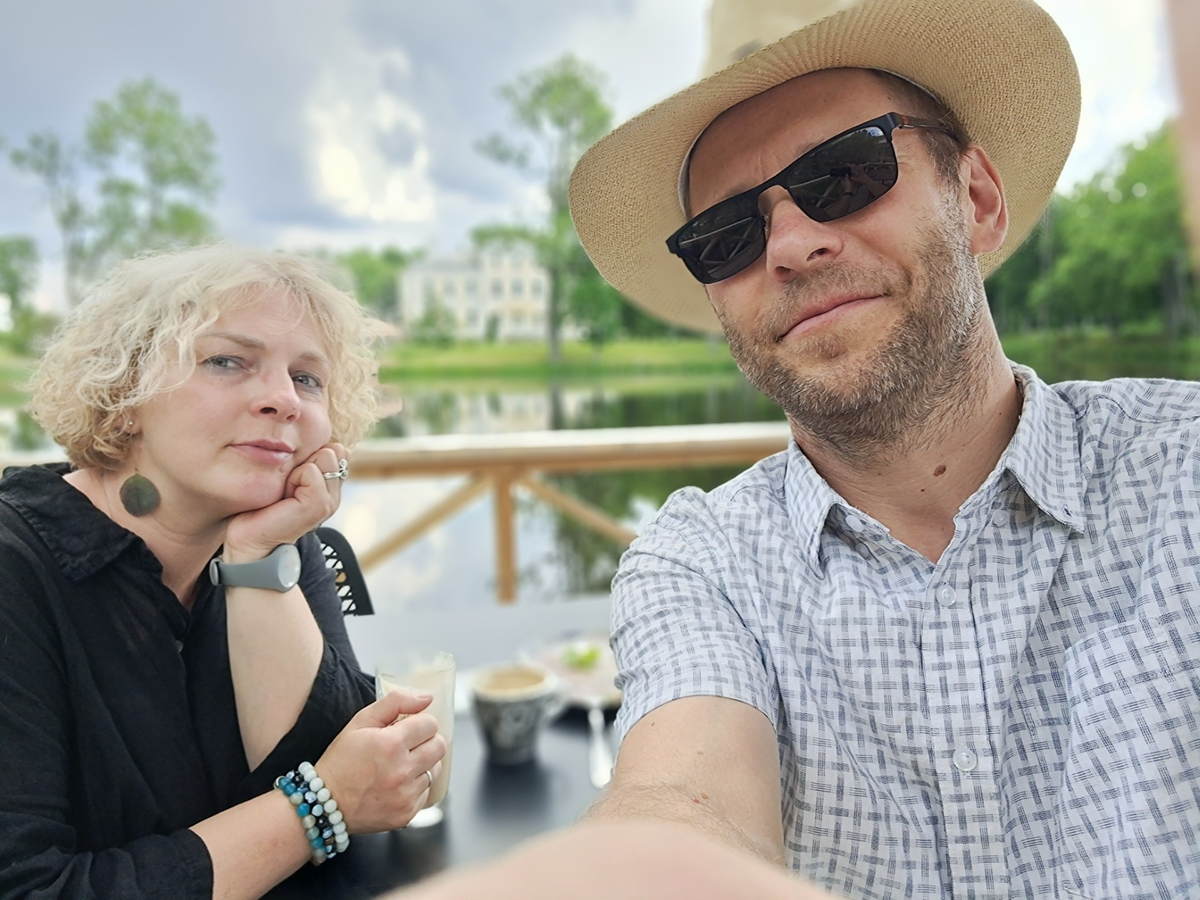
Egils Stalidzāns with his life partner
Related news
 Women in research are assessed on achievements, men on potential: RSU explores inequality in science Research