Where curiosity leads: interview with the RSU Student of the Year Diana Lismane


What happens when studying medicine alone is not enough to satisfy one's curiosity? Diana Lismane, a sixth-year student at the RSU Faculty of Medicine, seeks answers also in research, hospital practice, through working with children and young people, as well as in the mountains and through rock climbing.
In her studies, she has achieved an average grade of 9.14 and has been nominated for the RSU Annual Award in the Student of the Year category for 31 times. Diana has been working at the Laboratory of Sports and Nutrition Research for several years, taking part in national and international research projects. Her study on in-depth metabolic assessment in children with congenital heart defects and its association with physical activity has received an RSU Student Research and Innovation Grant. Alongside these activities, she volunteers in paediatric cardiology at the Children's Clinical University Hospital and, together with like-minded people, organises hikes, camps and other activities for socially vulnerable children and young people.
You have received the RSU Student of the Year Award. How did you feel when you found out about this recognition?
Grateful and also surprised. I have experienced and achieved a great deal during my study years, but much of it remains behind the scenes. I knew that my colleagues from the Laboratory of Sports and Nutrition Research had nominated me for the award, but I had not expected others to do so as well.
Inspired by her parents and driven by curiosity
Why did you choose to study medicine?
When time came to choose my path, I was considering both medicine and the natural sciences. When I enrolled in the Medicine study programme, I realised that there were different paths to reach the same goal. And having made this choice, I must not give up the part of myself that has always wanted to be a researcher.
Medicine seemed the safer choice, as at that moment, I felt I knew what I was signing up for. Both my parents are doctors – interventional cardiologist Aigars Lismanis and cardiologist Jeļena Mironova. Medicine was a constant presence throughout my childhood, from listening to my parents' conversations at the dinner table to waiting for them at the hospital or after their weekend shifts, as well as at conferences, after which we would sometimes go on family trips. All of this, combined with my own interest and my parents' encouragement, has led me down this path.
From a student to a researcher
How did you get involved in research at the Laboratory of Sports and Nutrition Research?
I have kept my promise to get involved in research. In my second study year, I wrote an email to Assoc. Prof. Dace Reihmane, expressing my wish to work on a research project under her supervision. This was followed by my participation in other research projects. Later, I found out that my friend and fellow student Deina Vilīte had done exactly the same. We joined forces and, under Dace Reihmane's supervision, also tried to prepare a funding application for a research project, but it was rejected at the time.
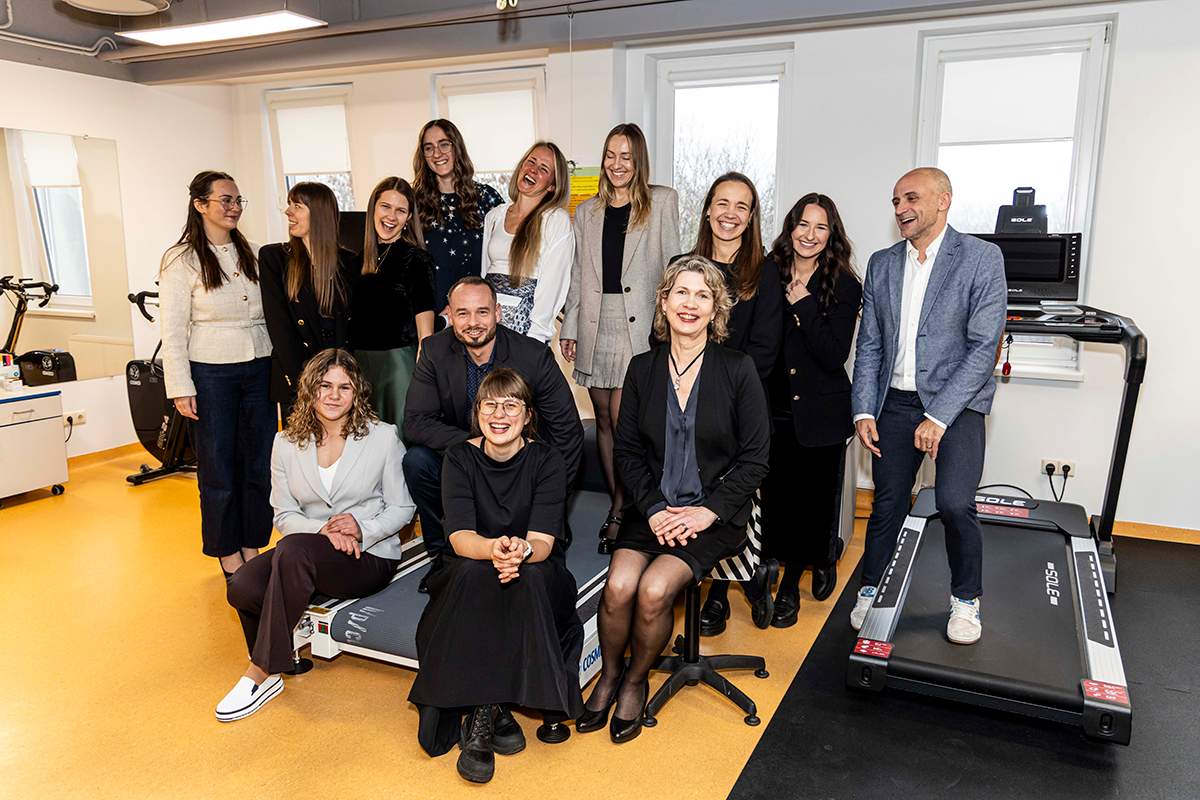
However, the idea did not disappear and eventually developed into a wider study on the effects of prolonged cycling exertion on the human body. We went to the Velorealitāte cycling race to conduct tests on cyclists. Afterwards, each of us was offered to prepare a scientific publication, and we took the opportunity.
At the moment, I am particularly excited about the opportunity to carry out my research project on children with congenital heart defects, for which I have received the RSU Student Research and Innovation Grant. This would not have been possible without the support I have received and everything I have managed to accomplish alongside my studies so far. I think it is wonderful that this project brings together several fields of my interest.
I would particularly like to emphasise that the Laboratory of Sports and Nutrition Research has an outstanding team of researchers. Whenever I have faced a challenge, I have been able to turn to my colleagues and receive support, advice or encouragement. I have been fortunate to be part of this team and to grow alongside my colleagues.
In paediatric cardiology, medicine meets humanity
You are volunteering at the Paediatric Cardiology and Cardiac Surgery Clinic at the Children's Clinical University Hospital. What does interacting with young patients teach you that you cannot learn in lectures?
Not only at the hospital, but also through my work with young people at social risk,
I often witness a sense of hope.
Life presents many of them truly enormous challenges, yet they always seem to retain a sense of lightness, smile and hope. I feel it is a blessing to learn from their positivity and joy.
Volunteering is also a real masterclass in communication when working with young patients and their parents. You have to be able to explain things in a way people can understand, listen and simply be there for them. Paediatric cardiologist Inga Lāce is also an excellent teacher in this respect, and I would particularly like to thank her both for sharing her knowledge and for her attitude from which I have so much to learn.
Do you already know which field of medicine you would like to specialise in?
At the moment, I have made up my mind and hope to be enrolled in the Paediatrics residency programme. It is very likely that I will want to pursue a subspecialty later on, as I am also interested in paediatric cardiology. However, there is still a long way to go, and sometimes life does its own corrections even for the best-laid plans.
I am also keeping open mind to the possibility of pursuing doctoral studies. I find research very interesting and engaging, so I would like to keep it as part of my life.
Mountains are not just about reaching the tops
Rock climbing and mountain hiking are also part of your life. Which climb has left the deepest impression on you?
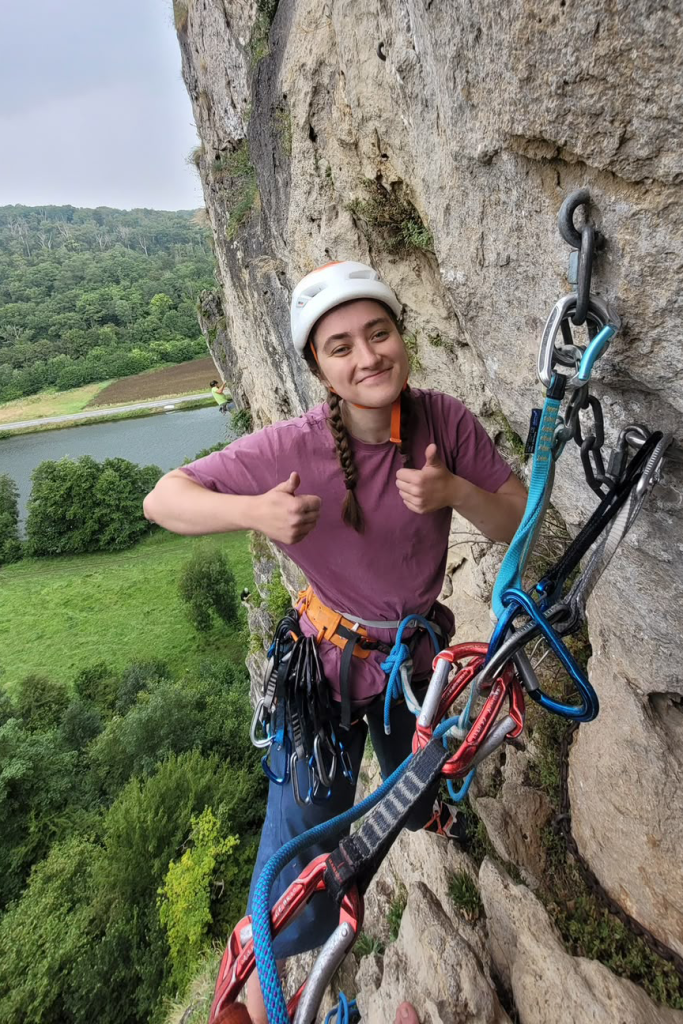
Although I have been involved in rock climbing and mountaineering for quite a long time, I have not climbed any particularly famous or impressive peaks known around the world. What I remember most are family trips to the mountains across Europe, multi-pitch rock climbing routes in the Dolomites, where we climbed what was almost like a rock tower, as well as the Rébuffat-Bacquet route in the Mont Blanc massif and Aiguille du Midi – a 300-metre-high rock face where you have to place your own protection in cracks in the rock.
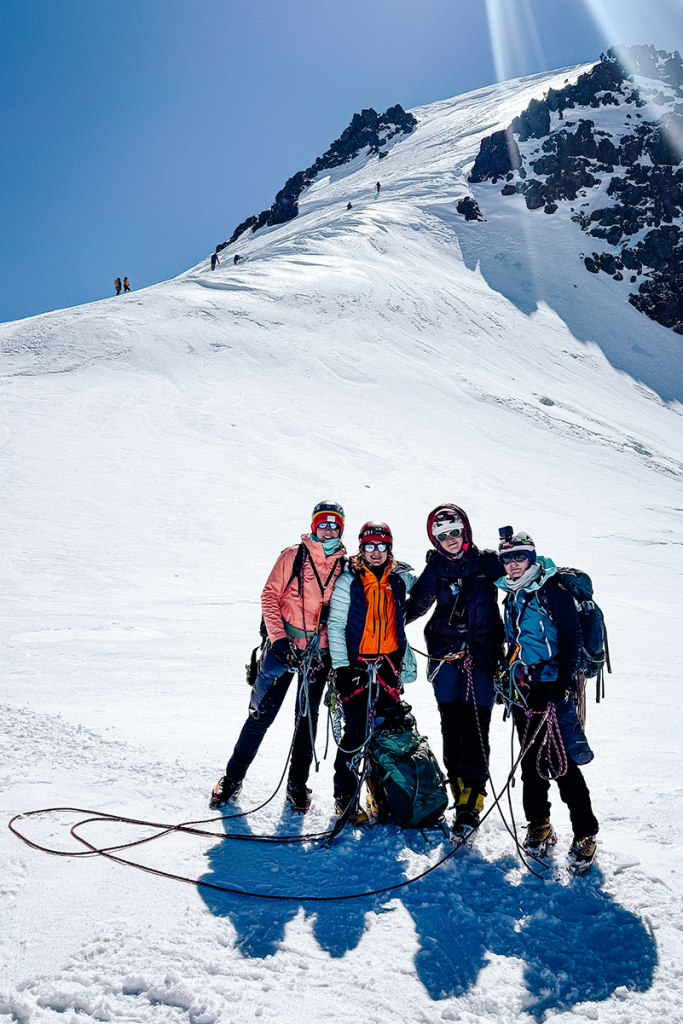
This summer's trip to Georgia felt like a return to mountaineering after a longer break. Although we did not reach the summit of Mount Kazbek, it was a real pleasure to get back to more serious climbing.
Sport and climbing are absolutely essential for me to cope with the stresses of everyday life. Time spent on a climbing wall, on real rock faces or bouldering feels like meditation – in those moments, you can focus solely on what is happening right there. And it is all very real – there is the fear that makes you tremble on the wall, and there is the immense sense of satisfaction of what you have accomplished.
When I return from the mountains or the crags, there is a sense of being grounded. The little things do not bother so much any longer, and it is easier to take in life and thing around me.
Climbing is not just about reaching the top; it is also about the process and the journey towards it – training, teamwork, cooperation, preparation and many other aspects. In a way, mountains are a bit like a small mirror of life itself.
The main goal – staying true to myself
If you had to choose just one goal for the next five years, what would it be?
To stay true to myself and maintain balance in the daily rush. I know how easy it is to lose sight of what is truly important and irreplaceable in everyday life when you take on too many responsibilities and say ‘yes’ too often. More often than not, it is sleep, training and the chance to recharge that suffer. And when there is no time to stop and catch your breath, the sense of fulfilment from what you have achieved gradually fades away too.
I would also like to continue taking on new challenges, doing what I am truly passionate about, and maintaining my drive and enthusiasm not only at the start, but also in the long run. However, it is just as important to learn not to lose myself along this process.
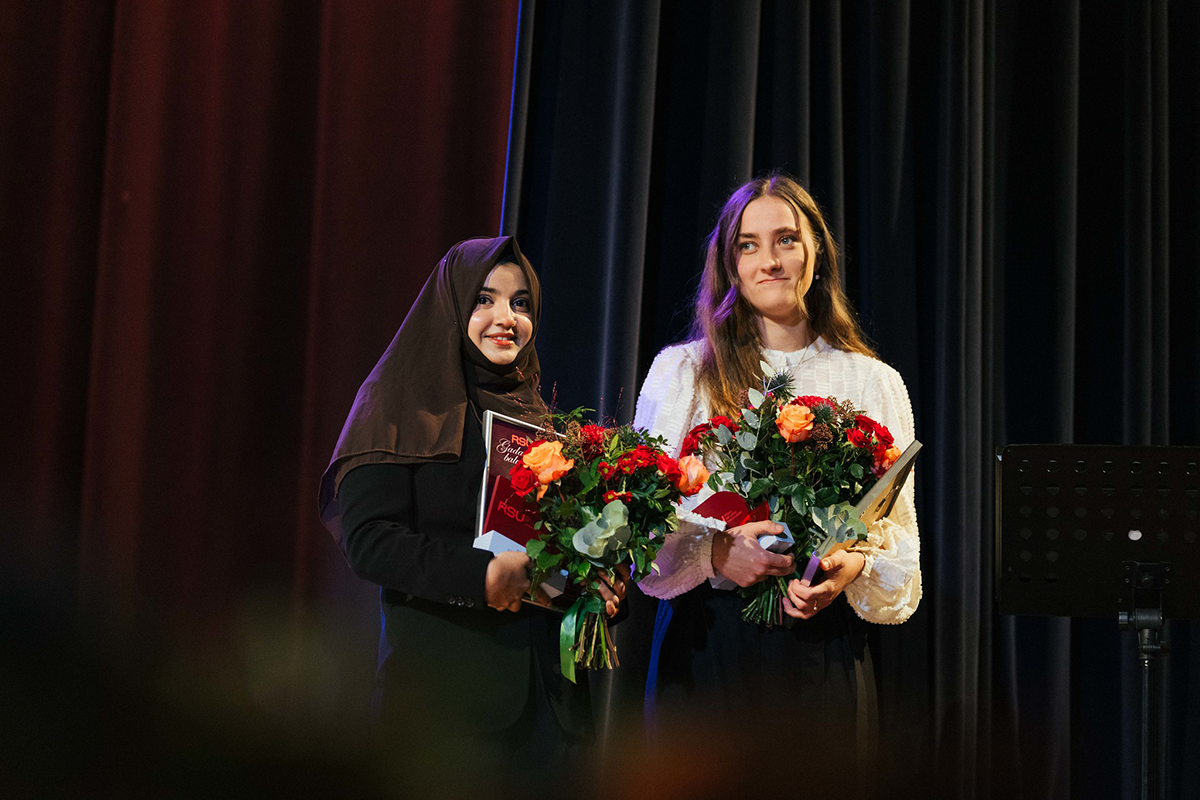
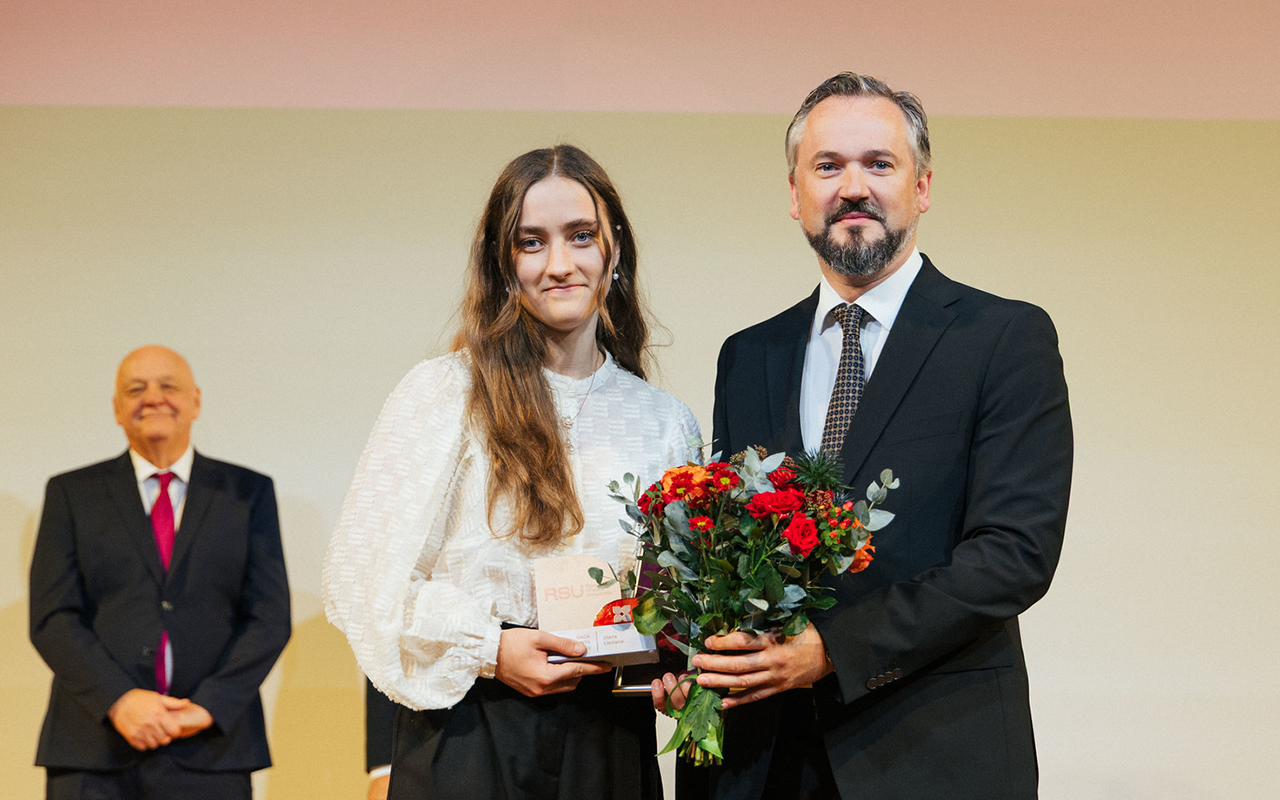
The RSU Annual Award 2026 in the Student of the Year category was presented to Diana Lismane for her outstanding academic achievements, active involvement in university life, initiative and personal contribution to the development of the study environment, serving as an inspiring example to other students.
Related news
 When choir reflects its conductor: Evita Taranda’s 26 years with the RSU Choir Rīga Interviews, Culture at RSU