Piecing fractured bones back together: Dr Raitis Turkins on residency training in Jelgava


Photo: Courtesy of RSU
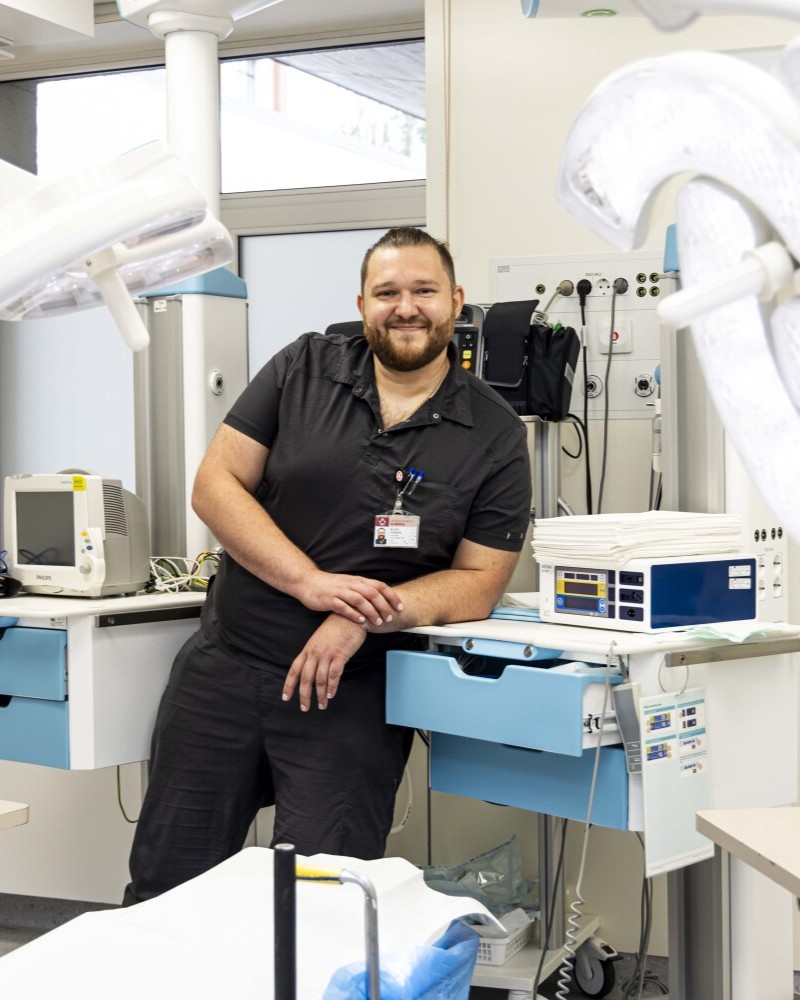
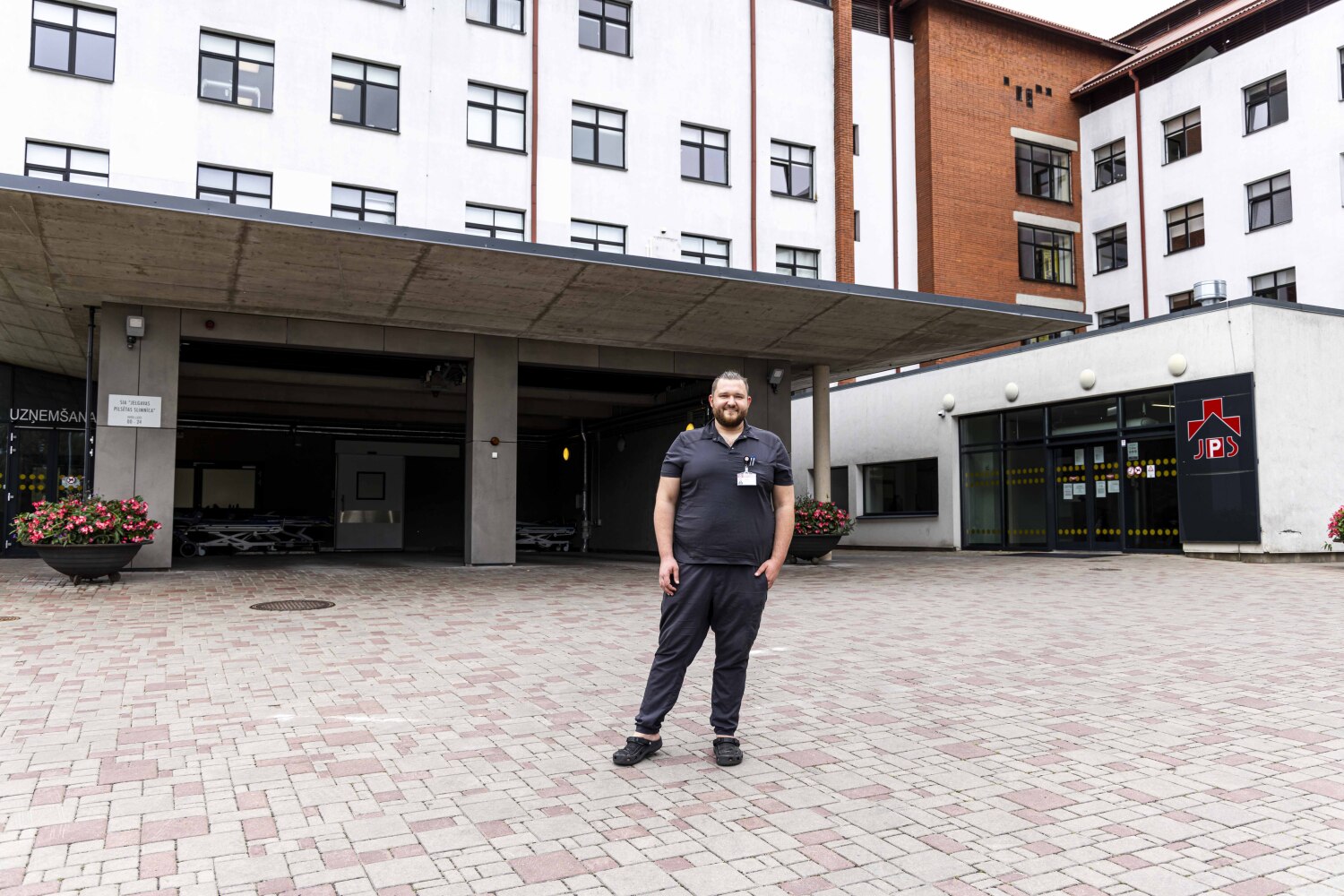
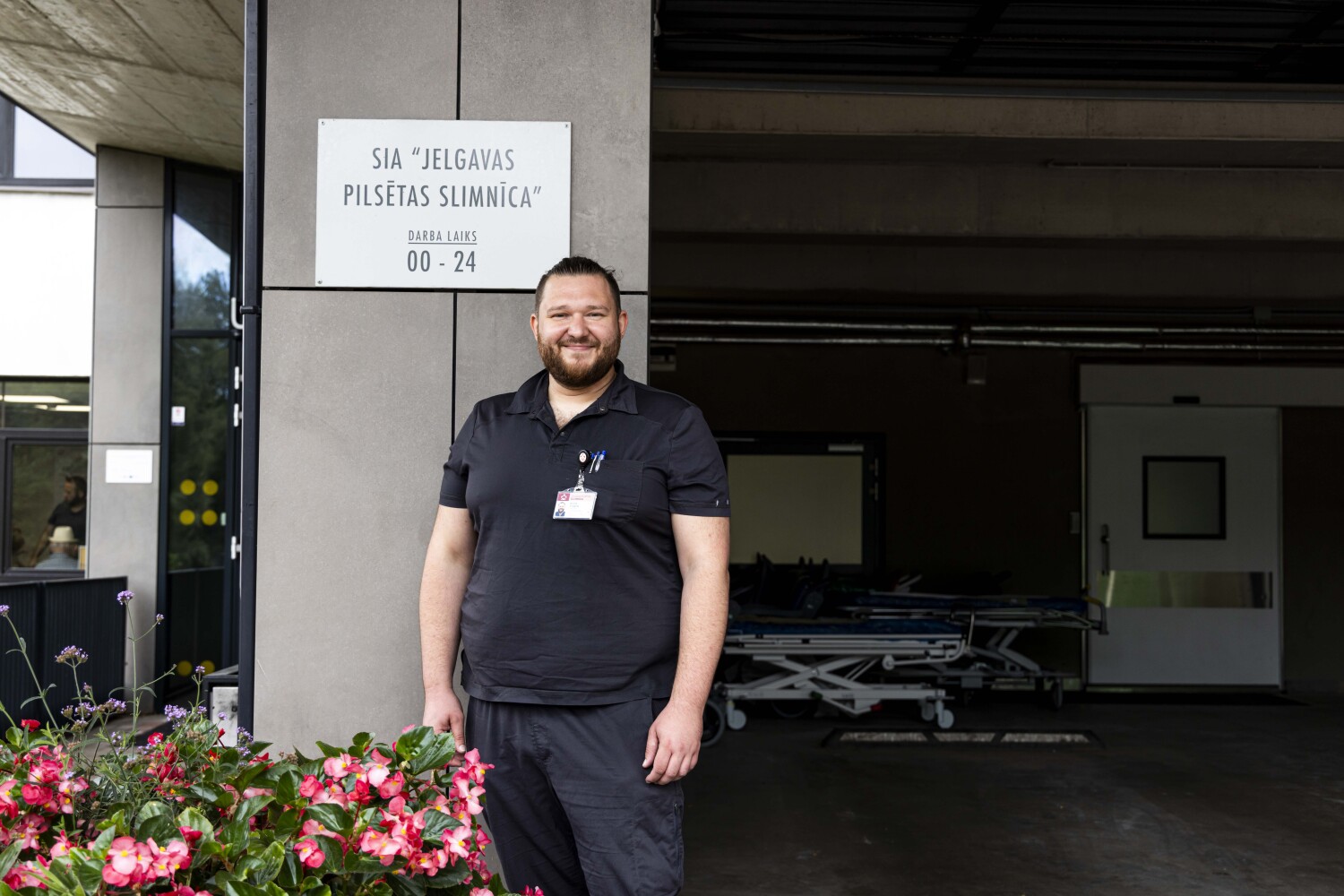
For a trauma and orthopedic surgeon, a complex fracture is like a jigsaw puzzle: the challenge is to piece the bone fragments back together without damaging nerves or blood vessels. Today, surgeons can often plan this on a computer or use a 3D printer. ‘I like the fact that trauma surgery requires both visual and creative thinking,’ says Raitis Turkins, a fourth-year Rīga Stradiņš University (RSU) resident in trauma and orthopedics. Originally from Riga, he chose Jelgava Hospital for his residency and plans to continue working there after completing it.
In this interview, Turkins recalls that he wanted to learn how the human body works instead of listening to bedtime stories as a child. He talks about the importance of knowing not only how to treat injuries but also how to speak to people who are in pain. He faced some of his toughest early experiences in Jelgava, from breaking the news of a patient's death to their family to performing particularly complex surgical procedures. The interview also offers a touch of humour, as Turkins recalls some unusual experiences from his medical practice. The conversation also turns to the future of medicine and explores Turkins' dream of a time when people might even have a third, artificial arm controlled by signals from the brain.
When did you first think about becoming a doctor?
I have been interested in medicine since childhood. My mother is an abdominal surgeon [Ludmila Turkina – ed.], and she was the first doctor in our family, starting a family tradition in medicine. She worked in several places, including hospitals, such as Jelgava Hospital and RSU. Now she focuses on her work at an outpatient clinic.
As a child, I often asked my mother questions about her work. I remember when I was about nine, she asked me which story I wanted to hear, and I asked her to explain how the liver works instead. She explained it in simple terms, and we arrived at the idea that it is a huge filter. From an early age, I wanted to help people and understand how the human body works.
How did you pursue your ambition, and how did you end up specialising in trauma and orthopedics?
I am from Riga, and after finishing school I enrolled at RSU. Initially, I thought I would become an abdominal surgeon like my mother. I applied for residency positions in surgery and anaesthesiology, but I wasn't successful in the selection process, so I looked for something to do in the meantime. During that gap year, I hoped to gain some surgical experience at Jelgava Hospital, but I was told they weren't looking for surgeons – they needed someone to work in trauma and orthopedics instead. That's how I began working in the Emergency Department at Jelgava Hospital as a trainee in trauma and orthopedics [a trainee can perform the same tasks as a specialist, but only under specialist supervision – ed.].
As soon as I started working in trauma and orthopedics, I knew this was what I wanted to do! I realised that this field suited me much better than general surgery. It's actually hard to explain. Everything is clear right away: we perform an X-ray, which is our primary diagnostic tool, and we can start treatment immediately. In other specialties, the process takes longer. I also think visually and like being able to see what I'm thinking about – and trauma and orthopedics makes that possible.
I was surprised by how fascinating I found the specialty.
Once I chose trauma and orthopedics, it seemed as though every door opened. I was accepted onto the residency programme straight away, even though there were fewer positions available than in general surgery.
What was your experience during residency?
You have to work and study at the same time and do a great deal of reading. Yes, managing your time is challenging and the workload is heavy, but at the same time I enjoy it. It is like going to the gym: afterwards you feel exhausted, your muscles or head may ache, but you know you've done something worthwhile, and it's a satisfying kind of tiredness.
In terms of hours, do you work in 24-hour, or 12-hour shifts?
It depends on the hospital. In Jelgava, a shift starts at four in the afternoon and ends at eight in the morning. A normal working day is eight hours, from eight in the morning until four in the afternoon. If you work a night shift and then have to continue your residency rotation the following day, you can end up working as many as 32 hours in total, which is much more demanding. If you can rest after the night shift instead, you'll have worked 24 hours in total.
At our hospital, the schedule is fairly flexible. We have to work the required hours, but we can arrange our shifts to some extent by coordinating with colleagues. Other hospitals have 24-hour shifts, which are harder to divide up.
Do you actually manage to get any sleep during a 24-hour shift?
Often, yes, but not on every shift. Some seasons bring more injuries. In winter, for example, it's slippery and people fall more often. In summer, when the weather is nice, people don't want to stay at home. They go out and get more active, which also means more injuries.
People are very fond of ‘climbing ladders’ – to prune trees, work on the roof or pick apples. And then they fall.
We also often see cuts to the feet from broken glass. In warm weather, people go out walking more often and get injured. After all, if you never do anything, you never make mistakes or get injured.
On some shifts you can't sleep at all; on others, there may be no new patients until six or seven in the morning. My colleagues and I often say that sleeping on duty is different from sleeping at home: you're ready to get up and help at any moment. Still, we manage. In our profession you have to learn to stay alert and be ready to help at any hour of the day or night. The important thing is to rest after working 24 or 32 hours: get some sleep, watch a film. I wouldn't advise anyone to take more than one shift in a row. I tried it, and I never want to do it again. What frightens me most isn't the workload but the possibility of making a mistake because of fatigue and end up harming a patient. You have to take sleep seriously. After working such long hours, you owe your body some rest – and you need to make up for it.
I once heard a doctor joke that the best specialty is pathology, because the patient never argues with you and you can essentially start over if you make a mistake. In trauma surgery, by contrast, you have to be able to communicate with someone who is very often in pain and may even be screaming...
Yes, pain is very common in trauma surgery, because painless injuries are rare – if people weren't in pain, they wouldn't come to us. But pain is highly subjective. I've seen some surprising cases. Someone may scream as if they have a fracture when they have only sprained a ligament, while another patient arrives, a man who appears to be walking normally, so I think nothing can be broken – but the X-ray shows fractures in three places! He simply had a high pain threshold.
With cuts, patients are often unable to speak while I'm examining the wound, but as soon as the pain eases after they receive pain relief, they start chatting and asking, ‘Will it take much longer, doctor?’
All kinds of patients have falls, including people with dementia who may already be unable to communicate. If a patient can't speak to me, I contact their relatives and ask how the person normally behaves and what they might have been doing, so I can piece together the full picture. Electronic health records are, of course, helpful nowadays.
Several residents from regional areas have told me that one advantage of working outside the capital is that their colleagues give them more opportunities to be involved in treatment and face challenges.
Yes, you work with more people in Riga and compete for operations, in a sense. Imagine six residents all wanting to take part in a complex procedure. It's easier for us in Jelgava, because there are fewer people, so there are more opportunities to observe different clinical situations and assist.
In Riga, you might spend your first years of residency ‘just holding retractors’ during operations.
What were your first surgeries like?
Your first surgeries are always nerve-wracking. You lack confidence, there are so many questions and pieces of information going round in your head, and it's hard to focus. Some of my colleagues may be more relaxed, but I always get nervous when performing a type of operation for the first time. Yet I've noticed that the more often you do the same operation, the easier it gets. You begin to understand your strengths and what you still need to improve. Once I understood that, I became much less afraid of trying something new.
At the beginning, of course, you have an experienced colleague standing beside you. There's always someone with you, which makes you feel secure and reassures you that you're doing things correctly. If the person beside you reassures you that everything is going well, you can make progress more confidently, because you begin to trust your own work.
What has been your greatest challenge in the operating theatre so far?
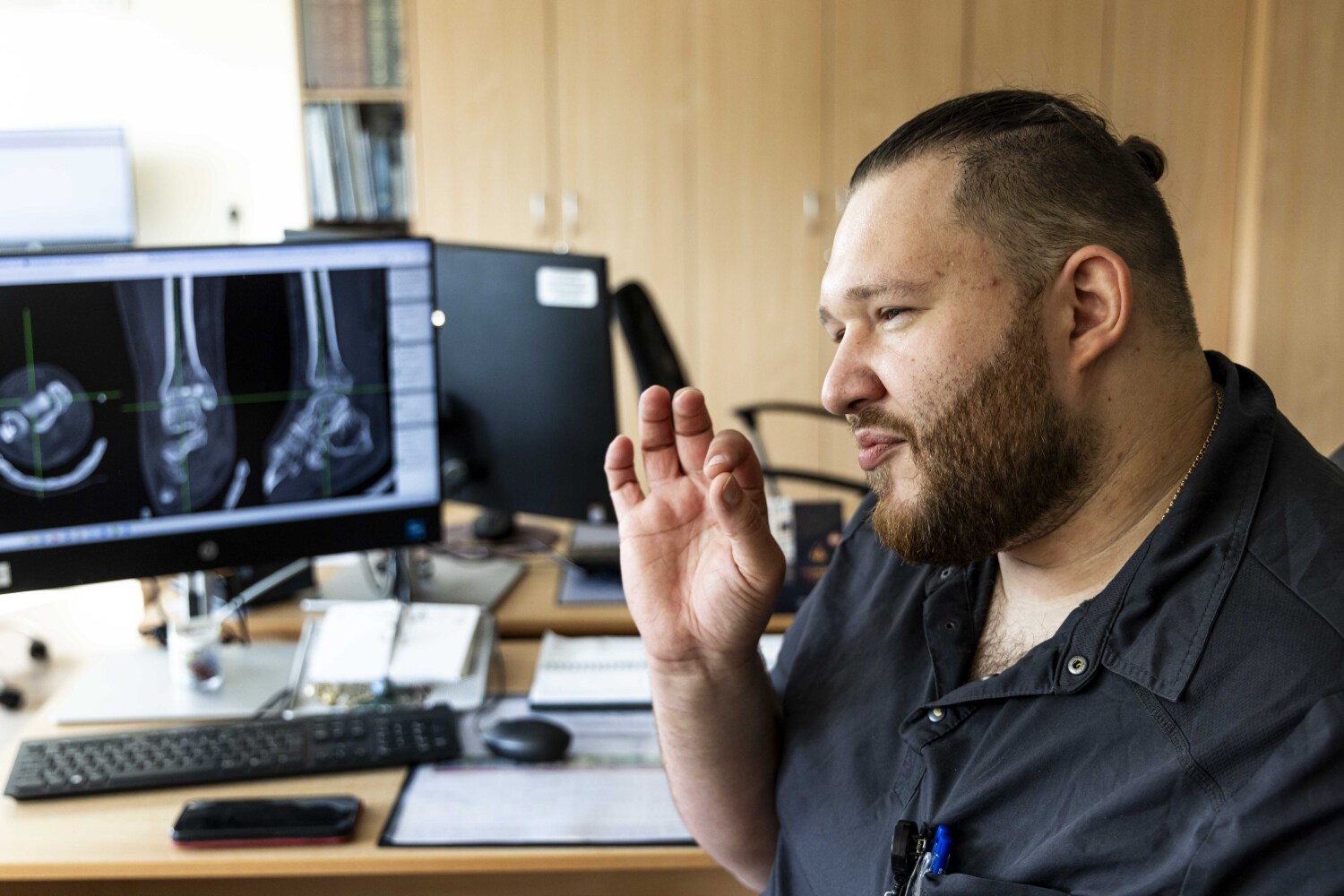
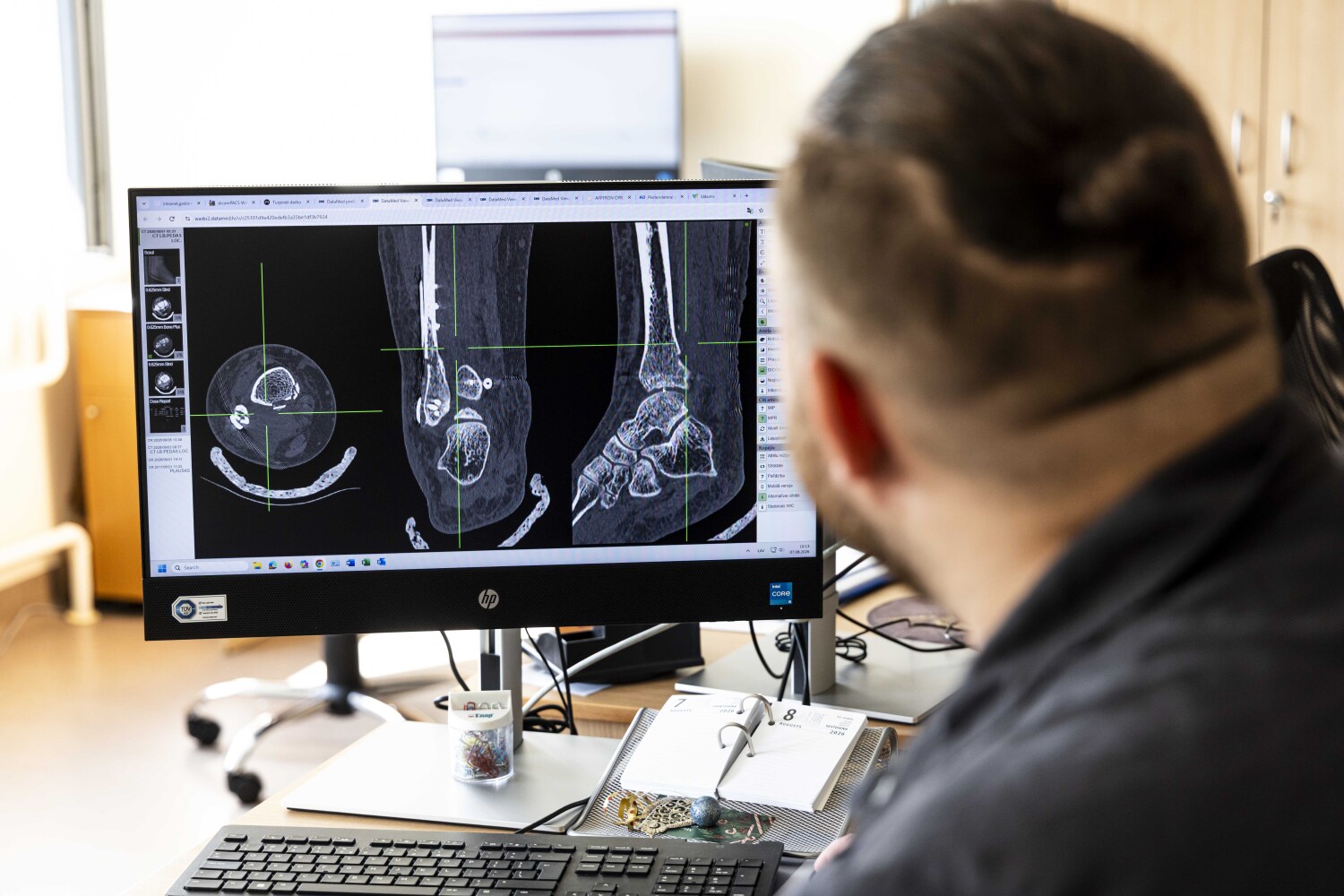
I had to operate on a pilon fracture, where the lower end of the shinbone had broken into several fragments at the ankle joint. The challenge wasn't so much the operation itself as planning it – figuring out how to put the pieces back together like a puzzle, which fragment to start with and which to fit into place next.
Did you model it on a computer?
Yes, we usually model it on a computer, and we also draw things out. Everyone has their own approach. One colleague, for example, cuts shapes out of paper and arranges them in the right configuration when planning an operation. I know trauma surgeons who use a 3D printer to print the individual fracture fragments, then take surgical instruments and screw the pieces together. This helps them work out which surgical approach to use and how to avoid damaging a nerve or blood vessel. I like the fact that trauma and orthopedics requires both visual and creative thinking.
I've spoken to Uģis Šolmanis, a young specialist in trauma and orthopedics at Vidzeme Hospital, about using artificial intelligence (AI) programmes in the field. He showed me a programme that acts like a ‘third pair of eyes’ when looking at an X-ray: the injury is assessed by a radiologist, the attending doctor and a programme trained on extensive information about fractures and able to analyse data effectively. Do you use AI tools of this kind too?
Yes, we use them too. Of course, we first look at the X-ray ourselves – out of professional pride (smiles). We make our own diagnosis and then use additional tools to check it. AI is most useful when changes on an X-ray are very subtle. The tool is good at identifying a fracture when the bone fragments haven't moved out of place – a type of fracture that's harder to detect. If the fracture is displaced, it's easy to spot with the human eye.
Have you encountered any injuries caused in unusual circumstances? For example, I dance bachata, and someone in the dance community shared a video from abroad in which a male dance partner spun a woman too quickly and awkwardly into a move that involves leaning the head backwards. She twisted her neck, sustained an injury and now has to wear a neck brace while she recovers.
I've seen plenty of injuries sustained in unusual circumstances, but one case from my first year of residency particularly stands out. A woman came in with a hand injury. While examining her, I noticed that her lower leg was angled inwards by about 60 degrees halfway down – the bone was somewhere it certainly shouldn't have been. I asked, ‘What happened to your leg?’ And she replied, ‘Well, actually, I hurt my wrist...’ It turned out that when she was a child, her father had run over her leg with a tractor, breaking it.
They should have gone to the nearest rural medical post, but that would have meant harnessing a horse, getting the cart ready and travelling for half a day. Her father said, ‘Don't worry, sweetheart, we'll figure out something.’ He wrapped her leg in newspapers, covered it with clay from a pond, and the girl walked around in this improvised ‘plaster cast’ for two months.
Afterwards, they broke it apart to remove it. As a result, the bones in her leg healed in the wrong position.
What recent developments in trauma and orthopedics seem almost like science fiction – perhaps things that haven't yet entered everyday clinical practice?
As we discussed, AI is advancing, and we already have robotic assistants. Special machines have been developed to help determine the correct angles for drilling and cutting bone.
I think some of the most innovative advances in trauma surgery may come from integrating AI, both to assist during operations and to help plan them.
I'm interested in science fiction and innovative possibilities, such as artificial prostheses capable of learning human movements. Work is already under way in that direction. For example, artificial arms are being developed, but researchers haven't yet fully managed to connect their operation to the brain so that the brain can send signals to the artificial arm.
If that became possible, it could open up opportunities not only for people who have lost a limb: people could even have extra arms controlled by their brain.
Experiments are now taking place abroad in which electrodes are attached to a mechanical arm so it can be controlled remotely. However, I watched a video by a blogger who has had both arms amputated. He talked about prosthetics competitions in which people with artificial arms race to perform different tasks. Mechanical prostheses still come first in these events. They use a cable that can be pulled through shoulder movements to operate the prosthesis.
You must also help patients in very serious situations – after car crashes or unfortunate head-first dives into water, for instance...
Not all patients injured in our region are treated at our hospital or stay here for treatment. It depends on the nature of their injuries. Although we're a multidisciplinary hospital, we don't have specialists in every field. For example, we have abdominal surgeons, trauma surgeons, anesthetists, intensive care specialists, neurologists, specialists in internal medicine, obstetricians and gynecologists, and pediatricians. But we don't have vascular surgeons, thoracic surgeons (who operate on the chest) or spine specialists who treat spinal injuries. If a patient comes in with a spinal injury or another injury requiring specialist care, we consult other specialists to decide how urgently they need to be transferred elsewhere or how quickly the appropriate specialist could come to us. We normally stabilise the patient until a decision is made about what to do next.
Nevertheless, you must encounter situations in which an injury will affect someone's life permanently, such as the loss of a leg. One thing is to look at an X-ray and think about treatment; another is to speak to the patient in difficult circumstances. What empathy and communication skills did you learn at RSU, and how have your colleagues' suggestions helped you handle these conversations?
RSU and my colleagues really helped me with that. They taught me how to talk to patients and helped me understand how patients feel and why they behave as they do – why someone might become aggressive, refuse to cooperate, or simply not hear what I'm saying. Once I began to understand why people behave in certain ways and recognise different personality types, I became better at working with them. Some patients need more support and reassurance, someone to listen and talk to them. Others need to be told that everything will be all right. And some people just prefer straightforward facts – they find that easier to deal with than being fussed over or called ‘sweetheart’.
The training sessions at the RSU Medical Education Technology Centre were extremely valuable. We practised different communication scenarios. In one scenario, I sat opposite an actress playing a Jehovah's Witness patient who had suffered severe blood loss and needed a blood transfusion. Jehovah's Witnesses may decline blood transfusions on religious grounds, even when a transfusion is medically necessary. We practised what I would and wouldn't say in that situation. We then watched recordings of our conversations and analysed what had gone well and what we could improve, which was very enlightening.
Advice from colleagues is useful in everyday practice – and not just from doctors. For example, our head nurse has taught me a great deal about communication, particularly when I first had to inform relatives that a patient had died. Those first few times were awful. I didn't know how to say it, and I was nervous.
How did you learn – or perhaps fail to learn – to accept that death is sometimes part of your job? I assume that it is, at least occasionally.
If you spoke to an intensive care resident, they'd tell you it's more than occasional. But in our specialty, death really isn't a common outcome. When it does happen, though, it affects our whole department emotionally. We carefully analyse why it happened.
The first few times were the hardest. But you have a choice: either you accept death as part of your job, or you don't – and sooner or later it will eat away at you.
I chose to accept that, unfortunately, there are times when a patient dies even though, as a doctor, you've done everything possible. Their body's compensatory mechanisms may have been exhausted by the injury, or they may have had other serious illnesses.
You come to understand that, yes, these things happen, but you can't let them stop you from doing your job. There are still other patients who need your help!
Given the physical and mental demands of your job, how do you maintain a work–life balance?
I think I manage it quite well.
I know colleagues who work in several places, and they're burnt out. I prefer to recharge, focus on one workplace and keep my number of shifts under control.
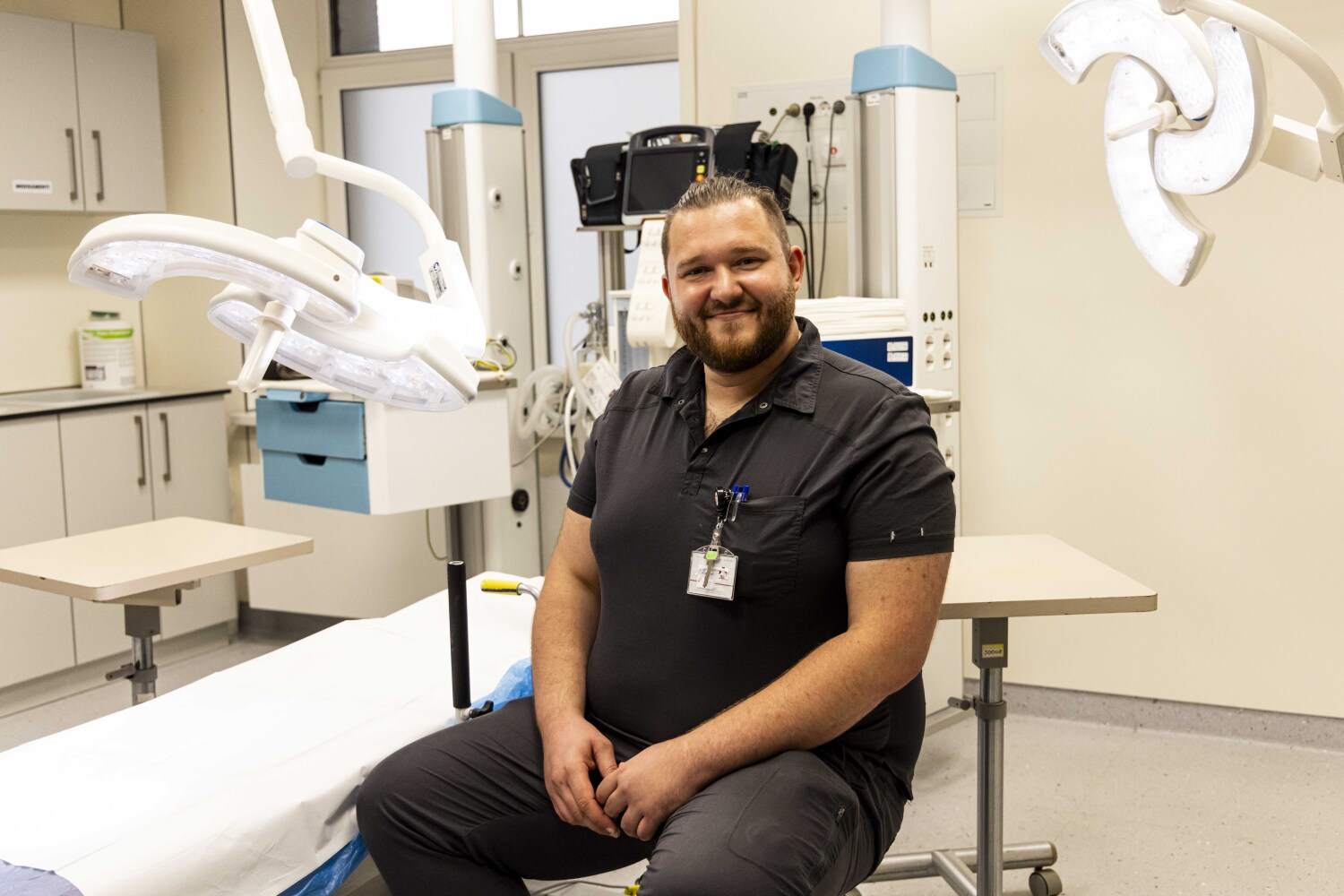
I try not to do more than four to six shifts a month – ideally four. Unlike many residents, I keep my Saturdays and Sundays free. I've realised I need those days to recover.
In my free time, I enjoy watching films and travelling. I've also found a sport that lets me arrange sessions at different times – with my changing work schedule, I can't commit to activities held at fixed times. I play padel. It's easy to put a group of four together, and anyone can join in; you don't need a particular level of fitness.
I didn't used to enjoy spending time in nature, but working with people has made me appreciate it more and more. You begin to value the sense of peace you get from just sitting down and ‘listening to the stillness’, finding pleasure and satisfaction in simply being outdoors.
When it comes to films, my favourite genre is science fiction, especially stories about possible futures and technology. Why, I wonder, aren't we transplanting brains yet? I think collaboration between science fiction writers and scientists could bear fruit. Jules Verne described the idea of an electric submarine long before it became a reality. Science fiction writers can come up with ideas, while scientists can explore how to make them happen. I also enjoy comedies and thrillers – and then melodramas.
You're nearing the end of your residency. Do you plan to stay at Jelgava Hospital afterwards?
Yes, I'd like to stay. The team here is very supportive and there's a great deal to do. I have rotated through various hospitals during my residency, so I can compare them. There are excellent opportunities for professional development here, and the hospital management and my colleagues are very accommodating.
Article originally published on the portal Delfi
Related news
 Daughters-in-law provide care for partners’ parents more often than sons-in-law: what characterises informal caregiving in Latvia? RSU in the news, Research