When choir reflects its conductor: Evita Taranda’s 26 years with the RSU Choir Rīga


This year, spring brought a victory for the Rīga Stradiņš University (RSU) Mixed Choir Rīga at the International Choir Competition in Riva del Garda, Italy, organised by concert agency Meeting Music, where the choir won all the top prizes. For the choir’s conductor Evita Taranda, this marks the beginning of her 27th year leading the choir.
For more than a quarter of a century, Evita Taranda has shared the choir’s journey, with generations of students changed, concert programmes created, and successes at international competitions achieved. This year has also been a special one for the conductor personally: she celebrated a significant anniversary and received Letters of Commendation from both the Ministry of Culture and RSU. It is a good moment to look back at how her musical journey at RSU began, what the greatest challenges and most rewarding moments have been over the years, and how the choir itself has changed.
With the start of the academic year, a new season of work has also begun, and the interest in joining the choir has reached a record high. This year, 52 applications to join the choir were received, compared with around 30 in previous years.
You have been conducting the RSU choir for 26 years. How would you describe this professional journey?
I remember quite well the moment I first arrived here: I had just graduated from the Latvian Academy of Music. From the very first day, I had great respect for the people in academic gowns. And that respect has never changed.
I moved from the musical environment I was used to into a completely different community, mainly with medical students around. Musicians have their own sense of humour. For example, when I say: ‘Just don’t smile’, I actually mean: ‘Come on, do smile!’ But here, the medical students were serious and took everything literally. I have adapted, and we still have our jokes, in fact, plenty of them! Throughout all these years, humour and building good relationships have been important aspects of my work.
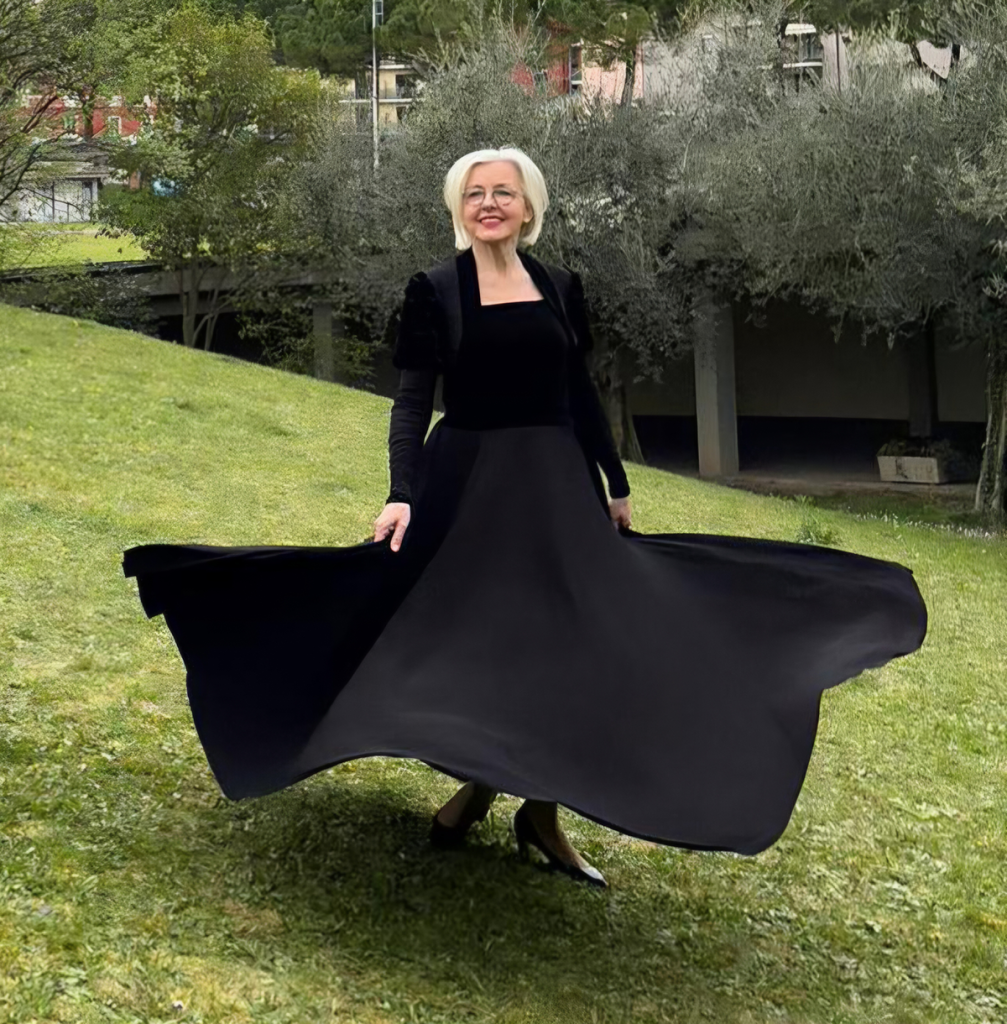
Students have changed over the years. Back then, we were all the same age. Now, the singers are more at the age of my children. But I think we were a bit wilder – back then, the singers always found time for parties, concerts, and trips, despite their demanding studies. Many of those singers have since become well-known doctors. Nevertheless, I have always respected: if medical students have a histology colloquium or an anatomy exam the next day, it is understandable that they do not turn up for a rehearsal on that day. After all, who would want to visit a doctor who has never heard of a particular disease and makes excuses like: ‘Oh, I don’t know about that one – I was at a choir rehearsal when we covered it.’ We need to help them balance everything.
Interestingly, the choir is constantly changing – some students graduate from RSU or start families, and new members take their place. As a result, at times, represenatives from certain field dominate in the choir. For example, at one point we had more dentists. However, we have never had a single ear, nose and throat specialist – who might perhaps sometimes be useful for the singers with their advice (laughs).
The RSU Choir Rīga regularly takes part in international competitions, and this spring you won all the top prizes at the International Choir Competition in Riva del Garda, Italy, organised by concert agency Meeting Music. What enables a university choir to compete with leading choirs? How do you ensure that singers not only perform in a technically accomplished manner but also captivate the audience?
From the very moment we work through the sheet music of a song, we discuss its message and meaning. We talk about how to change the tone or expression, rather than simply whether to sing more softly or loudly.
After our performances at concerts and competitions, we have often seen and felt emotions of the audience. For example, in Italy, one listener was showing that our singing had given him goosebumps, while others had tears in their eyes. We feel this shared experience. It is such a treasure! We keep refining this performance through our daily work.
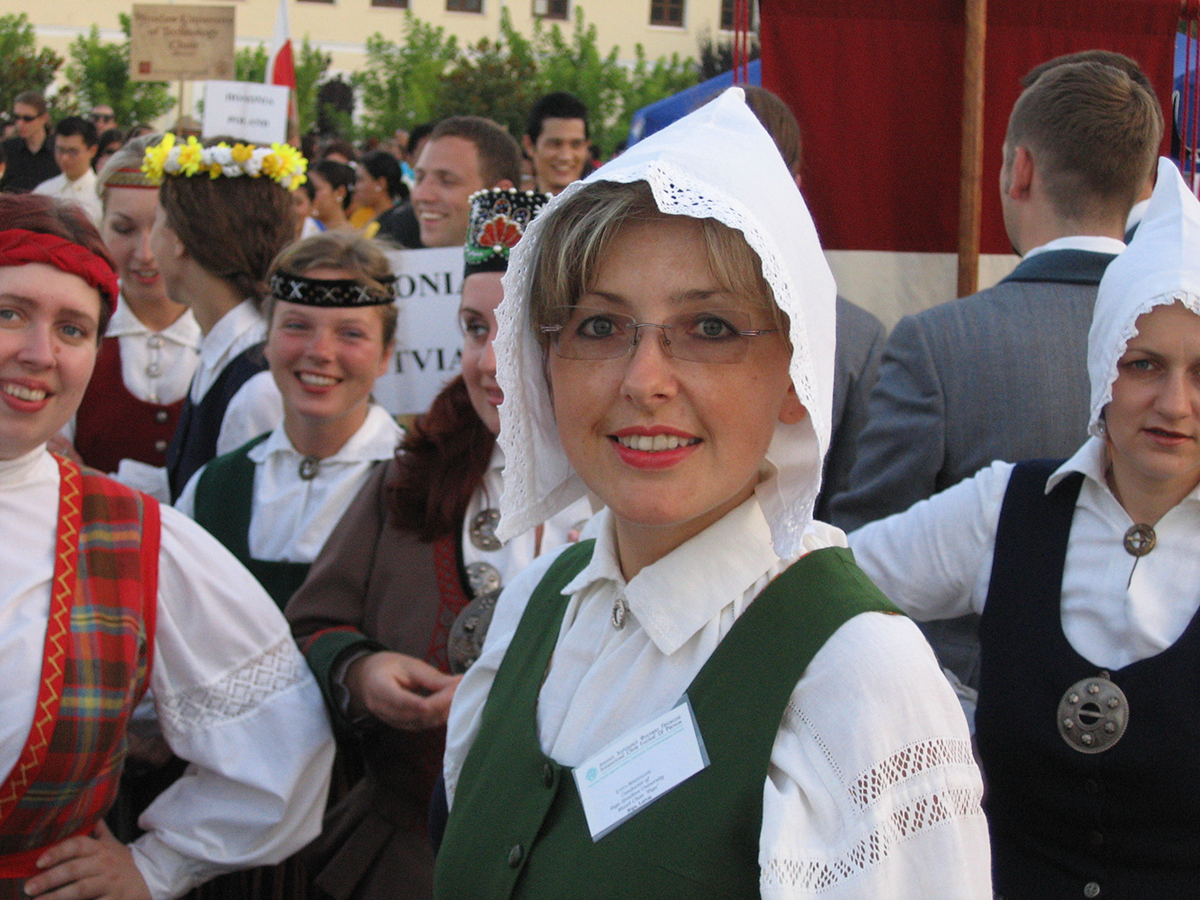
However, no concert, however wonderful, can compare to the experience of taking part in – and, even more so, winning a competition! It is difficult even to put into words what happens there – the adrenaline is so intense that everyone in the choir is ready to do more than they ever thought they could. At the last competition in Italy, we heard some very good choirs, with singers even having secondary and higher musical education (we have singers both with and without basic musical training)…
The richness of Latvian choirs lies not in the purity of sound, but in the ability to convey meaning and put emotion into their singing. Even choirs whose sound might seem technically superior, do not necessarily have this ability. Latvian choirs have.
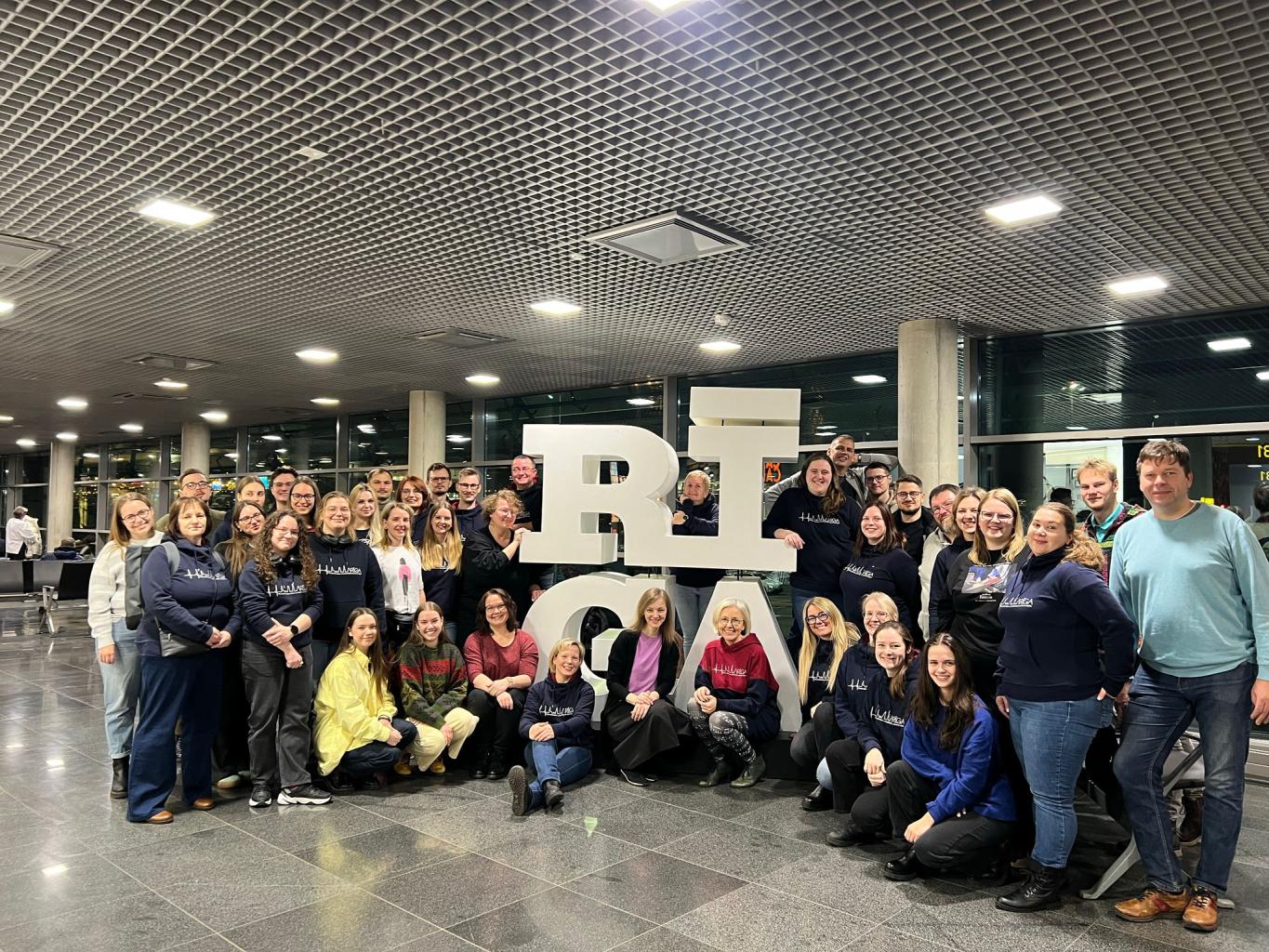
I would like to emphasise that our achievements and such a vibrant creative life would not be possible without the support of our beloved university - I would like to express my heartfelt thanks to RSU. Without the university’s financial support, we would not be able to perform at local concerts in excellent concert halls and churches or take part in competitions and concerts abroad. With the RSU’s support, our students have had the opportunity to sing in Austria, Italy, Spain and other countries. We are currently preparing for a university choir festival in Portugal. The university and our choir – we love each other dearly.
You are also a singer with the State Choir Latvija and have performed with the choir in some of the world’s most prestigious concert halls. What has this experience brought to your work as conductor of the RSU choir?
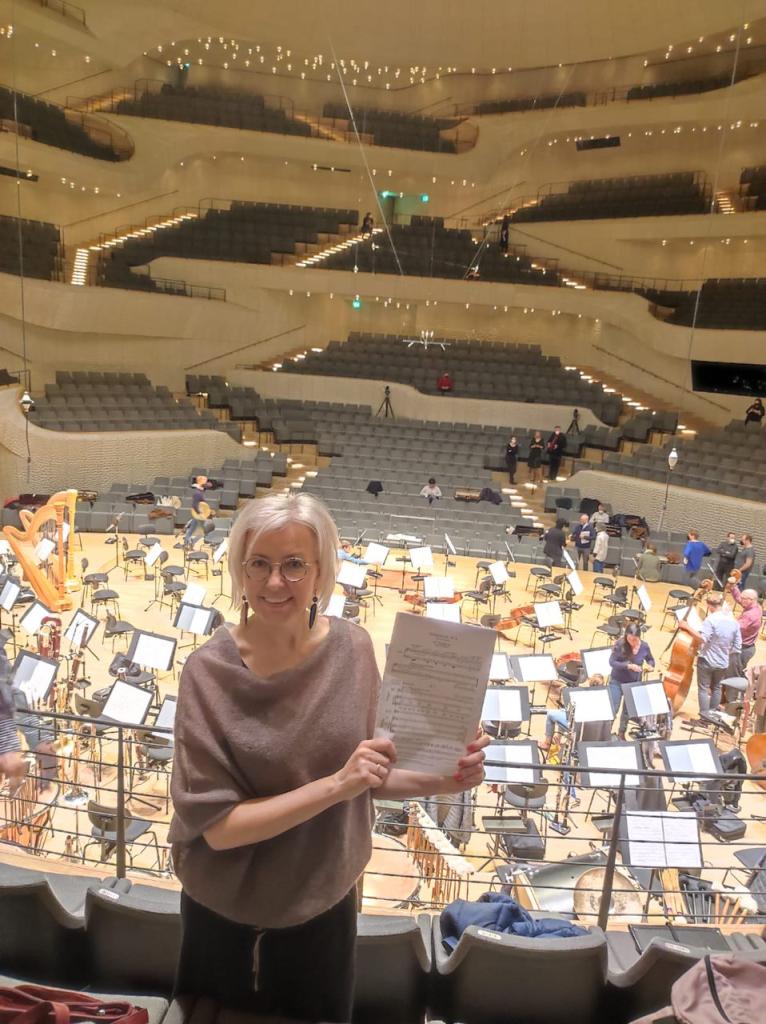
As a choir singer with the State Choir Latvija, I have performed in the world and Europe’s most prestigious concert halls. The opportunity to perform at the Elbphilharmonie, Lincoln Centre in New York, the Concertgebouw in Amsterdam, in China, Singapore, and in London this summer, has been invaluable.
I had previously read about many of these prestigious venues in books on choral music. And that is without even mentioning unforgettable musical experiences, such as the opportunity to sing alongside Mariss Jansons. Working with outstanding musicians is inspiring and gives us new aspirations to strive for in our own work.
I do appreciate the opportunities that singing in a choir and conducting one provide. It can be difficult at times. Daily rehearsals, trips away – sometimes early flights followed straight by rehearsals – but the sense of fulfilment makes it all worthwhile.
What has been the most profound musical experience for you over the years, a kind of catharsis?
There have been many such moments, especially when tears well up in my eyes at the end of a piece. I do my best to hold them back, as I have to keep singing until the very end. I once listened to an interview with our famous opera singer Aleksandrs Antoņenko, who, when asked about emotions during a performance, said: ‘People have come to listen to me sing, not to hear me cry.’
One must learn to balance deep emotional engagement with a high-quality performance, so that emotions do not compromise the quality of the performance. If I start crying, the choir singers will start crying too – they are a conductor’s mirror.
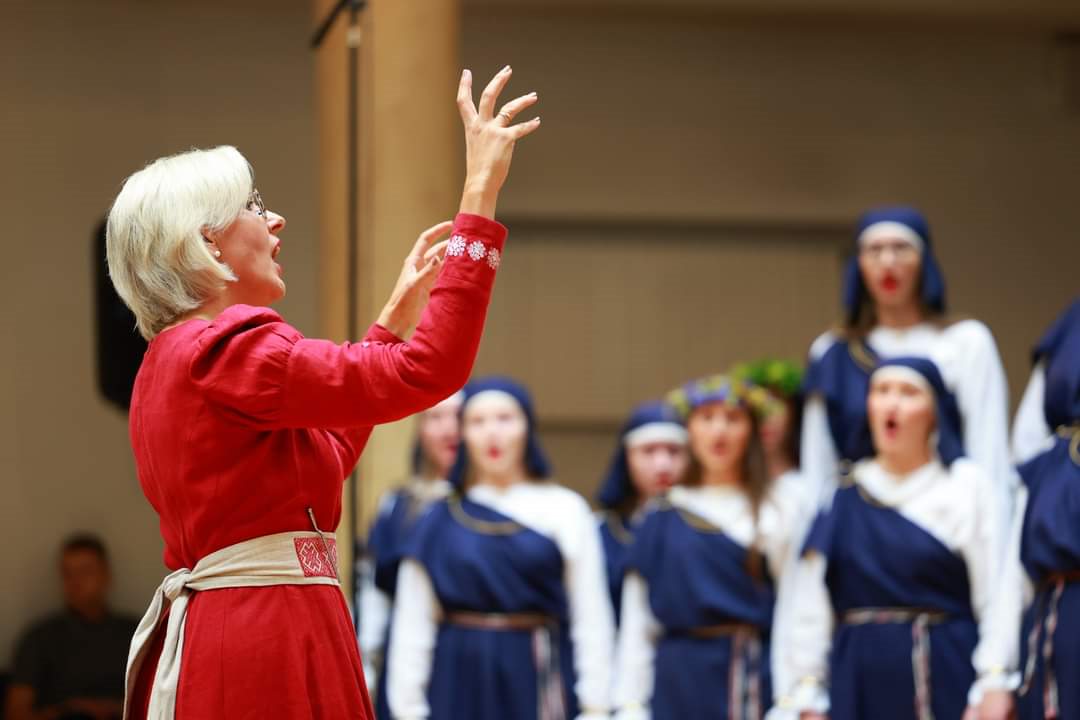
Afterwards, I can let myself cry. I had one such emotional moment in Italy. All the choir battles at the Latvian Song and Dance Festival are also very special. We have always made it to the final. The distinctly Latvian environment and sense of togetherness evoke particularly powerful emotions. I think it is one of the most intense choir competitions. It brings out a sense of the Latvian pride, the determination to overcome any obstacle. Emotions run high!
Of course, we have our outstanding concerts – every one of them is special, it is never any different. Zane (Zane Zilberte, the other conductor of the RSU Choir Rīga – author) and I think very carefully about the concept behind each programme. We have been working as a team in this choir for 20 years and have known each other since the music secondary school. Colleagues have asked how we have managed to work together for so many years. We complement each other. When one of us comes up with the central idea, the other builds on it with her own perspective.
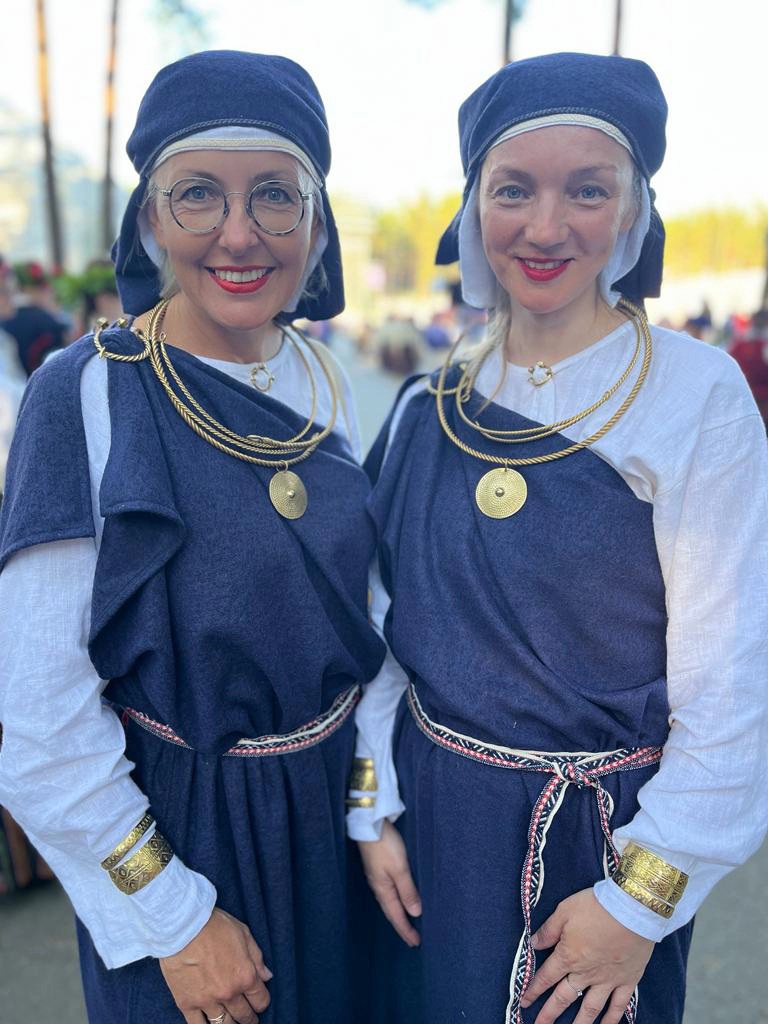
Alongside the compulsory Song Festival repertoire, the choir has performed sacred, classical, and contemporary music.
There is always an idea or a composer who suggests a collaboration, and then we develop it further with our own vision.
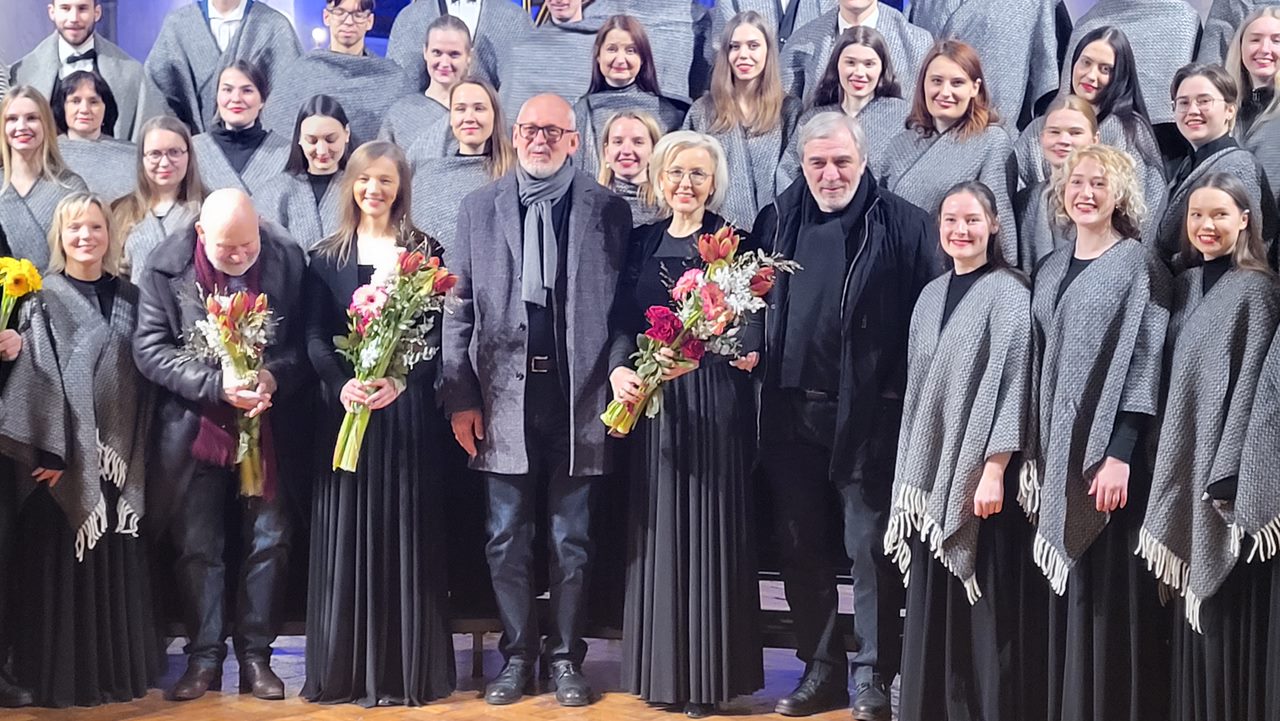
One of the most memorable concerts that comes to mind, took place at Riga Cathedral. The programme featured works by Pēteris Vasks, Ēriks Ešenvalds, and the Georgian composer Vakhtang Kakhidze. It all began when I discovered the Georgian composer’s song cycle Vita. Gradually, we built the rest of the concert programme around this work - the concert took place at Riga Cathedral, with Pēteris Vasks attending. It is impossible to imagine our choir without Ēriks Ešenvalds, as it is largely through performing his music that we have won prizes in competitions - his compositions are among the finest gems of Latvian music. And so, the music of Latvian composers met with that of a Georgian composer, and on top of that - at Riga Cathedral! Such a programme cannot be planned rationally – it takes shape as the original idea gradually develops.
How did your journey into music begin?
I feel as though someone up there had everything planned, because, when I was in the second grade, new teachers came to our school and set up a branch of the Ogre Music School in Madliena, starting from scratch (it later became an independent music school.) They invited the first seven children from various classes to join. It is incredible that several professional musicians have emerged from that small country school.
Then, I studied at the Latvian Academy of Music, and after completing my bachelor's degree, continued my studies in a two-year master's programme in choral conducting.
Upon graduating with my bachelor's degree, I was offered a position with the State Choir Latvija. About six months later, I became a choirmaster, a position I held for almost 15 years, until I went on maternity leave. I still continue singing with the choir as a performing choir artist, singer.
There are no professional musicians in my family, but everyone loves music and sings in choirs. Together with my husband, we founded and conduct a choir in Garkalne. My husband graduated from the Department of Music Education at the Latvian Academy of Music. Our daughter has also followed in my footsteps and is studying choral conducting at a music secondary school. The eldest son has chosen a career in aviation, while the youngest daughter attends music school and also takes private clarinet lessons.
What have been the greatest professional challenges over the years?
The biggest challenge was the COVID-19 pandemic, when many people across the world, including in Latvia, believed that choir rehearsals could be held online. My colleagues tried to simulate working with a group remotely...
I tried working remotely individually, but it was impossible to synchronise the sound. I had learnt to play the melody myself, while listening to a singer perform vocal exercises with a time delay, and then I pieced the singing together in my mind.
Of course, this could hardly be considered quality training. Nevertheless, we had to find a way to keep rehearsing.
As for the rest of the time, I can only wish everyone a job that is also their hobby. Even though I work very hard, I know that I enjoy doing my job. We could work less – many choirs do – we could choose not to travel to competitions, but we have always enjoyed taking on challenges and achieving our goals.
The sense of fulfilment is immeasurable.
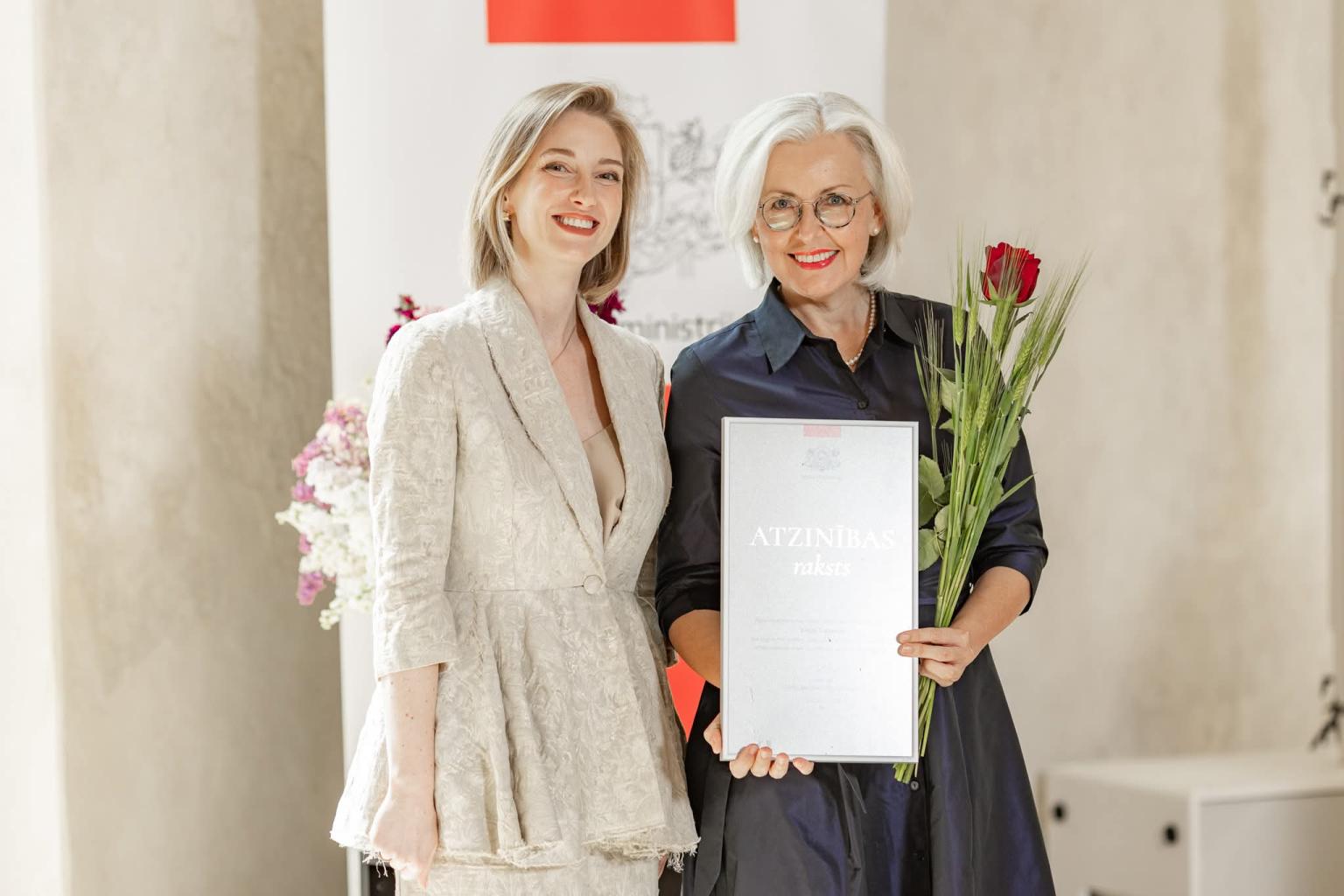
How did you feel when you received the Ministry of Culture Letter of Commendation – this high recognition?
First of all, I would like to express my deepest gratitude to RSU for nominating me for the Letter of Commendation. As someone who has been doing her job with dedication and passion for many years – and I would not imagine doing it any other way – I do not feel that I have done anything beyond what I have always strived to do to the best of my ability. However, when I heard about the awarded Letter of Commendation, it was a very special feeling. I realised that I had actually achieved a great deal.
The award ceremony coincided with my milestone birthday, which felt like a gift arranged from somewhere above the world. I felt a great sense of fulfilment, and the recognition meant a lot for my self-esteem.
When so many people appreciate my work, I have every reason to feel happy and fulfilled.
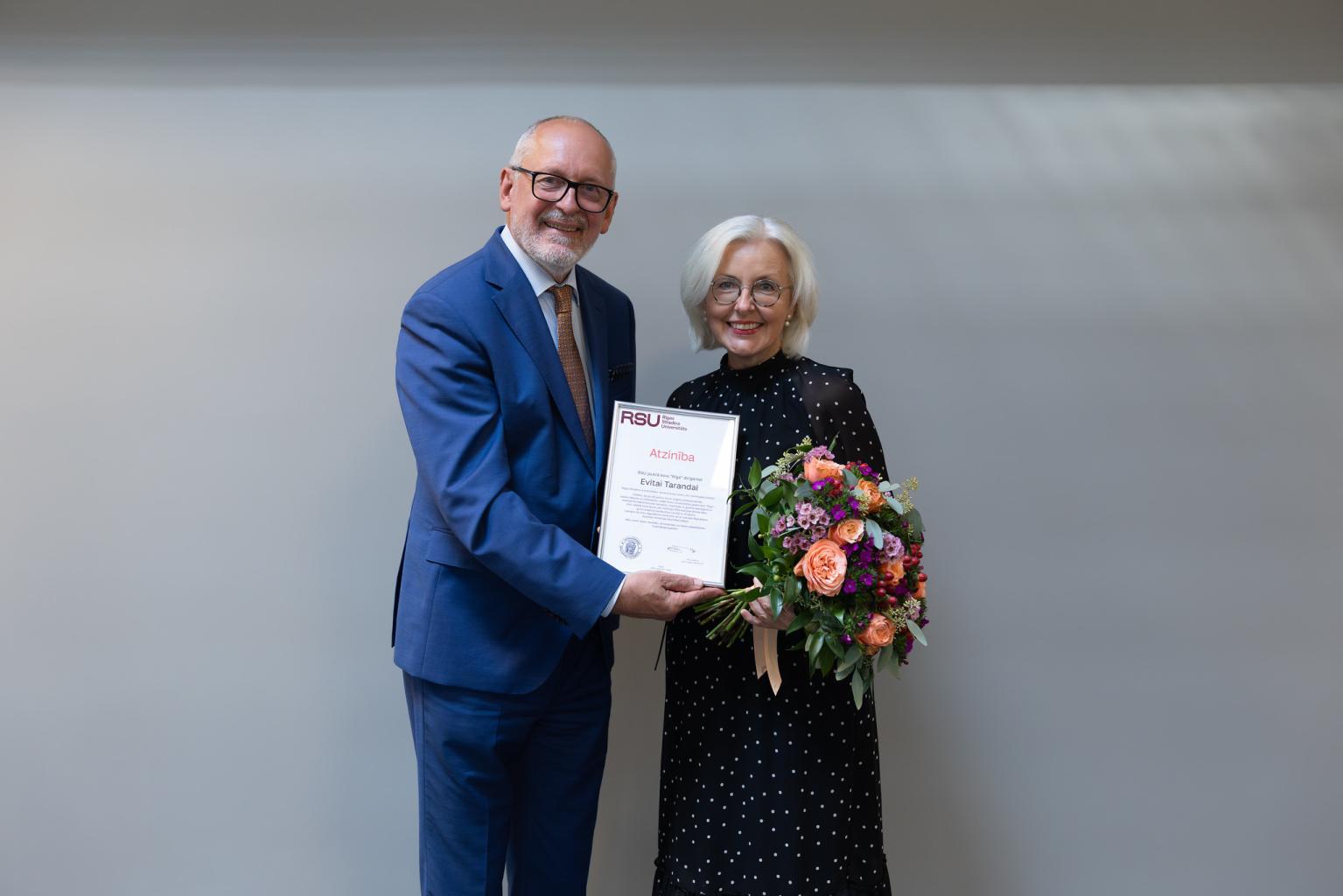
And a lovely follow-up was the recognition I received from the RSU management. It gave me the feeling to keep going and achieve even more!
Related news
 The people behind the numbers: interview with Agnese Gintere, RSU Administrative Employee of the Year Interviews