Women in Science Baltic Fellowship 2025 awarded to RSU Faculty of Social Sciences lead researcher Jana Kukaine


In Latvia, one of the winners of the Women in Science Baltic Fellowship 2025 competition is Asst. Prof. PhD Jana Kukaine, Lead Researcher at Rīga Stradiņš University (RSU) Faculty of Social Sciences. She received the fellowship for her research project Plant Aesthetics in Baltic Contemporary Art: Women’s Stories and Experiences.
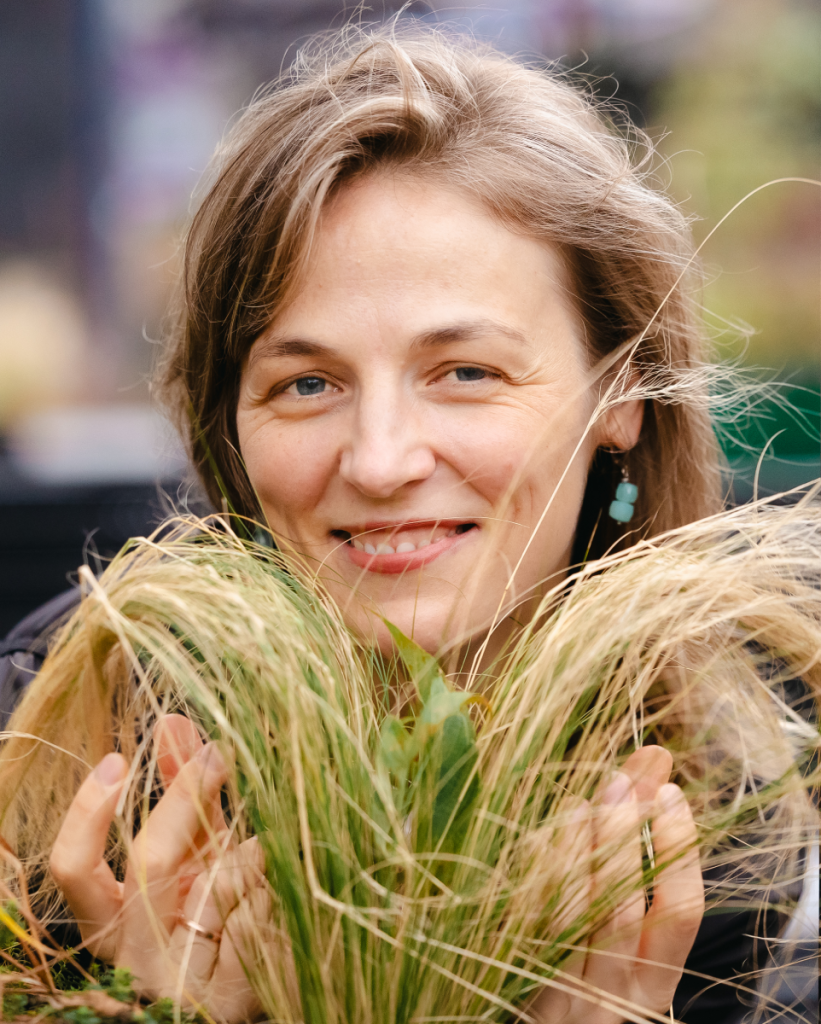
Photo: Courtesy of Agnese Zeltiņa
The initiative, which receives financial support from the Ministry of Education and Science, is implemented by the Latvian Academy of Sciences (LAS) and the Latvian National Commission for UNESCO (LNC UNESCO). The fellowships are awarded on a Baltic scale through the collaboration of the Baltic Academies of Sciences and the National Commissions for UNESCO. For the second year in a row, nine female scientists from Latvia, Lithuania, and Estonia have received the fellowship, each awarded 7,000 EUR to support their further research.
Jana Kukaine states: ‘I am delighted to have the opportunity to continue developing plant studies and feminist theory in the context of Latvian and Baltic contemporary art. I am glad that the committee recognised the transformative potential of contemporary art as a driving force that protects democratic values such as diversity, human dignity, equality, and freedom.
In my research, I intend to explore plant aesthetics in Baltic contemporary art, drawing on women’s stories and experiences. I will engage with current discussions in critical plant studies to develop an innovative theoretical framework where plants in Baltic contemporary art are perceived not only as visual or symbolic elements, but also as connectors between humans, the environment, bodily sensations, and affects.
The theme of plants is one of the key issues in social sciences and humanities. Plants are also the foundation of life, and we must remember this in the context of the current climate crisis and ecological threats. Feminism, too, is becoming increasingly relevant in light of today’s troubling political and social developments, the rise of right-wing populism, and growing intolerance in society.’
Jana Kukaine was inspired to pursue this line of research by her postdoctoral study at RSU, Vegetal Agency and Contemporary Art: Towards Sustainable Relationships with a More-Than-Human World, which will conclude in March next year. This perspective focuses on the strategies used by contemporary art in Latvia to reconsider human relationships with nature and make them sustainable, reciprocal, and horizontal.
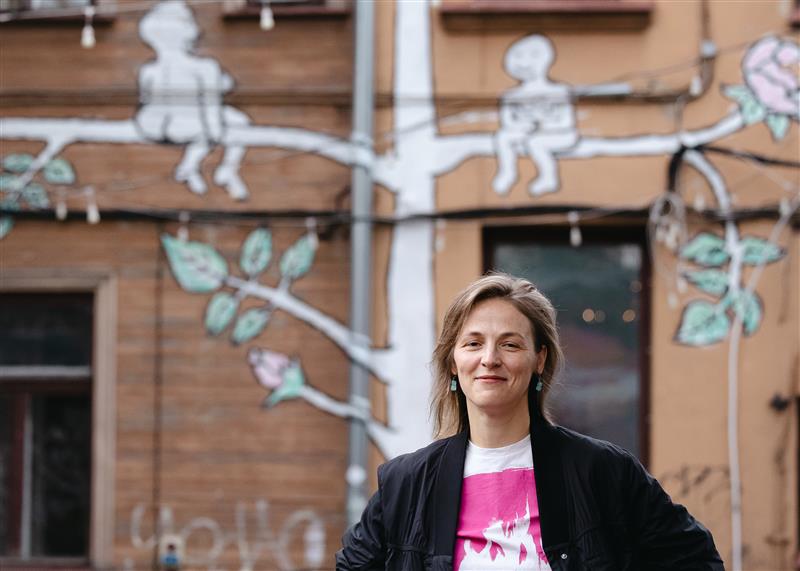
Jana Kukaine with mural by Ingrīda Pičukāne in Riga. Photo: Courtesy of Agnese Zeltiņa
In Latvia, the fellowships were also awarded to the young researchers PhD Monta Brīvība and PhD Candidate phys. Elīna Pavlova; Brīvība received the fellowship for her study “Precision Medicine in Oncology”, and Pavlovska received it for her study “From Two-Particle Collisions to Collective States: Analysis of Electron Correlations in Mesoscopic Colliders”.
LAS President Ivars Kalviņš emphasised: ‘It is very important for the development of science in the Baltics to support the most talented female researchers on their path to the highest achievements in science. Women in science often face greater challenges in advancing their careers, as family responsibilities, particularly the arrival of children, affect them more than men. Therefore, the Baltic Academies of Sciences and the National Commissions for UNESCO, within their means and with the financial support of the Ministry of Education and Science, organise fellowship competitions specifically for young female scientists and conduct expert reviews and evaluations of the applicants’ performance. We can be proud that a truly outstanding generation of young female scientists is emerging in Latvia and across the Baltics. Supporting their careers must remain our long-term priority to ensure the sustainability of our countries.’
‘In our rapidly changing world, scientific development plays a significant role, and support for research provides opportunities to address current challenges. Scientific discoveries help us build future prospects that will improve people's quality of life and strengthen public security. The research topics of the fellowship winners demonstrate how diverse and innovative the potential of young scientists is,’ says Baiba Moļņika, Secretary General of LNC UNESCO.
In Latvia, 51 applicants applied for the fellowship. 38 applications were submitted to the Doctor of Science contest, while 13 applications were submitted to the Doctoral Candidate contest. 33 applications were evaluated in the fields of natural sciences, engineering and technology, medicine and health sciences, while 16 applications were in the fields of humanities and social sciences. The applications were evaluated by expert committees of the LAS science departments, with the final decision being made by a joint expert committee of the LAS and LNC UNESCO. The contest Women in Science Baltic Fellowship is financially supported by the Ministry of Education and Science.