RSU sports psychologist boosts Latvia’s Paralympic achievements in wheelchair curling


In recent years, Latvian Paralympic athletes in wheelchair curling have demonstrated their competitiveness at the international level. At the Milano Cortina Paralympic Winter Games, a sports psychologist was also part of the team’s support staff.
A place among the world’s Top 8 teams
At the 2026 Winter Paralympic Games in Milano and Cortina, seven Latvian Para athletes competed in two disciplines - mixed doubles and mixed team wheelchair curling. Unfortunately, Latvian Para alpine skier Mārtiņš Oliņš, although qualified, lost his quota place and was unable to compete.
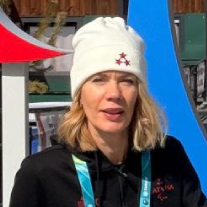
However, a particular historic event deserves special mention - for the first time in the history of Latvian sports, a sports psychologist was included in the Paralympic team’s support staff. This role was entrusted to PhD Gundega Ulme, a lecturer, researcher, and sports psychologist at the RSU Department of Health Psychology and Paedagogy.
The Paralympic Games were a truly fantastic experience! Being on-site at a competition of this level is very different from just preparing for it. To feel the absolute intensity of stress and emotions, the full spectrum of the atmosphere, is a unique experience. The emotions are still running high, but we have already started structuring our experiences and drawing conclusions. Sports psychologists and team representatives from other countries have also been a great support.
PhD Gundega Ulme
Challenges for a sports psychologist
Working with Paralympic wheelchair curling athletes is particularly challenging. Unlike in regular curling, players cannot sweep the ice to influence the stone’s slide. This means that athletes must maintain exceptional focus on every shot, precisely controlling the stone’s trajectory and speed while sustaining strategic thinking and emotional balance. Athletes must keep focus throughout the entire game, make well-considered decisions within a short period of time, and simultaneously uphold strategic awareness and emotional stability.
A sports psychologist must help the team adapt to a changing environment and unpredictable factors, maintaining the athletes’ spirit and focus on their goals. As a top-level competition, the Paralympic Games create additional stress, so the psychologist must also be able to respond quickly to the situation while maintaining the ability to effectively support the team and help athletes achieve peak performance.
Historic breakthrough and bronze – in the firing line
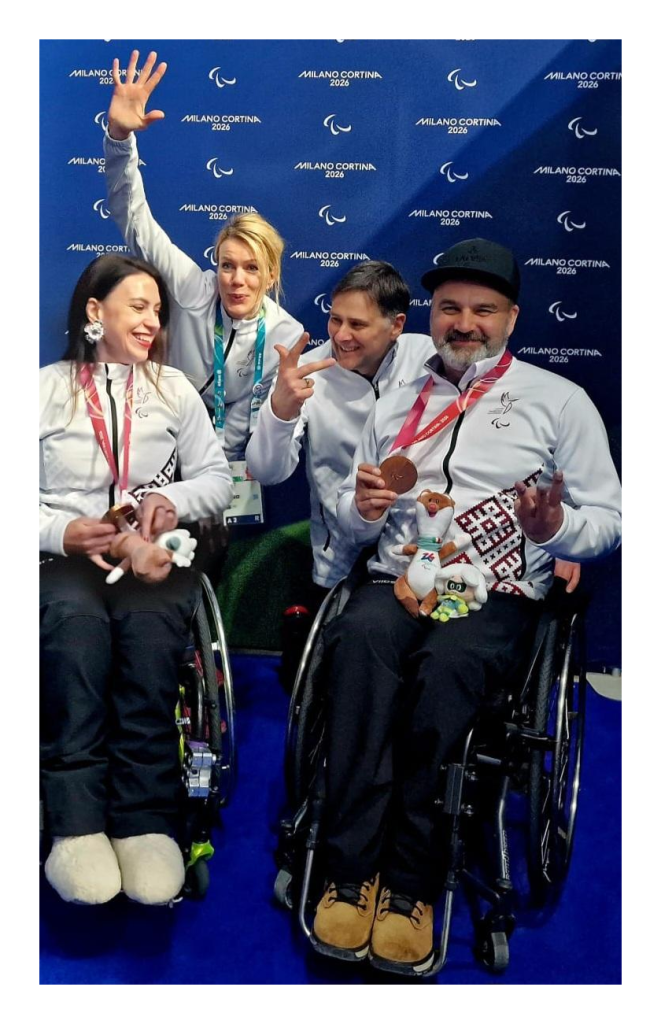
Latvia’s wheelchair curling mixed doubles team - Poļina Rožkova and Agris Lasmans (pictured) - have demonstrated consistent results at the international level in recent years. In 2023, they became world champions, proving that Latvian wheelchair curlers can compete for medals. In 2024, the duo reached the playoffs but lost in the quarterfinals, and in 2025, they ranked 11th overall. The combined results of these three championships secured Latvia’s qualification for the mixed doubles tournament at the 2026 Paralympic Games, where Rožkova and Lasmans won a bronze medal- marking the greatest achievement in Latvia’s Paralympic curling to date.
Latvia’s wheelchair curling mixed team has also steadily strengthened its position internationally. In 2022, they placed 9th at the Beijing Paralympic Games, continued competing in world championships while gaining experience and qualification points, and in 2025 secured their place at the 2026 Paralympic Games. At the Milano Cortina Games, the team won 3 out of 9 matches in the group stage and finished the tournament in 7th place, demonstrating competitive performance among the world’s top teams.
The Core of Jelgava Curling
Latvia’s success in wheelchair curling has largely developed around the Jelgava Curling Club:
- Latvia’s strongest wheelchair curling team was formed in Jelgava;
- Most national team players train together at the same club, allowing for more frequent and consistent practice than in other countries;
- Players know each other’s playing styles helping refine tactics and build team synergy.
With great pride in our outstanding Para curling athletes, we wish them success in their upcoming competitions. And continued progress in the field of sports psychology, with increasing involvement in athlete support teams!
Related news
 RSU psychology students launch initiative to support patients at the National Mental Health CentrePsychology, Society