
RSU IT expert Andris Bruģis on solving challenges with calm and humour


Photo: Courtesy of RSU and Andris Bruģis
We continue introducing the recipients of the Rīga Stradiņš University (RSU) Annual Awards 2025.
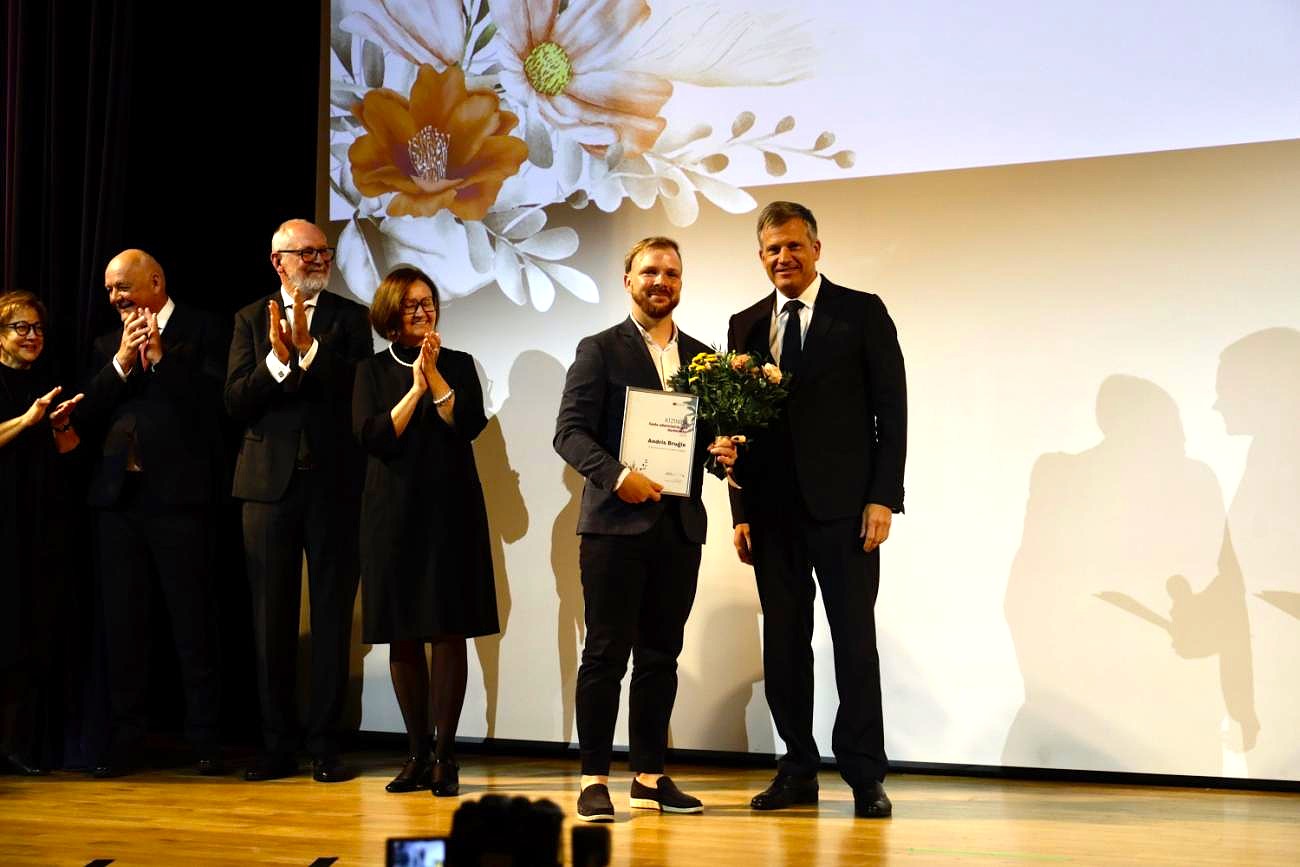
This time, we introduce a colleague described as warm-hearted and always ready to help, someone who knows how to find solutions in difficult moments. He has been involved in many challenging situations, such as when the university had to switch from on-site to remote work during the pandemic or when sound suddenly disappears during a video conference and a solution must be found quickly. Andris Bruģis, Acting Manager of the IT Service Centre (ITSC) of the Department of Information Technology, received the RSU Annual Award in the category Administrative Employee of the Year.
Next year will mark ten years since you are working for RSU. The IT field is evolving very rapidly. How has the university’s capability changed over the years? What has surprised you the most?
In my opinion, RSU has successfully kept pace with the rapid development of the IT sector and the use of new technologies to work even more efficiently. Digitalisation has been successfully implemented, ranging from the improvement of e-study course content to the document management systems. One of my first tasks at RSU, when I was a computer systems engineer, was helping colleagues record Panopto lectures, but now we provide this service only to new lecturers and just once; for everyone else, it is already part of their daily routine. It is a pleasure to work in an environment where knowledge is valued and where a truly large number of colleagues are willing to adapt to new systems.
When nominating you for the RSU Annual Awards, your colleagues described you as a kind-hearted teammate who works with great dedication and professionalism and is very supportive. They also praised your technical mindset and ability to find solutions in the most challenging situations. What helps you in difficult moments?
It is truly rewarding to receive such recognition and appreciation. When working with colleagues, I have often said that each of us has our own professional field that we know best, and if I had to understand even half of their lectures, I probably could not. In my view, we all have our own unique knowledge and skills, but we share a common goal.
In challenging situations, I find it helpful to break down a problem into smaller steps and then solve it step by step.
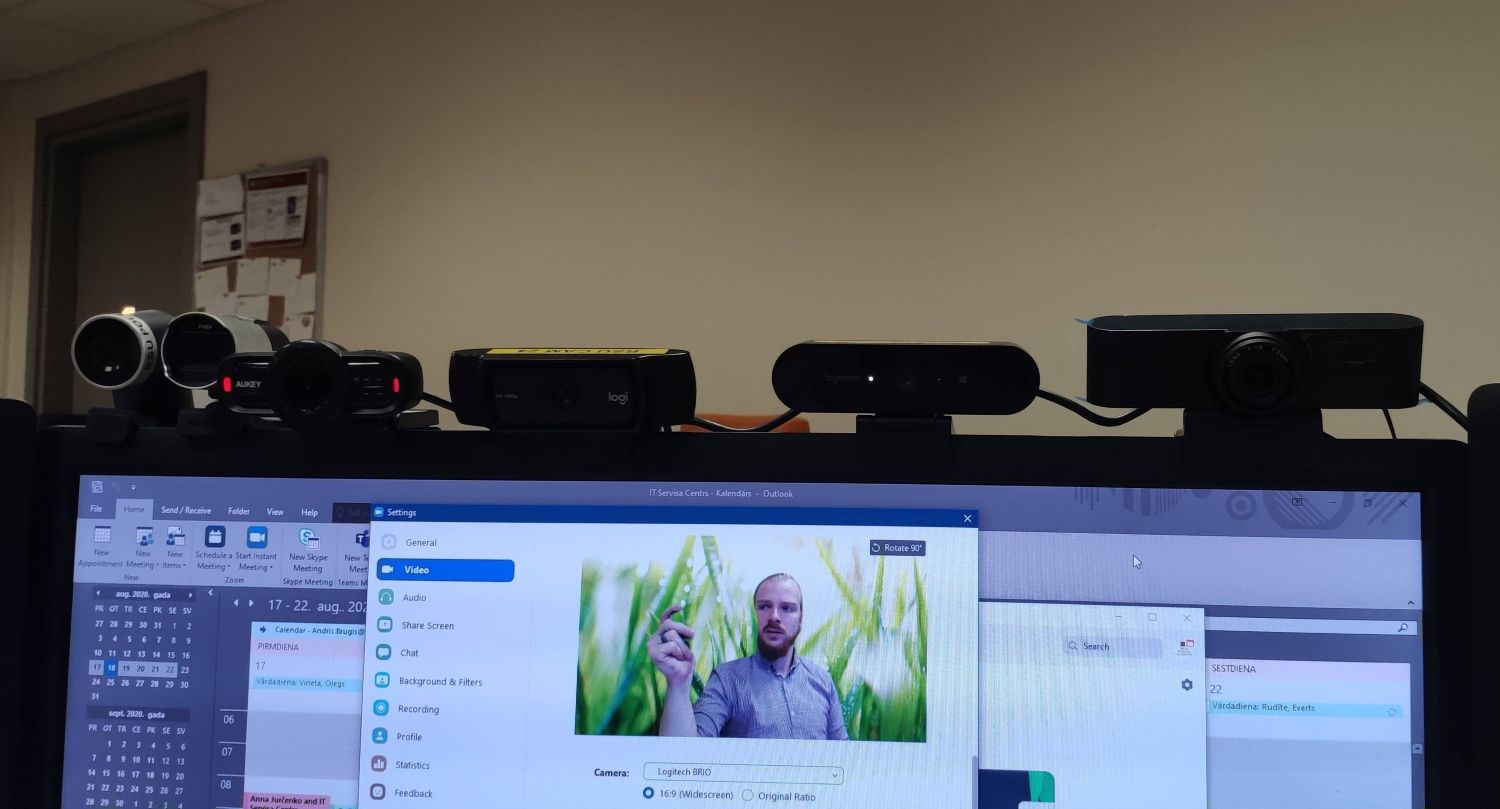
Here's an example of a problem: you can't hear the audio from the audience's microphone during a Zoom meeting. To solve this, you need to go through it step by step: is the right computer connected to Zoom, is the microphone turned on, is the correct microphone selected, is the microphone working in another app, etc. By going through everything this way, you can find the cause of the problem and fix it.
It is important to stay calm in stressful situations. As my mother told me when I was a child: ‘If you cannot change something, then it is not worth worrying about, but if you can change it - then stop worry about it and take action.’
My colleagues praise my patience. One of the reasons I am patient at work is that I am a farther, and energetic kids definitely help develop this quality.

Which IT project that you have been involved in has been the most challenging?
It is difficult to say, as I have had the pleasure and good fortune to work with highly knowledgeable colleagues who are able of solving technically complex issues. However, I can share the story of the first major project we implemented at the university.
Even before COVID-19, in 2020, a decision was made that RSU needed a tool for video calls. At the time, video calls were mainly used for guest lectures or for connecting with the Liepāja branch. We began testing Zoom, MS Teams, and BigBlueButton across different networks and devices. Back then, Zoom proved to be the best option, and we purchased ten licences, which at the time seemed plenty. Then the pandemic began, and those ten licences were fully utilised within the first weeks. We purchased ten more, and those were quickly used up as well. Currently, every RSU employee has a Zoom licence that is used daily, including during RSU Research Week.
The most challenging time was definitely the transition from on-site to fully remote work, which the IT Department handled with great professionalism.
You recently moved up from the position of the IT Project Manager to Acting Manager of the IT Service Centre. How has this transition changed your day-to-day work? What are your main goals and challenges?
I feel happy and honoured to have the opportunity to take on this important responsibility. What has changed is how meticulously I have to manage my calendar now. The work has become much more interesting and dynamic, and the daily plan I set in the morning usually changes by the afternoon. It is well known that the IT field is developing rapidly, and many ITSC colleagues have also moved to different departments within RSU. I appreciate that the university provides opportunities for professional growth, and alongside these changes, my main goal is to build a strong and united ITSC team, to develop and improve our areas of responsibility in order to provide even more supportive and knowledgeable assistance, higher-quality videos, better-equipped lecture halls with even more powerful computers.
What is the strength of IT at RSU, and what does it give us?
As Rector Prof. Aigars Pētersons has said on several occasions, our strength lies in our people.
No IT tool is useful without a knowledgeable professional behind it who can explain how to use it and teach others to apply it effectively.
I have been providing consultations on IT tools for several years now, and during these sessions, I have heard from colleagues that access to high-quality IT support is our greatest strength compared to other workplaces.
A lighter question about serious matters. Why and how often does it happen that someone asks the IT Department for help, but as soon as the problem is explained to the IT specialist, it turns out that it has already resolved itself? Has the IT Department compiled a list of the “strangest” questions?
Of course, we do not officially have a list of such questions, but we have a colleague whose duties include hiding Outlook emails, disconnecting printers, and freezing apps (just kidding). But seriously, these problems usually pop up just when a deadline is approaching.
Mistakes easily happen in the rush to click the right buttons, and then, while on the phone with ITSC, trying to slowly demonstrate what is not working, the “problem” resolves itself.
Is there perhaps something important I did not ask about the IT Department or about collaborating with it?
Varbūt es kaut ko būtiski nepajautāju par IT departamentu vai sadarbību ar to?
Yes - where to find IT instructions! You can find them at wiki.rsu.lv.
Related news
 RSU students explore study and research opportunities in GermanyFor RSU Employees, Research, For Students


