
Anthropology – A Way of Thinking. A Reflection on the Erasmus+ Trip to Brno


Authors: Anna Apīne and Ēriks Gorda, second-year students of the journalism program
Photo from the project archive
A few months ago, we at Rīga Stradiņš University received a spontaneous invitation to join as part of the Erasmus+ exchange programme with an anthropological focus. The course Current Debates in Social Anthropology was running for the second year, in collaboration with three universities – the University of Padua in Italy, Masaryk University in the Czech Republic, and Rīga Stradiņš University in Latvia.
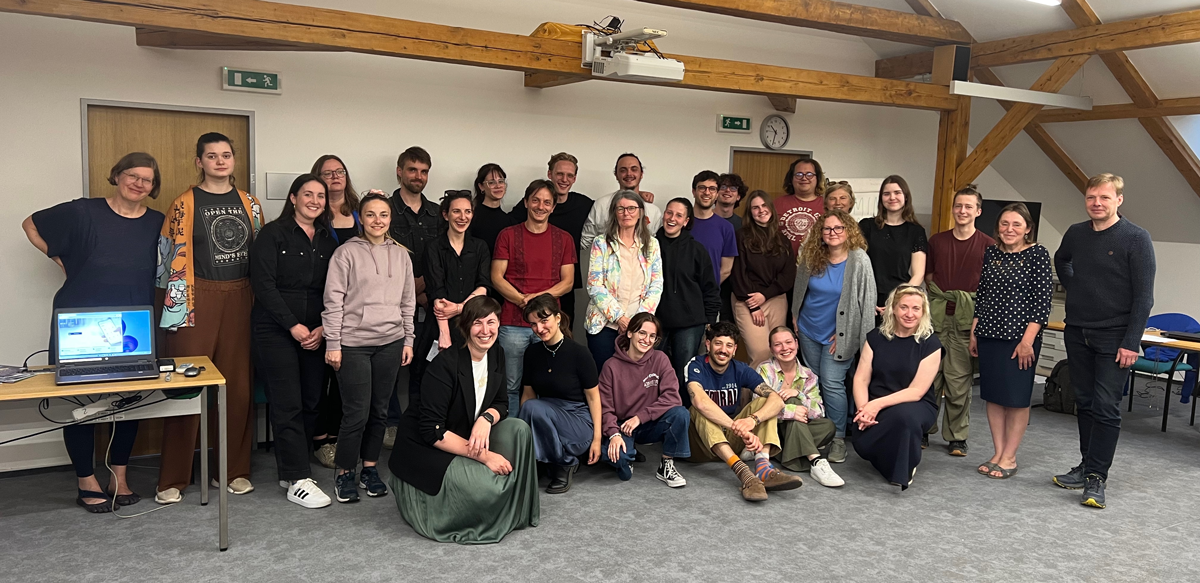
Group photo after the group research presentations on the penultimate day of the project
Initially, the course began with a month of online theoretical introductory lectures, followed by an in-person session in the Czech city of Brno, where students from different countries conducted small-scale anthropological research in teams. It must be said that beyond the official agenda, this kind of experience opens up a much broader understanding of the world and the people around us. Over the course of a week, we experienced everything – long serious and not-so-serious conversations, laughter, thousands of steps walked each day, Walpurgis Night in the Brno highlands, mutual support and acceptance, and a small song festival by the campfire at a village monastery.
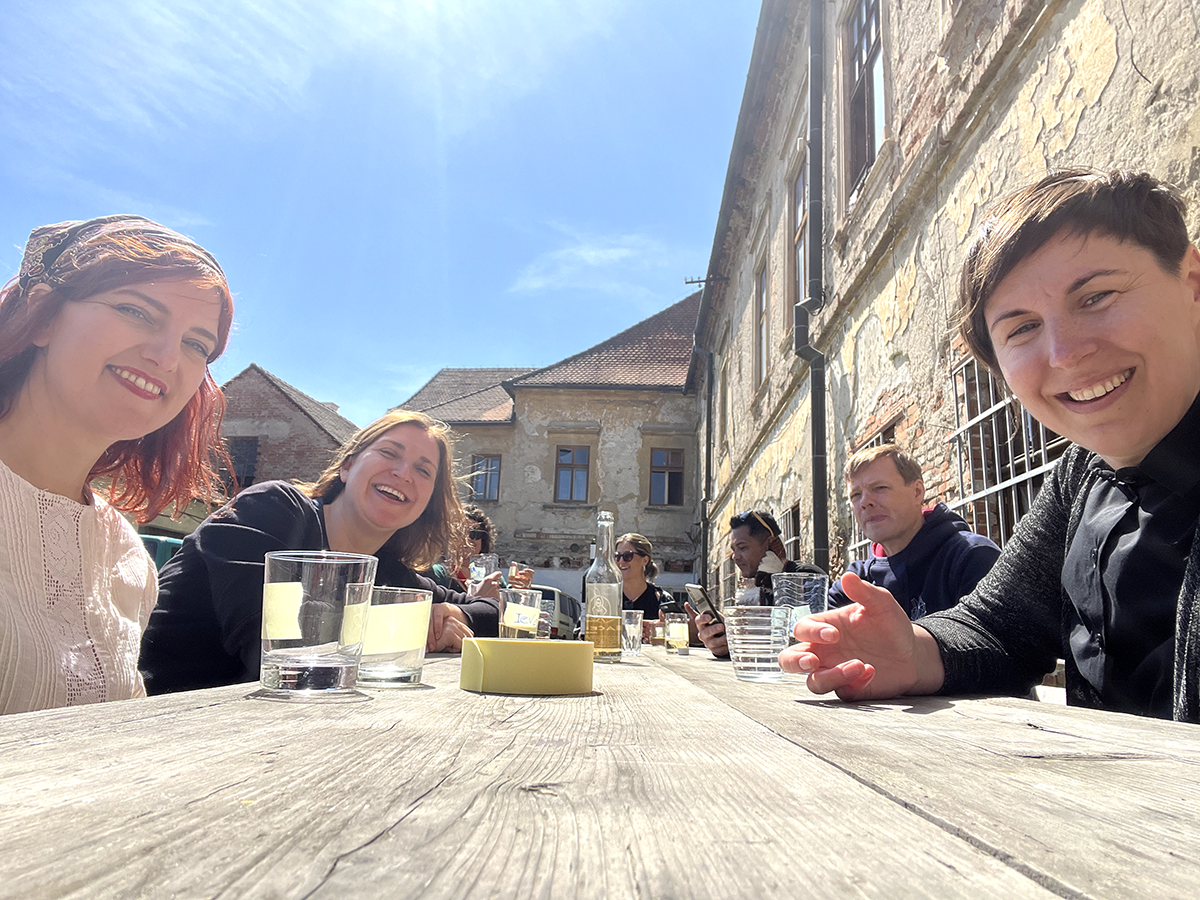
Conversations at the monestary shortly before lunch
Brno is a student city. It's compact, everything is easily accessible on foot, and if you get tired, public transport costs only four cents. Locals joked that we were overpaying, since a long-term student ticket would be even cheaper. It's also worth noting that Brno feels safe both day and night, and it seemed that everyone in the city knows how to coexist respectfully. The city’s rich architectural heritage continued to amaze us, even outside the historical centre. Ilze Žukova highlights that Brno is an anthropologist's paradise – walkable, with cheap wine and beer, mysterious places and objects to explore, and warm-hearted people open to conversation.
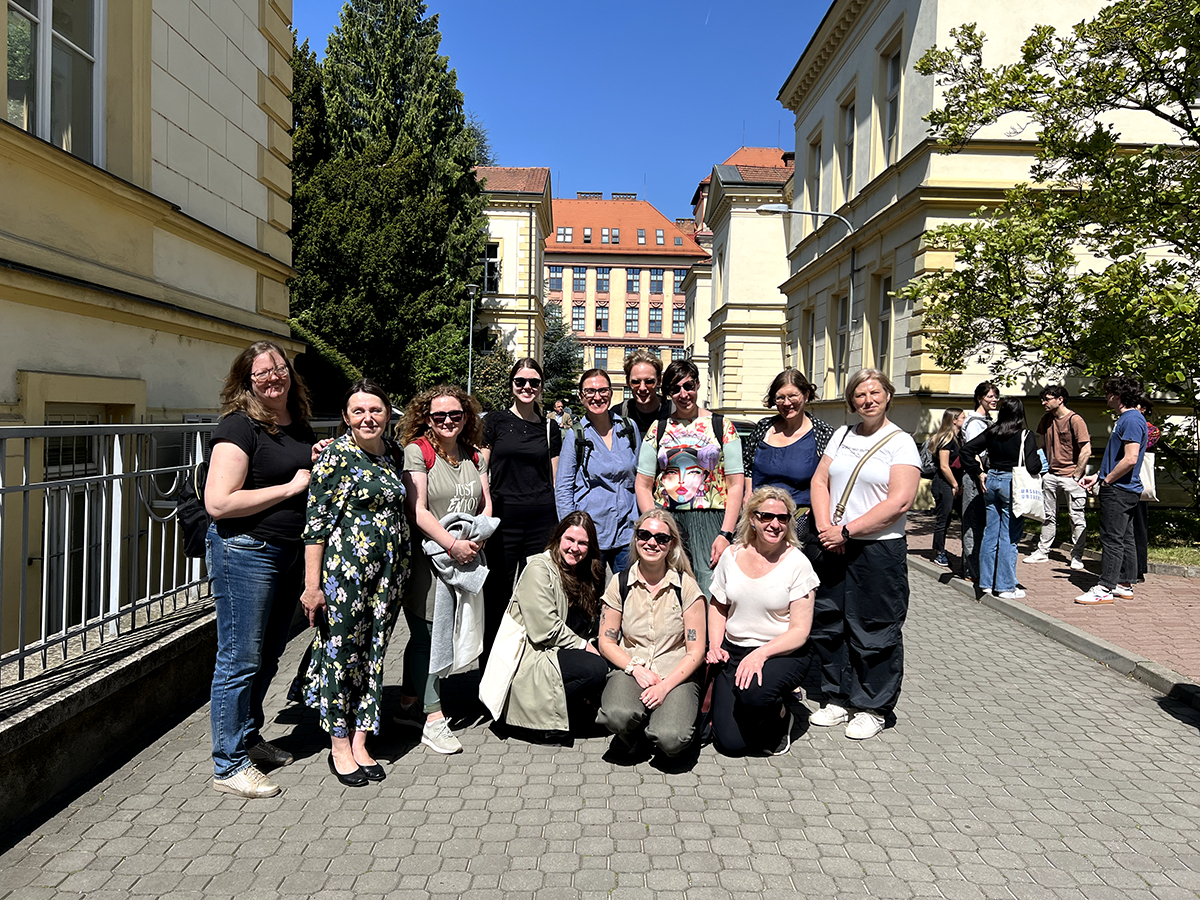
Latvian group in the courtyard of Masaryk University
As this was an intensive course, our daily schedule was filled with lectures, excursions, and preparation for the final project. Speaking about the programme’s intensity and planning, Anete Valaine says: “The organizational quality of the project was very high. They had considered a variety of activities and entertainment, making the trip both educational and exciting. Of course, with such a short programme, it was intense, so we had to plan our time carefully and skip some activities.” In our final discussions about the experience, we realized that despite the tight schedule and being a group of 30 people from different cultural backgrounds, everything went according to plan and no one was forgotten or left behind.
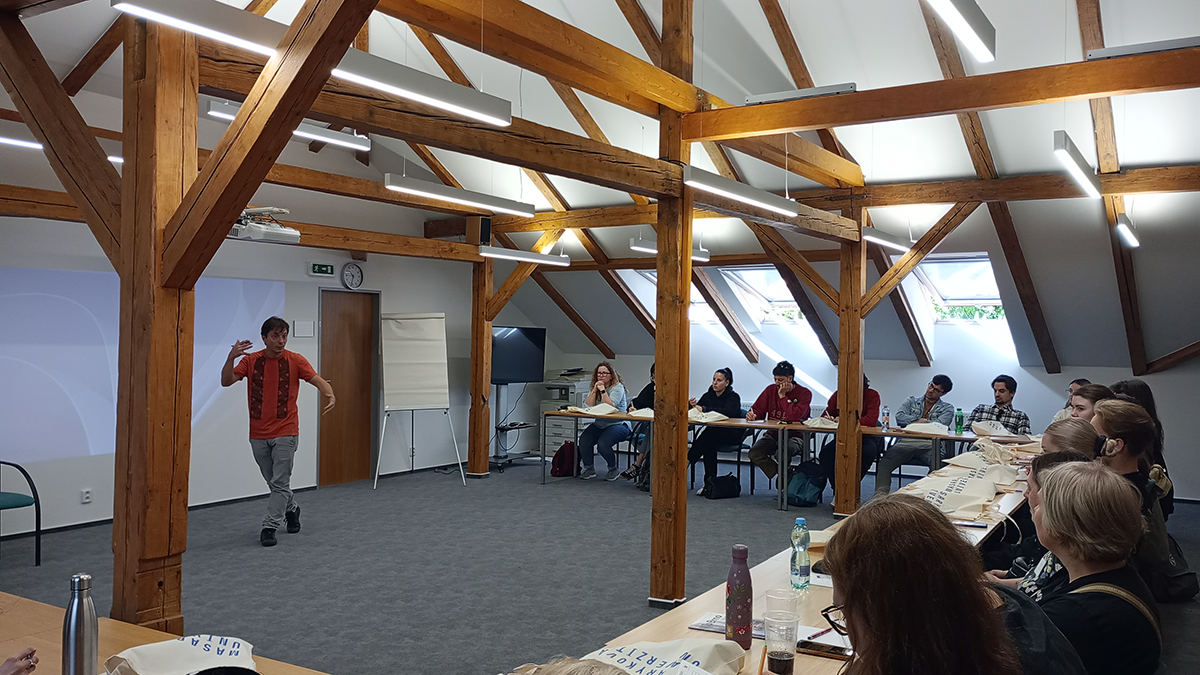
First joint lecture at the university. By the screen – anthropology professor and one of the course coordinators (Paride Bollettin)
This was a programme of exchange of ideas, thoughts and experience and one of its main goals was to bring together people from different cultures. While these differences were sometimes noticeable, they mostly brought us closer and helped us step out of our comfort zones. We learned to accept one another – because we were there to learn, to understand, and to reach our goals together. Ilze Putniņa reflects: “Human diversity is both the brilliance and the challenge of such projects. In our case, the brilliance prevailed.”
The climax of the trip was a visit and overnight stay at the Porta Coeli Monastery in Tišnov. At first, there were doubts, fears, and confusion among us – where would we sleep, what would we eat, and how should we behave? However, once we grasped the local order, which was infused with spiritual lightness and a strong work culture, we could focus on the main task – digging, weeding, and sorting stones while engaging in anthropological conversations.
Eva Bērziņa-Zommere shares: “I really liked the monastery's atmosphere and architecture – the opportunity to touch the past and reflect on how life used to be within those walls and how it has changed today. The volunteer movement to restore the monastery and its surroundings was very interesting. I had expected tougher conditions, so the modern comfort surprised me. I'm not even sure if that was a relief or a disappointment.”
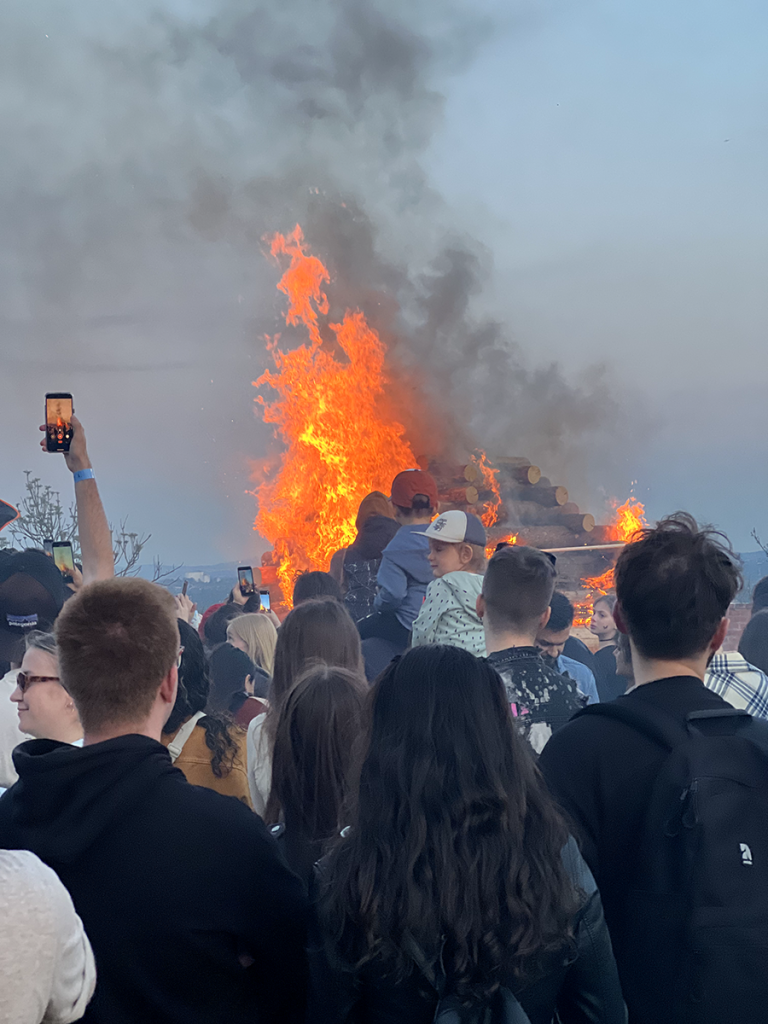
The big bonfire of Walpurgis Night at the 13th century walls of Brno
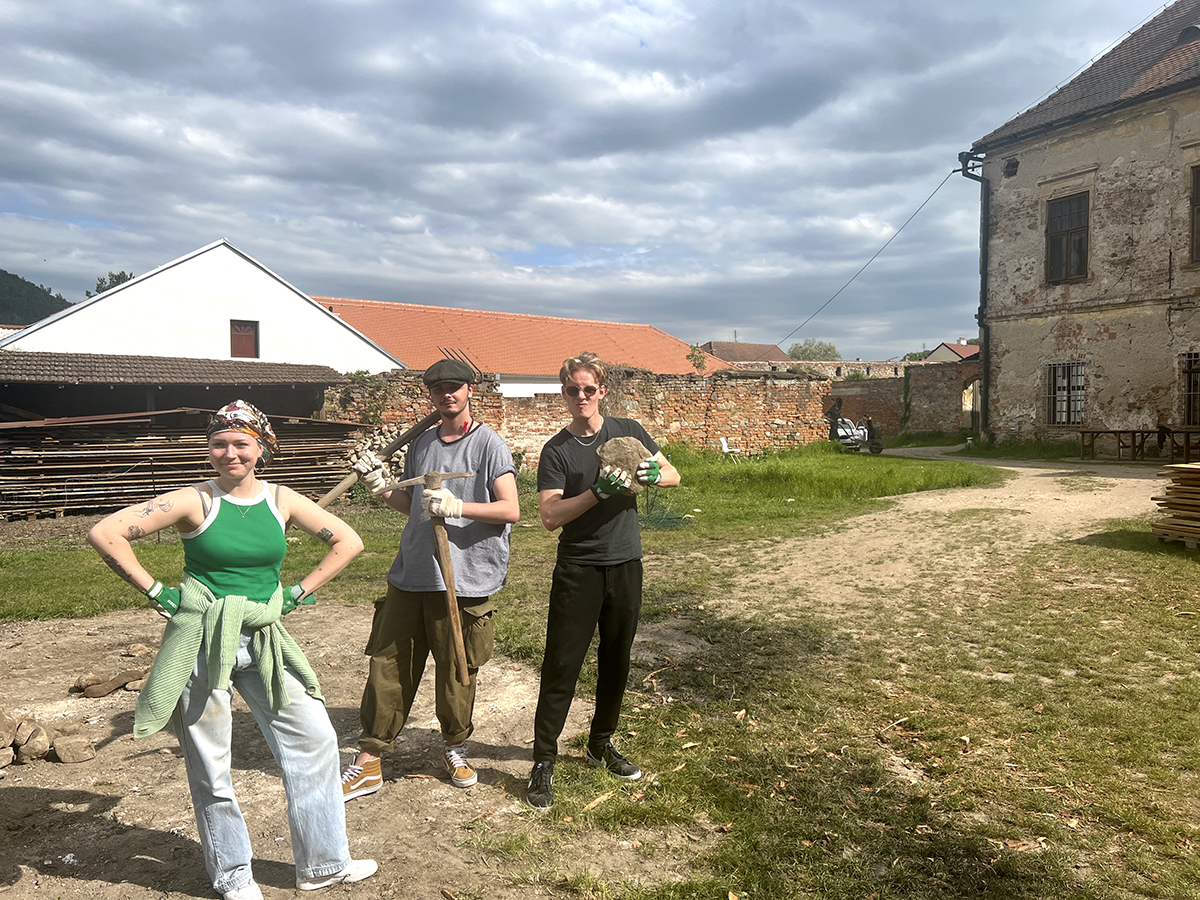
Anna, Samuel and Eric tydying the area and evaluating stones at the monastery
When speaking about the most memorable moments of the trip, they were different for everyone. Some were fascinated by the Walpurgis Night event in Brno with the large bonfire, others were amazed by the city’s architecture and museums, observing the rhythm of Czech life. However, it seems that everyone will remember how the Latvians shared their Song Festival traditions and sang late into the night, filling the monastery walls with voices. Anete recalls: “One of the loveliest moments was before we began fieldwork – sitting in a circle in the park, we shared our research ideas. The atmosphere was so calm and inclusive, and it truly reflected the overall feeling of the project.”
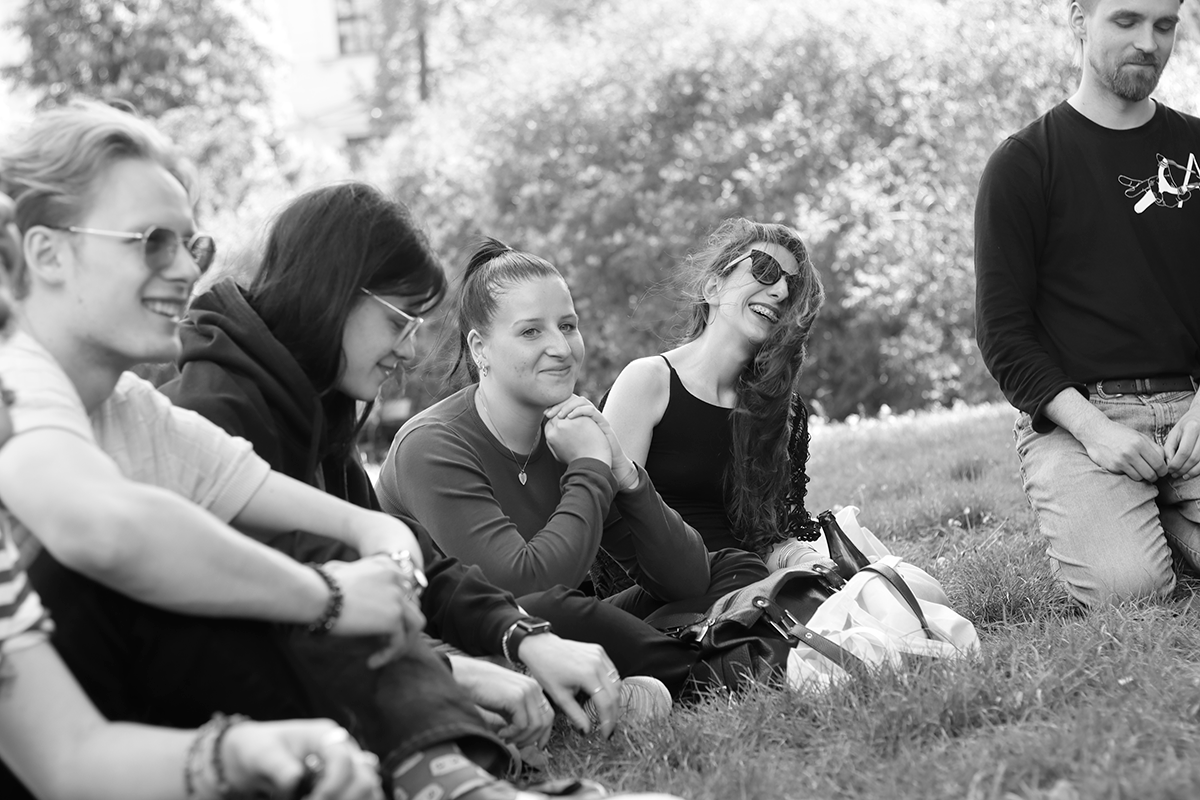
Discussion on the park lawn, where groups introduced one another to their research ideas
When asked whether they would recommend such an opportunity to others, the unanimous answer was “yes.” Ilze Žukova emphasizes: “There are many like-minded people here. You have to go and talk and connect and raise important topics and meet new people. It’s a relaxed and reflective atmosphere that first and foremost allows you to discover yourself. The feeling of unity is the key to this journey. Just when we felt like one big family – it was time to go home.”
Ieva Puzo, Head of the RSU Social Sciences Research Centre and the coordinator of this course, notes: “This is a fantastic opportunity for students to understand how similar issues are approached at different universities, to build new friendships, gain international experience, and take their first steps into research in a supportive environment. Next spring, we plan to host the course at Rīga Stradiņš University and welcome students from Padua, Brno and – fingers crossed – from Tenerife as well. Stay tuned for the course topics – it’s going to be exciting!”
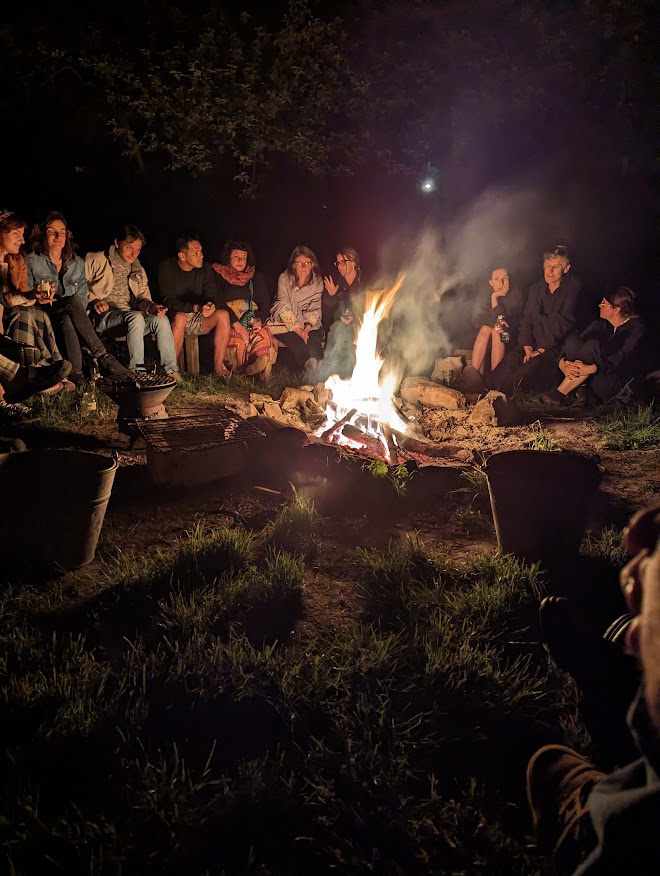
Bonfire in the monastery garden, where chatter and hundreds un Latvian songs could be heard late into the night
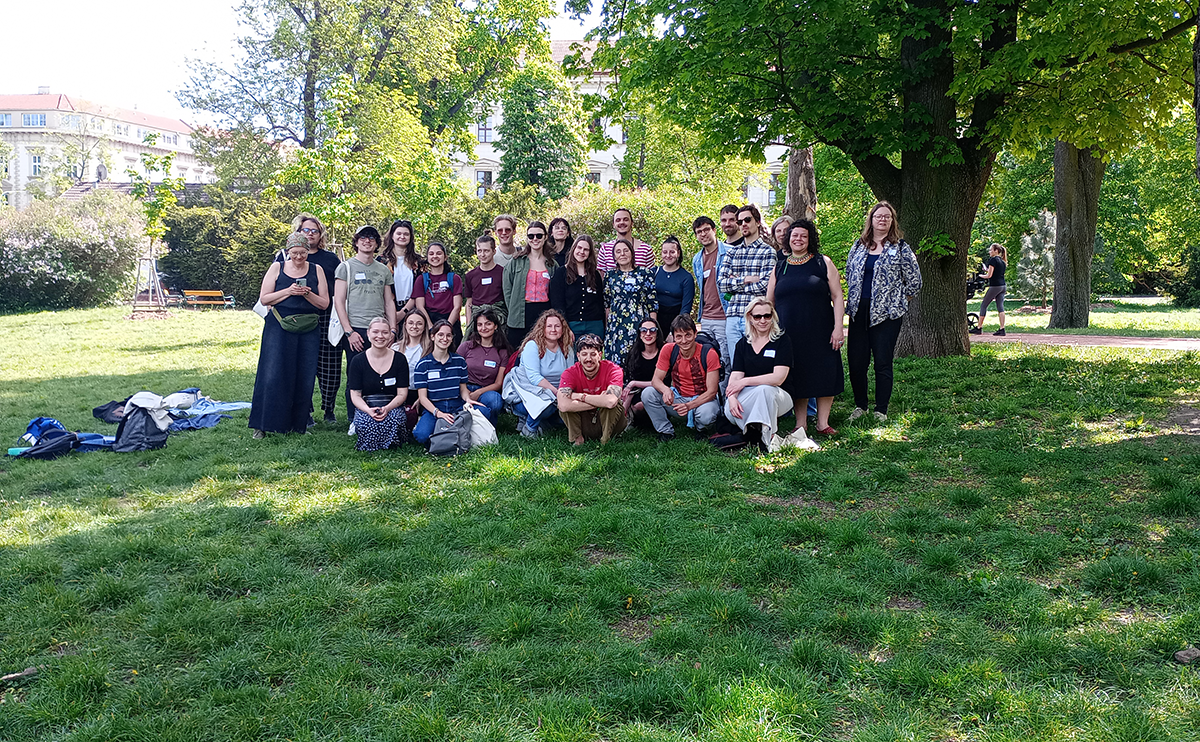
Group photo on the first day after discussion of research ideas
Related news
 Understanding society, gaining deeper insight, and analysing: Who benefits most from studying social anthropology? For Students, Social anthropology


