Environmental anthropologist Guntra Aistara on interspecies relationships and the path to a sustainable future


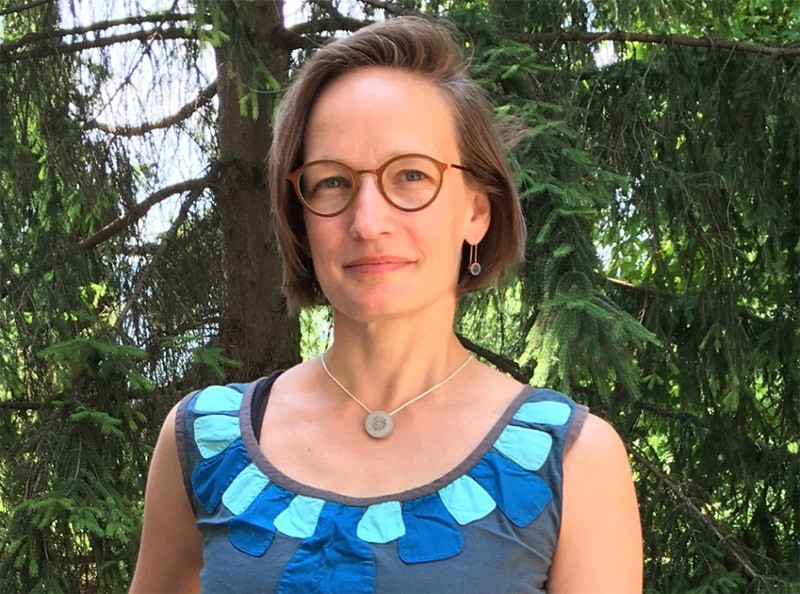
As the 30th International Congress of the European Society for Rural Sociology (ESRS) approaches, we invited Guntra Aistara, environmental anthropologist and associate professor at the Central European University in Vienna, to share her insights on food sovereignty, a topic she will explore further at the congress. The event will bring together over 400 leading researchers from 37 countries at Rīga Stradiņš University (RSU) from 7 to 11 July.
What is food sovereignty and why is it important?
Food sovereignty is a concept that has its origins in 1980s South America, when farmers came together in the movement La Via Campesina (Spanish for “the farmer’s way”). Local farming communities were confronted with corporate influence and began to feel that they were losing a say in their own activities.
Food sovereignty seeks to emphasise that each community has the right to decide what food they want to grow, what they want to process, what they want to sell and what they want to eat, rather than this being determined by some abstract market. Food sovereignty depends on local environmental conditions, on the socio-cultural values that exist within a community, and on political and economic factors. Consumer interests are also considered: what do consumers themselves want to eat?
Before, there was an emphasis on food security, which is often defined in very quantitative terms, for example when we talk about how many calories each person needs and how we provide them. But then we lose culture, we lose culinary heritage, we lose local species.
In the abstract for your keynote address, you write that ‘in an era of climate change, all species with whom we co-inhabit the landscape must navigate liveable futures in relation to one another, as well as the shifting climactic conditions.’ How can this common “agreement” on coexistence for a viable and sustainable future be achieved?
We don’t know. That is our challenge. We are all thrown into an environment where we have to try to survive. It has always been that way.
I use some interspecies anthropological research methods in my work that are based on the premise that we do not look at humans as being at the top of the pyramid, but that humans are always interacting with all the other species around them, being part of the biological food chain.
Each species is trying to adapt to climate change, individually but also in relation to each other. For example, I am trying to adapt as a farmer or as a fisherman, but in the same way a round goby or a seal or something else is also trying to adapt. We can have cooperation, sometimes interaction, sometimes competition.
And here are the points of collision where we can see that our adaptability does not depend on us or on the political system alone, but on inter-species interactions. And if we look at it from that point of view, it is in our interest to understand the interspecies relationship and to participate in a way that benefits us, rather than living with the idea that we can do whatever we want. We are already seeing the consequences of this way of thinking, where humans have sought to be the ultimate determinants of how nature works.
Your research has so far focused on biological farmers and now on coastal fishermen, who are essentially minorities in today's market economy. What is the role of these professions and their activities in building a sustainable future in the context of food sovereignty?
I have great respect for the people I work with as part of my research. We can learn a lot from them as they are in contact with the environment all the time through their work. They have their own observations of what changes have taken place in the environment over time and what the relationships are between different species and therefore have knowledge that people living in the city do not have. Paradoxically, it is people who live and work in cities who try to regulate farmers and coastal fishermen.
That is one of the main complaints among both farmers and fishermen—that the people who write the regulations rarely come to see what is happening in the countryside. By contrast, the people who work in the field or go out to sea have a very specific, nuanced and rich knowledge of what is happening in nature. They have developed their craft skills by adapting to the environment. They have a lot to tell about how all these processes work and we should listen to them.
Historically, coastal inhabitants have always built their livelihoods through the interaction of agriculture, fishing and forestry. Sea and land have always influenced one another; when the weather is windy in summer, coastal people have worked in the fields and when the sea is frozen in winter, they go to work in the forest. These sectors were not separate from each other in the past. Now they are both separate and industrialised.
In recent years, it has also become fashionable to talk about the circular economy, which is basically knowledge that these people already have, which has otherwise been long forgotten.
There is also a public perception of these professions as some kind of nostalgia for the past or that we are “going backwards” to something that is already outdated. Fishermen and farmers alike are constantly looking at generations of knowledge, looking at how this knowledge can be adapted to modern conditions. Their knowledge does not stand still – it circulates and evolves.
Considering what you have seen through your research, do the lives of biological farmers in Latvia and Costa Rica differ due to regionalisation and climate change, and if so, how?
When I started my PhD, it was clear to me that I wanted to work with biological farmers in Latvia, as I had previously worked for an environmental NGO that organised classes and workshops for biological farmers. They were very innovative and wanted to learn new knowledge having the conviction that we can live differently. This conviction was based on innovation and skills.
At the same time, I wanted to see what was happening in the rest of the world. While studying at the University of Michigan, I had the opportunity to work with professors who conducted research in Central America. This is how I started to pay attention to what was happening there. In Central America, there were very strong cooperatives for small farmers. At the beginning, I was more inclined to do research on cooperation and how I could help small organic farmers in Latvia to cooperate more, but it became clear that the cultural differences were very stark. Latvian farmers’ experience of collective farming under the Soviet regime made it very difficult for farmers to set up these cooperatives today, and that was not something that was going to change soon.
I therefore shifted my focus to the cultural-ecological values through which the organic farmers built their farms as landscape elements, how they collaborated with other species to build their farms, and how they represented and defended their interests in large markets (at the time Latvia was entering the European Union and Costa Rica had joined the Free Trade Agreement with the USA).
An interesting observation in this study was that land and land care was the most important thing for organic farmers in Latvia, whereas in Costa Rica I found that farmers were not so strongly connected to a specific area of land but to seeds –wherever they moved and wherever their property was, they always had the seeds of plants they had inherited from their ancestors with them. They continued to grow different crops from these seeds.
I saw that the understanding of family, place and identity was very important for organic farmers in Latvia and Costa Rica. Then I tried to understand how in both countries the diversity and interactions between different species helped to create this understanding of the homestead or farming, and how bureaucratic laws often fractured these local understandings. Local understanding of what good farming is was often incompatible with the understanding of good farming in law, which led to conflicts. We know that there was an outcry in Latvia because it was thought that the European Union, with subsidies and new markets, would bring great benefits to farmers, but in fact many were disappointed because it was quite difficult to achieve what was written in the law and to reconcile it person own values. I have partly described this process.
How is the perception of food sovereignty changing in the coastal fishing community in Latvia? Are there similarities with biological farmers?
What I really appreciated in my research with farmers was the way in which they were able to cooperate with other species in the design of their farms and practices, and that this was part of food sovereignty. In fishing, there is more of an element of competition between species.
For example, the round goby, which is an invasive species from the Black Sea, has now appeared in the Baltic Sea. Initially, it was thought that this species should be eradicated because it competes with the European flounder for nutrients such as bivalve molluscs and mussels. At the same time, as other species are declining in the Baltic Sea, the round goby has become an economic mainstay for many fishermen. Cod also eat the round goby. Humans also eat it, but it is not our culinary heritage.
A couple of years ago, the first and probably the last Round Goby Festival took place in Liepāja, trying to promote new traditions. Now fishermen have learned, but at first they had to adapt to how to catch the round goby. The nets and traps had to be adjusted because the round goby was coming in large quantities in the nets, and initially, the fishermen did not understand how to get the nets out of the sea. They had to cut them into pieces and go to sea three times a day during the season. The round goby dictated a completely different daily rhythm for the coastal fishermen.
Culinary practices, on the other hand, have been slower to adapt. When I talk to fishermen who also smoke fish off the coast, there are some people who really want the round goby and ask for it specifically. Others say they don't want it at all. If we want to live with the round goby, we need to understand and establish this new tradition.
Another example is that there used to be far fewer grey seals in the Baltic Sea than there are today. Seal populations are growing, and they have become the main enemy of fishermen. Fishermen are literally competing with the seal for fish. Fishermen put their nets in the sea, but seals tear holes in it and eat the most valuable fish, which are the salmon and cod. The fishermen are left with a broken net and it is difficult to get compensation for the loss, because it is impossible to prove how many fish were in the net before the seal ate them.
It is very important to understand the interactions between all these species – round goby, European flounder, salmon, cod, seals and so on. A human is just one of the species. It is not up to a human to decide that they will catch fish. Sometimes the nets are empty, sometimes they are full of sea debris. How we determine what our food sovereignty is depends very much on other species, as well as on political and ecological influences.
How would you say our coastal fishermen feel in the midst of these different influences?
I think fishermen currently feel under attack from all sides – both from the seals and from the law. I think that there is a very big gap between those working in the field of environmental protection and fishermen, who, as I said earlier, have a great deal of knowledge and work with methods that are easily compatible with environmental protection. These are not big trawlers that take everything out! This is not industrial fishing! They are not guilty of industrial overfishing. There must be greater cooperation between coastal fisheries and environmental protection.
RSU students also have the opportunity to participate in researching coastal fishing!
Yes, the third year of the project ‘Life by the Sea over the Course of a Century’ is now underway.
This project basically originated from a conversation with the librarian in Jūrkalne – my own ancestors went to the sea, and I spend my summers in Jūrkalne, but I didn't know much more about it. I took an interest and read the book Life by the Sea by Vilis Veldre, in which he cycled 500 kilometres along the sea coast in 1937-1938, stopping in various villages and talking to fishermen, teachers and others he met along the way. Together with the librarian, we thought it would be great to repeat this!
Social anthropology and other social science students from RSU can join these expeditions focusing on three main themes: fishing practices, culinary heritage and environmental observation. Our project partners from the Association of Oral History Researchers ‘Dzīvesstāsts’, RSU Social Science Research Centre and the interdisciplinary art centre ‘Serde’ also participate in the expeditions.
During the expeditions, we interview local researchers, visit museums, talk to fishermen or their descendants, and meet local women who know how to cook fish in different ways. I want to thank the Central European University in Vienna, the Latvian Foundation and the Kurzeme Planning Region for supporting this project.
We have reached the centre of the Gulf of Riga and this summer, two expeditions are planned on the Vidzeme coast, in Saulkrasti and Ainaži.
We are currently gathering a lot of information and trying to collect and analyse it all. Next year we will start writing a book, where we will look back at what we have experienced and learned during our expeditions.
Related news
 RSU joins new precision medicine programme for paediatric oncology, LEONARDO Conferences, workshops, Research