Openness, collaboration and a clear path: discussion on the future of healthcare innovation


On Thursday, 29 May, EIT Health Latvia and Rīga Stradiņš University (RSU) hosted a discussion in the Morning Health Talks discussion series focusing on the theme “More Than Money: the Missing Links in Healthcare Innovation Success.” The key takeaway from the event was that successful healthcare innovation depends heavily on close collaboration between entrepreneurs, researchers, and healthcare institutions, supported by a unified framework that helps startups move from idea to patient impact.
One of the central challenges identified during the discussion was the complexity of healthcare regulations and the lack of a clear “roadmap” for innovation. Experts emphasised that understanding and navigating the regulatory environment requires specialised knowledge—something only a few currently possess in Latvia. Startups and healthcare institutions often find themselves searching for the “correct doors” to knock on, seeking pathways that align with legal and procurement standards. According to participants, the human factor also plays a critical role: openness, trust in new solutions, and doctors’ personal recommendations often determine whether an innovation succeeds or fails.
The human factor as a driver for innovation
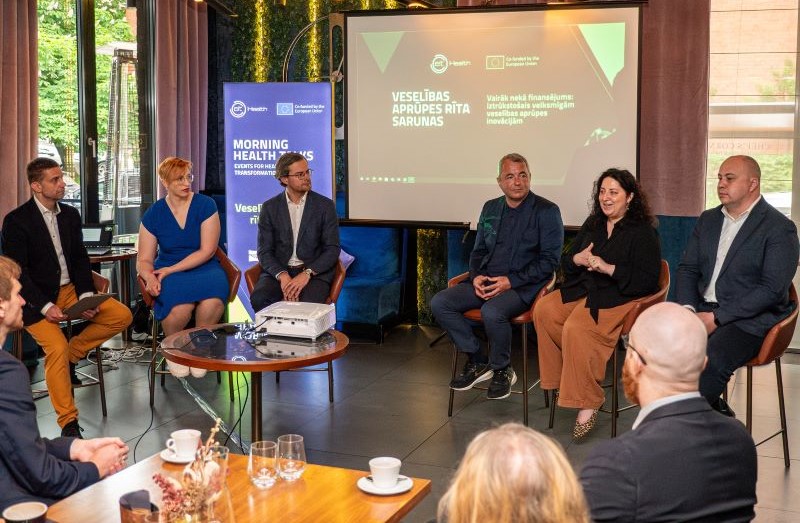
‘Often, it’s not the regulations or policies that make or break an innovation—it’s the people involved. Trust and the willingness to collaborate are key. Those who are sceptical will always find risks and bad intentions, but real progress depends on our ability to work together in a safe, supportive environment,’ said Jeļena Jesajana, Chairwoman of the Board at Prof. Skride’s Heart Clinic.
Proposed solutions - innovation greenhouse and structured roadmap
As a potential solution, experts proposed establishing a centralised “innovation greenhouse”—a high-quality support hub where healthcare technologies can be tested across various medical institutions. Participants also highlighted the need for a unified, structured, and transparent roadmap. Such a system would include regulatory expertise, streamlined certification processes, support in avoiding conflicts of interest, and assistance in validating new products. Another suggested step forward was the creation of innovation departments within hospitals—serving as the first point of contact for startups and helping reduce bureaucratic hurdles.
EIT Health - a platform for collaboration and change
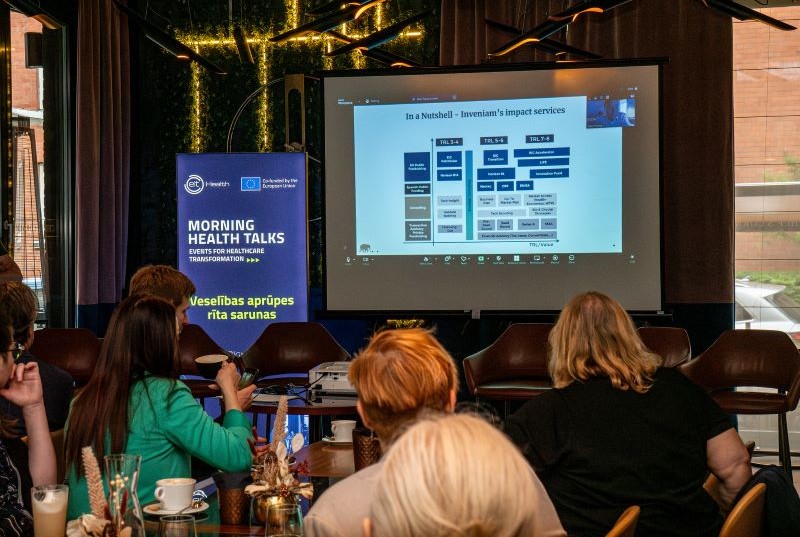
‘EIT Health hosts Morning Health Talks twice a year to bring startups, innovators, government officials, private sector representatives, and industry experts to the same table,’ said Luīze Madara Ziediņa, Coordinator of EIT Health Latvia. ‘Our goal is not just to identify challenges but to lay the foundation for meaningful change. This discussion proves that
the viability of innovation depends not only on funding but also on the innovators’ ability to build partnerships, doctors’ openness to new technologies, and the state’s role in establishing a clear, accessible development path.’

The importance of dialogue for the future of healthcare
The discussion featured several key voices in the field, including Didzis Rūtītis (CEO of the startup Sepsiscan), Jānis Ancāns (Senior Expert at the Latvian Council of Science’s Horizon Europe programme), Artūrs Ozoliņš (Board Member at Pauls Stradiņš Clinical University Hospital), Jeļena Jesajana (Chairwoman of the Board at Prof. Skride’s Heart Clinic), and Zaiga Barvida (Project Manager at the National Health Service). The event was moderated by innovation expert and business angel Voldemārs Brēdiķis. The opening address was delivered by Dr. Jesús Purroy, Senior Business Development Manager at Inveniam, who shared insights from Catalonia’s experience in advancing healthcare innovation.
The Morning Health Talks event series traditionally brings together top-level professionals, decision-makers, and startup ecosystem leaders, fostering important conversations around the future of healthcare innovation and exploring solutions to the sector’s most pressing challenges.