Palliative medicine considers patient’s life story, values, and emotions: conversation with a residency graduate


‘A patient in palliative care is not merely a person suffering from the specific manifestations of an illness. They have their own life story, experiences, relationships, values, and emotions. In palliative medicine, attention is focused not only on symptoms, but on the person as a whole, both in a direct and broader sense,’ emphasises Unda Jukone, a recent graduate of the Rīga Stradiņš University (RSU) additional specialty residency programme Palliative Care Specialist.
This is her second completed residency programme - the first was in the internist specialty. Interestingly, while working in the Covid-19 ward during the challenging pandemic, the internal medicine resident especially felt the need for such an important quality in a doctor as the ability to provide compassionate human support to patients: ‘There was a lot of work, the pandemic was a crisis situation, and the priority was patients in urgent need for care; however, I provided human support (not just medical, but sometimes psychological, etc.) to everyone involved as much as possible even back then.’
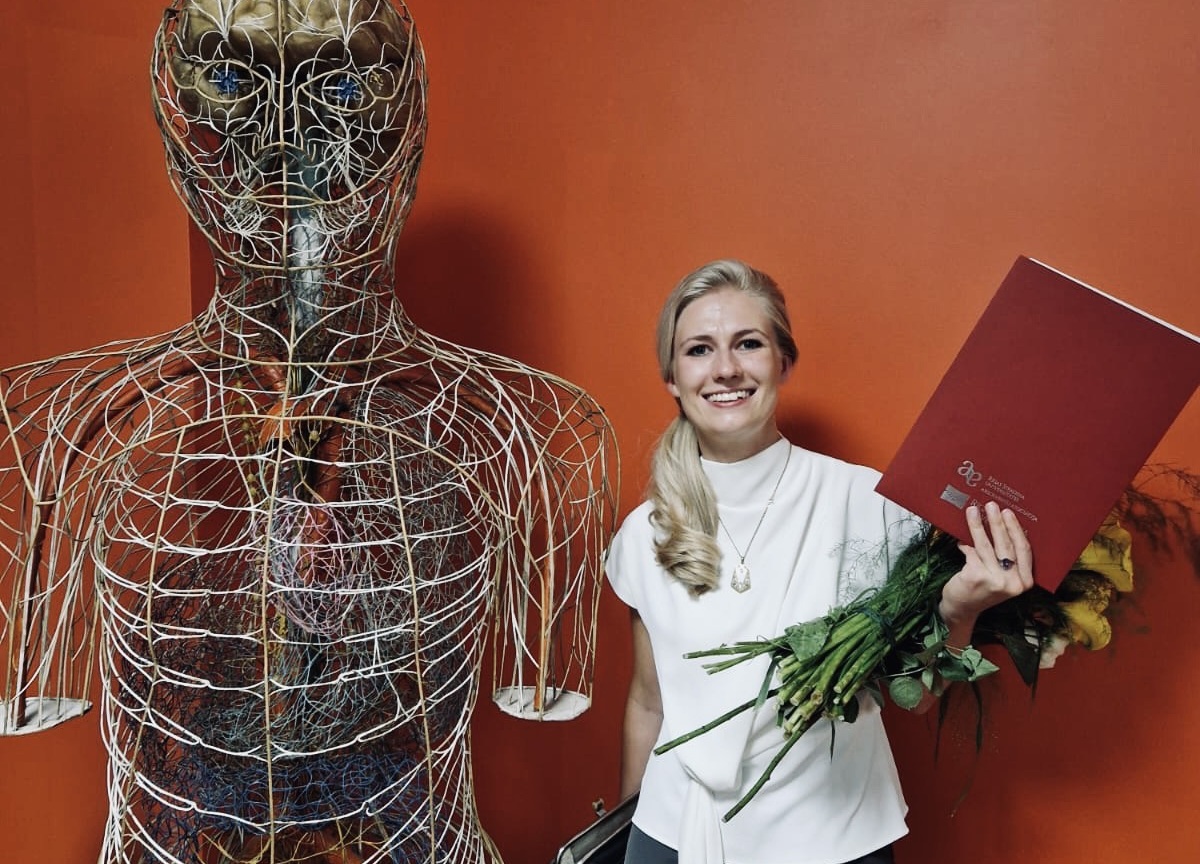
In this series of resident profiles, we introduce Unda Jukone and her journey and choices in medicine.
When and how did you realise you wanted to become a doctor?
I realised it as early as in the eighth grade. I remember walking home from art school and thinking about how much I enjoyed chemistry, and I intuitively felt that the upcoming ninth-grade topic on the human body would also fascinate me. And it did. That was when I first clearly realised I wanted to pursue a career in medicine.
At that time, I did not have any deeper understanding of working in medicine, as neither my parents nor grandparents were involved in this profession. Perhaps, it was the interest in the unknown that appealed to me most. Moreover, the medical profession seemed like a safe choice, as this work has always been in demand, and the choice of specialty can be made during later years of study.
I set a clear goal and stayed focused on it. I did not even consider many other alternatives. My parents, relatives, and classmates definitely encouraged me. As far as I remember, everyone believed that this would be a suitable profession for me.
How did you choose your medical specialty?
After receiving my medical degree, I immediately enrolled in the Internist primary specialty residency programme at the University of Latvia. The residency lasted five years. During my second year, the COVID-19 pandemic reached Latvia, and internal medicine residents were among the first to care for patients with SARS-CoV-2 infection. Initially, there was a profound sense of uncertainty and anxiety not only about our patients, but also about our own safety, as no one had been vaccinated during the first months of the pandemic. Still, many patients demonstrated positive response to treatment and recovered. This brought a sense of satisfaction and strengthened my motivation to continue on this path.
At the same time, I came to appreciate the key advantage of the internal medicine specialty - the ability to view the body as a whole and assess the interactions between different organ systems.
Contracting a single illness, in this case an infection, can lead to a wide variety of complications, especially in patients with chronic conditions. This is why a broad and comprehensive approach is so important.
However, alongside the positive outcomes in medicine, there are also very difficult experiences. During the COVID-19 pandemic, the emotionally most challenging situations were those in which a patient was terminally ill, conscious, and experiencing severe shortness of breath, yet they were alone in the hospital - without the presence of their loved ones.
Family members, on the other hand, often did not fully grasp the severity of the situation, as the only means of communication was the telephone, and the course of the illness could progress rapidly and unpredictably, leading to disbelief and shock.
In the ward’s patient care area, smartphones were available with strict infection control measures, and video calls were often arranged at patients’ request, helping bridge the sense of distance. However, this was not always possible, and in particularly severe situations, communication took place only between medical staff and family members.
This experience became a significant turning point in my professional thinking - it made me realise that I did not want to leave such patients without special attention.
There was a lot of work, the pandemic was a crisis situation, and the priority was patients in need of immediate intervention, yet I provided as much human support as possible (not just medical, but sometimes psychological, etc.) to everyone involved even back then, despite that situations and conversations varied greatly and were often unpleasant. The COVID wards continued to operate for another two years after the pandemic. Looking back, I can say that it was one of the most exciting years of my residency, as I particularly came to realise the significance of my chosen primary specialty.
By the final year of my primary specialty in residency, I knew I wanted to pursue a narrower specialisation on a daily basis while maintaining the relevance of my internal medicine training. I had also explored other subspecialties in more depth (endocrinology, allergology), and I had given some thought to palliative medicine, as I had completed rotations in the Palliative Care Unit several times during my previous residency. The palliative care team working there left a particularly good impression of this specialty; it demonstrated the importance of teamwork and the ability to see the bright side in every situation, both for the patient and their loved ones. It confirmed that solutions can be found even in seemingly hopeless situations.
Over time, I also realised that if a medical professional has the knowledge and skills to help palliative care patients, such situations are not merely emotionally difficult - they can become structured and professionally manageable, allowing us to provide patients with the maximum possible support and dignified care.
Gradually, I began seeing myself among the colleagues of this ward in the future. These reflections coincided with an unexpected invitation to join palliative care mobile teams, which were rapidly expanding in Latvia at the very moment I had to make my choice. Thus, I decided to apply for the RSU additional specialty residency programme Palliative Care Specialist.
Although issues of a dignified death and palliative care were becoming increasingly relevant in society, that was not the decisive factor in making my choice. It was rather a fortunate coincidence of circumstances - in the workplaces where I was selected, in-depth knowledge of palliative medicine was particularly important. This, in turn, reinforced my confidence and assurance that a residency in palliative medicine was a logical and justified next step.
How did you prepare and apply for residency?
During my previous residency, I gained a practical rather than theoretical understanding of palliative care, and this helped reduce my uncertainty in conversations about death, eased my sense of fear about this specialty as a whole. As a result, I was also mentally prepared, even though my theoretical knowledge in my chosen additional specialty was not particularly strong at that time. While studying internal medicine specialty, I also participated in various conferences and actively presented at them, accumulating the necessary credits to apply for the additional specialty residency programme; however, I certainly do not stand out with major, extensive scientific activity, as I prefer practical work over academic research. Nevertheless, I had sufficient points to apply and compete for a place in the residency programme.
It should be noted that applying for the additional specialty residency programme does not require accumulation of as many different types of points as for the admission to the primary specialty. The interview, which is one of the key components for earning points, took place remotely. Everything went smoothly. Later, after the results were announced in mid-August, I submitted the remaining required documents. I also remember the somewhat unusual feeling I had when I finished my primary specialty: on Friday, 27 September, the University of Latvia graduation ceremony took place, and that weekend was the first time in eleven years that I officially spent two days without having a status of a student. My residency in palliative care at RSU began as early as 1 October.
What is the day-to-day reality of residency like?
My residency in palliative care at RSU was exciting, rewarding, intense, and the year passed incredibly quickly. The residency programme in this specialty consists of two major rotations - Adult Palliative Care and Pediatric Palliative Care. The first was the most comprehensive course with nine months in the Palliative Care Ward at the Biķernieki inpatient facility at Riga East Clinical University Hospital. The Pediatric Palliative Care rotation took place at the Children’s Palliative Care Service in collaboration with the Children’s Palliative Care Society, both on-site at the Children’s Clinical University Hospital and during home visits to patients. During the residency rotation, I worked full-time every day.
Since I had already obtained one certificate, I worked as a certified physician- internist in the Palliative Care Unit at Pauls Stradiņš Clinical University Hospital on weekday evenings and with the palliative care mobile teams on weekends and holidays. For an entire year, I had no real vacations and very little time for myself. I mostly used my annual holidays in the summer to prepare for the palliative care specialist exam, which took place in August.
The year was difficult; however, the exhaustion was more physical, and the awareness that it was only for one year made the studies easier to handle.
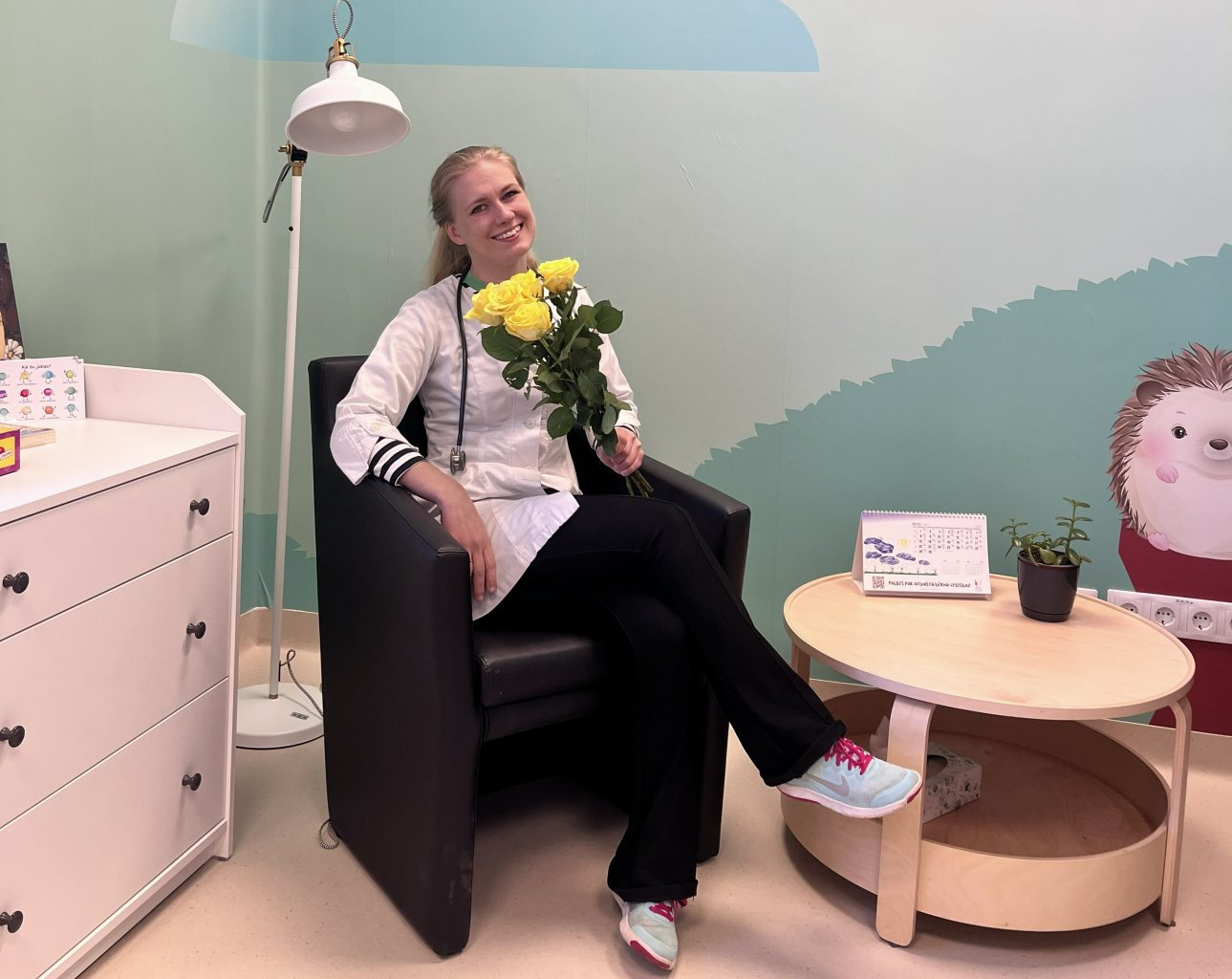
My understanding family was also an invaluable source of support, standing by me both emotionally and with everyday practical tasks. Such intense residency studies, combined with work in settings where palliative care was central, provided rapid experience to a wide variety of situations. I received a lot of feedback and advice from the supervising physicians and other colleagues with whom I worked during my residency rotation.
As the priority during this residency was my studies and work, many interests not related to medicine were temporarily set aside. Nevertheless, in my opinion, residency can also be combined with many other activities - the most important thing at every stage of studies is to clearly define priorities and stick to them purposefully, without compromising the quality of studies.
What surprised you most during your residency?
It was the progress I made in my knowledge and skills, as the transition to the professional level was imperceptible, and it seemed like only a short while ago I was still unsure about many things. The respectful attitude and empathy of my colleagues made this experience special, and the fact that I felt more confident during this residency allowed me to enjoy the training despite the intense workload.
What would you recommend to future doctors or young residents?
Always treat patients, their family members, and your colleagues, including students and residents, with respect. Every now and then, remember what it was like during your own studies and how important the support from more experienced colleagues and certified doctors was. For this reason, offer a helping hand to your younger colleagues as well. Strive to be the kind of doctor you would want to encounter in your own situation, both professionally and in conversations. Despite the rush of work, do not forget about your family and friends, and recognise and appreciate what you have already achieved.
Is there anything else you would like to share about residency and the medical profession?
Reflecting further on my choices, what initially drew me to internal medicine was the opportunity to view the patient as a whole, but palliative care allowed me to understand this perspective even further. Despite being a narrower specialty, it demonstrates clearly that a patient is not just a person with the individual expressions of their disease. A patient is a person with their own life story, experiences, relationships, values, and emotions. In palliative medicine, attention is devoted not only to symptoms, but on the person in the fullness of their life, both in the direct and broader sense.
Related news
 Piecing fractured bones back together: Dr Raitis Turkins on residency training in Jelgava RSU in the news, Residents' Stories, Graduate Medical Training, Interviews