
Professor Pauls Stradiņš’ 130th anniversary


Photo: Courtesy of the RSU History Museum
On 17 January, we commemorate Prof. Pauls Stradiņš on his 130th anniversary.
Pauls Stradiņš was born in 1896 into a family of craftsmen in Eķengrāve (now Viesīte), where he also started his schooling. From 1910 to 1914, he studied diligently at the Alexander Gymnasium in Riga, then went to the Military Medical Academy in Petrograd (now St. Petersburg) to study medicine. After graduating from the academy with distinction, Pauls Stradiņš broadened his knowledge in surgery and started doctoral studies. In 1923, he defended his doctoral thesis “Peripheral Nerve Damages and their Treatment”. In the same year, he returned to Latvia and started working as a lecturer at the Surgery Clinic of the Faculty of Medicine of the University of Latvia (University of Latvia, UL; for two time periods – the State University of Latvia, LVU).
 Prof. Pauls Stradiņš in the 1950s
In 1925-1926, Pauls Stradiņš was the first Rockefeller Foundation scholarship holder from Latvia to visit clinics and research centres in the USA and Great Britain. In 1927, he defended his second doctoral thesis “On the Aetiology, Clinical Course and Therapy of Gangraena Spontanea” with distinction.
Professor, leader and founder of a new school of surgery
Pauls Stradiņš was elected to the position of professor in 1933. By 1940, he had travelled to almost all European countries for further education and had participated in numerous scientific conferences. He actively sought to implement the knowledge he had acquired in his work as a lecturer, doctor, and scientist.
From 1931 to 1941, he was the medical director of Riga City Hospital No. 2 (now Pauls Stradiņš Clinical University Hospital) (occupying the same post once again from 1944 to 1947). In 1928, he was elected to the position of the Head of the Department of Surgery at the Faculty of Medicine of LVU, a position he held until the end of his life.
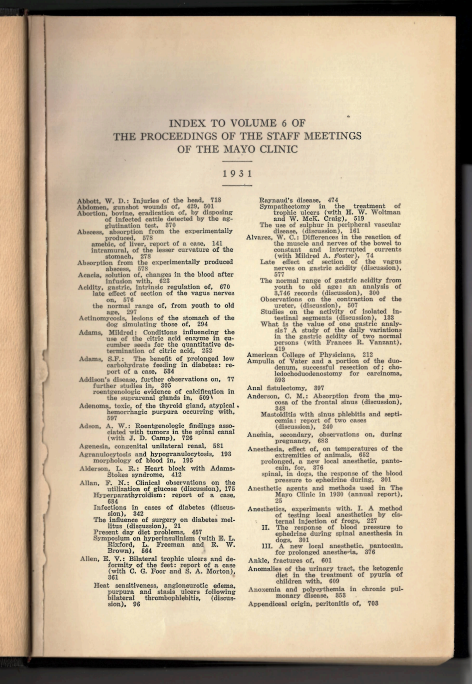
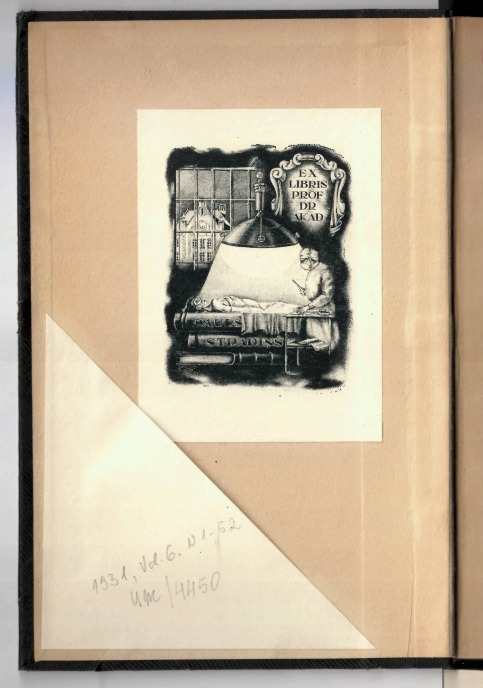
Collection of scientific papers from the Mayo Clinic in the USA, Volume 6, 1931. On the first page is an "Ex Libris" created in 1958 by artist Aleksejs Jupatovs (1911–1975) for Prof. Stradiņš.
Social activities and recognition in science
During World War II (after the liberation of Riga), Prof. Stradiņš resumed his work at the Faculty of Medicine of LVU and, due to shortage of lecturers, was briefly the head of 14 different departments. He was active in founding and leading various scientific and social organisations related to medicine and healthcare, and in organising various scientific events.
In 1945, he was elected a corresponding member of the Academy of Medical Sciences of the USSR, and a year later – a full member – academician of the Academy of Sciences of the Soviet Socialist Republic of Latvia.
Between 1947 and 1949, the professor was repeatedly accused of “lack of self-criticism” and “delivering harmful lectures”, because he had expressed unflattering remarks about the USSR at public events in Latvia and Lithuania. This, and the load created by his many and varied duties and his passion for research, took a heavy toll on his health.
A lifetime of service to medicine
In the 1950s (until his death in 1958), Pauls Stradiņš continued his work as a professor at Rīga Medical Institute (now Rīga Stradiņš University), which was founded on the basis of the Faculty of Medicine of LVU, working as a surgeon, while participating in research and organising conferences, being an active public figure and a passionate medical historian.
Medical historian Arnis Vīksna and physician Edvīns Platkājis on Pauls Stradiņš*
‘Extraordinary energy, immense capacity for work, and relentless spirit of initiative characterised all of the endeavours of Pauls Stradiņš.
[...] Hardly a year after his return to Riga from Petrograd, Pauls Stradiņš went on a long scientific mission [1925] to America and Western Europe, where he absorbed the best of the world’s medical science. Pauls Stradiņš defended two doctoral theses with honours: one in Petrograd, the other in Riga. At the beginning of his scientific career, he was mainly interested in peripheral nerve damages and spontaneous gangrene, but later he turned to oncology, becoming the founder of this discipline in Latvia. [...] He became the head of the general surgery clinic, the youngest professor of medicine in Latvia, as he soon established a capable and broad scientific school.
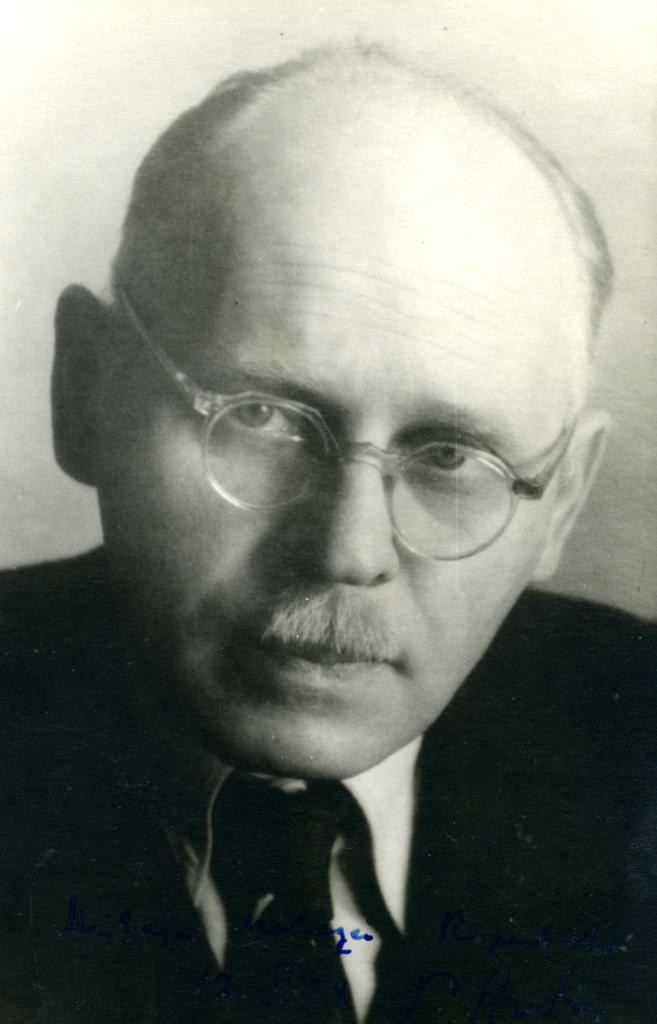 Prof. Pauls Stradiņš. At the bottom of the photograph is a dedication signed by P. Stradiņš to Veronika Rozenbaha. Mid-1950s.
Under the leadership of Pauls Stradiņš, Riga City Hospital No. 2 became the clinical base of the Faculty of Medicine, where most of the departments moved. [...] In the 1930s, Pauls Stradiņš was the most prominent representative of the new generation of doctors in Latvia.
He was an ideal role model for young aspirants in both scientific and social activities, and he embodied the best qualities of a physician, both human and ethical.’
The name of Rīga Stradiņš University
Rīga Stradiņš University is named after the Stradiņš family. This choice is related not only to the Prof. Stradiņš (1896-1958) himself, but also to the significance of the entire Stradiņš family for Latvian science, especially medicine. Prof. Stradiņš is, however, the first prominent member of this family.
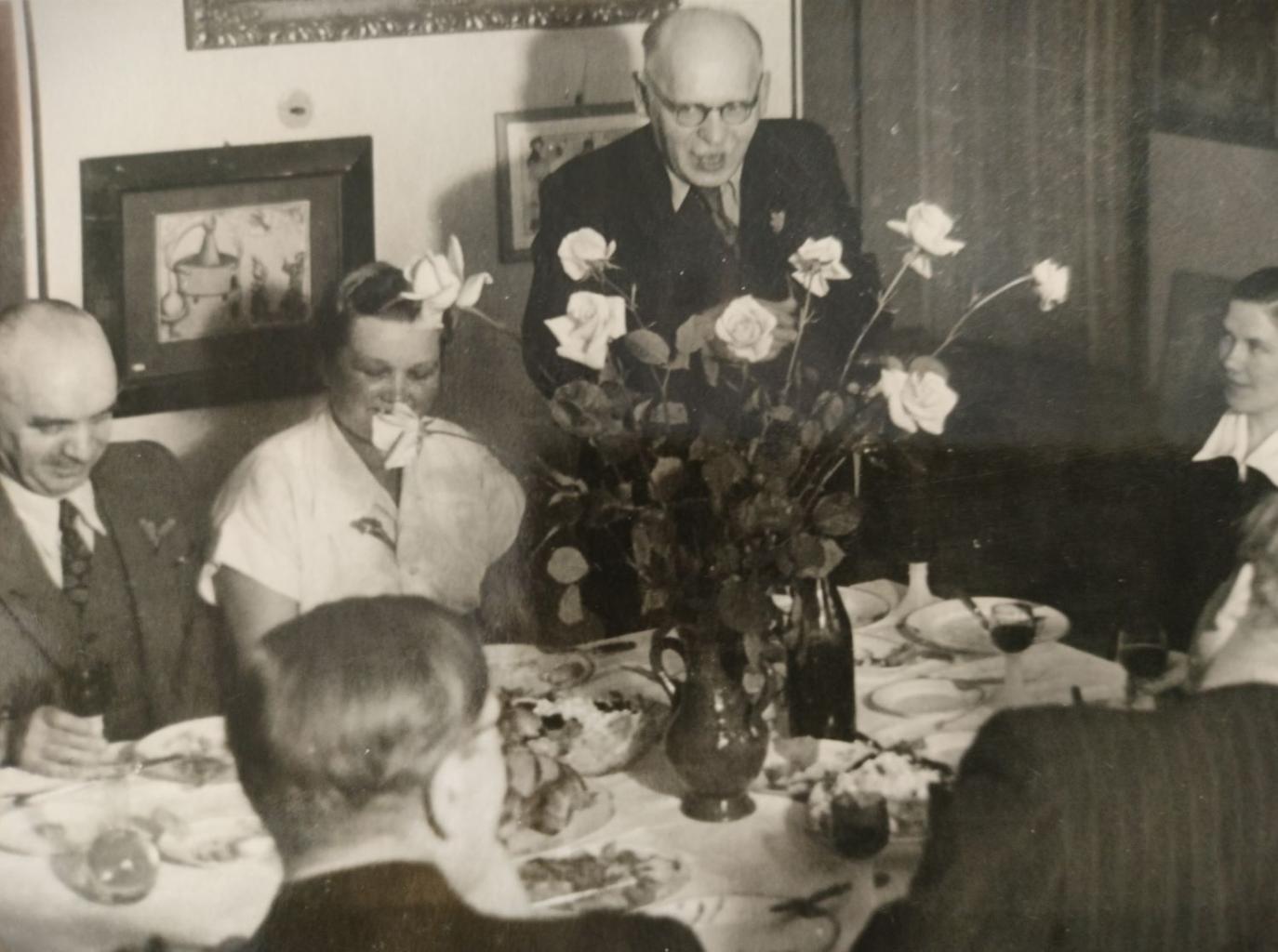 Around 1955. From the left: Prof. Kristaps Rudzītis, standing, Prof. Pauls Stradiņš
Pauls Stradiņš' life principles
Viņa dēls akadēmiķis Jānis Stradiņš (1933 – 2019) minējis vairākus sava tēva akadēmiķa Paula Stradiņa dzīves principus, kuriem sekot Rīgas Stradiņa universitāte mudina arī savus studentus:
- His son, academician Jānis Stradiņš (1933 - 2019), has mentioned several principles of his father, academician Pauls Stradiņš, which Rīga Stradiņš University encourages its students to follow:
- High professionalism combined with deep understanding of a patient. What is more important – a technically trained doctor or a wise doctor who understands and loves the patient? The two cannot be separated.
- The desire to bring modern medical knowledge to small Latvia, to introduce it without prejudice from all over the world – from the West, from the East, from the North and from the South, of course, also the heritage of folk medicine (which the professor was interested in all his life).
- Democracy – of the people, by the people, for the people. One wouldn’t say that the professor was a “widow’s son” or from a poor background; however, he definitely came from a low-income rural craftsmen family. Life experience had taught him how to find common grounds with people of different nationalities, opinions and professions, avoid diminishing himself when talking to the superiors and abstain from artificial boosting of his authority. He did not distinguish between people by position or nationality, but he was especially close to people of prominent destiny and ideas.
- Respect for your teachers and contributions of past generations, that especially came to light when establishing the Museum of the History of Medicine.
- Thinking globally, but not forgetting your country, including your home region.
- The ability to devote oneself to public work for the common good, perhaps even by fragmenting one’s efforts in a seemingly useless way, but trying to set an example for the youth, for young doctors.
‘I think that also the high ethical principles of a doctor, which life had taught him and which guided him in his good and bad days should be included. However outdated these principles may seem today in the age of market economy, they have future value,’ said Jānis Stradiņš, the son of Pauls Stradiņš, in his letter to the RSU History Museum dated 2012.
* Arnis Vīksna, Edvīns Platkājis Izaugsme // Zelta skalpelis, Zvaigzne (Rīga, 1980)
Related news
 RSU Museum to celebrate 25th anniversary with ‘Things. Places. Feelings’ exhibitionFor RSU Employees, RSU History, For Students


