When learning turns into collaboration: birthday conversation with Prof. Tatjana Koķe


This spring, Tatjana Koķe, member of the Rīga Stradiņš University (RSU) Council and professor at the Unit for Continuing Education of Academic Staff at the Centre for Educational Growth, celebrated a milestone birthday. She has devoted ten productive years to our University, demonstrating high professional competence in her role as Vice-Rector for Studies, and serving as Chair of the Council of Social Sciences Professors, Head of the RSU Publishing Council, and Head of both the RSU Council of Deans and the RSU Library Council.
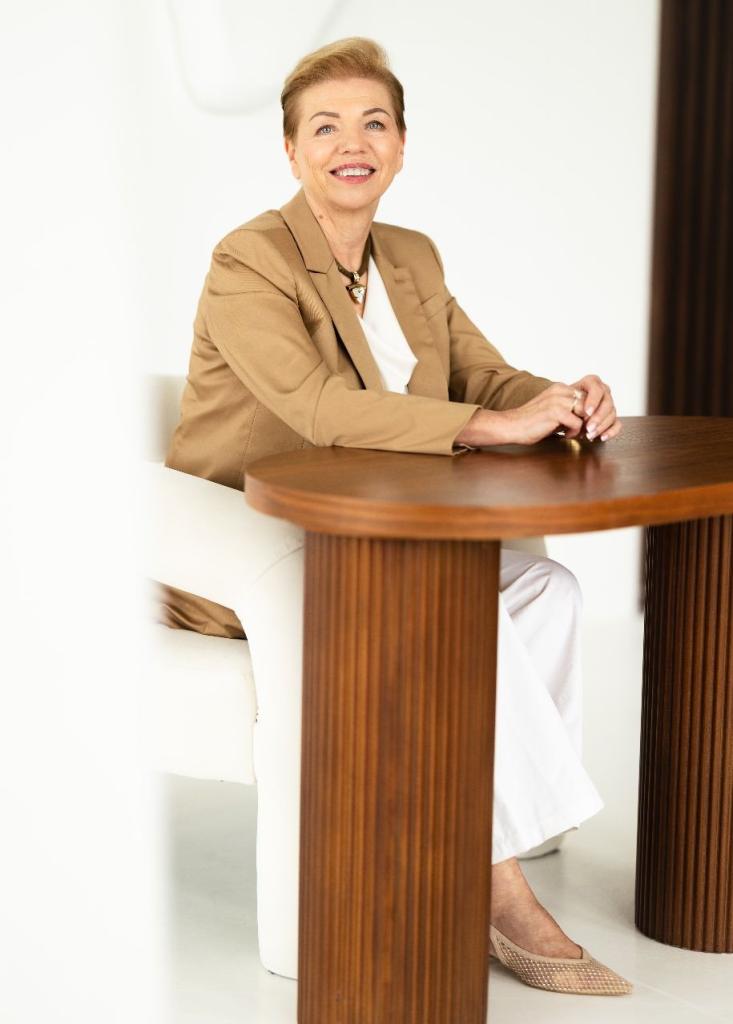 Photo: Courtesy of Tatjana Koķe (2025)
During this period, significant changes initiated by Prof. Koķe were introduced to the University’s study process. The RSU Centre for Educational Growth (CEG) was established, contributing not only to the pedagogical growth of RSU lecturers but also to the continuing education of academic staff from other Latvian higher education institutions.
A milestone birthday is a great time to look back at what has been accomplished. Which of your achievements or creative moments at RSU would you particularly highlight?
I am one of those people who values achievements more through action than through words. I would like to believe that my colleagues at RSU, as well as senior students, can name the joint projects we have carried out that have strengthened the quality of studies, deepened mutual understanding, and enhanced the prestige of RSU.
When I started working at RSU, I saw the need to significantly transform the approach to studies – from a client-oriented model to a student-centred university. A student-centred approach does not mean a “service relationship” in which the lecturer gives and the student receives, but rather a partnership that substantially increases student involvement, participation, and ownership of the study process and its outcomes.
I believe that the main task of studies is to enrich students’ understanding of the value of their own work, effort, and responsibility. Such experience helps not only when starting a professional career but also in shaping one’s personal life path.
Undeniably, this was not easy, as the medical community is characterised by a certain level of subordination and hierarchy, and students must work very hard before experienced colleagues recognise them as equal partners.
To implement changes, I had to get to know my colleagues. Although my workload was very high from the very first day, I regularly scheduled meetings at departments and structural units, especially hospitals, as this environment was quite unfamiliar to me. I tried to listen to my colleagues’ insights about the study process – through discussion, we sought to find a rationale for shifting the lecturer-student relationship and for modernising the study process. Since international students have been studying at RSU since the 1990s, it was also necessary to collect and update information about their integration experience.
We now know that RSU’s strong international reputation and brand are largely based on the understanding that the University’s multicultural environment is an important resource and an added value for its growth and development.
Another important contribution to improving the study process was the identification, development, and implementation of study quality criteria. It was clear that support for this work had to be gained from both lecturers and students and, as I had positioned myself as a “student vice-rector” from the very first day, I looked for like-minded individuals among the students. I must admit that I gained a great sense of satisfaction from collaborating with students, especially the study year leaders, in the process of identifying and justifying the quality criteria. It was a truly creative process, carried out with great responsibility and organised in a competent manner, despite the students’ limited experience in such work.
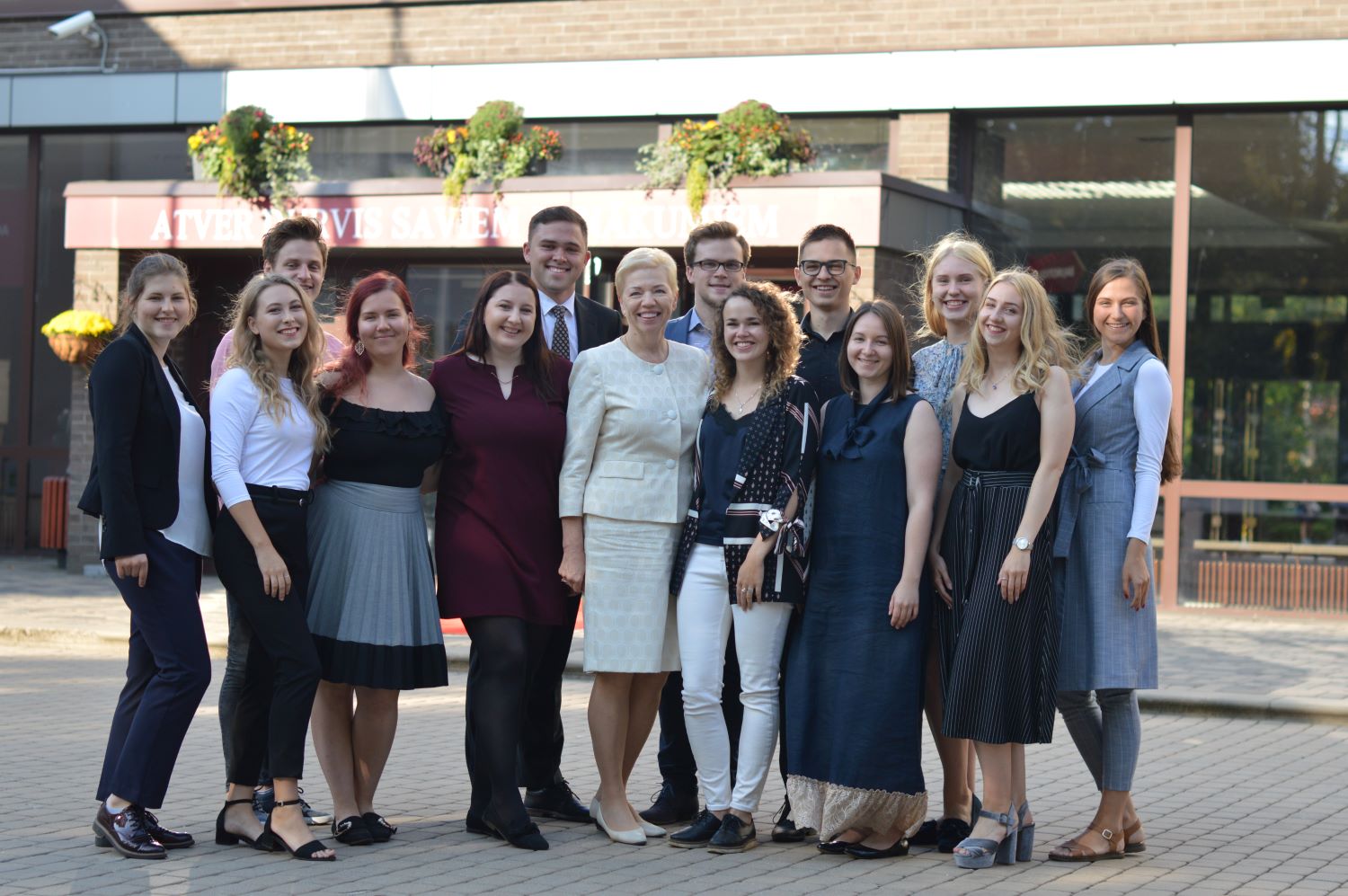 Prof. Tatjana Koķe (centre) and the RSU Student Union, 2019. Photo: Courtesy of RSU
Looking back on what has been achieved, it is important to mention the lockdown caused by the COVID-19 pandemic, which lasted for almost two years, and the measures introduced to ensure the continuity of the study process. The swift and responsible cooperation between the structural units involved, as well as the initiative and creativity shown by lecturers, deserves recognition. It should be noted that, thanks to the foresight of RSU Vice-Rector for Development and Administration Toms Baumanis and his enthusiastic promotion of the introduction of the latest technologies, the IT department had already procured the necessary equipment to enable a rapid transition to online studies. Similarly, colleagues from the Centre for Educational Growth provided round-the-clock support, sometimes even beyond what seemed possible. The pandemic offered many new lessons and valuable experience that should be preserved and further developed even under normal circumstances.
The CEG was founded at RSU more than 10 years ago on your initiative. How did this idea come about, and what were the biggest challenges in implementing it?
When I started working as Vice-Rector for Studies, I quickly realised that changing the aforementioned philosophical emphasis of studies from client-oriented to student-centred at a contemporary university required a professional team that could consult lecturers and provide the necessary theoretical and practical support.
This means that university lecturers must continually learn. Moreover, they must learn from those they teach, and from their own teaching practice.
Therefore, when planning the establishment of the CEG at RSU, we were confident that the continuous education of lecturers must be organised in accordance with the professional development needs of teaching staff, which must be identified and respected, and that the necessary answers should be provided. In the establishment and management of the CEG, I have always trusted the team’s ability to take important decisions. I believe that leaders have emerged from within the CEG whose work guarantees the institutional resilience of RSU.
The contribution of the entire CEG team is invaluable in helping to create an inclusive, student-centred, and modern, high-quality study environment at RSU. New structural units are currently being formed at RSU, such as the Artificial Intelligence Support Unit. It is important that all these units work together towards a common goal so that RSU, as a research university, can provide excellent studies and research for the professional growth of its students. The prerequisites for this are excellent at RSU, as our environment – open spaces, access to technology, digital tools, and infrastructure – is suited to an active, collaborative learning process.
Are there any encounters, events, or people that have inspired you in your work?
I am part of a generation that more often reflects on memories than on future aspirations; however, I am grateful that life has given me the opportunity to collaborate with Aina Nagobads-Ābola, Prof. Jānis Stradiņš, and both RSU rectors – Prof. Jānis Gardovskis and Prof. Aigars Pētersons – under whose leadership I was able to apply my experience and competence to strengthen the RSU brand.
It is no secret that my niche in pedagogy is lifelong learning, which is why I not only always use, but also create opportunities for myself to learn continuously. In the context of RSU, a few examples stand out: I learned a rational, pragmatic approach to work from my colleague, Vice-Rector for Science Prof. Iveta Ozolanta; I gained a multifaceted and sharp perspective on various processes from Prof. Ilga Kreituse; and self-control and composure from the then Dean of the Faculty of Dentistry, Prof. Ilga Urtāne. I could continue listing these remarkable personalities, but to sum up, I would like to sincerely thank all my colleagues, both experienced and young, with whom I have worked to achieve excellent results.
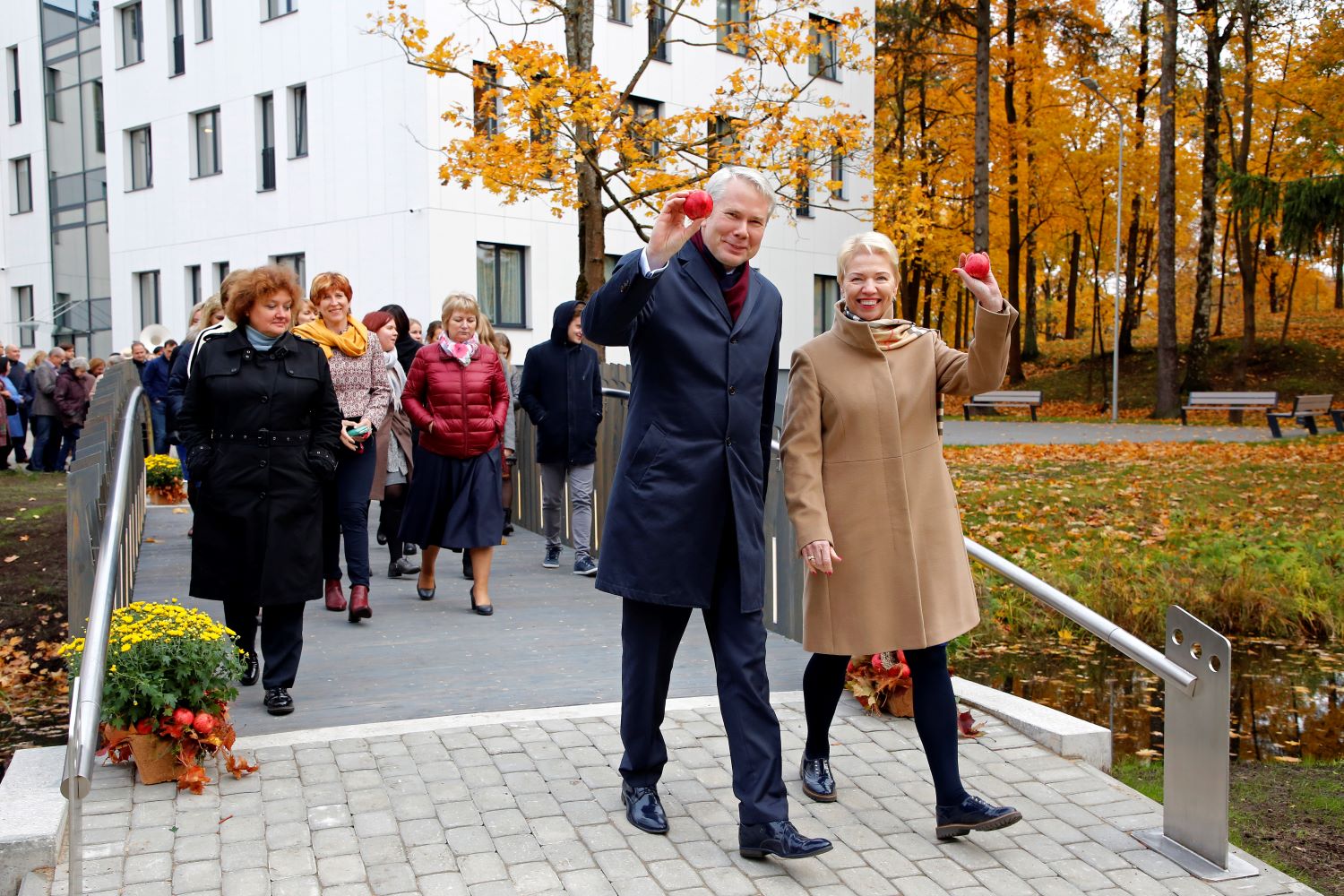 Opening of the bridge in RSU Inspiration Park in 2019. In the foreground: Prof. Guntis Bahs and Prof. Tatjana Koķe. Photo: Courtesy of RSU
What are the main lessons you have learned from your professional career so far?
Firstly, I feel gratitude and satisfaction for the opportunity to manage and oversee the RSU study process over the course of ten years.
My goal and responsibility have always been to create an environment where everyone – both students and staff – feels that their voice is heard and their potential is recognised.
Secondly, I am grateful for the understanding, support, and trust of the management, colleagues, and students in implementing changes that take time. It has been deeply rewarding to see how competence and collaboration over the years have developed into a high level of mutual trust, providing satisfaction from understanding one another even without words. Thirdly, I am well aware that some decisions required colleagues to step out of their comfort zones, but the primary goal was always to ensure the well-being of staff and students, and to maximise their development opportunities throughout their studies.