75 years since the first 1 September at our university


Photo: Courtesy of the RSU History Museum
Back on 1 September 1950, students began their studies at the Rīga Medical Institute (RMI), the original name of Rīga Stradiņš University, in three faculties: Medicine, Dentistry, and Pharmacy.
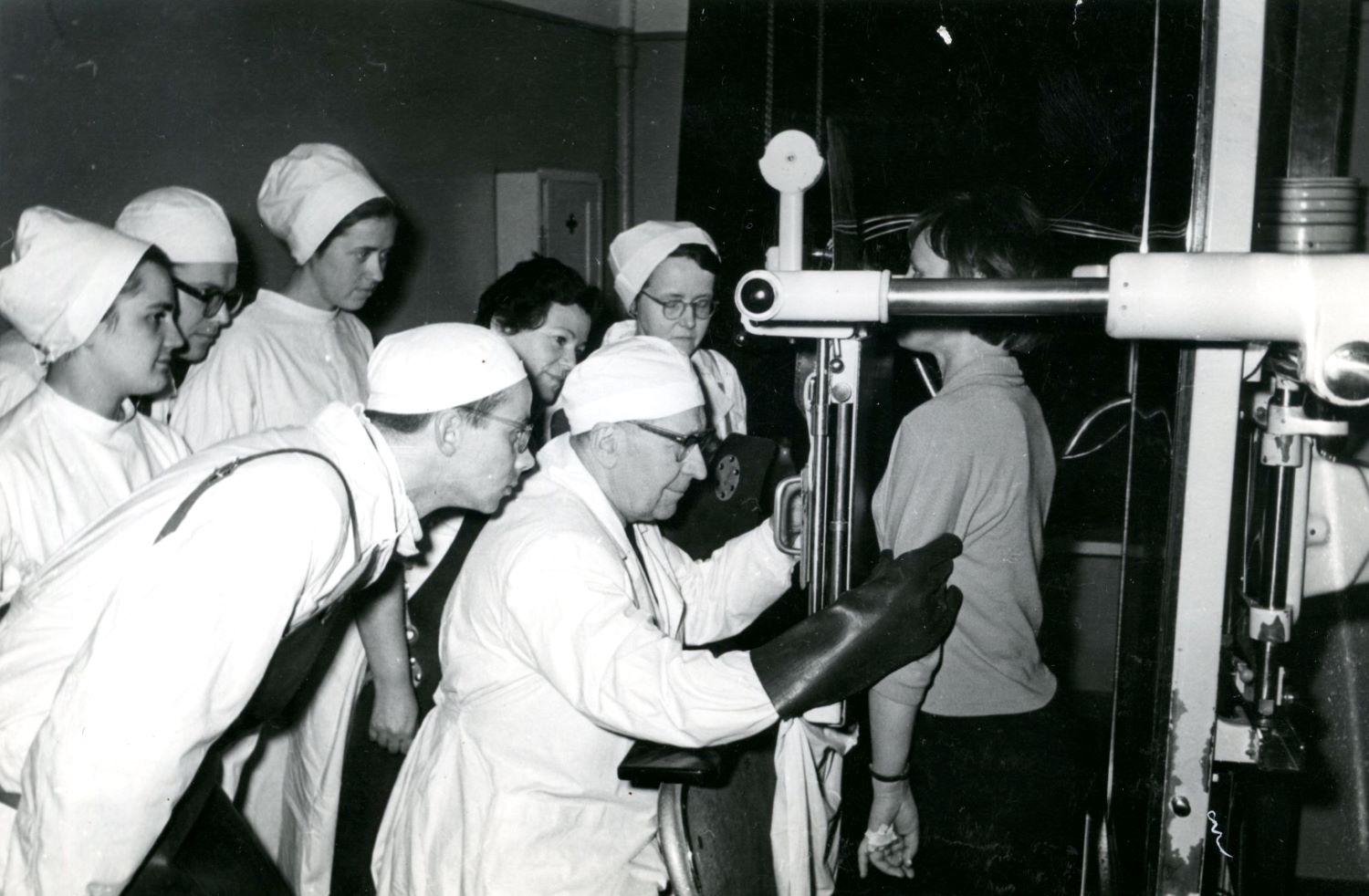 1967. RMI Student Scientific Society surgery club class. Prof. Aleksandrs Bieziņš at the X-ray machine; behind him, wearing glasses – Tamāra Čēma. 45 Vienības iela, Riga. Photo: Courtesy of Paulis Cīrulis
Founding the Rīga Medical Institute
RMI was established in 1950 on the basis of the Faculty of Medicine and the Department of Pharmacy of the Faculty of Chemistry at the University of Latvia. In the early years of the Institute, securing qualified teaching staff was challenging. The departure of Baltic Germans at the end of the 1930s, Soviet repression and deportations in the 1940s, World War II, the Holocaust, and exile had left Latvia with a severe shortage of medical teachers. After the war, specialists were invited from other Soviet republics, primarily of Latvian origin, as the study process was conducted in both Latvian and Russian.
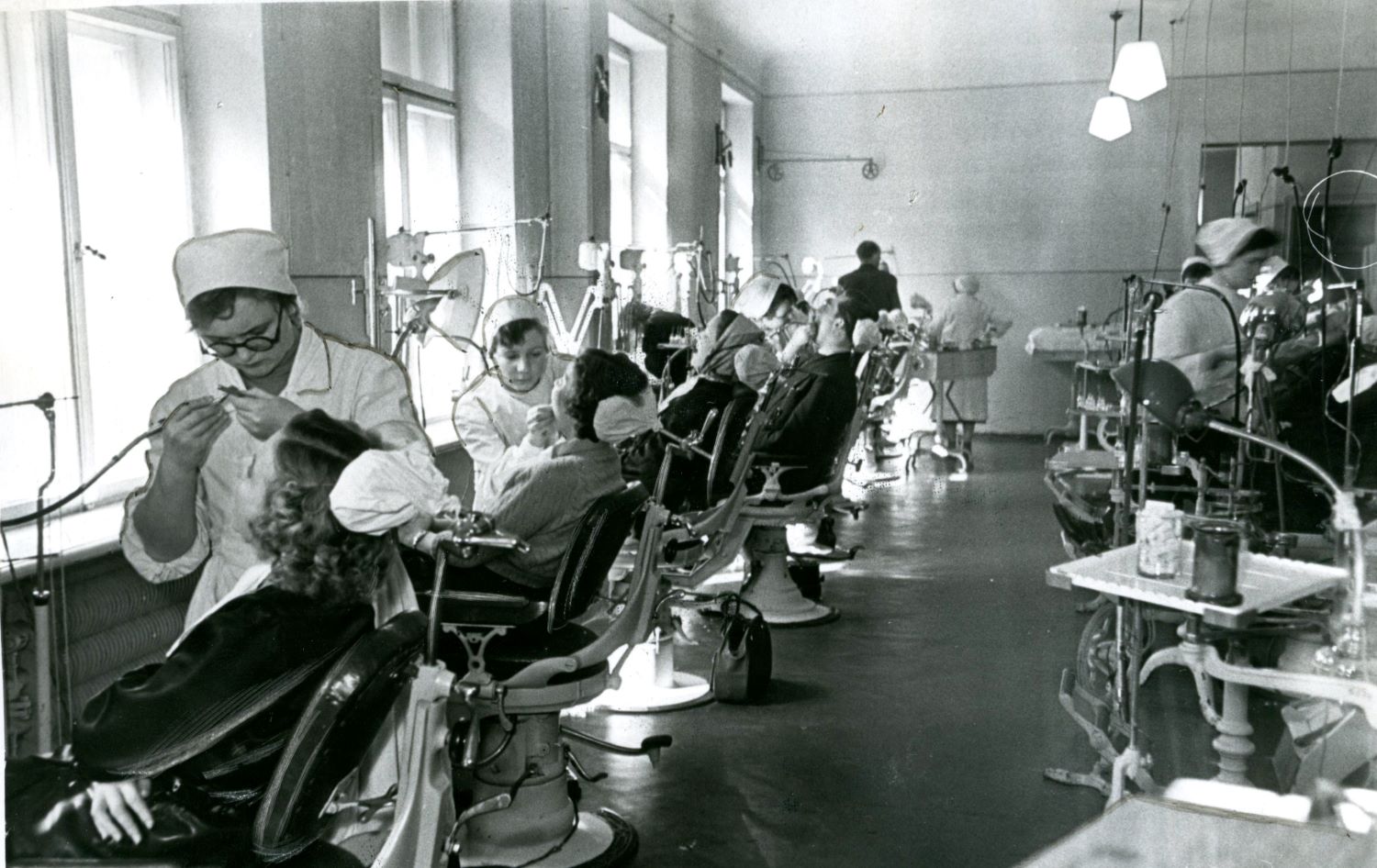 1958. Dentistry students during a practical class. Photo: Courtesy of the newspaper Padomju Mediķis
Prof. Ernests Burtnieks, who had received his medical education and gained his professional experience in Soviet Russia, became the first director of the RMI in 1950. Colleagues remember him as a pragmatic and highly determined person with good organisational skills.
Watch historical footage of the institute in its early days
The study process and academic growth
When the Institute opened, training local academic staff was essential. Young doctors were often sent to Moscow and Leningrad (now St Petersburg) for postgraduate studies. To obtain a degree, doctors had to study for six years, while dentists and pharmacists completed five years of study. By 1975, more than 7,500 doctors, dentists, and pharmacists had graduated from RMI.
In 1990, the Council of Ministers of the Latvian SSR renamed RMI the Medical Academy of Latvia. Following the restoration of Latvian independence in the 1990s, new study programmes were introduced in areas such as rehabilitation, nursing, and public health.
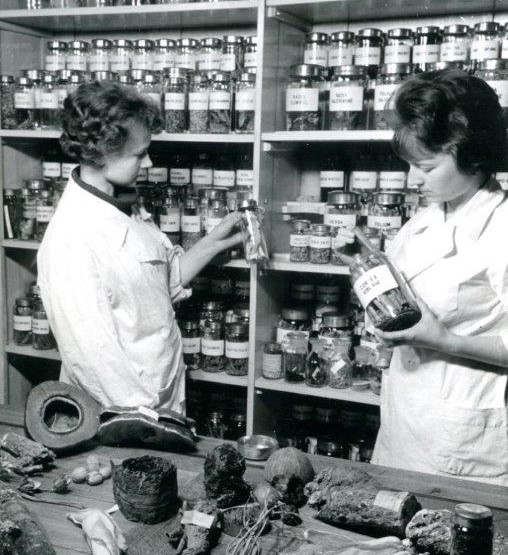
1967. Students Pārsla Pēda and Zigrīda Cēsniece working with the medicinal plant collection of the Department of Pharmaceutical Chemistry. Photo: Courtesy of Paulis Cīrulis
Rīga Stradiņš University – since 2002
In 1998, to prepare highly qualified specialists for Latvia’s anticipated integration into Europe, the university began developing social science programmes. This included political science, international relations, economics, journalism, public relations, and sociology. Given the growing diversity of study programmes, the academy was renamed Rīga Stradiņš University. In 2002, the Saeima approved the law on the RSU Constitution.