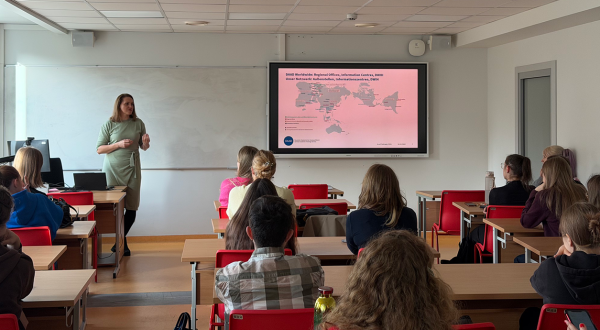
RSU Master’s Student of the Year 2025: ‘I’d like to continue my academic journey at RSU’


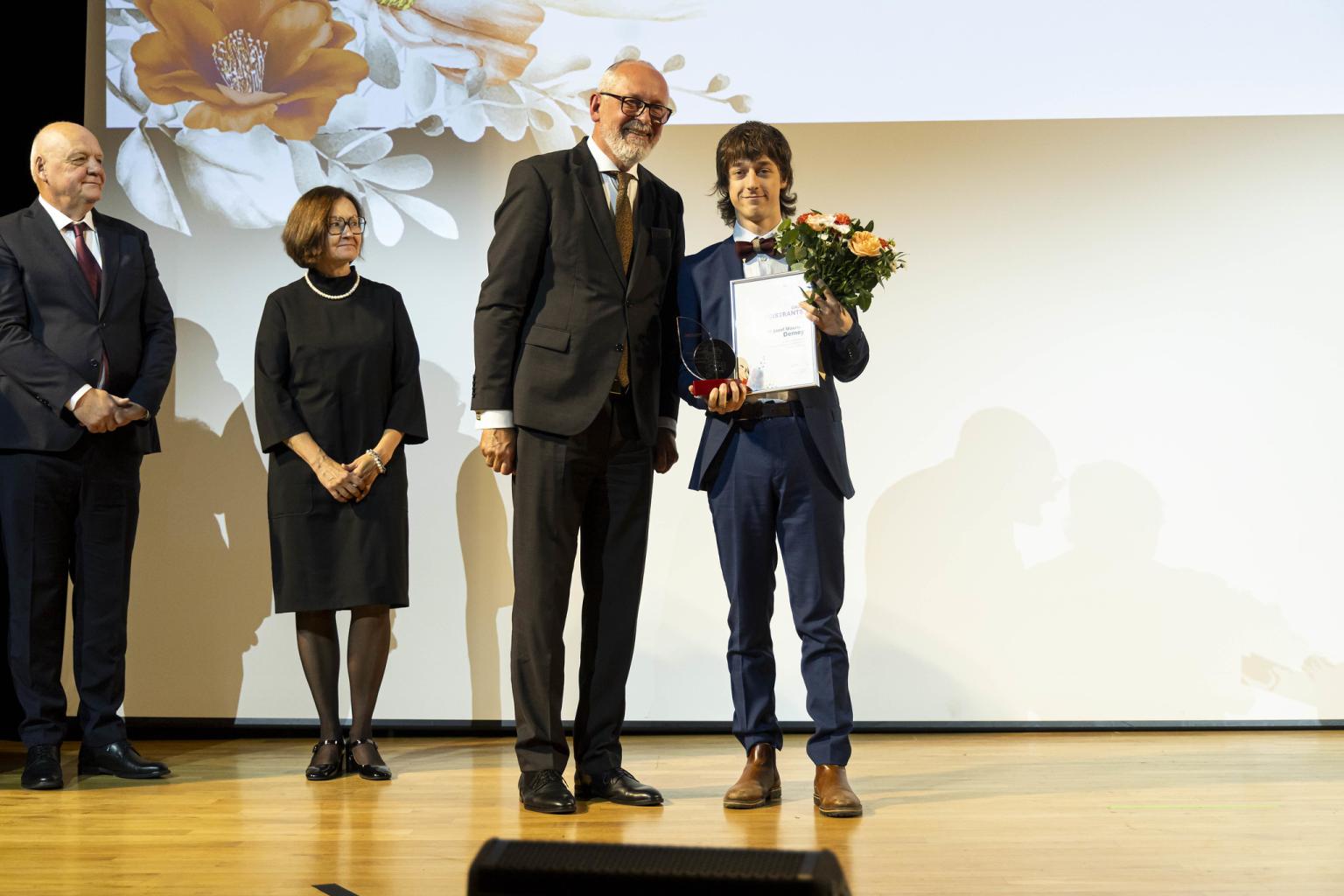
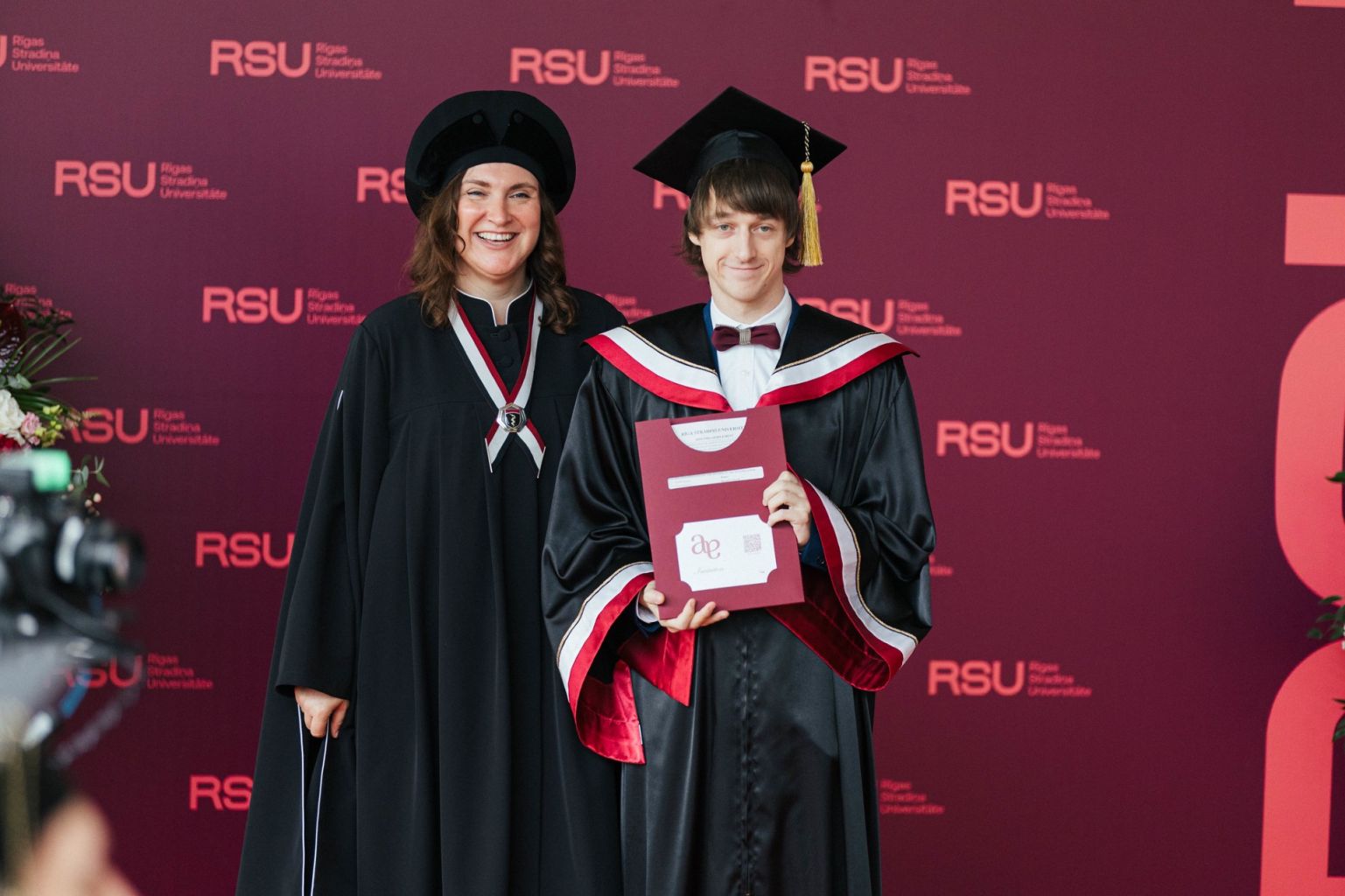
International student Reinaert Jozef Maurice Demey, recently graduated with a master’s degree from Rīga Stradiņš University (RSU) in the International Relations and Diplomacy programme. He is the recipient of the RSU Master’s Student of the Year 2025 award. Learn more about his academic journey and his experiences studying and living in Latvia.
Could you also please tell us where you obtained your bachelor's degree and why you chose to continue your studies in Latvia, at RSU?
I earned a bachelor's degree in secondary education, specialising in history and Catholic religion. However, after spending a year teaching at a secondary school in Belgium, I realised that this was not the right career path for me. While being a teacher can certainly be emotionally challenging at times, it did not feel intellectually challenged. Furthermore, it did not allow me to fully work with my passion, which is in international politics. I therefore chose to continue my studies by getting a master’s in international relations.
Latvia was not the obvious first choice. After the pandemic, I was finally able to start travelling, and I became interested in the legacy of communism in North-Eastern Europe and how countries in the region had dealt with the challenges of regaining independence. It may sound sentimental, but Riga made a strong impression on me during my first visit. I simply had the feeling that I could live here. That feeling, together with my interest in the region’s history and politics, led me to start researching study opportunities online.
I remember that by the middle of the RSU tour, I was already fully convinced.
How did your studies at RSU differ from your previous study experience in your home country?
Studies in Latvia differ in many ways from those that I was used to in Belgium. I remember being very anxious during my first semester prior to the first course as I did not know what to expect, so I sort of braced myself for the worst. However, the worst never came. This is due to the most significant change I noticed: the relationship between professors and lecturers, and their students. In most instances in Belgium, the approach is quite impersonal and does not provide process evaluation for students. I even heard horror stories from friends where professors would say, 'Look to your left. Look to your right. Only one of you three is making it to the end of the year.' At RSU, I was pleasantly surprised with the support we received.
In many cases professors would not only help us with the basics but also provide opportunities beyond our degree to engage with our interest in international politics, for example by recommending conferences.
What were your first impressions of Latvia, and how has your perspective on the country evolved since then?
My perception of Latvia also changed a lot, which is to be expected when becoming more familiar with the people and culture. This might once again sound corny, but it has been nice to get to know the openness that is often hidden beyond many Latvians’ stoic facial expressions. I also deepened my appreciation for Latvian culture, and even celebrated Līgo for the first time recently. Even the small things spark my interest, such as the superstition surrounding whistling inside or the religious devotion some Latvians have to their mushrooms spots. However, Latvian food has yet to charm me.
Looking back, I loved my experience at RSU. Not only for the obvious knowledge and opportunities I gained, but I think international relations and diplomacy students are privileged because our programme included both international and local students. This allowed us to become more familiar with perspectives from almost every continent and also provided a bridge to the local culture and perspectives. However, I hope that my experience with RSU is not over yet, as I want to pursue a PhD.
You have achieved an outstanding average grade of 9.67. What are the main factors that helped you maintain such a high level of academic performance?
I think there are two main factors; the first was developing a study method that worked for me personally. Through trial and error I learned that I benefit from taking notes continuously. This might seem obvious, but the way I take notes matters, as I actively have to think about whether specific notes are relevant to include. This method then also extends to making overviews for exams. I make list of concepts and practice them as if I was learning a language. Then I also draw lines or use colours to test myself to what extent I am able to connect all concepts. When it comes to papers, I always just push myself to go above and beyond. I usually try to do as much as possible in the least amount of sittings, so all information is fresh in my head. Therefore, at times it benefited me to have the sleeping schedule of a vampire. I also found it helpful to ask frequently for the input of professors whenever I deemed it necessary, especially when I tangled myself up in theory.
The second factor is engaging with international relations beyond my degree. I frequently listen to podcasts on news and politics on Spotify, or BBC World when I hire a car (this is in part due to the fact that it is the only radio station in English, as far as I know). I also try engage with extracurricular activities that involve international relations. I attended as many conferences as possible and I had the opportunity to attend the Small State Summer School in Reykjavik and the MIRAI programme in Japan.
The Small State Summer School, brings together students and academics from all Nordic and Baltic states and delves into small state strategies from each of the Nordic and Baltic countries. It is then also this that inspired the idea for my master’s thesis. The MIRAI programme is organised by the foreign ministry of Japan and brings together students to become more acquainted with East Asian and especially Japanese culture and international relations. Not only was visiting both countries an amazing opportunity, which I cannot recommend enough to current postgraduate students, it also helped me broaden my perspectives beyond the traditional big European state politics.
Your fellow students and lecturers appreciate your active participation in discussions. Why is it important to you not only to acquire knowledge, but also to challenge ideas and ask questions? What has been the most interesting question and answer that emerged from such a stimulating discussion?
There are many different perspectives in international relations, so discussions should arise naturally from lectures and seminars.
I believe that contributing your own opinions and asking questions is an important part of learning,
as it helps you connect new ideas with your existing knowledge. It also exposes you to different viewpoints. Even when I disagree with them, I find them valuable because they help me understand how others think and what their arguments are based on. That, in turn, helps me develop and refine my own perspective.
Rather than naming a specific question, I remember that certain discussions, particularly on the European Union and Russia, often reflected the recent historical context of my fellow local students. While I fundamentally disagreed with some of these opinions, it was enlightening to see how personal experiences, recent history, and culture shape these perspectives, especially beyond the traditional Western / Northern European perspective.
International relations and diplomacy are fields that reflect the rapidly changing world. Which current developments or events are you most interested in, and why?
Such developments are even accelerating. While it is often not positive for the world, it does provide fascinating developments in the science of international relations. I have always had a soft spot for US politics, but my current interest is mainly centred on the Baltic and especially Arctic regions. I wrote my master’s thesis on the evolution of the Danish perspective on great powers in the Arctic region, especially as it has become so dynamic. For two decades, Arctic politics was rather dull marked by peaceful cooperation among all Arctic states, without being influenced by outside events. However, in the last decade things have increasingly heated up, both literally via climate change, and metaphorically, via increased interest from great powers both inside and outside the region. I will continue to examine this region in my further studies.
What are your future professional ambitions?
I definitely want to pursue a PhD, preferably at RSU.
Looking further ahead, I hope to continue with theoretical research in international relations. There must be something wrong with my brain, because I genuinely enjoy combining theories and developing new elements or even entirely new concepts. My main research interest would probably focus on how the strength of identity and the degree of cooperation shape state behaviour during periods of increasing tension.