Department of Radiology
By combining education, research, and clinical experience, the Department of Radiology promotes the advancement of the field and excellence in patient care.
Department of Radiology section on RSU Research Portal
- Areas of Work, Main Tasks and Objectives
- Ensure implementation of modern diagnostic radiology study programmes at undergraduate and postgraduate level
- Academic supervision of research carried out by students, resident physicians and PhD students
- Active involvement in professional associations (Latvian Society of Radiology, Latvian Musculoskeletal Radiology Association, Latvian Association of Ultrasound)
- Pedagogical and scientific upskilling of the academic personnel
- Study courses implemented by the department
- Basics of Radiology
- Practical Training Course in Abdominal, Thyroid Ultrasonography, and FAST Protocol Using the UltraSim Simulator
- Vascular and Non-Vascular Interventional Radiology
- Clinical Cases in Radiology: How to Get to the Diagnosis
- Research projects
CT Perfusion Topical and Quantitative Criteria in Predicting Prognosis of Acute Ischemic Stroke Patients after Mechanical Thrombectomy
A.I.B.M. – Interpretable AI-Powered System for Identification of Bone Metastases in Computed Tomography and Magnetic Resonance Imaging
Modifiable Bio and Life-Style Markers in Predicting Cognitive Decline (MOBILE-COG)
Brain Magnetic Resonance Imaging Biomarkers in Parkinson's Disease and Syndromes, Their Association with Motor and Non-Motor Function Disorders
High-Level Digital Skills Training in Latvia in High-Performance Computing
Development of an integrative approach to the assessment of cognitive abilities in patients with neurodegenerative diseases of the central nervous system
Latvian–Ukrainian collaboration programme project Development of artificial intelligence systems for early biomarker detection in spine imaging with a focus on evaluating structural changes in osteoporotic vertebral bodies, including potential applications for war-affected individuals, No. LV-UA/2025/4- History
The department can trace its history back to December 1928 when the Department of Roentgenology and Radiology was founded. The department’s name has changed several times over the years: the Institute of Roentgenology (1928–1941), the Department of Radiology (1941–1944), the Department of Roentgenology and Radiology (1956–1998). In February 1998, the Department of Roentgenology and Radiology was renamed the Department of Radiology and moved from its previous premises at Pauls Stradiņš Clinical University Hospital (PSCUH) to new premises at Riga Clinical Hospital No 7 Gaiļezers in Riga, 2 Hipokrāta iela.
In 1999, the Rīga Stradiņš University (RSU) Institute of Radiology was established and the department was integrated into it. In 2009, following the decision of the RSU Senate, the Institute of Radiology was reorganised into the Department of Radiology.
Heads of the department (institute, or cycle)
- Eižens Vēbers (1928–1939; 1940–1944)
- Jānis Lediņš (1940)
- Jēkabs Romāns (1948–1950)
- Aleksandrs Poļakovs (1953–1966)
- Jevgenijs Nemiro (1966–1993)
- Ēriks Reinholds (1993–1998)
- Gaida Krūmiņa (1998–2019)
- Ardis Platkājis (since 2019)
The origins of radiology in Latvia can be traced back to Eižens Vēbers. He had become a respected specialist at the University of Kyiv, where he graduated from the Faculty of Medicine in 1898. In 1920, Vēbers organised and headed the first Department of Roentgenology in Kyiv. A year later he moved to Vienna, where he worked as a medical consultant for Siemens. In 1927, Vēbers came to Riga and established an assistant professorship in roentgenology within the Faculty of Medicine at the University of Latvia. Sofija Linkoviča, Kristaps Butulis, Jānis Lediņš and Jānis Zemzars were among his assistants. Vēbers was a determined leader and a good organiser. In 1928, the Institute (Department) of Roentgenology was established at the Riga City Hospital No. 2 (presently the Pauls Stradiņš Clinical University Hospital). It was one of the oldest departments of roentgenology in Eastern Europe and the first and for many years also the only one in the Baltic region. Latvian radiologists were successful in establishing international connections, with specialists from Latvia travelling abroad on scientific missions.
In the 1930s, the Institute of Roentgenology introduced contrast urography, hysterosalpingography, encephalography, myelography and other methods. Jānis Lediņš began experimenting with angiography on animals. In September 1944, Vēbers left for Germany and passed away there in 1947. World War II and the occupying regimes interrupted the department’s ongoing initiatives. Jānis Lediņš was deported in June 1941 and returned to his homeland only in 1962.
In 1941, the Institute of Roentgenology was renamed the Department of Radiology, but in 1944 the department ceased its activities. After the war, Asst. Prof. Jēkabs Romāns undertook the management of the roentgenology cycle, Ņina Stradiņa and Vladimirs Kosinskis worked as lecturers. After the death of Jēkabs Romāns (1953), the cycle was headed by Asst. Prof. Aleksandrs Poļakovs until 1956.
After the establishment of the Rīga Medical Institute (RMI) in 1951, a sub-internship in roentgenology was introduced. The Department of Roentgenology and Radiology was restored in 1956 and headed by Asst. Prof. Aleksandrs Poļakovs until 1966.
In 1966, Asst. Prof. Jevgenijs Nemiro (professor since 1990) became the head of the department. He was also the Chief Radiologist of the Ministry of Health. He introduced the most up-to-date equipment and radiology services flourished. The most modern CT room in the Baltic States (1983) and digital angiography laboratory (1996) were opened at PSCUH.Clinicians began to make greater use of the possibilities of radiological examinations. Besides, postgraduate specialisations and qualification upgrading became more popular, and active and important scientific research work was carried out. Nemiro and Natālija Bāliņa focused on in-depth research in mediastinal pathology. Together with Ēvalds Ezerietis, Nemiro introduced angiocardiography. Rasma Heniņa focused on in-depth studies of the heart and large blood vessels. Aivars Stengrēvics was the first in the USSR to develop the methods and indications of lymphography. Valentīna Baruļina and Baldūrs Apinis performed in-depth research on the pancreas. Andris Laganovskis widely introduced cholangiopancreatography in medical practice. In 1969, the RMI Laboratory of Thermoluminescent Dosimetry was established under the scientific leadership of Nemiro and Kurts Švarcs to ensure the safety of staff and patients. Nemiro and Švarcs were awarded the State Prize of the Latvian SSR in 1977 for their research in this field. In 1973, the first textbook on roentgenology and radiology was published in Latvian, and in 1983, an extended edition of this book was released.
The main directions of scientific work
- Differential radiodiagnosis of pulmonary and mediastinal pathology (J. Nemiro, A. Amoliņš, R. Heniņa)
- Radiological diagnosis of hepatobiliary and pancreatic pathology (V. Baruļina, A. Laganovskis, Ē. Reinholds, P. Zlemets)
Nemiro addressed radiation protection and clinical dosimetry issues together with his staff. The work of the Department of Roentgenology in the field of education and science resulted in numerous publications (including two textbooks, four monographs and two collections of articles), several inventions and patents, original developments, eight doctoral theses. The department established creative international cooperation with several foreign higher education institutions – Charles University in Prague and Palacký University Olomouc in the Czech Republic, the Dresden University of Technology in Germany, Pomeranian Medical University in Poland and others. This cooperation resulted in several joint scientific publications.
Professor Nemiro has been awarded the Gold Medal of the Palacký University Olomouc (1990). Nemiro is a State Emeritus Scientist (1998) and a recipient of the Order of the Three Stars (2000). In 1991, Arnis Amoliņš was awarded the Commemorative Medal for Participants of the Barricades.
The Department of Radiology was established in 1998, and Prof. Gaida Krūmiņa, habilitated doctor of medicine (1990), was appointed as its head. She was also the director of the Institute of Radiology established in 1999 and became the head of the re-established Department of Radiology in 2008. In 2003, the Department of Undergraduate Studies was established at the Institute of Radiology and Asst. Prof. Ardis Platkājis (associate professor since 2005) was appointed as its head. Since 2019, Prof. Ardis Platkājis has been the head of the Department of Radiology.
Employees






Related news
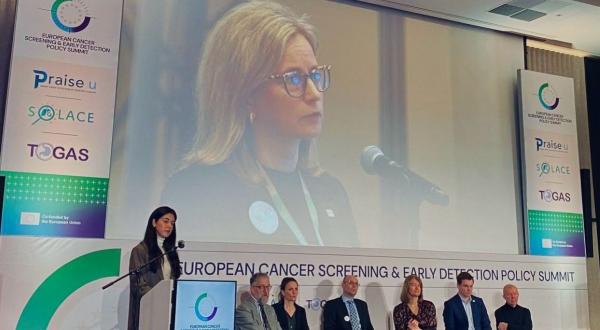 RSU Professor Maija Radziņa represents Latvia at EU cancer screening summitResearch, International Cooperation
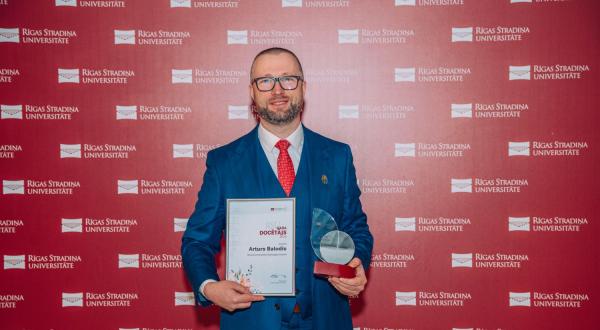 RSU Lecturer of the Year Arturs Balodis on research, high standards and trust in studentsRecognition, Interviews
 RSU students honoured for excellence in medical studiesWe are proud!, For Students
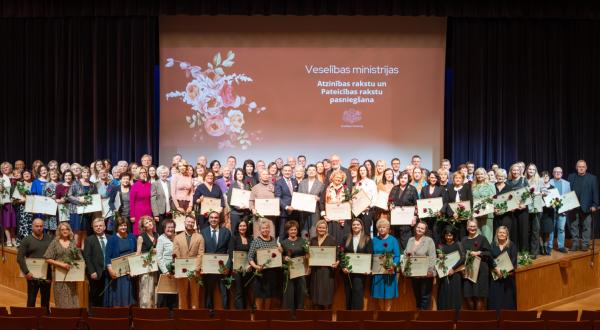 RSU employees receive Ministry of Health awards For RSU Employees, Recognition
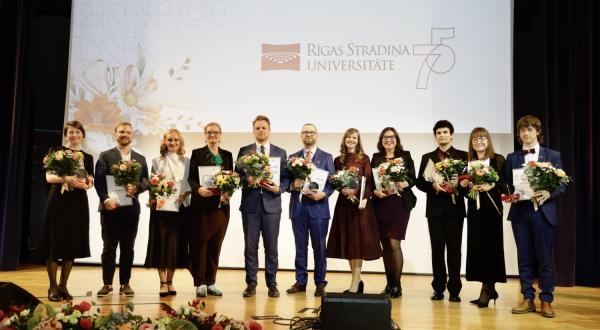 RSU Annual Awards 2025 and special recognitions presented at annual RSU Academic MeetingWe are proud!, For Students, For RSU Employees, Recognition, Traditional Events