Estonian and Latvian media landscapes: similarities and differences explored in RSU podcast


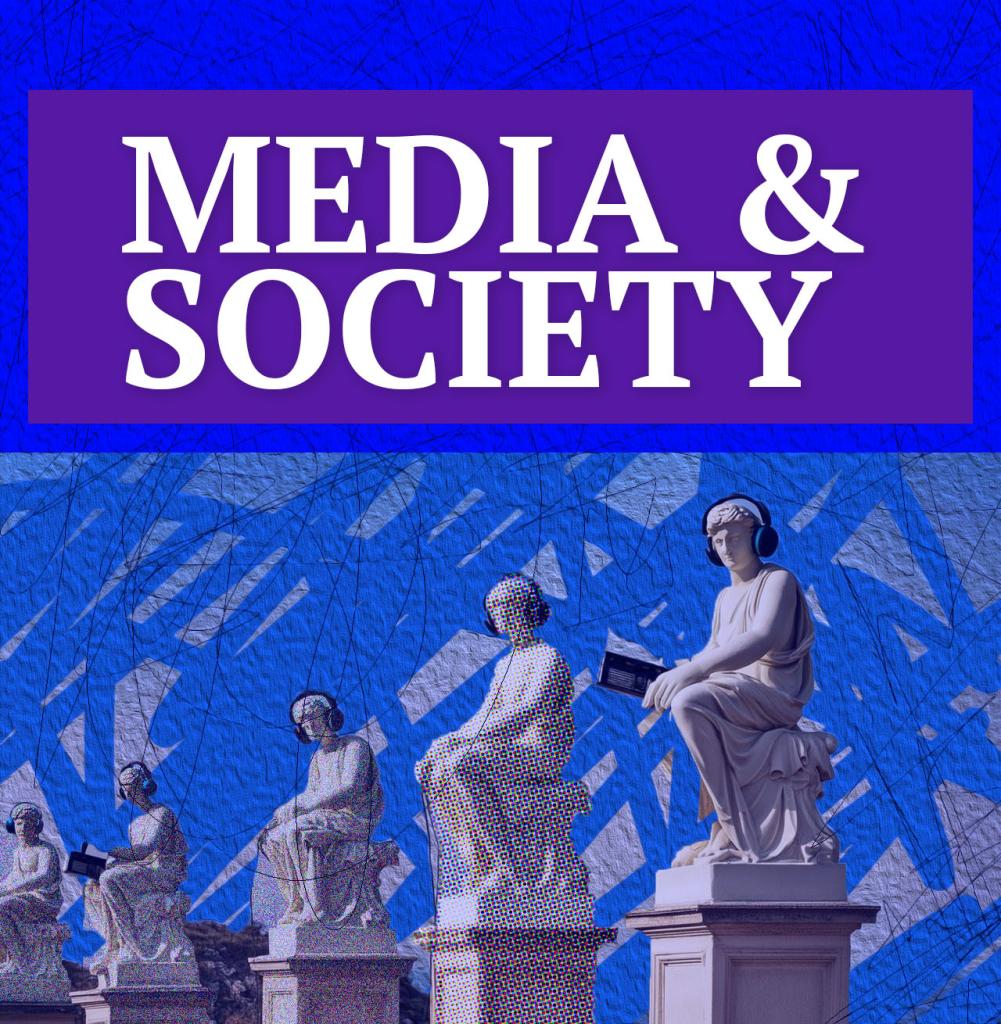
The podcast Media & Society, produced by the Faculty of Social Sciences at Rīga Stradiņš University (RSU), for the first time brings together and explores in depth how media professionals, researchers, policymakers, and audiences in Latvia and Estonia perceive the relationship between media and society in today’s complex and ever-changing information environment.
It reveals not only technical or political challenges but also deeply human experiences – how journalists fight for audiences’ attention and trust, how audiences search for content that resonates with them, and whether minorities feel heard or, on the contrary, excluded.
Today, when the role of professional media is often questioned and the information environment is changing extremely rapidly, it is crucial to understand the narrative in which conversations and thinking about media take place – about their role and importance in society and in every individual’s daily life. And when we see that, in two small and geographically close countries – Latvia and Estonia – these narratives differ on seemingly identical issues and situations, it becomes truly fascinating.
Līga Ozoliņa,
Vice-Dean and researcher, RSU Faculty of Social Sciences,
podcast host

Episode overview:
- What it’s like to be a journalist in Latvia and Estonia I – Inga Spriņģe, Holger Roonemaa
- What it’s like to be a journalist in Latvia and Estonia II – Anda Rožukalne, Ragne Kõuts-Klemm
- What it’s like to be a media user in Latvia and Estonia – Laura Šmideberga, Dmitrijs Petrenko
- Are people willing to pay for journalism? The case of Delfi in Latvia and Estonia – Filips Lastovskis, Urmo Sonvalds (Urmo Soonvald)
- How to build trust with your audience: The case of public media in Latvia and Estonia – Anita Brauna, Marts Luiks (Mart Luik)
- How to address Russian-speaking audiences: Approaches of Latvian and Estonian media policymakers – Kārlis Dagilis, Andress Jēsārs (Andres Jõesaar)
- What it’s like to be a Russian-speaking journalist in Latvia and Estonia – Jūlija Bali (Julia Bali), Anna Stroja
The project’s principal investigator, Jānis Juzefovičs, Senior Researcher at the Faculty of Social Sciences, emphasises: 'We wanted to understand why people in Estonia trust media more and are generally more favourable toward journalists than in Latvia. From our own and other countries’ previous research, we knew that in order to understand people’s perceptions of media and journalism better, we cannot focus only on media – we have to study the broader context that shapes attitudes toward media: for example, to what extent people feel satisfied with their lives, whether they feel a sense of belonging in society, and how much they trust the political elite. All of this shapes our attitudes toward institutions, including the media.'
The podcast is produced in English and is aimed at media professionals, researchers, students, policymakers, and anyone who wishes to better understand the relationship between media and society. It is available on all major podcast streaming platforms (e.g. on Spotify). The producer is Marta Herca, editor of RSU student media network Skaļāk. Five more episodes will be released by next spring.
The podcast series is produced as part of the Scientist Grant Making Sense of Media: A Non-Media-Centric and Open-Ended Approach to the Study of Media-Related Experiences and Perceptions No. RSU-ZG-2024/1-0007, which is carried out under the project RSU Internal and RSU with LASE External Consolidation No. 5.2.1.1.i.0/2/24/I/CFLA/005. The project is funded by the European Union Recovery and Resilience Facility and the state budget of the Republic of Latvia.
Related news
 RSU Rector presents the university’s achievements and future goals at Academic Meeting For RSU Employees, Internal consolidation, Consolidation, Traditional Events