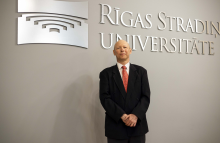
We continue our series of articles on the tenured professors at Rīga Stradiņš University (RSU). Riga-resident Egils Stalidzāns recently joined the Bioinformatics Group at RSU as a tenured professor and is a leader of the Computational Systems Biology Team.
The international scientific and applied research conference “Modern Security Challenges and Strategies for Their Prevention – Towards a Secure Society” is devoted to the analysis of contemporary security challenges, including military conflicts, terrorism, cybersecurity, hybrid threats, and risks to the information environment.

The current global and regional security landscape in Europe, including the Baltic region, is becoming increasingly complex and unpredictable. Russia’s full-scale war in Ukraine remains the most significant long-term threat to Europe, the situation in the Middle East also escalated. Simultaneously, Europe’s security environment is being shaped by an expanding array of threats – terrorism, extremism, cyberattacks, organised crime, disinformation, and economic crises – that present substantial security challenges transcending national borders.
Rīga Stradiņš University (RSU) has become the first university in the Baltic States to join the More Than Our Rank initiative by the International Network of Research Management Societies (INORMS).

First-year bachelor’s students from all fields of study whose declared place of residence is in Jelgava, Salaspils, or Valka municipalities are eligible to apply for the Regional Scholarships. Nursing master’s students with a declared residence in these municipalities may apply for the Rūšu Family Scholarship. Scholarships of up to EUR 2,500 per academic year are available to dedicated, successful, and socially active students with a weighted average grade above 7.5.
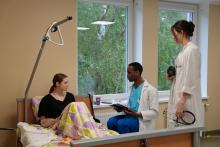
Photos: Courtesy of METC
In June and July this year, the Medical Education Technology Centre (METC) at Rīga Stradiņš University (RSU) hosted a pre-hospital placement in a simulated hospital environment. From 2 to 13 June, third-year international Medicine students took part, followed by Latvian students from 2 to 8 July, who participated in this type of study process for the first time.
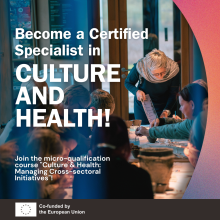
Rīga Stradiņš University (RSU) invites cultural, health, and social sector professionals from across the Baltics to apply for a new and innovative micro-qualification course: “Culture and Health: Managing Cross-Sectoral Initiatives.” The course runs from September 2025 to June 2026 and is part of a wider Erasmus+ project titled Inclusive Wellbeing Through Arts and Culture in the Baltics (WITAC).

European Institute of Innovation and Technology's Health Knowledge and Innovation Community (EIT Health) invites students, early-stage entrepreneurs, researchers, and healthcare professionals to take part in a free introductory course on early health technology assessment. This course is a great opportunity to gain practical knowledge on how to evaluate ideas and development plans before taking them to market, helping innovators save resources and increase the impact of the innovation.

Photos: Courtesty of Artūrs Kurbatovs