At Rīga Stradiņš University (RSU), we recognise that academic success is deeply intertwined with well-being and social connections. Our social support services are designed to foster a nurturing environment where students can thrive both academically and socially. We are committed to providing comprehensive support that meets the diverse needs of our student community.
Our social support services include:

Between 2017 to 2024, students from the Rīga Stradiņš University (RSU) Faculty of Communication (now the Faculty of Social Sciences) went on several expeditions to visit Latvians in Iceland, together with their lecturers. The content of the exhibition is based on the material from the first and the last expedition (so far), which took place in the summer of 2024. Some of the protagonists in the exhibition, whom we met seven years ago, have told their Iceland stories from two different points in time. Some have changed - grown up - in that time.
The Rīga Conference is an annual meeting of regional and international experts in foreign policy and defence, academics, journalists, and business representatives, promoting the discussion and assessment of issues affecting the transatlantic community. Convening in the Latvian capital since 2006, the conference has become a recognised annual tradition in the region.
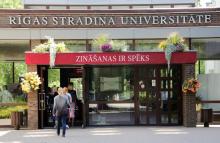
The Ombudsman of the Republic of Latvia has invited students, lecturers and staff at various universities to participate in a survey on experiences of sexual harassment in higher education institutions in Latvia.
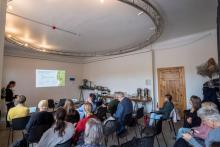
On 3 October, Āgenskalns Market hosted the international symposium Wild Things on wildlife research, organised by Tenured Professor Miķelis Grīviņš and Senior Researcher Jana Kukaine from the Rīga Stradiņš University (RSU) Faculty of Social Sciences. The symposium highlighted current trends in wildlife research from the perspectives of the humanities, social sciences and natural sciences, demonstrating the diversity of approaches and views, as well as common interests, and laying the foundations for future collaborations.
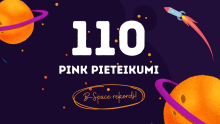
At the beginning of October, the Rīga Stradiņš University (RSU) business incubator B-Space will launch its annual pre-incubation programme PINK. This year, a record number of 110 students and employees from several Latvian universities have applied.
Have you ever wanted to create your own 3D model? The Rīga Stradiņš University (RSU) business incubator B-Space invites all students and staff members from RSU and the Latvian Academy of Sport Education (LASE) to participate in a free creative workshop on 3D technologies.
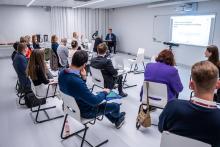
On 2 October 2024, the sixth session of the School of Junior Academics began at Rīga Stradiņš University (RSU). 26 lecturers from 11 departments will begin their studies at the School.

The RSU Sports Club is organising a hike on 12 October. Come along and bring your family and friends!
On 25 October 2024, from 15.00 to 17.00, Visiting Prof. Narūnas Porvaneckas (Vilnius University, Medical Faculty/ Republican Vilnius University Hospital, Center of Orthopaedic and Trauma surgery, Lithuania) to Rīga Stradiņš University (RSU) will give a lecture in Grindeļa lecture room, 16 Dzirciema iela.
Topics