
Department of Neurology and Neurosurgery
An academic department that combines modern studies, patient-centred clinical experience and innovative research into the diagnosis, treatment, prevention and rehabilitation of diseases of the nervous system.
The department’s main goal is to prepare highly qualified, responsible healthcare professionals with an interdisciplinary approach. At the same time, the department actively promotes the development of neuroscience both in Latvia and internationally.
Professor Guntis Karelis heads the Department. Its lecturers are outstanding clinical professionals whose daily work in Latvian university hospitals ensures a close link between modern theoretical education, evidence-based medicine and clinical practice.
Studies and professional development
The Department provides comprehensive study content in neurology and neurosurgery for future doctors and other healthcare professionals. It also actively participates in the training of residents and the continuing professional development of medical practitioners. Training is provided in the following study programmes:
- Medicine;
- Physiotherapy and Occupational Therapy;
- Prosthetics and Orthotics and Speech and Language Pathology;
- Nursing.
Special attention is paid to in-depth neurological examination and topical diagnosis. Students learn to interpret clinical, laboratory, neurophysiological and imaging data and develop the skills necessary to prepare well-founded treatment and rehabilitation plans. The analysis of clinical cases and interdisciplinary cooperation form the basis for developing students’ professional judgement, communication skills and ability to make safe decisions.
Clinical practice and continuing education
The Department’s study, clinical and research activities are carried out in close cooperation with Latvian university hospitals, various medical institutions, rehabilitation centres and research partners. Lecturers’ direct involvement in daily patient care allows the latest diagnostic and treatment guidelines to be integrated into the study content. The Department regularly organises educational events, including courses, seminars, thematic schools and conferences for neurologists, neurosurgeons, family doctors, residents and other healthcare professionals.
Long-term strategic directions
To ensure excellence in teaching and research, the Department has set the following strategic directions:
- Development and implementation of modern study content in neurology and neurosurgery at all levels of healthcare studies;
- Strong links between academic education and clinical practice, with an emphasis on patient safety and evidence-based care;
- Targeted supervision of research by students, residents and doctoral students, and strengthening academic succession;
- Continuous improvement in the quality of diagnosis, treatment, rehabilitation and care based on clinical data and patient experience indicators;
- Extensive use of digital learning solutions, simulations, remote professional collaboration and innovative health technologies;
- Active public education on brain health, the prevention of neurological diseases and early recognition of symptoms.
Research and innovation
The Department promotes clinical, translational and interdisciplinary research, actively involving faculty, students, residents and partners. Research integrates clinical observation, laboratory and imaging methods, neurophysiology, biomarker analysis, as well as health data and patient-reported outcomes. The results are practically used to update the study content, as well as to improve diagnostic and treatment approaches, rehabilitation and patient care quality.
The main research directions in neurology
- Cerebrovascular diseases, acute stroke care, secondary prevention and neurovascular diagnostics;
- Neuro-immunological and demyelinating diseases, including multiple sclerosis;
- Epilepsy and other paroxysmal nervous system diseases;
- Movement disorders, cognitive disorders and neurodegenerative diseases;
- Neuromuscular and peripheral nervous system disorders;
- Headache, pain of various types in neurology and dizziness;
- Neuroinfections and systemic diseases causing nervous system damage;
- Neuro-rehabilitation, functional outcomes, quality of life and long-term follow-up.
Main research directions in neurosurgery
- Trauma to the head and spinal cord, neurointensive care and its outcomes;
- Cerebrovascular pathology and modern neurovascular treatment approaches;
- Central nervous system tumors, neuro-oncology, molecular neuropathology and specific biomarkers;
- Hydrocephalus and cerebrospinal fluid circulation disorders;
- Spinal, spinal cord and degenerative spinal diseases;
- Compression of peripheral nerves and other neurosurgical diseases.
Interdisciplinary research areas
- Complex integration of neuroimaging, neurophysiology and laboratory data in disease diagnosis and prognosis;
- Research into diagnostic, prognostic and therapeutic response biomarkers;
- Monitoring of health care quality, patient safety, analysis of care pathways and use of real clinical practice data;
- Digital health, big data analysis of clinical data and evaluation of the effectiveness of the latest technologies in neurosciences.
International cooperation and foreign expertise
The international scope and scientific capacity of the chair are significantly strengthened by visiting professor, Prof. Dr. med. habil. Christian Mawrin. The professor heads the Institute of Neuropathology at Otto von Guericke University in Magdeburg and is a world-renowned expert in neuropathology and molecular neuro-oncology.
His scientific expertise covers molecular mechanisms of intracranial tumors, malignant progression and invasion processes, tumor metabolism and microenvironment, research of prognostic and therapeutic biomarkers, as well as experimental models of meningiomas. Professor Mavrin's involvement significantly enriches the study content in neuropathology and neuro-oncology and opens up broad opportunities for joint research projects, high-level scientific publications, as well as valuable exchange of academic experience.
Student research and public engagement
The Department actively supports the early involvement of students in research, the development of scientific papers and participation in scientific conferences. The RSU Student Scientific Circle in Neurology and Neurosurgery is an important platform where students can expand their theoretical knowledge, develop practical skills and get to know the professional and research opportunities of their specialty in depth.
In addition to academic work, the faculty members and students of the department are actively involved in educating the public about brain health. One of the most prominent examples of such an initiative is the neuroscience olympiad Latvian Brain Bee, which promotes the interest of high school students in the human brain, neuroscience, and medicine in general.
Networking and partnerships
The department builds and maintains a strong network of collaborations, working together with Latvian and Baltic professional societies, leading university hospitals, rehabilitation and scientific institutions, patient organisations, as well as international professional organisations. Active collaboration is maintained with leading universities and their clinics in Estonia and Lithuania, as well as with high-level international experts and researchers from other European countries. At the national level, partnership with Latvian university hospitals and the National Research and Innovation Institute (NIRI) is essential. At the European and global level, cooperation with key industry organisations is particularly important, including the European Academy of Neurology (EAN), the European Association of Neurosurgical Societies (EANS), and the World Federation of Neurosurgical Societies (WFNS).
Management and staff
Professor Guntis Karelis chairs the department. A highly qualified, multi-profile team of specialists ensures the department's academic, clinical, research, and organisational work daily.
Employees

Related news
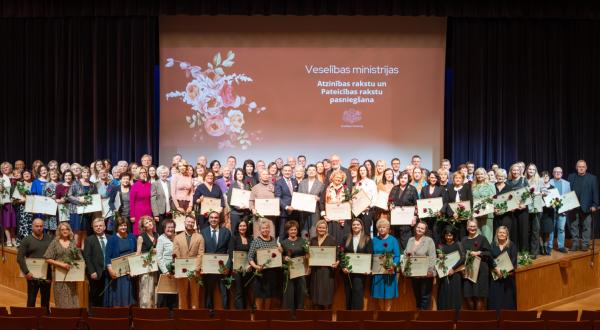 RSU employees receive Ministry of Health awards For RSU Employees, Recognition
 Latvia wins ninth place at international neuroscience competitionOlimpiādes, For High School Students
 RSU invites secondary school students to participate in the neuroscience olympiad Latvian Brain Bee 2024For High School Students, Traditional Events
 7th Neurology Winter School Has ConcludedProfessional Development, Neiroloģija, neiroķirurģija
 High-school Students from Rēzekne and Riga Triumph in the First Latvian Brain BeeFor Students, For RSU Employees, For High School Students, For Teachers


