Can we live right in a wrong world? Dzintra Atstāja at the Latvian Circular Economy Forum


Photo: Courtesy of the Latvian Circular Economy Forum
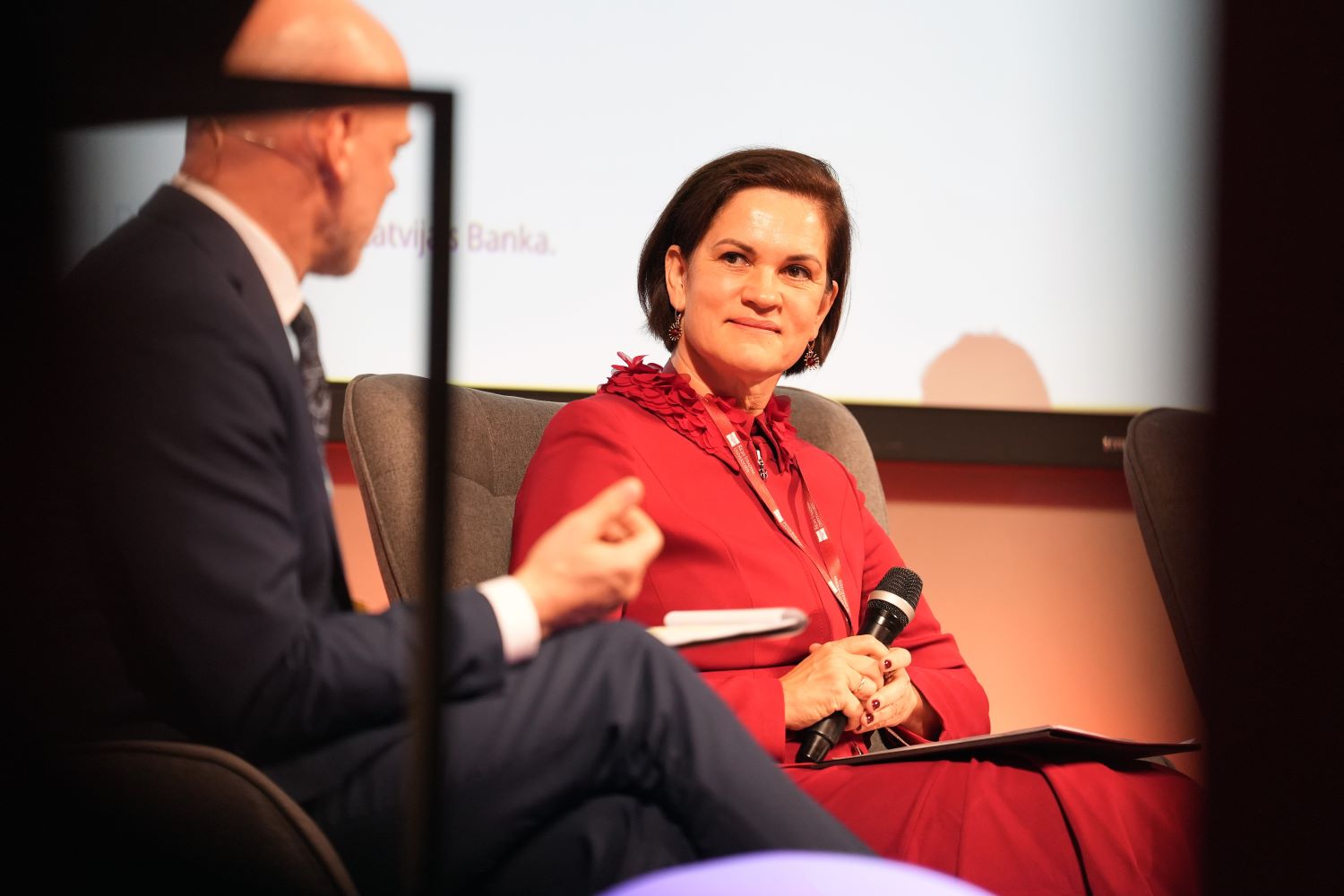
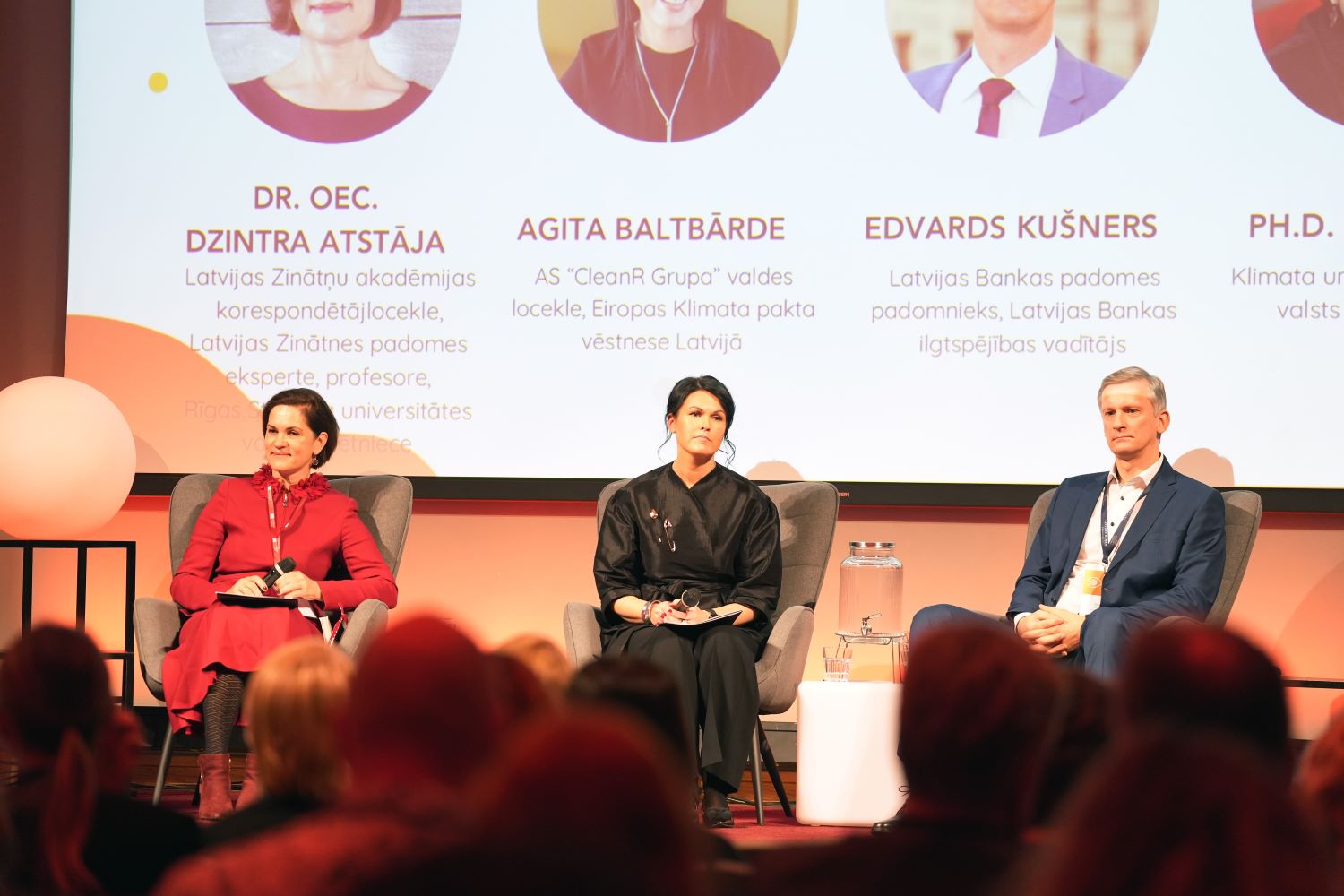
On 5 November 2025, the Latvian Circular Economy Forum took place in Riga, bringing together entrepreneurs, policymakers, scientists and representatives of the creative industries to discuss the implementation of circular economy principles in Latvia. The aim of the forum was to stimulate cooperation between the private, public and non-governmental sectors, as well as to promote the exchange of experience and creation of new ideas. Dzintra Atstāja, Lead Researcher at the Rīga Stradiņš University (RSU) Faculty of Social Sciences, spoke at the forum and highlighted important issues about sustainability, well-being and the circular economy principles. She called for reflection on systemic changes, collective responsibility and the need to redefine economic and prosperity goals in order to ensure the sustainability of both people and the planet.
Sustainability – a form of collective responsibility
At the forum, in her speech “Vai varam dzīvot pareizi nepareizā pasaulē un nodrošināt labklājību?” (Can we live right in a wrong world and ensure prosperity?), Dzintra Atstāja posed the question of whether it is possible to live right in a system that is still structurally wrong. The researcher emphasised that the interest, success stories, and collaborations of today’s forum participants demonstrate their desire to make the world a better place, starting with oneself and introducing changes at various levels – at home, in business, in a community, in a municipality, and in the state.
Sustainability cannot be a form of individual guilt or heroism – it is the collective responsibility of the system.
Dzintra Atstāja criticised the approach of shifting responsibility for sustainability to individual consumers, emphasising that majority of emissions and resource consumption is generated by manufacturing, energy, and transportation, not by individual consumers.
Surpassing the planet's capabilities and redefining the concept of well-being
Data show that humanity is currently living on ecological debt – this means that human activity has altered natural systems to such an extent that their ability to regenerate is severely limited. The consequences may manifest as more frequent natural disasters, shortages of water and food, climate instability, and a biodiversity crisis.
Atstāja called for redefining the concept of well-being – shifting from consumption and GDP growth to well-being that ensures the safety, health and ecosystem services of both people and the planet. Human well-being cannot be reduced only to economic indicators; it is closely linked to the benefits provided by nature – clean air, water, fertile soil, carbon sequestration, and recreational opportunities.
The goal is decarbonisation, instead of growth
The researcher emphasised that the goal of the circular economy (CE) is not to accelerate economic growth, but to decarbonise and dematerialise the economy while ensuring human well-being. CE is not just a more efficient linear economy – it is a structural approach in which the value of materials is preserved while the volume of consumption is reduced.
She explained the paradox of “decoupling” - even relative decoupling (growth without a proportional increase in resource consumption) cannot compensate for absolute consumption on a global scale.
Although the economy becomes “greener” per unit of GDP, the overall pressure on the planet continues to increase.
Sharing responsibility and consumer protection
An important point Atstāja made is that the consumer should not be the only “filter” for sustainability. Responsibility must be distributed across the entire value chain: manufacturers must consider design and material choices, institutions must ensure legal framework and information quality, while consumers provide demand signals rather than act as the main guardian. She pointed to the abundance of information and insufficient transparency on sustainability issues, highlighting that consumers should be protected by the system, not expected to support the system through their conscientiousness.
Related news
 RSU students explore study and research opportunities in GermanyFor RSU Employees, Research, For Students