Donations as future investment. How RSU Foundation builds sustainable support for students


Donating to higher education is often seen as a gesture of goodwill; however, it is supported by a carefully designed system, long-term planning, and a scientifically grounded approach based on trust, transparency, and human relationships.
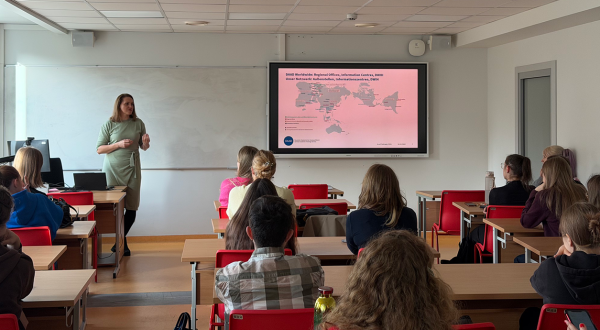
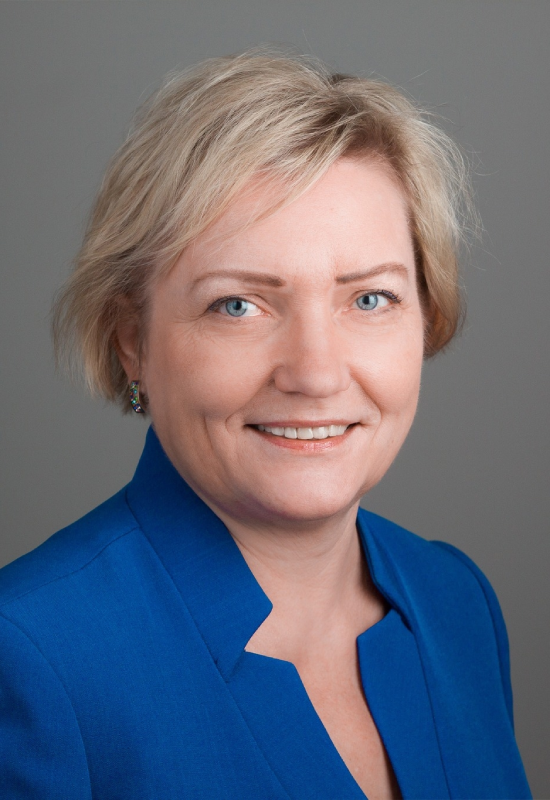
The philanthropy practiced by the Rīga Stradiņš University (RSU) Foundation is becoming a conscious and measurable investment in the future of students, research, and the growth of society as a whole. Laila Kundziņa (pictured), Executive Director of the RSU Foundation, tells us about the foundation’s goals, the role of donors, her personal path to philanthropy research, and future plans.
Why do you believe RSU needs its own foundation, and what do you see as its main role in the university's daily operations and development?
Foundations like this have long been an integral part of all major and prestigious universities across the world. They are an essential tool for attracting donations for student scholarships, research projects, and various development initiatives. A significant benefit is that donors, both individuals and companies, are also eligible for tax incentives, making donations not only an emotional and meaningful gesture but also a rational choice.
What opportunities for donating does the RSU Foundation currently offer, and how are these funds allocated?
Currently, the RSU Foundation is running two active fundraising campaigns. One is dedicated to supporting Ukrainian students and researchers, and it is implemented in cooperation with the platform Ziedot.lv, while the other campaign is being carried out in partnership with the platform Mobilly and is intended for student scholarships. These campaigns offer the opportunity to make regular monthly donations of five, ten, fifteen euros, or any other amount of your choice.
We especially encourage RSU alumni and friends to take advantage of this simple, yet highly meaningful form of support.
The foundation also works closely with patrons. Could you share a compelling example that highlights the importance of this cooperation?
The foundation cooperates with patrons not only in Latvia, but also abroad. Patron Filips Brasliņš from Australia is a particularly meaning and inspiring example. His father bequeathed 50,000 euros for student scholarships in his will, with the intention that the amount be distributed over ten years, with two scholarships awarded each year.
This year, after evaluating three very strong candidates, the scholarship committee decided to support all three candidates, giving the students the opportunity to focus on their studies rather than look for additional employment.
Which target group does the foundation most strongly encourage to become donors, and why is this group particularly important?
As I mentioned, our primary target audience is RSU alumni, both as private individuals and as representatives of various companies. Many wealthy and influential people are RSU graduates, and supporting current students means supporting the future of your university, while maintaining a lively connection with your alma mater.
How do you assess donor activity, and is it even possible to measure this?
Of course, every foundation has its own set of indicators based on accounting data, which makes it possible to evaluate the situation objectively. Personally, I take particular pride in having recently earned a doctoral degree, as my doctoral thesis was devoted to fundraising trends at state-funded higher education institutions, analysing both Lursoft data and Ministry of Finance databases. One of the objects of the study was also the RSU Foundation, whose development potential is very high, compared to other foundations.
In the field of donations and philanthropy, is goodwill enough, or is professional education and a research-based approach also necessary?
Experience at philanthropic organisations at universities across the world varies greatly, yet there are clear basic principles that are similar regardless of geography. One of the most important is that, before asking for a donation, universities and their foundations need to establish sincere and loyal relationships with their alumni, regularly keeping them informed about the university’s development and future plans. Another golden rule is transparency, which means that donors must be fully confident that their contribution is used precisely for its intended purpose, and that there is consistent feedback between the donor and the university.
What is the foundation's vision for the future and its main goals for the coming years?
In the future, we aim to work much more closely with the RSU Communications Department and actively use social media, where the university already has a wide audience to share about scholarship recipients, new donors, and the foundation's achievements, while also using new technologies for fundraising.
Our ambitious yet measurable goal is that within the next three to four years, one in every ten RSU alumni will make a monthly donation.
What role do the foundation’s volunteer ambassadors play in this process?
Two volunteer ambassadors will participate in this campaign: RSU alumni Kristīne Mennika from the management team at the company Bite, and physician Kārlis Rācenājs. Their task will be to engage in dialogue with a wide audience, share their experiences, and explain why it is important to first get to know the university and the opportunities it offers, and only then make an informed decision about donating.
There are certainly many RSU alumni and other friends of the university who may still be considering whether and when to start donating. What would you recommend to them?
I would emphasise that donating is not about finding the right amount or the perfect moment, but about one’s relationship with the university. I would also highlight that even small, regular contributions can make a meaningful difference to a student’s everyday life and future. Even just five or ten euros a month can give a student the chance to focus on their studies rather than worry about working extra, while for the donor, it is an opportunity to feel connected to their university and be confident that their contribution is used transparently and meaningfully. You can start donating today, without waiting for a special moment, and every step in this direction is an investment in our shared future.