
Elizabete Ārgale, RSU Alumnus of the Year 2024: It’s not enough to heal– what matters is how the patient feels


Writer: Linda Rozenbaha, RSU Public Relations Unit
Photo: Courtesy of RSU and Elizabete Ārgale
To launch a large-scale study on childbirth and postnatal support*; to train a new generation of midwives and medical scientists; to care for women during their most sensitive moments – pregnancy, childbirth, abortion decisions, recovery from illness; to educate society about health issues; and to be an inspiring professional, mother, and wife – these qualities describe the RSU Alumnus of the Year 2024, Elizabete Ārgale (née Pumpure), doctoral student and lecturer at RSU, and gynaecologist and obstetrician at Veselības centrs 4 and Ogre District Hospital.
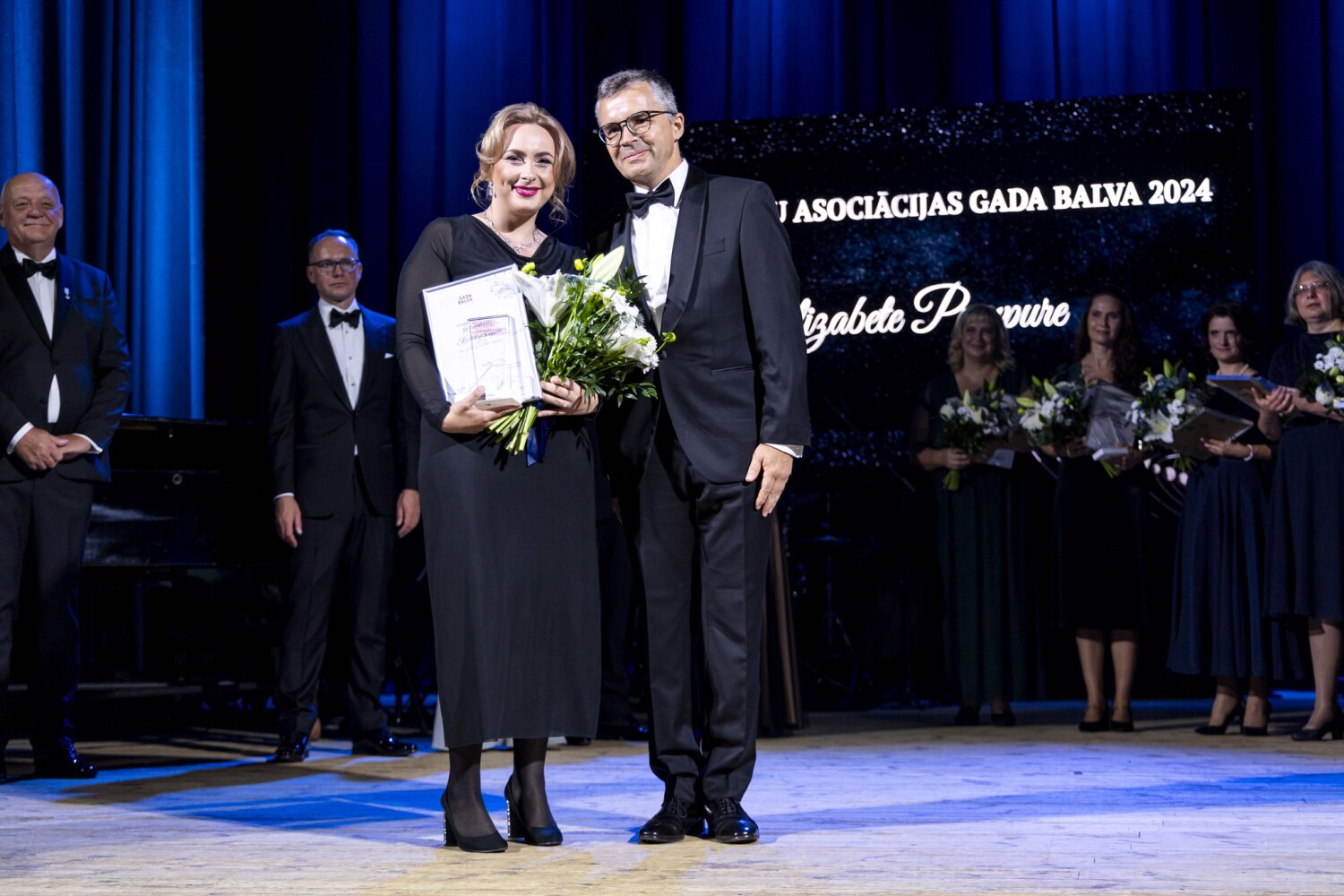 RSU Alumnus of the Year 2024, Elizabete Ārgale (née Pumpure) receiveing her award from the Chair of the Alumni Association, Vice-Rector for Academic Affairs Dins Šmits
With the launch of the study Ārgale coordinated in Latvia, the topic of emotional intelligence and violence during childbirth were brought to the fore, highlighting the doctor’s modern approach to medicine. In this approach, it is no longer solely only the outcome that matters (whether or not a patient is cured, or whether or not a certain medicine effective), but also the patient’s emotional wellbeing.
In the interview, Ārgale speaks about the rewarding aspects of being both a doctor and a researcher, as well as the challenges and the deeply personal journey that led her to medicine. She recalls a pivotal moment at the end of secondary school, when she was expecting her daughter and everything seemed to fall apart. Only recently did she fully realise how significant her gynaecologist’s role had been at that time. His wise outlook and unwavering support gave her the strength to believe that everything would be all right. Today, she hopes to offer the same reassurance and support to other women.
I remember the day you received the RSU Alumni Association’s Alumnus of the Year award — you told me it felt like proof that hard work truly pays off. And you really do work hard, across so many different fields.
I have always had a sense of mission to help others, and when I see that something needs to be improved, I understand that I have to get involved and do it. However, it is clear that, over the long term, it is very difficult to continue working without recognition. Of course, I have more often received kind words from patients or students, but
it was something truly special to realise that my work has also been recognised by the University – it is an additional source of motivation.
I will be honest: there have been breaking points, when it has been really difficult to achieve what I intended to do. I felt this particularly during my residency, when working in a hospital became a serious challenge. We had many daily contact hours with patients, and all this happened during a pandemic, when the emotional strain was particularly heavy. Research work was practically impossible at that time, and there was no shortage of responsibilities at home. My teenage children needed a lot support in their studies, which were then held completely remotely. It was a period when it seemed that due to the circumstances I could no longer do what motivated me to get up every morning and carry on... I gradually adapted to the new rules and found ways to keep myself busy. I conducted my research remotely using questionnaires, I learned about the tools and possibilities of remote environment, I had to trust those around me and ask for support with my children’s education while I was at work in the hospital.
In the second year of COVID-19, you launched an important study for Latvian women and families, focusing on the assessment of support during childbirth and the postnatal period, and became the national coordinator for the World Health Organization’s study in Latvia. What does it take to become a pioneer of such a significant study in your country?
In 2021, there was no real discussion in Latvia about childbirth experiences in general; we had only heard individual stories about some women’s bad experiences.
I attend a lot of international congresses and educational events, and I always get to meet everyone and ask questions – it is a great way to broaden your horizons! After that I follow foreign colleagues on social media. That is how I came across a Facebook post by a Slovenian colleague, inviting women in Slovenia to take part in a study on childbirth experiences. I thought – oh, what a brilliant idea, because how else could we get a glimpse of what happens to a woman behind the doors of the delivery room than by asking the woman herself? When I asked her, I found out that any country could participate in the study. And you did not have to be a scientist to become a coordinator – midwives, doctors, and NGOs could apply. The key requirement was that the specialist was ready to translate the questionnaire and distribute it. As it turned out, I was the first to get in touch, and they quickly agreed to let me join. I then discussed the idea with the Latvian Association of Gynaecologists and Obstetricians and its board representative, RSU Professor Dace Rezeberga. We agreed that it would be best for Latvia to be represented by a neutral organisation – a university – since the study also involves care provided not only by obstetricians, but by midwives, anaesthetists, and other medical professionals during childbirth.
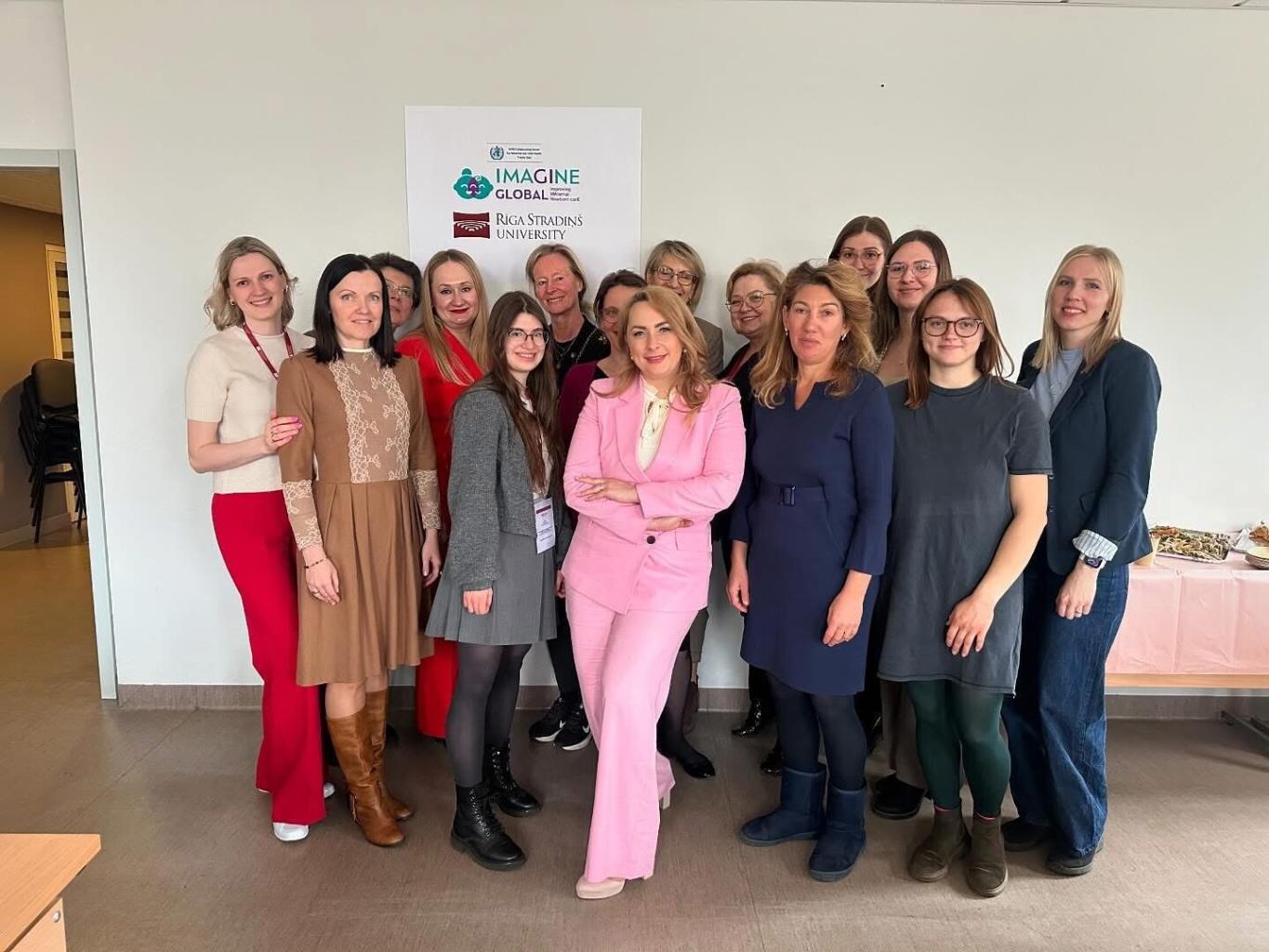
With peers from Latvia, Italy, Poland, and Lithuania during RSU Research Week 2025, where the results of the childbirth study were presented
In June 2021, we launched a survey, and a year later, the media gave a lot of attention to the topic of childbirth experiences, especially violence.
The media created an uproar and many expectant mothers felt very worried. Fortunately, at that point, I already had unpublished research data that I could share.
This data reflected that most women are satisfied with their childbirth experience and do not suffer from violence in care. At the same time, none of the episodes of violence that some women do experience during childbirth can be justified. I believe we managed to reassure the public to some extent and also raise awareness of issues such as recognising signs of violence. Most importantly, there have been notable improvements in this area since then. We repeated the study, and the initial data shows that instances of violence have decreased. We are still in the process of calculating the final percentages.
Raising the topic also led to specific practical steps. For example, education for maternity care providers in offering emotional support has become more active, and midwives will most likely be more involved in longer postnatal care, specifically in the emotional aspect...
Yes, all the topics received a lot of attention. I have no doubt that many improvements would also have been made thanks to global trends, including European trends, but the study and raising of the issue in society was an additional impetus for change.
My greatest achievement is that now, four years after the introduction of the study in Latvia, my questionnaire has been adapted by the Centre for Disease Prevention and Control (SPKC), and I can rest assured that the experiences of childbirth and postnatal care will continue to be monitored.
Each medical treatment institution will be able to assess the results individually, while at the national level, the data will be analysed annually, with specific improvements recommended where necessary. I am very pleased with what has been achieved so far. I still have work to do on the publications, as I have chosen this research as the topic of my doctoral thesis. I am definitely interested in research that helps to identify which political or national changes are needed in healthcare.
The SPKC will send each hospital information with research data, including results from the study on that specific healthcare institution. Initially, we encountered some resistance from certain hospitals. There could have been concerns that the information would be made public and used to “point a finger” at those performing less well. That was never our intention, however, rather, this is a valuable opportunity to identify areas for improvement and to highlight what is already being done well.
Let us take a step back in your life story — how did you come to choose medicine?
It was not my first professional ambition. I have always considered myself a very communicative person, with strong language skills and a desire to travel. That is why, when I started secondary school, I decided that I wanted to work in international relations.
I worked hard on scholarship applications, took the required tests, and came very close to being invited for an interview for the International Relations programme at Boston University. However, the birth of my daughter at the end of secondary school changed the course of my life.
That major turning point made me realise that I would not be able to “roam the world” for some time.
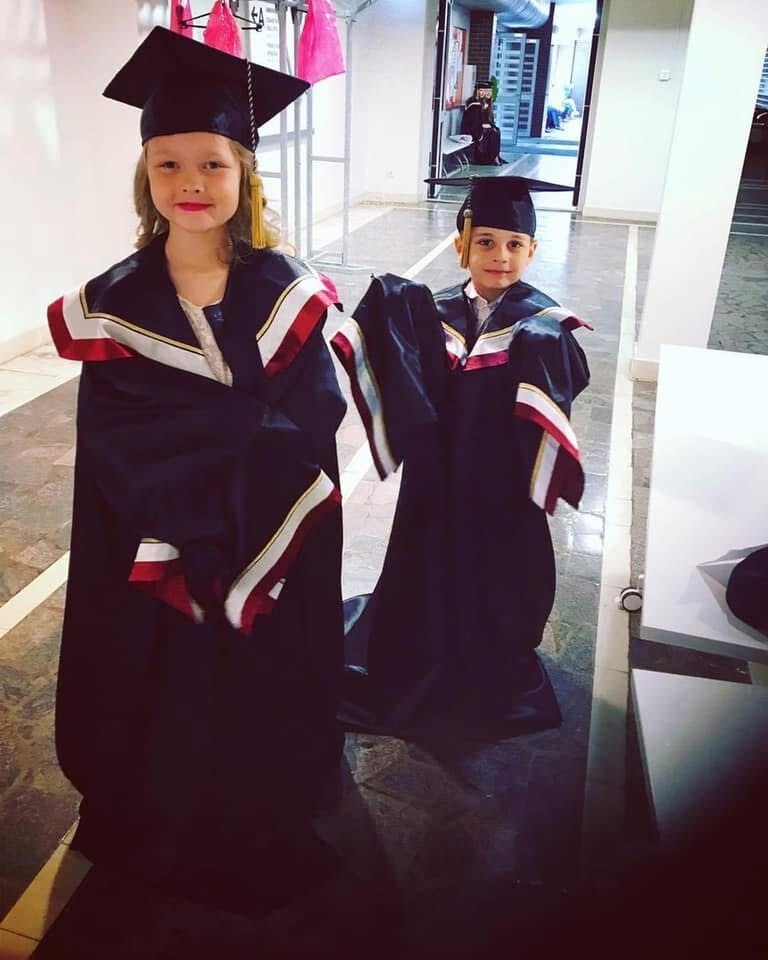 Elizabete Ārgale’s children Grēta and Aksels at her first graduation from the RSU Faculty of Medicine
That is why I chose to study medicine. I was good at the natural sciences, and I felt that becoming a doctor would offer a certain level of stability. At the time, I may not have been fully aware of my empathy and desire to help others. It was not long, however, before the international side of medicine revealed itself. I was already active during my studies, engaging in research, presenting my findings, and communicating with international professors, all of which had a significant impact on the direction of my career.
As a student I was very active – I volunteered in hospitals, including oncology and palliative care units, and it was always important to me that my work helped people. I also became involved in scientific work during my medical studies, and I particularly enjoyed research where I felt that the results had a real-world impact.
During my first year of residency at the university, I organised the first Eastern European residents’ conference on gynaecology and obstetrics. Shortly afterwards, I enrolled at Riga Business School, where I earned an MBA in Business and Organisation Management. While organising the conference, I encountered numerous financial issues, contracts, and organisational challenges – I was essentially learning on the job, which motivated me to develop my management skills at a professional level.
In any case, the implementation of various ideas and my involvement in projects that I initiated would certainly not have been possible without Prof. Dace Rezeberga and a supportive member of the department at the time — Ronalds Mačuks, who was an important mentor for me and helped me take my first steps in research.
How did you ultimately come to choose gynaecology and obstetrics as your specialisation?
I was really drawn to the different specialisations. I quickly realised, during my second year of studies, that I did not want to just sit in front of books and take notes. Being from Valmiera, I volunteered once a week at Vidzeme Hospital with a surgeon. I got to “check tummies” and assist in surgeries. It reignited the zeal and enthusiasm for medicine that had been dulled by the theory-heavy nature of the studies.
In the fourth year, my studies were so intensive that I could not go to Valmiera, and I was recommended gynaecologist Ronalds Mačuks at the Oncology Centre of Latvia, where I could volunteer in surgery.
This job gave me insight into women, because, of course, I not only participated in operations, but also spent a lot of time talking to cancer patients.
The staff often do not have time to explain everything to the patients, but as a volunteer I had time to explain the course of the disease and treatment and to discuss philosophical topics about life and death. It was during this period that I realised that gynaecology and working with women would be my choice. There were times when I walked into a hospital room and there were five or six women and the mood in the room was depressing. That is understandable since they had serious diagnoses. However, in speaking with each of them, I conveyed the feeling that there is hope, and the women understood that they still have opportunities and life ahead of them, and that by dwelling on sad thoughts, they are actually robbing themselves and their loved ones by avoiding communication. Moreover, cancer can very often be cured nowadays.
At that moment, I realised how much influence a doctor who talks and engages in meaningful dialogue can have on a person’s life. Clearly, we cannot always perform such miracles, especially when we see a new patient every 20 minutes. I do believe there is a place in medicine for psychologists or assistants, as well as representatives of NGOs who offer support through talking and listening.
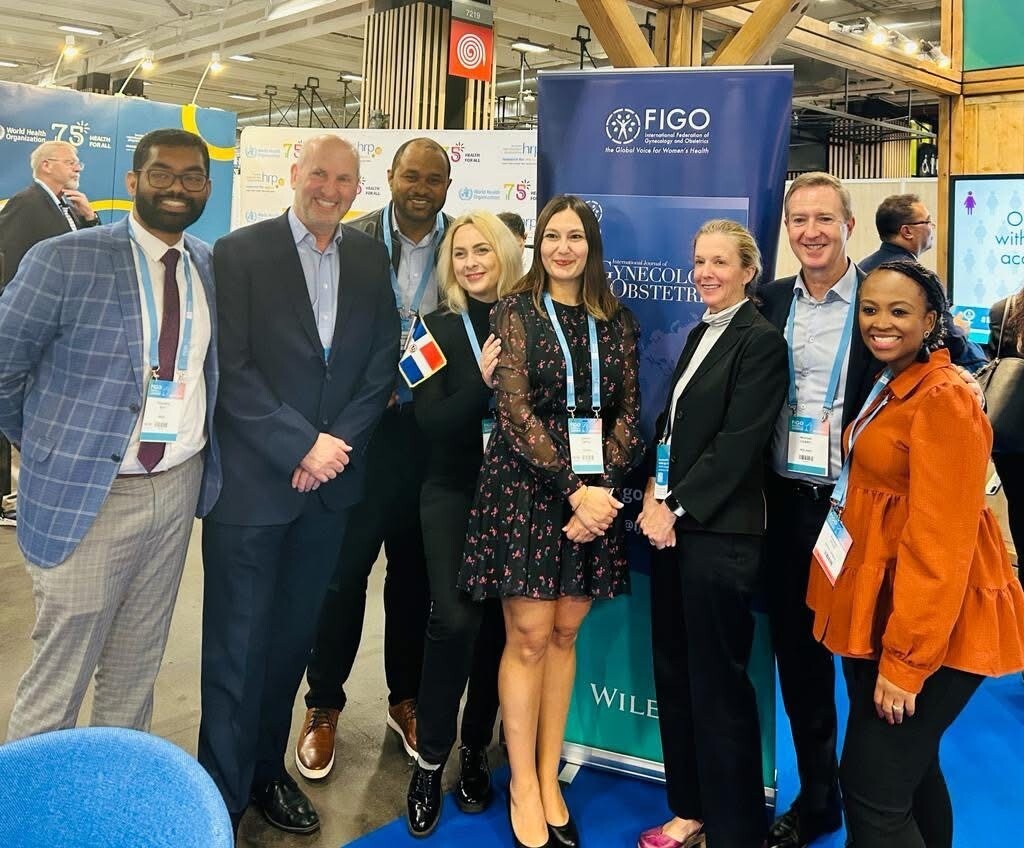 Ārgale (from the left) with the International Federation of Gynecology and Obstetrics working group, with whom she developed recommendations on obtaining informed consent
I am glad that in my practical work in the maternity ward at Ogre District Hospital (I kept my shifts because it would be strange to study maternity care without actually participating in it myself!), there is an opportunity for longer consultations. It is not just women who come here to give birth; patients also include those suffering from losing babies through miscarriage, those deciding to terminate a pregnancy, those being treated for inflammatory conditions that threaten their fertility, or those who have experienced physical or sexual abuse. Having a baby, becoming pregnant, having an abortion, giving birth, or choosing not to have children — women very often seek support in any decision related to these matters. It is crucial to receive support when a woman wants to continue a wanted pregnancy or is facing health issues. It is also completely normal not to want children, although this is a topic rarely discussed in society.
I only recently realised the significant role my gynaecologist played in my life.
When I was 18 and pregnant with my daughter, the circumstances around me as a young mother were incredibly difficult — there were conflicts in the family, and the baby’s father left me. It was always the appointments with my gynaecologist that lifted my spirits and gave me hope that everything would be alright.
When you are young and having your first child, it can feel like your whole world has fallen apart, and you have no experience to guide you. But the support of a doctor, as a figure of authority, means so much. I have only recently realised that perhaps when I chose to help other women, it was because I wanted to offer them the same support I once received.
How did you come to specialise in gynaecology? I imagine your main motivation was to support women through the different situations they face in life?
There are two main areas of gynaecology – surgery and obstetrics. Initially, I was more inclined towards surgery. Again, a change of circumstances in my life determined that I worked at the Riga Maternity Hospital during my residency, where I focused more on developing my obstetric skills rather than surgical ones.
I always keep in mind that you should not resist going with the flow.
I believe this approach has served me well, as I am now more focused on obstetrics than on the surgical path I originally envisioned. I do know, however, that if I decide to concentrate more on surgery in the future, I will be able to do so.
Yes, I was convinced that I could work in any field of medicine, as long as I was able to make a practical contribution to medicine and patients, and use my empathy to help others. To be honest, my empathy sometimes makes my work very challenging, because during consultations I often ask patients not only about their symptoms but also about how they are doing in life, at work, and in their relationships. Sometimes the answers are quite shocking, and I find myself wondering why I asked in the first place, because people are often in very difficult situations where there is little I can do. It can be upsetting, but with experience I have learned to leave these feelings at work. On the other hand, patients can feel moved, and it often turns out that I, as their gynaecologist, am the only person who has ever asked them how they felt during such a difficult time in their lives. It is a sad peculiarity of our society that we do not care enough for one another…
You pass on your knowledge and skills to RSU students. What are our students like?
Working with students is my passion, and I am very honoured to be the head of study subjects for midwives, as well as a mentor for future gynaecologists and scientists, in both the Latvian and English gynaecology groups.
I was a student myself until quite recently, so I can compare. We were shyer, more timid, whereas now students are more demanding and ask questions more openly. I am happy about this because I am confident that I can dispel doubts or provide information. Sometimes there are awkward questions, where the answer seems obvious to me, but students have unlimited freedom of thought, and I have to think carefully about how to respond. For example, I was once asked why gynaecology teaches that blood pressure should be measured on both arms—surely, that is a topic for cardiology. At first, the question seemed incomprehensible, but then I was able to explain that in modern medicine, a doctor no longer works with just one organ system—they have to see the person as a whole.
We need to keep telling and reminding students that patients are not just diagnoses or the health or illness of an organ, and that our division into specialties is relative in most cases.
Secondly, it is no longer sufficient to simply know whether a patient has been cured and understand the effects of medicinal products. Today, it is very important how the patient feels emotionally about the care they receive and whether they understand everything. They are human beings, just like all of us.
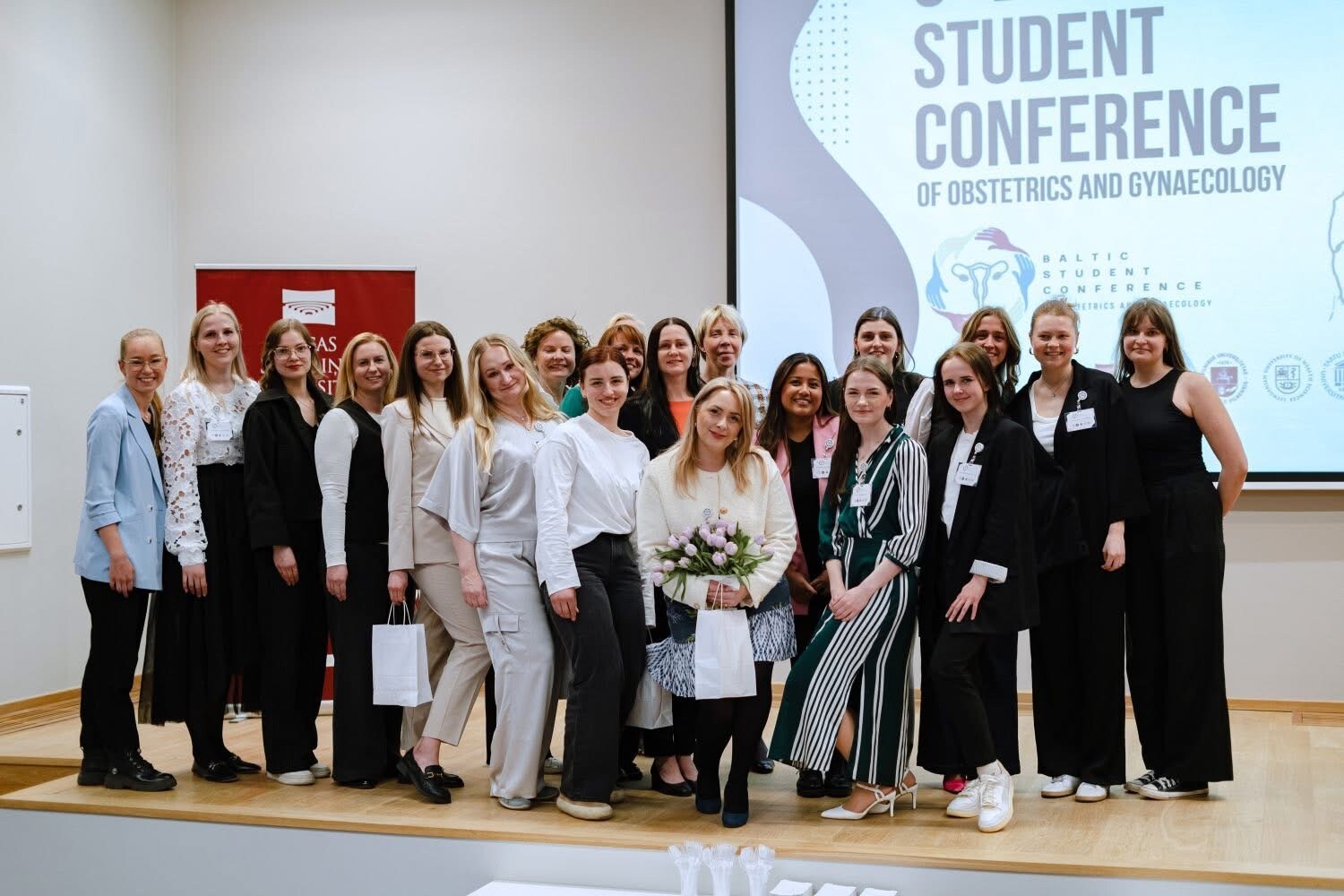 In May 2025, at the Baltic Student Conference of Obstetrics and Gynaecology, where Elizabete Ārgale (front, centre) served as a mentor
It is also very interesting to develop potential research ideas during classes. It is difficult for a specialist who has been working in the field for several years to think of something new, but students complement my contribution as a researcher and lecturer.
You have also raised the issue of doctor’s being overwhelmed on your social networks and openly shared that you gave up a job to avoid burnout and protect the quality of your work. Currently, as a doctoral student, lecturer, and practicing physician, how do you manage to balance your workload to ensure that all your efforts have a positive impact?
I noticed that when I pushed my body beyond its limits, I started to get sick. I want to do a lot, and I know I can do it, but my physical body gets exhausted. Now, I try not to work with patients for more than 160 hours a month. If there are extra hours, calls outside office hours, and so on, then I do not have the creative or mental energy left to put my visions on paper, plan research projects, or inspire students.
When I am tired, I think about how to recharge, and have found that walking is the best way for me.
As doctors and lecturers, we have to plan our own workload. You can blame your employer or financial reasons, but ultimately, the amount of responsibility we take on is our own choice. We are no longer students with work limited by specific deadlines. As professionals and adults, we are the ones who say “yes” to everything.
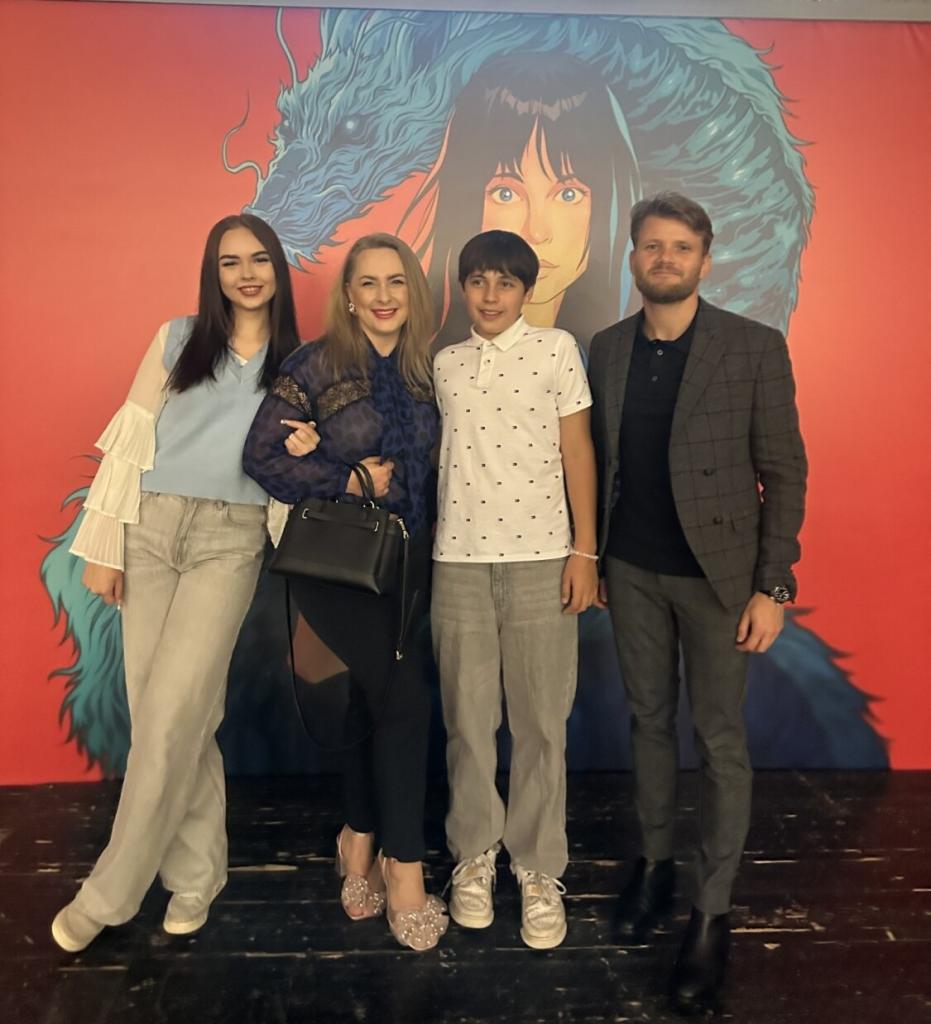 With her husband and children Grēta and Aksels
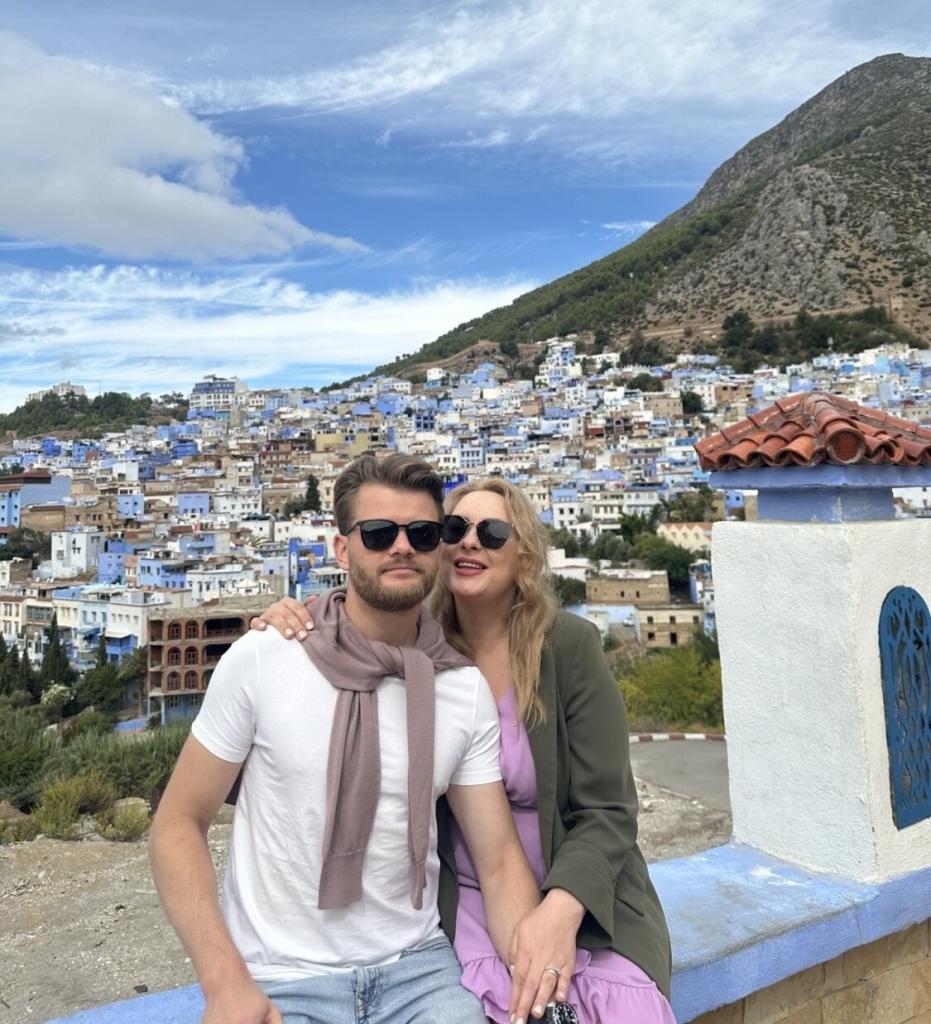 Elizabete Ārgale on a trip with her husband Rihards
The RSU Alumni Association recently honoured you with an award. What does the Alumni Association offer to its members, and why would you encourage people to join?
Initially, when I joined the Alumni Association, I simply appreciated that it did a great job of summarising the most relevant information about RSU for alumni. However,
I felt a deeper sense of gratitude for the Association when I had the chance to attend one of their events — there, I truly experienced the spirit of the Association and the strong sense of community among former RSU students.
It was very positive! They organise many valuable events, often inviting specialists to speak about particular sectors, and they also arrange tours.
It is always rewarding to connect with the RSU family, both past and present. So, I would like to invite everyone to the RSU 75th Anniversary Celebration on 12 September. Many of our alumni will definitely be there!
* The project IMAgiNE EURO (Improving MAternal Newborn carE In the EURO Region) is coordinated by the WHO centre Istituto di Ricovero e Cura a Carattere Scientifico (IRCCS) Burlo Garofolo in Trieste, Italy.
Related news
 RSU students explore study and research opportunities in GermanyFor RSU Employees, Research, For Students


