Open Source Software Powers Innovation in Life Sciences, ELIXIR Report Finds


Open source software refers to code that is freely accessible for anyone to use, examine, adapt, and distribute. Shining a light on the role of open source software in advancing life science innovation, ELIXIR has released a new report detailing how open source tools and workflows (OSSW) are shaping industry practices and fuelling the commercial translation of research. Developed in collaboration with Professor Hannes Rothe from the University of Duisburg-Essen, the report offers a comprehensive look at how companies are integrating OSSW into their operations—highlighting its value not just as a technical asset, but as a strategic driver of scientific progress and market innovation.
 Visuals: An image representing coding (source: https://www.pexels.com/), icon (source: https://www.freepik.com/), ELIXIR logo (source: https://elixir-europe.org/), Galaxy Project logo (source: https://galaxyproject.org/), and GitHub logo (source: https://github.com/)
Large and complex datasets are the lifeblood of modern life sciences, underpinning breakthroughs across research and innovation. Turning this data into real-world applications—from novel diagnostics to personalised therapies—depends on reliable analytical workflows and well-maintained, professional-grade software. A clearer understanding of how open source software and workflows (OSSW) are used in industry not only highlights their economic and scientific value but also informs decisions on how best to fund and coordinate the development of open-access tools that benefit the broader research ecosystem.
The report draws on insights from interviews with representatives of bioinformatics companies, alongside a quantitative analysis of data from GitHub (https://github.com/) and the Galaxy (https://usegalaxy.eu/) platforms. Its findings highlight how open source software and workflows (OSSW) are fuelling innovation while reinforcing trust, reproducibility, and cost-efficiency across the life sciences. By enabling researchers to automate complex, data-heavy tasks and share validated tools, open workflows are also boosting the reproducibility of machine learning methods and expanding access to cutting-edge resources for the global scientific community.
Companies that actively embrace open source software and workflows (OSSW), along with broader community engagement, often report gains in market expansion, talent recruitment, and product quality. Drawing on industry interviews, the report identifies three common strategies for adopting OSSW:
- Open Source First, where OSSW is the core of the business model;
- Open Source Support, where open tools enhance proprietary software;
- Open Source Ingestion, where tools are used internally but not offered as part of commercial products.
The study examined the Galaxy ecosystem to uncover trends in how workflows and tools are shared, and to assess the impact of the most frequently accessed resources. It reveals a dynamic landscape dominated by a handful of highly popular tools, alongside a long tail of niche applications. Crucially, sustained maintenance emerged as a key factor in driving adoption. The widespread use of Galaxy tools in industry underscores the platform’s strengths—reliability, automation, and robust data management—that make it indispensable for data-intensive life science research.
The report also stresses that OSSW faces growing challenges: many tools are underfunded, rely on a small number of maintainers, and lack stable governance structures. Without coordinated, long-term investment, the sustainability of key OSSW assets—and the research and innovation they enable—is at risk.
Funders and policymakers are urged to treat OSSW not merely as a means to an end but as essential digital infrastructure. Recognising OSSW’s public value means supporting its ongoing maintenance, documentation, and community development. Such support ensures scientific reproducibility and technological sovereignty in Europe’s bioeconomy.
ELIXIR plays a critical role in supporting the OSSW ecosystem by coordinating standards, fostering interoperability, and connecting public and private sectors across its 23 national Nodes. Its work helps ensure that OSSW tools remain open, reliable, and aligned with FAIR (Findable, Accessible, Interoperable, Reusable) data principles.
By examining how companies use, adapt, and build upon open source software and workflows (OSSW), the report underscores the broader economic and scientific value of a thriving open source ecosystem. It makes a compelling case for sustained investment in high-quality, reliable, and community-driven OSSW services. A deeper understanding of where these tools generate economic impact will not only strengthen the argument for long-term support but also help shape future development strategies.
The report makes clear: OSSW is no longer a side story in science—it is the platform on which future innovation will be built.
Original source: ELIXIR Europe, “Open source software tools and workflows: a driving force for innovation in life sciences”
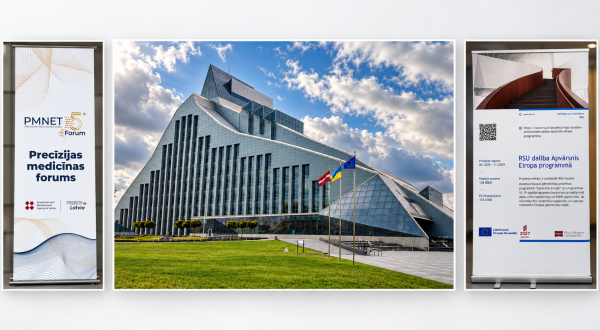
As previously reported, on 1 June 2025, Riga Stradiņš University (RSU) launched the project “RSU Participation in the Horizon Europe Programme” (project No. 1.1.1.5/3/25/I/014), which will also implement one of Latvia’s new ESFRI/ERIC National Partnership and Action Plans - the integration of Latvia into ELIXIR. As Latvia advances toward ELIXIR Membership, the integration of national expertise into Europe’s life science digital ecosystem becomes increasingly vital. In this context, Latvian research software developers are encouraged to join the ELIXIR community and actively contribute to the development and sustainability of open source software and workflows. By engaging with platforms like Galaxy and GitHub, Latvian developers can play a pivotal role in shaping high-impact, FAIR-compliant tools that drive innovation across bioinformatics and precision medicine in Europe.