
RSU Joins an International Study on the Resilience of Science and Society in Conditions of War and Global Crises


Rīga Stradiņš University (RSU) is leading a Latvian team of scholars in a five-country international research project supported by the U.S. National Science Foundation, 'EAGER: IMPRESS-U – Resilient Engineering to Advance Public Value and Innovation in Research Periphery Countries.' The project explores how higher education responds to major societal crises and how universities develop study programmes that create value for society.
 It will generate new insights into innovative approaches in higher education, helping participating countries better prepare for complex regional and global challenges, including geopolitical, climate, and institutional crises. The project is led by a team in the Center for Organization Research and Design (CORD) at Arizona State University (USA) and includes partners from all three Baltic states, Poland, and Ukraine.
Our participation in this project is a strategic step at a time when war, climate change, and other global disruptions are significantly affecting societies, institutions, and scientific systems. Science of crisis response today is not a theoretical direction for the future but a present-day necessity, and this international cooperation provides an opportunity to strengthen universities’ capacity to respond—by rapidly assessing urgent needs, setting priorities for action, and substantiating decisions. Moreover, the Baltic Sea region is strategically important not only geographically but also scientifically, as it brings together diverse experiences in crisis management that can make a valuable contribution at the global level.
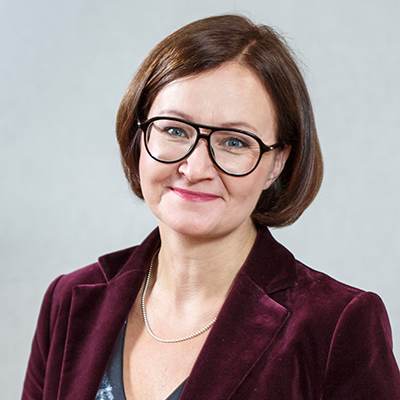
Agrita Kiopa, Latvia’s project lead, RSU Vice-Rector for Research
The project focuses on so-called research periphery countries – countries and regions located outside global centres of science and innovation and often facing limited resources, structural inequalities, and political or economic instability. The study will analyse how science develops in such contexts, what strategies are used under crisis conditions, and how academic resilience and innovation capacity can be strengthened. The Baltic states represent a region with long-standing experience of living near security threats. This experience – shaped both by historical memory and by the direct and indirect impacts of the war in Ukraine – generates innovative knowledge that can help other countries prepare for challenging conditions, strengthen institutional resilience, and improve crisis management practices. In addition to RSU, Riga Technical University (RTU) is also participating in the project from Latvia.
RSU’s contribution to the project is grounded in experience gained through the development of simulation-based training, military medicine, and medical technology engineering. As early as 2017, RSU established a military medicine research and study track, and since 2023 a military medicine course has been integrated into the Medical study programme, preparing physicians to work in emergency and conflict conditions. Particularly significant for the project is the long-standing expertise of the Medical Education Technology Centre (METC) in simulation-based education and simulation engineering. METC is the only simulation centre in Latvia and the largest in the Baltic states, providing training and skills development as well as the implementation of simulation programmes across various healthcare sectors. RSU also contributes to a body of interdisciplinary knowledge accumulated over many years through the training of medical technology engineers in close collaboration with RTU. Additionally, a distinct contribution comes from RSU-developed 3D printing technologies, which enable the creation of high-precision, clinically adapted, and personalized dental solutions by integrating digital modelling, engineering precision, and clinical expertise.
Related news
 Women in research are assessed on achievements, men on potential: RSU explores inequality in science Research


