SimWeek 2026: METC hosts first meeting of Latvia’s clinical simulation community


To mark Healthcare Simulation Week, the Rīga Stradiņš University (RSU) Medical Education Technology Centre (METC) brought together representatives of Latvia’s clinical simulation community for a virtual meeting.
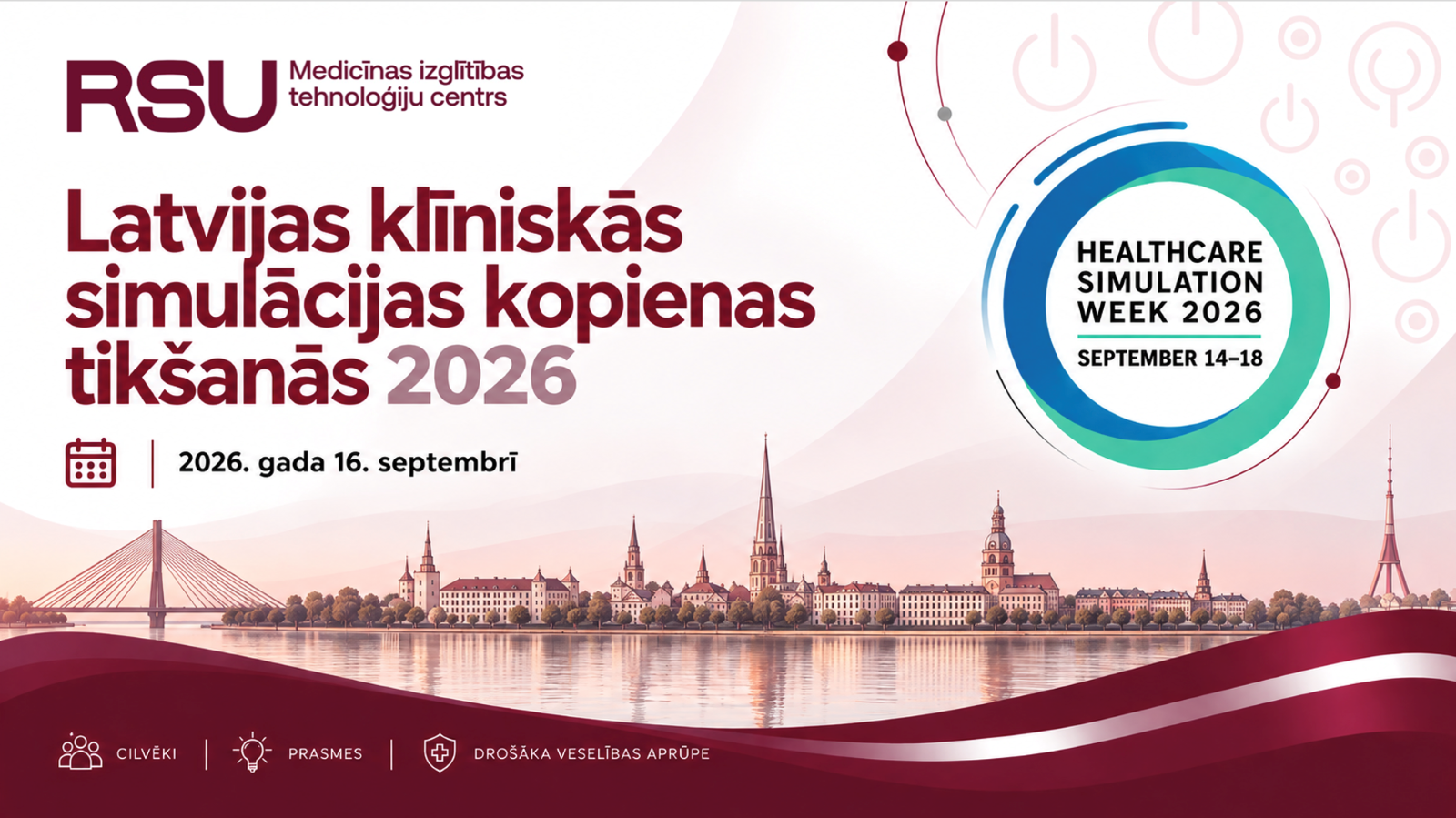
This year’s SimWeek activities took place worldwide from 14 to 18 September. The theme, Sim Found Me, invited members of the simulation community to share stories about their journey into clinical simulation and how simulation has become an important part of their professional practice.
This was the first nationwide meeting of its kind for the community in Latvia, bringing together physicians, nurses, researchers, simulation instructors, physiotherapists, academic staff, heads of training centres and other professionals from Latvia’s leading healthcare and educational institutions.
From course graduates to a professional community
Building Latvia’s clinical simulation community has been a deliberate and sustained effort by RSU METC over several years. A significant part of the community is made up of colleagues who have completed simulation instructor courses delivered by RSU METC (MācīSIM: Fundamental Principles of Simulation Design and Delivery and the internationally recognised EuSIM courses) and have since introduced or continued to develop simulation-based education at their respective healthcare institutions.
Since 2024, more than 100 aspiring simulation instructors have completed simulation instructor courses led by METC. They include physicians, physician assistants, residents, nurses, lecturers and other academic staff, simulation specialists, heads of training centres, pharmacists, physiotherapists, occupational therapists and representatives of other professions from a range of healthcare and educational institutions in Latvia, Poland and Lithuania.
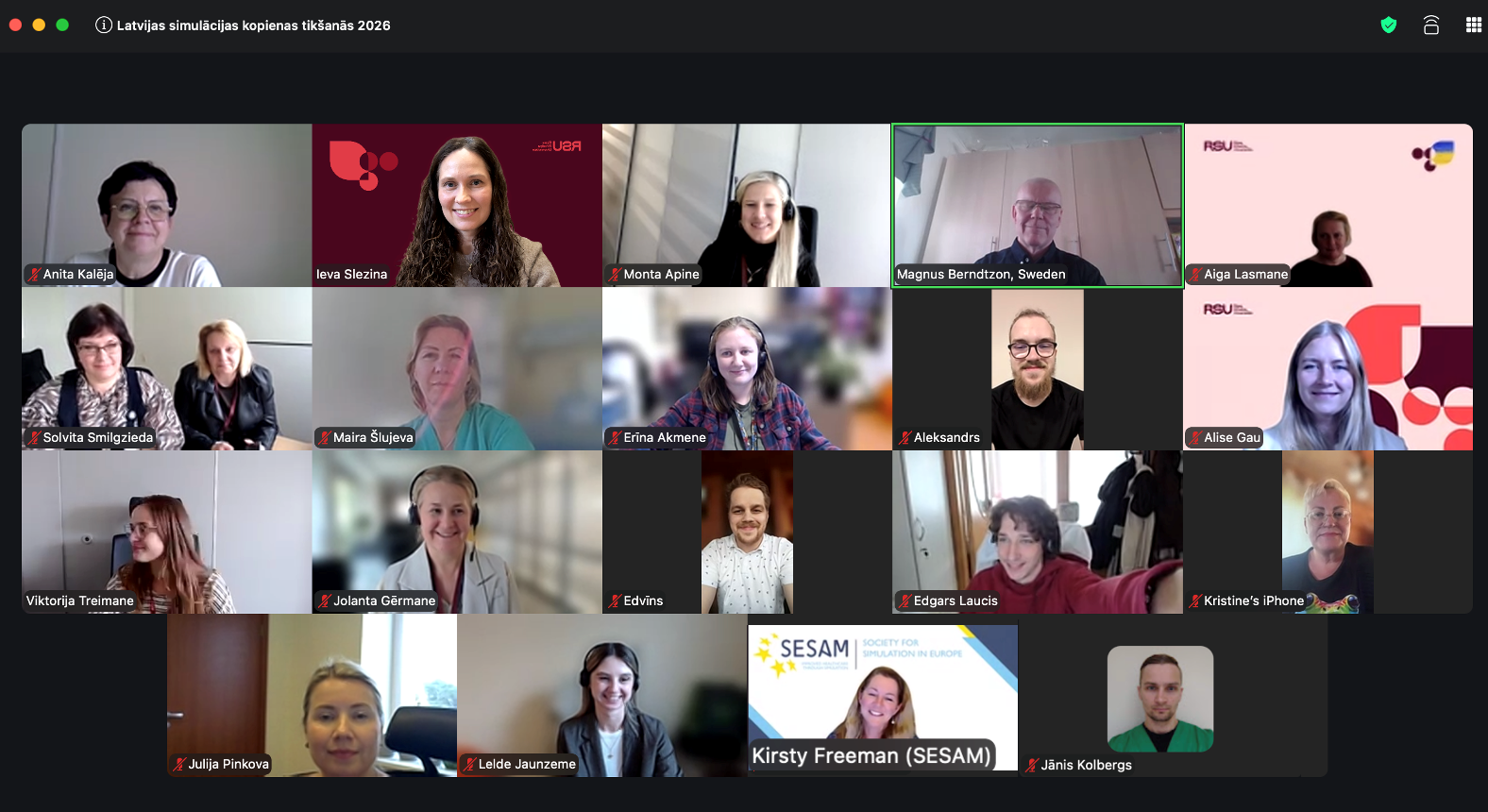
This diversity is one of the community’s key strengths, as it fosters the exchange of experience and knowledge among representatives of different specialties, regions and institutions. These connections provide a foundation for continued exchange and collaboration after the conclusion of the courses. The meeting of Latvia’s clinical simulation community organised as part of SimWeek serves as an important platform to keep the community active – allowing colleagues to meet, share insights, learn about simulation developments in other institutions, and work together to address current challenges.
Different experiences, shared challenges
During the meeting, participants shared their institutions’ experiences of developing clinical simulation. Their stories demonstrated that while the use, focus, and pace of simulation development vary across institutions, several challenges are shared – the availability of time and human resources, technical equipment, quality assurance in simulation, and measuring the impact of simulation-based education on the quality of healthcare and patient safety.
At the same time, colleagues’ experiences demonstrate that simulation is increasingly becoming a practical and routine part of training. For example, the Children’s Clinical University Hospital uses in-situ simulation, i.e. simulation conducted in the actual clinical environment. Meanwhile, North Kurzeme Regional Hospital has established regular cardiopulmonary resuscitation (CPR) training featuring theoretical modules, practical skills stations, and simulation scenarios. Monthly simulations have also been introduced at Liepāja Regional Hospital. Riga East University Hospital is developing its simulation capacity at its newly opened simulation centre, while Vidzeme Hospital integrates simulation into its broader staff professional development system.
A shared success is the ability to adapt simulation to an institution's specific needs and resources – from small-scale, regular CPR training to in-situ simulation and the establishment of dedicated simulation centres. Positive feedback from participants and growing interest in training indicate demand for this approach.
The discussions clearly highlighted that the next step in development is not only to deliver simulation, but also to build a sustainable system and a shared approach to quality. Participants identified instructor training and mentoring, opportunities to observe colleagues working at other simulation centres, joint pilot projects, the creation of a scenario library and common quality criteria as the main support mechanisms for the community. Evaluating the impact of simulation is another key issue – how to assess learning outcomes effectively and demonstrate their contribution to patient safety and the quality of healthcare.
Magnus Berndtzon, President of the Swedish Society for Clinical Simulation (KlinSim), joined the discussion as an international guest and shared his journey in the field of simulation. Drawing on a range of examples, he emphasised that simulation is not only about developing skills, but also about fostering safer, patient-centred healthcare and a culture of learning.
SESAM 2027 to take place in Riga
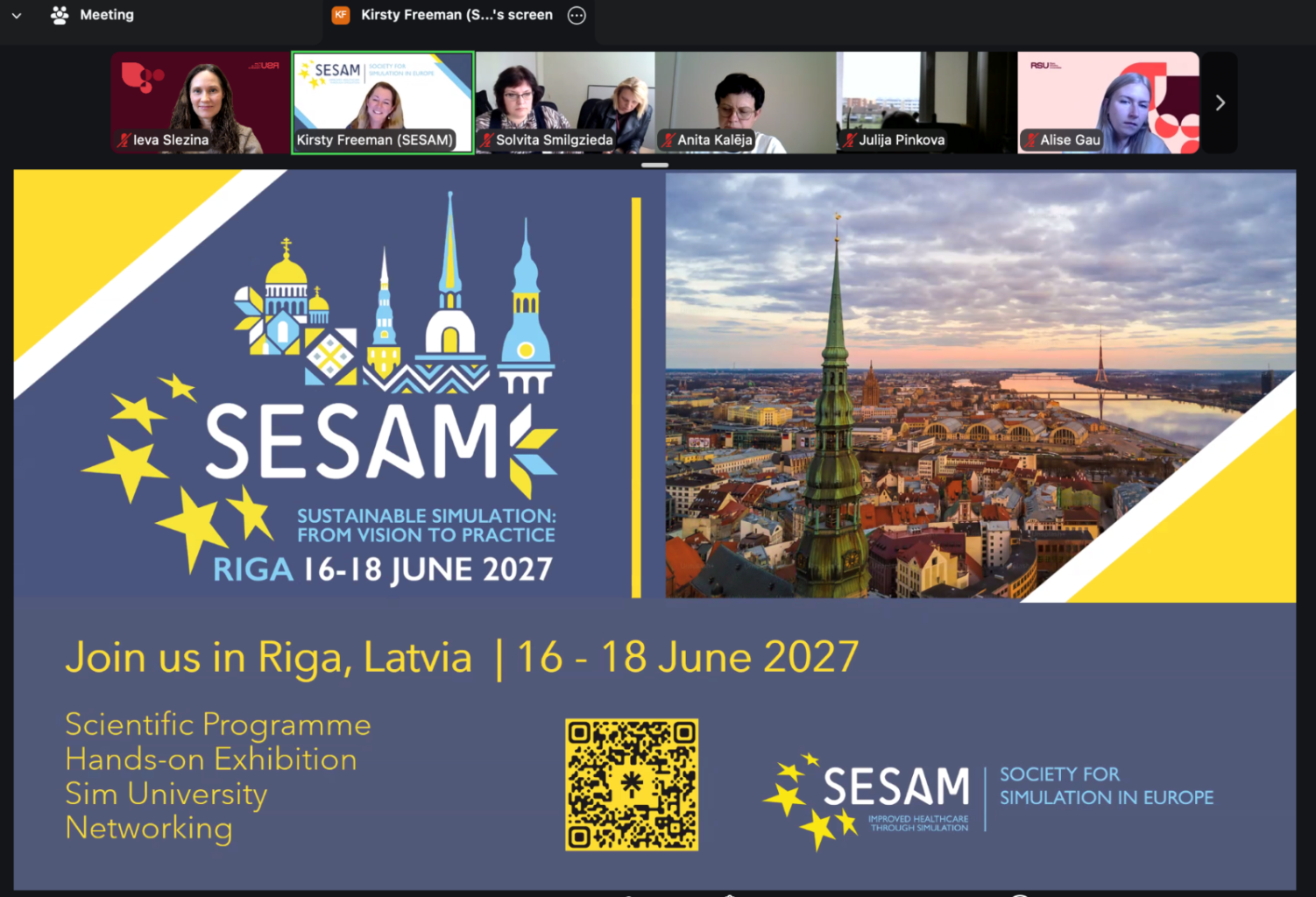
Kirsty Freeman, Secretary General and Board Member of the Society for Simulation in Europe (SESAM), joined the meeting as a special guest, bringing an international perspective on the development of clinical simulation worldwide. She introduced the Latvian colleagues to SESAM, its work and international community, and encouraged them to explore opportunities for international collaboration and exchange of experience.
One of the key events for the simulation community is the annual SESAM conference, which brings together more than 1,300 experts from across Europe and beyond. In June 2027, the conference will be held in Riga, Latvia, for the first time.
The conference theme, Sustainable simulation: from vision to practice, will focus on how to turn simulation ideas and initiatives into sustainable practice. The theme also reflects issues currently relevant to Latvia’s simulation community – how to develop simulation over the long term, ensure its quality, strengthen instructors’ competencies, make effective use of available resources and evaluate the impact of simulation-based education on the quality of healthcare and patient safety.
Hosting the conference in Riga will also be an important milestone in the further development of Latvia’s simulation community. It will offer an opportunity not only to welcome international colleagues to Latvia, but also to exchange experience, discuss the future and build new professional connections.
Related news
 RSU hosts CNRS/EHESS Centre for Russian, Caucasian, East European and Central Asian StudiesResearch, International Cooperation