Is social work the right career for you? Vita’s story helps break down stereotypes and find the answer


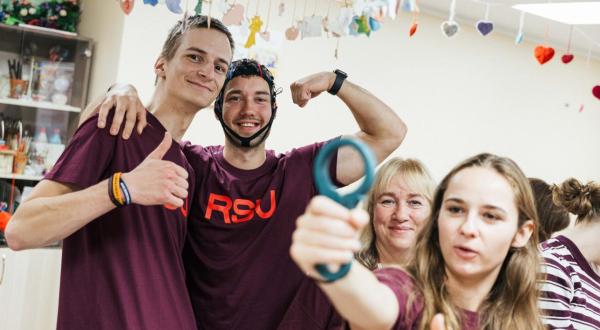
Photo: Courtesy of RSU and Vita Redenka
This interview reshapes the perception of social work. It reveals a profession that offers plenty of scope for creative solutions to help people improve their lives or make meaningful changes. As Vita Redenka puts it: ‘You have to do it yourself; a social worker can only give you the fishing rod.’ They are not there to save anyone.
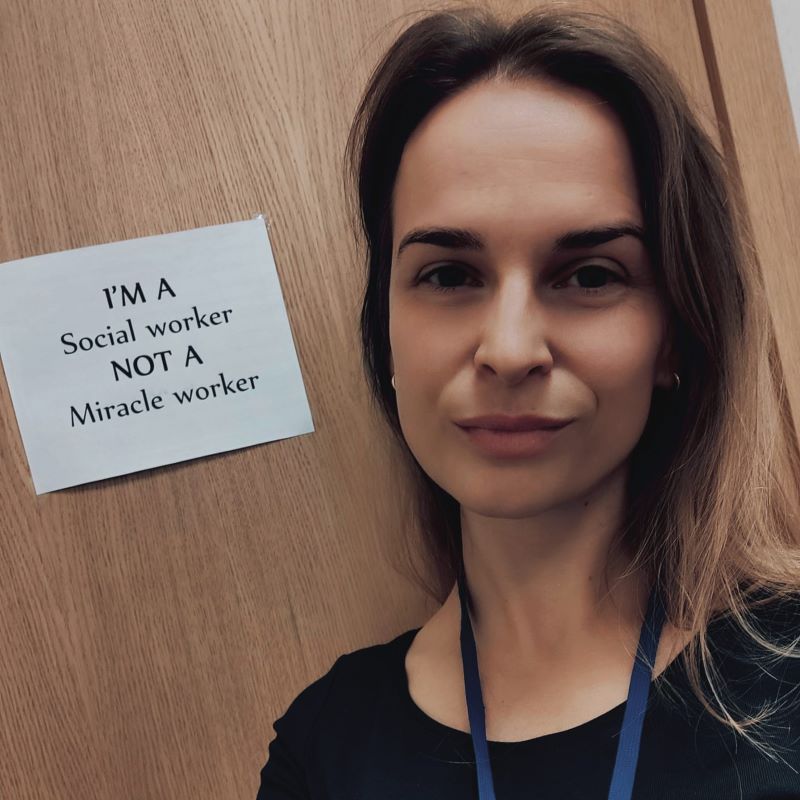
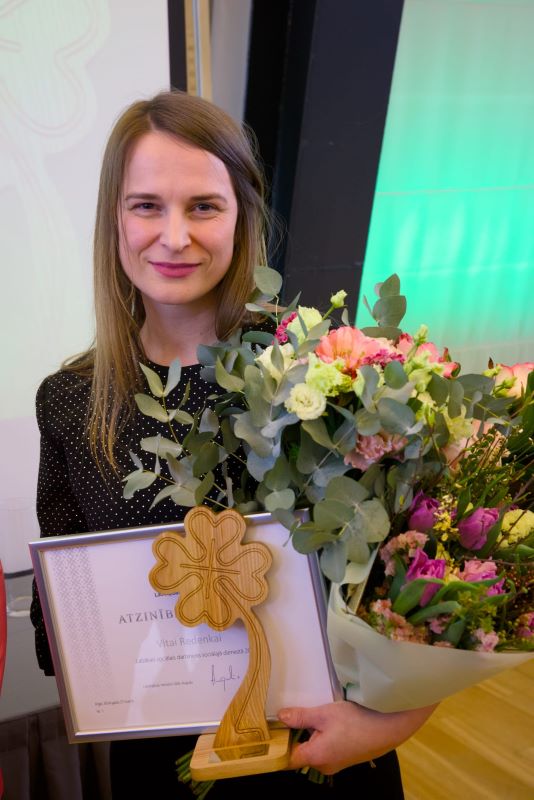
With five years of experience in social work, supporting families, children, and adults, Redenka is currently helping to educate future social workers as Head of the Training Sector within the Personnel, Documents, and Quality Management Department at the Riga Social Service. She is a graduate of Rīga Stradiņš University (RSU), having completed both the bachelor’s and master’s programmes in Social Work.
Tell us about studying social work at RSU.
I started studying at a more conscious stage of life. Before that, I was enjoying life and was not one of the “easy” kids or young people. I believe it was my life experience that led me to choose this profession and pursue these studies.
I am glad I made the decision to study at a conscious age. I absolutely loved my studies. I felt that I had found my own way of learning, and RSU truly felt like my university. I saw the effort I put into my studies reflected in the results I received from my teachers.
What was especially interesting is that I was able to gain diverse experiences here, with lecturers from countries such as Slovakia and Spain.
The studies were dynamic and engaging. Yes, they required a lot of energy, but I could see the value they added to my personal and professional growth. I deeply appreciate the quality of education at RSU, which is why I chose to continue my studies in the master’s programme. There is a great balance between practical application and theory, along with group work, projects, and think tanks. I believe this approach is excellent, especially for adults who already have a clear sense of what they want.
Before that, you worked directly with clients in a variety of situations, did you not?
Yes, for five years I worked as a social worker with various target groups, including people with addictions, people with mental health disorders, people in crisis and/or victims of violence... Very diverse target groups – everyone you can imagine, including families with children.
Please tell us more about your previous social work experience with clients.
I think it was one of the highlights of my life to work with so many different people.
As funny as it sounds, I really enjoyed working with clients because I think not only did I learn from them, but they could also learn something from me now and then.
There were many difficult situations where it seemed that we would not be able to resolve the situation without a rapid response to the crisis.
I saw my work as providing support by accompanying a person in a particular life situation. And, of course, I had to find the right tools and methods to support them, without forgetting the right to person’s self-determination.
How did this 'time together' work in practice? Did you visit clients at home to assess their living conditions and situations, or was it more office-based, focusing on consultations, advice, and paperwork?
Everything you mentioned – one-to-one counselling, home visits, attending different institutions, participating in classes together, and collaborating with other professionals (which we refer to as interinstitutional cooperation) – represents all kinds of support in various settings! For example, I had a family – a mother and her baby – come to see me. The baby had difficulty sitting still, so we moved to a park or a playground where the baby could play, allowing me to talk to the parent about the circumstances that led to outside involvement, with me as a social worker. Often, we would meet our young clients in places that were convenient for them, such as a skate park.
It is important that a person feels comfortable in the environment where we discuss the important issues of their life – I will adapt to any environment. The main thing is that they are comfortable, that I am not the one sitting in my office and saying – the appointment is over, see you later.
Can you share some examples of how your support has helped people?
There are many stories! For example, I remember vividly a young man who loved to draw, but… he expressed his energy for art by tagging walls, and there was a situation where he was detained and was sentenced to a correction programme. I was asked to prepare the programme.
Instead of sending him to a specialist and talking about his emotions and his transgressions, I took a slightly different approach – I invited a well-known graffiti artist to help, found him a wall in a neutral area, where the artist gave him an introductory lesson on graffiti culture.
He not only taught the blowing techniques, but also talked more about the culture of graffiti, where it could be done, where it could not, what the possible penalties were. He also educated him on spray paints and where to buy them legally. After a while, I received a call from the young man’s mother saying that she had not noticed his talent. Today, his artwork can be seen on a wall in Vangaži, where graffiti is legally permitted.
How do you feel in situations like these? It is a story of both empathy and the risk of burnout.
My belief is this: I do not have a magic wand to change anyone. That is why I try to adapt to situations as much as possible. While I have not compromised my personal or professional ethics, I think it is important to remember that work should stay at work. That is easier said than done… I have been working on it for quite some time.
How do you approach it? Is there any supervision or systematic support?
Yes, supervision is an integral and indispensable part of a social worker’s development. It offers a valuable exchange of experiences and support. I have supervision once a month, ten times a year. Self-growth is also very important to me – working on myself. I regularly focus on personal development by attending various training sessions, webinars, and retreats.
I can adapt in many support situations, delve deeper when needed, and I have trained myself to read between the lines – to sense unspoken emotions, even those reflected in a person’s eyes. However, being able to distinguish between other people’s emotions and my own has been invaluable in my work.
You are currently training young professionals…
I really like the next stage of development I have chosen. Unfortunately, there are fewer and fewer social workers, but I see in these young professionals a passion to invest in the development of their work, and that makes me happy. Of course, I talk to them a lot about boundaries, about ethical dilemmas, about building a relationship with a client, about being able to separate personal and professional life.
Are there other stereotypes about social workers?
Taking children away is certainly not our role – it is not what we do. We also do not spend our days drinking coffee or looking for ways to harm others. Our work is guided by objectivity, the effective use of resources and methods, and collaboration at all levels, both in our daily tasks and with our clients.
Moreover, not everyone in social services is approaching retirement age. There are many young, active, and dynamic professionals who are focused on the work process. I want to emphasise that this profession is incredibly interesting and very dynamic.
There is something new every day. This work builds self-confidence, develops constructive analysis, the ability to assess risks and is very useful in your daily life. And it builds character, of course.
A social worker is a support person, but this role encompasses many others. For instance, they can act as a service administrator who provides access to services, a teacher who explains the situation, or a mediator who steps into a family dynamic. In one scenario, for example, a social worker might observe that a young teenager is struggling to form a relationship with their parents, and then help the parents understand new approaches to foster that connection.
It is a delicate, interesting and at the same time very difficult profession because, you may know people, yet you have to find a different approach to every person.