
Technologies promise peace but create stress in digital infant care


In mid-2025, Rīga Stradiņš University (RSU) launched a postdoctoral programme comprising five research projects, with a sixth project joining in 2026. All of them will be presented under RSU Research Synapses.
We begin with the study by Māra Grīnfelde (pictured), entitled ‘Ethical and embodied perspectives on digital health-related baby-tracking and monitoring technologies’.

The main goal of the postdoctoral programme is to provide early-career researchers with opportunities to grow, shape their careers, and contribute new knowledge to Latvian science. For Māra, this project is a natural continuation of her professional journey – from art school and philosophy studies to a set of interests that combine people, technology, and healthcare. During our conversation, she explains how her work at RSU and discussions with students on bioethics have helped her uncover the many unanswered questions surrounding digital health technologies and their impact on lived experience.
Through her research, she aims to help both parents and healthcare professionals better understand the opportunities and risks associated with digital infant-tracking technologies.
What led you to pursue academic research and a career at Rīga Stradiņš University?
Overall, it has been quite an unintentional journey. I studied at the Riga School of Design and Art, which was a very practical experience where I spent five years painting and drawing all the time. I really wanted to learn something theoretical – to think more, understand more, organise more. Then, I decided to try enrolling in philosophy studies. There was a lot of reading, much of which initially seemed incomprehensible, but slowly, by rereading and trying to delve deeper, at least some initial understanding began to form. I was very drawn to this process of trying to understand things.
I started giving lectures and seminars in bioethics for medical students at Rīga Stradiņš University, including courses on death and dying and various other topics, which in turn sparked my interest in the field of healthcare. All these topics and discussions with students became increasingly relevant to me in the context of my personal interest – phenomenological philosophy. This is a direction in philosophy that studies experience – not only individual experience, but the conditions that shape how experience is possible. For example, how we experience time not just individually, but whether there are common structures we can talk about, or how we experience space. From this follow further questions: how do we experience illness? How do we experience health? These questions eventually led me to qualitative research.
I currently work as a lead researcher at the RSU Social Sciences Research Centre, which is a great place to conduct interdisciplinary research. It allows me to combine my interest in philosophy, empirical research, and healthcare.
Can you tell us how the research topic ‘Ethical and embodied perspectives on digital health-related baby-tracking and monitoring technologies’ came about?
The idea emerged from two directions. Firstly, I have long been interested in phenomenological and post-phenomenological philosophy, which emphasises that technologies are not merely tools, but shape how we experience ourselves, others, and the world. I particularly relate to the view that technology is neither good nor bad, yet it is never neutral – it always influences experience.
Secondly, I am interested in how baby-monitoring technologies affect parental care and relationships with their children. This interest also stems from personal experience – I used these devices myself when my child was a baby. I did not think much about it at the time, but these issues have since become more pressing and worthy of research.
What does “embodied perspective” mean in this context – how does it differ from the traditional view on ethics and technology?
The embodied perspective comes from phenomenology and emphasises the role of the body in our experience. It involves looking at how technologies enter our everyday physical lives – whether they become a natural extension of the body or a hindrance. It is similar to wearing glasses: I have become so used to them that I no longer notice them. To a certain extent, they have become part of my body. However, this is not always the case – some technologies may remain foreign objects. In the phenomenological tradition, corporeality does not refer only to the visible and tangible body, but primarily to the “lived body” – our sentient, active way of being in the world.
An embodied perspective in infant care allows us to explore whether and how technologies are internalised in parents’ bodily experience, how they change parents’ physical relationships with their children, and how they affect touch, feelings, and emotions.
What digital health monitoring technologies are you researching?
The technologies I study fall into two main groups. The first consists of devices that “monitor” the baby – video monitors, audio monitors, and wearable sensors that measure temperature, heart rate, or oxygen levels. These sensors are often integrated into socks, nappies, or crib mattresses and continuously transmit data to parents. The second group includes mobile apps that collect information about a baby’s daily rhythm and attempt to predict upcoming events. Together, these form a wide range of digital monitoring technologies that are becoming increasingly common in infant care.
What ethical dilemmas have you observed when parents use these technologies in infant care?
Drawing on preliminary data, existing literature, and my own experience, several ethical dilemmas have emerged. One of the most significant concerns the tension between the sense of safety and control these technologies seem to offer and parents’ limited understanding of privacy and data-protection risks, particularly when using mobile apps. Parents often state that data protection is very important to them, yet at the same time they do not know where their data goes or who has access to it. This uncertainty can lead to “digital resignation”: the feeling that the only real alternative to safeguarding their own and their child’s data is to stop using the technology altogether – something many parents are reluctant to do. As a result, they begin to feel that sharing personal data is inevitable, which reinforces this sense of resignation.
The second dilemma lies in the contrast between the promise of peace of mind and the anxiety that the same technologies can generate. This is closely connected to the idea of “technostress”: the continuous need to monitor the data and to keep one’s phone constantly at hand can become an additional source of stress. Stress may also arise from using the technology itself: Am I using it correctly? Is it working? Have I remembered to charge it or update the software?
Finally, there is the question of epistemic authority. Whom do we trust: our own embodied experience or the data provided by a device? Parents often find themselves caught between the desire to trust their own judgement and the assumption that technology is more objective. This is a very interesting aspect because it shows how technology influences the decision-making process and who we trust in this process.
Can digital devices help create close relationships between parents and their children, or do they, on the contrary, create distance?
I think the answer is most likely both, because no experience is uniform. Based on existing research, there is potential for creating distance. In one study on the use of biomonitors in infant care, mothers noted that at times they did not need to have direct contact with their child in the basic sense of touch – for example, they could check temperature without physically touching the child. This can introduce a sense of distance and withdrawal. On the other hand, using a video monitor can create a sense of presence; even without being physically nearby, the child remains within the parent’s horizon. It should be noted, however, that this experience is asymmetric. As one research participant described her experience with a video monitor: ‘I have contact with my child, but they do not have contact with me.’
What is your outlook on these technologies in the future – will they become even more integral to our daily lives, or will society seek balance between technology and humanity?
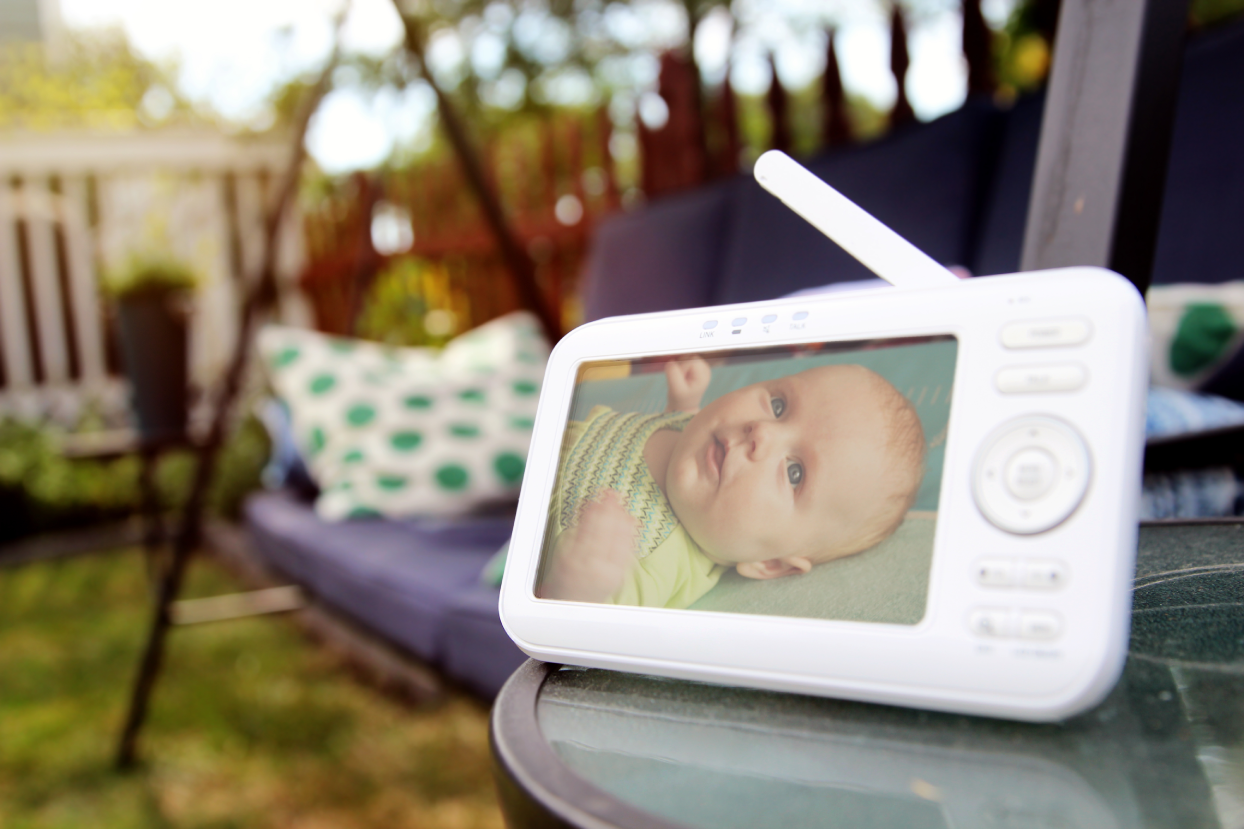 Technologies will undoubtedly continue to develop; they will be offered and used. I believe that in the field of baby-monitoring technology, both techno-optimism and techno-pessimism will always coexist. Even now, it is clear who is pro-technology and who is sceptical. This is closely linked to deeply rooted perceptions of what it means to be a parent and how one should care for a child.
We must also consider the accessibility of these technologies. For example, smart cribs remain expensive, and according to my research questionnaire data, more than one-third of the population does not currently use these technologies due to cost. I hope that technology will become more widely accessible and that discussions on the ethical aspects of developing and using these technologies will gain in relevance.
How could your research help both healthcare professionals and parents better understand the impact of technology on caregiving and attachment?
My goal is to systematically summarise the potential benefits and risks associated with these technologies, providing a basis for informed decision-making. For parents, this means considering whether a device is necessary and what advantages it might bring. For healthcare professionals, it offers guidance on when it is appropriate to recommend a particular technology.
Is there a sufficient discussion in Latvia about ethical matters related to digital technologies in family life?
I believe that ethical matters in the digital environment are sufficiently discussed in Latvia, but mainly in relation to children rather than infants. There is considerable discussion regarding the use of smartphones, tablets, and computers, whereas the technologies I focus on – infant-tracking devices – are far less debated. This may be because such technologies are not yet widespread in Latvia, but this is precisely what I aim to explore.
In many other countries, particularly in Europe, the USA, and Australia, these technologies are used extensively, making issues of privacy and data protection increasingly relevant, along with their potential impact on parents and children. From a broader perspective, it is also important to consider how inclusive these technologies are. For example, many apps are designed primarily for mothers rather than parents in general, thereby reinforcing gender stereotypes and expectations about the division of roles in childcare.
Procet Ethical and embodied perspective on the digital health related baby-tracking and monitoring technologies No.1.1.1.9/LZP/1/24/133 (1.1.1.9/1/24/I/001)

Related news
 Systemic sclerosis in Latvia may be more common than statistics suggest; study also reveals a frequent risk of nerve damageRSU research synapses


